
I said this to myself for most of a year after my first: “Everyone cries after a baby. This is just that.” It was not just that. The crying was the least of it; it was the fog, the flatness, the way the days ran into each other and nothing in them felt like mine. Nobody had explained baby blues vs PPD to me, where the baby blues end and something else begins, so I kept waiting for the blues to lift, and they did not, because they were not the blues.
This is the post I needed in that year, written as plainly as I can. The difference between the baby blues and postpartum depression, the signs that mean it is time to tell someone, who that someone can be, and what the first conversation actually sounds like. I am a mama, not a clinician; this is what I learned the slow way and what the people who helped me told me. If any of it is you, please read to the end and then make one call.


The baby blues, in plain words
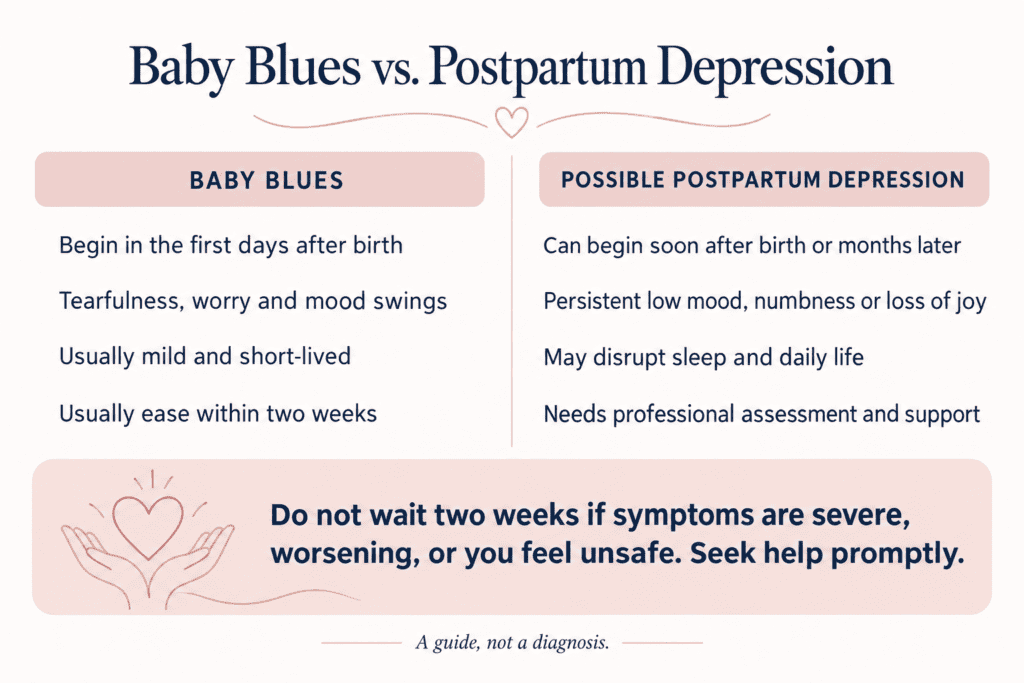
The baby blues can involve tearfulness, irritability or feeling overwhelmed in the days after birth. They usually settle within two weeks. You can still ask for support during that time, especially if symptoms feel intense or are getting worse.
Postpartum depression, in plain words
Postpartum depression can begin soon after birth or later in the first year. Signs may include ongoing low mood, loss of enjoyment, guilt, difficulty sleeping or feeling disconnected. These symptoms deserve assessment; they do not mean you are a bad parent. Treatment and support can help.
Baby blues vs PPD: when to seek help
Speak with a healthcare professional if symptoms continue beyond two weeks, start later or concern you at any point. Do not wait if symptoms are severe or worsening, or you are struggling to manage daily life. Anxiety and unwanted frightening thoughts also deserve support; a clinician can help assess what is happening.
What it looked like for me
Not crying, mostly. Getting dressed took an hour because every choice felt enormous and none of them mattered. I poured everything into the baby and had nothing left over, and I called that being a good mother. I stopped answering messages. I remember thinking I was fine because I was doing all the tasks, and it was a friend who said, gently, that doing the tasks is not the same as being alright. She was the one who got me to make the call.
Free · takes ten seconds
Whatever time you have today, it counts.
Tell The Window how many minutes and how many hands you have free, and it picks one small thing for you: a stretch, a shower, a page of a book, ten minutes of nothing. A jar counts them up over the week.
No email needed. Works on your phone, one-handed.
Who to tell
Tell your midwife, doctor or another maternity-care professional; you do not need to wait for a routine check. If there is immediate danger, or you feel you may act on thoughts of harming yourself or your baby, contact local emergency services or go to the nearest emergency department. Hallucinations, delusions or marked confusion after birth also need immediate medical assessment.
What the first conversation can sound like
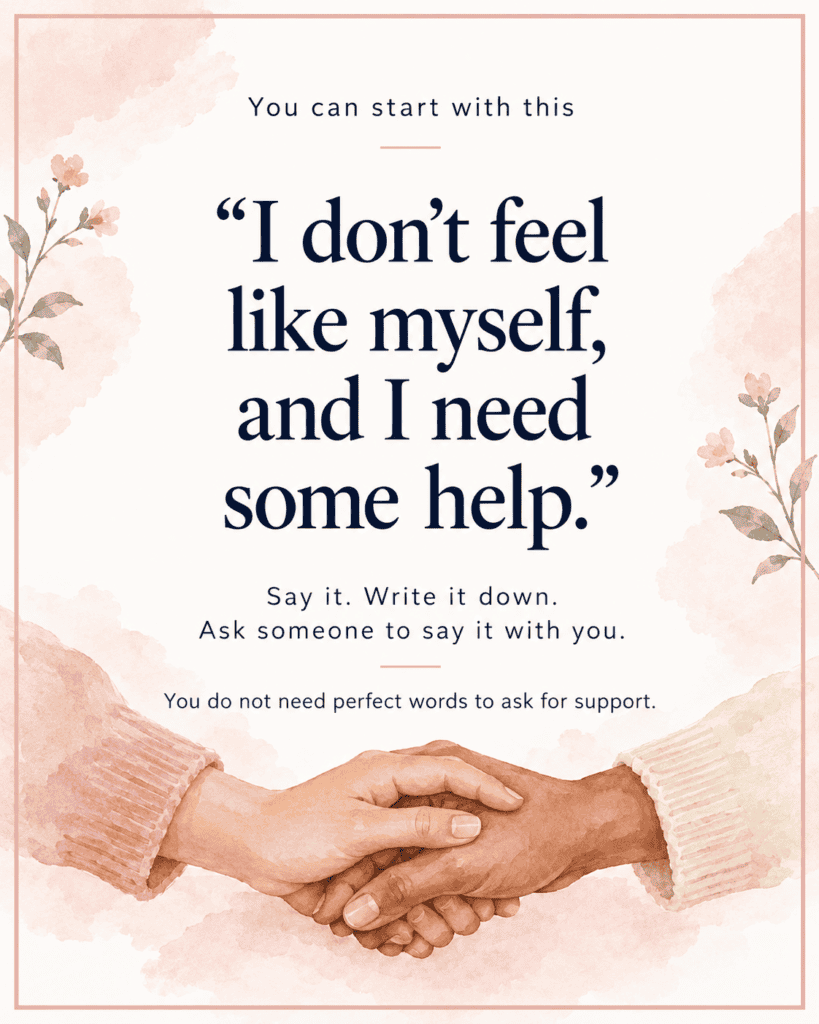
“I don’t think this is the baby blues. It hasn’t lifted and I don’t feel like myself.” That is enough. You do not need the right words or a list of symptoms. If it is easier, write it down and hand it over, or ask the person who comes with you to say it. The people who do this for a living are expecting it; what they cannot do is guess.
Free · five minutes on Sunday night
Five minutes on Sunday night, and the whole week is dressed.
Tap the kind of day each day is and The Sunday Reset lays out seven outfits, one window of time for you each day, and the three things that matter this week. Print it, or have it emailed.
Free. Made for the mornings when choosing is the hard part.
What help tends to look like
Help may include assessment, talking therapy, medication and practical support. Treatment is chosen with you, including discussion of breastfeeding and the benefits and risks of any medicine. Recovery varies; needing more than one kind of help is not a failure.
For the person reading this about someone else
Describe what you have noticed without judging, and offer to help arrange an appointment or provide practical support. Listen to what she wants rather than taking over. If she seems confused, is hearing or seeing things others do not, or you are concerned about immediate safety, seek emergency medical help and stay with her if it is safe to do so.

The call I made after my friend’s gentle sentence was the beginning of getting myself back. Not instantly; there was a therapist and a few months and a lot of small mornings. But the fog had a name, and once it had a name it had an exit. If you have read this far and recognized yourself, I would like you to make one call today, to anyone on the list above, and to let them take it from there.
This is a sensitive subject and I have written it as carefully as I know how. If you want more of the practical side, who am I now is about the identity part of the fog, self-care is not selfish is about the guilt, and surviving the sleep fog is about the sleep that makes everything harder. None of them replaces the call.
You can ask for help today. You do not have to wait two weeks. You are not alone in this, mama, and treatment is available.

You deserve to be looked after too
A stylist who already knows you, every morning.
The Atelier is Anah every morning, already knowing your season, your shape and your closet. The community, the magazine, the planner, and Dress me for the mornings when choosing is the hard part.


