Choosing a breast pump can feel strangely high-stakes. You are tired, the options all look alike, and everyone around you has a strong opinion on manual vs electric breast pumps.
The simplest place to start is one question: how often will you pump? Your answer points you toward a manual pump, an electric one, or, for many moms, a bit of both.
Below, I walk through the real difference, who each type suits, and well-reviewed picks on Amazon in each group.
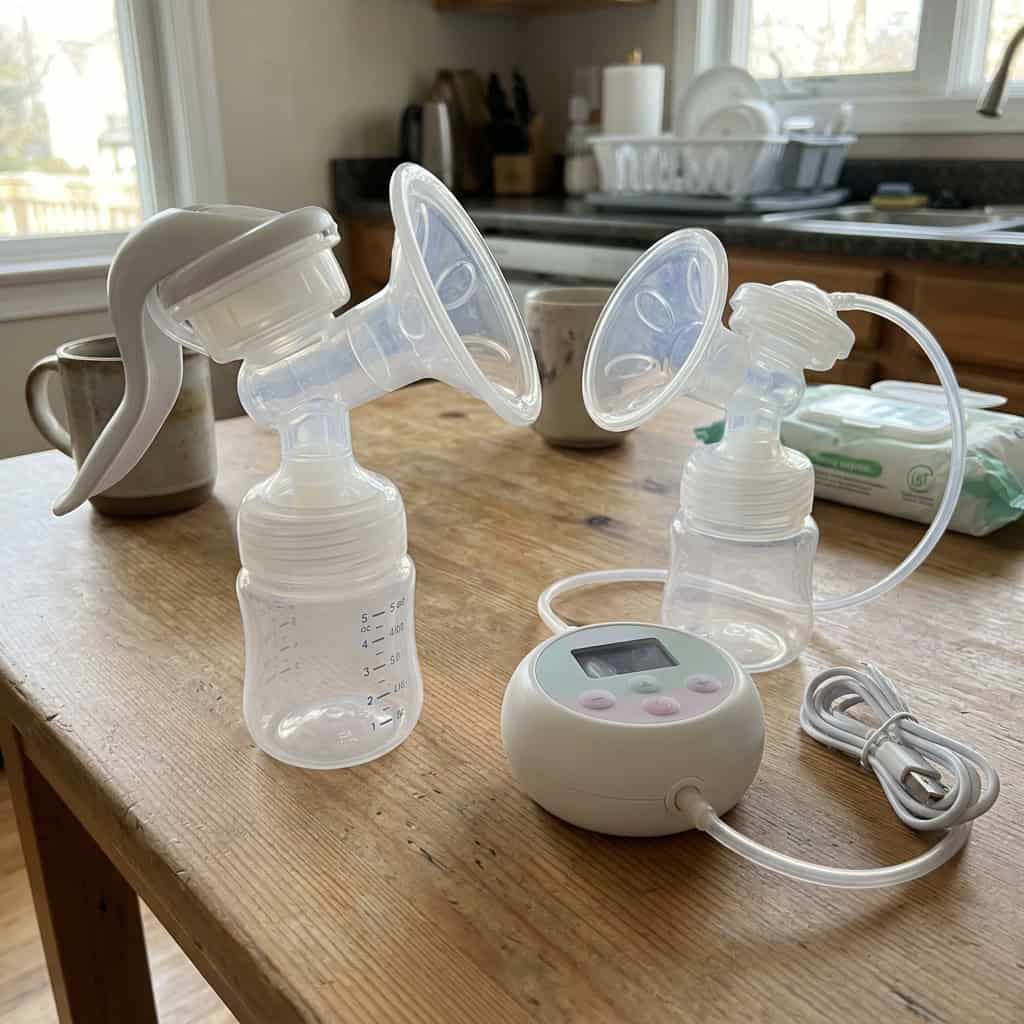
Manual vs electric: the real difference

A manual pump runs on your hand. Lever pumps work when you squeeze a handle, while silicone pumps (the haakaa style) use suction you create by squeezing the base before attaching. They are quiet, small and need no power.
An electric pump does the work for you with a motor, and double electric pumps express both sides at once. That saves real time if you pump every day, whether for work or exclusive pumping.
Many moms end up using both: an electric pump as the daily workhorse, and a manual one in the diaper bag for engorgement relief, a missed session or catching letdown.
Who each type suits
- A manual pump suits you if you mostly nurse directly, pump only now and then, want quick relief from fullness, or need a quiet backup for travel.
- An electric pump suits you if you are returning to work, exclusively pumping, pumping several times a day, or feeding a baby who is not latching yet.
What to look for in any pump
- Flange fit: the right size matters more than any feature.
- Adjustable suction and speed, so you can stay comfortable.
- Easy cleaning with few small parts.
- Portability: weight, battery and a way to carry it.
- Noise level, if you will pump at work or near a sleeping baby.
- Insurance: many US plans cover a breast pump, so check your benefits before buying.
Free · eight questions
What to buy first, in the order to buy it.
The Order asks about your feeding, your season and your days, then gives you twelve pieces in the order they earn their place, with a picture and a shop link for each. Nothing you do not need.
Free. The list can be emailed to you so it is there in the shop.
Manual pumps
1. haakaa Manual Breast Pump
The haakaa silicone pump is the one you will spot in countless diaper bags. There is nothing to assemble: you squeeze, attach, and let gentle suction collect milk, often on the opposite side while baby nurses. With over 96,000 reviews, it is one of the most reviewed feeding products on Amazon.
Good to know: It is best for collecting letdown and easing fullness, not as a replacement for an electric pump if you pump on a schedule.
2. haakaa Gen. 2 Silicone Breast Pump with Cap
This newer version holds 5 ounces and comes with a silicone cap, which helps when you need to set it down or carry it without spills. A thoughtful upgrade if the open top of the original worries you.
Good to know: The larger size can feel bulkier on a small frame, so check the listing photos to picture it in your bag.
3. Medela Harmony Manual Breast Pump
A lever-style manual pump from a well-known pump brand. You control the rhythm with your hand, which some moms find more comfortable than motor suction. A solid choice for occasional sessions or as an on-the-go backup.
Good to know: Hand fatigue is real with lever pumps. Switch hands and take short breaks during longer sessions.
4. Lansinoh Manual Breast Pump
Another lever pump, from a brand many moms already know from nipple cream and storage bags. It suits you if you pump a few times a week and want something simple, small and easy to understand.
Good to know: Check which flange size comes in the box and whether other sizes are available before you rely on it.
5. NatureBond Silicone Breast Pump
A silicone collector-style pump that comes with a lid, stopper, strap and pouch, so it is ready for travel and storage right away. The strap helps keep it from being knocked over, a common frustration with this type of pump.
Good to know: Wash every small piece separately, including the stopper, and let them dry completely before storing.
Electric pumps
6. Spectra S1 Plus Electric Breast Pump
Spectra pumps come up constantly in pumping conversations, and the S1 Plus is a double electric option with a 4.6 rating across thousands of reviews. It is a good fit if you pump daily for work or exclusive pumping.
Good to know: The S1 and S2 look alike. Compare the listings to see which has a built-in battery, which matters if you pump away from an outlet.
7. Spectra S2 Plus Electric Breast Pump
The S2 Plus is the S1’s sibling, a strong choice if you mostly pump in one spot, like your nursing chair or an office lactation room. Before buying, check whether your insurance offers it.
Good to know: Valves and duckbills wear out over time. Note which parts your pump uses so reordering is easy when output dips.

From the capsules
The Back to Work Capsule
Two hundred workday outfits, every top opening for the eleven o'clock pump. $27 once, yours to keep.
See the capsule8. Lansinoh Signature Pro Double Electric Breast Pump
A portable double electric pump from Lansinoh with nearly 8,000 reviews. It is a sensible middle ground if you want double pumping without a big machine, and it is easy to carry between home and work.
Good to know: Check the flange sizes included. If the standard size is not right, sort out compatible sizes before your first long day back.
9. Elvie Double Wearable Breast Pump
Elvie’s wearable pump sits inside your bra with no tubes, and it is described as small and quiet, with an app to track sessions. It suits moms who need to pump in meetings, on the move or while caring for older kids.
Good to know: Wearables are more sensitive to fit and positioning. Some moms see lower output than with a traditional pump, so keep an eye on yours in the first weeks.

Free · tick as you pack
The hospital bag, then the fourth-trimester bag.
Packed for how you plan to feed, heal and travel, with the pump things and the recovery things in the right place. It remembers what you have ticked, and you can print it or have it emailed.
Free. Two lists, one for the birth and one for the weeks after.
Tips before you buy a pump
Call your insurance first. Many US plans cover a pump, and some let you choose from a list of models.
Get your flange size checked. Flanges should fit your nipple, not your breast size, and an IBCLC can help you measure. Pain is not a sign that pumping is working.
Start on lower suction and build up slowly. Follow the cleaning instructions from your pump maker and the CDC every time.
Feel Your Best, Give Your Best. You Matter Too.
There is no wrong choice here, only the one that fits your life right now. A manual pump, an electric one, or both, every ounce counts.
Be gentle with yourself while you figure it out. You are learning, and you are doing well.

You deserve to be looked after too
A stylist who already knows you, every morning.
The Atelier is Anah every morning, already knowing your season, your shape and your closet. The community, the magazine, the planner, and Dress me for the mornings when choosing is the hard part.