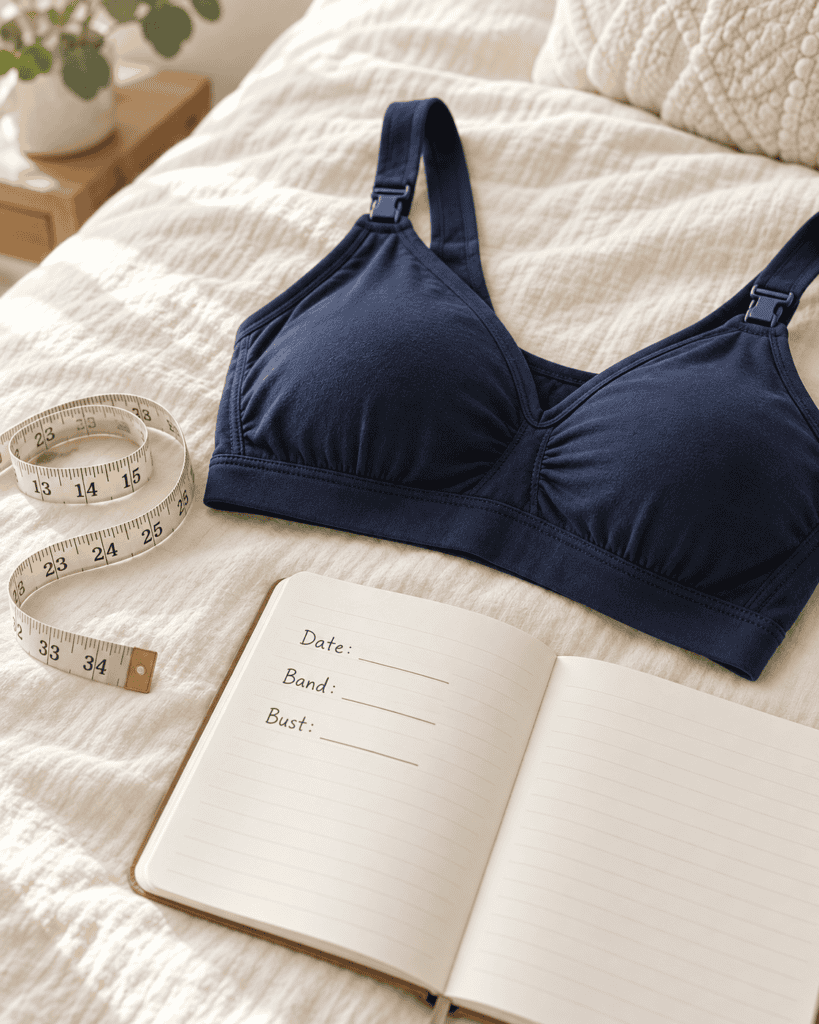
The message I get more than any other, usually in the first fortnight: “What size am I now?” The honest answer is that it depends on the week, and that is not a failure of measuring. A breastfeeding body changes size on a timeline that is roughly the same for most of us, and once you know the timeline you know when to measure, when to buy and when to wait. I bought bras at the wrong moments twice before I learned it.
This is the timeline: the four shifts, when they happen, what to buy at each, a two-minute measuring method with a tape and a mirror, and the two measurements that size the rest of the wardrobe. It is written so you buy once at each stage instead of twice.
The four shifts, roughly
Late pregnancy: the size you are the week before the baby. Days three to ten: the milk comes in and the chest can be a full cup bigger, sometimes two, and changes by the hour. Weeks three to six: supply settles to what the baby needs and the size settles with it; this is the first real size. Months three to six: feeds get faster and fewer, the chest softens, and the size often drops back a little. After a year or at weaning: the final size, which may be the old one or may not. Four moves, and each one has a buying rule.
When to buy at each shift
Before the baby: two soft, stretchy, wireless day bras and a sleep bra, with room, in the late-pregnancy size. Days three to ten: buy nothing; wear the stretchy ones and let them stretch. Weeks three to six: measure, and buy the two or three bras that will carry you to month six, slightly better quality. Months three to six: check the band and the cup again, and replace one if it gaps. After weaning: the one honest fitting for the body you have now. How many nursing bras you realistically need keeps the total to five.
How to measure at home in two minutes
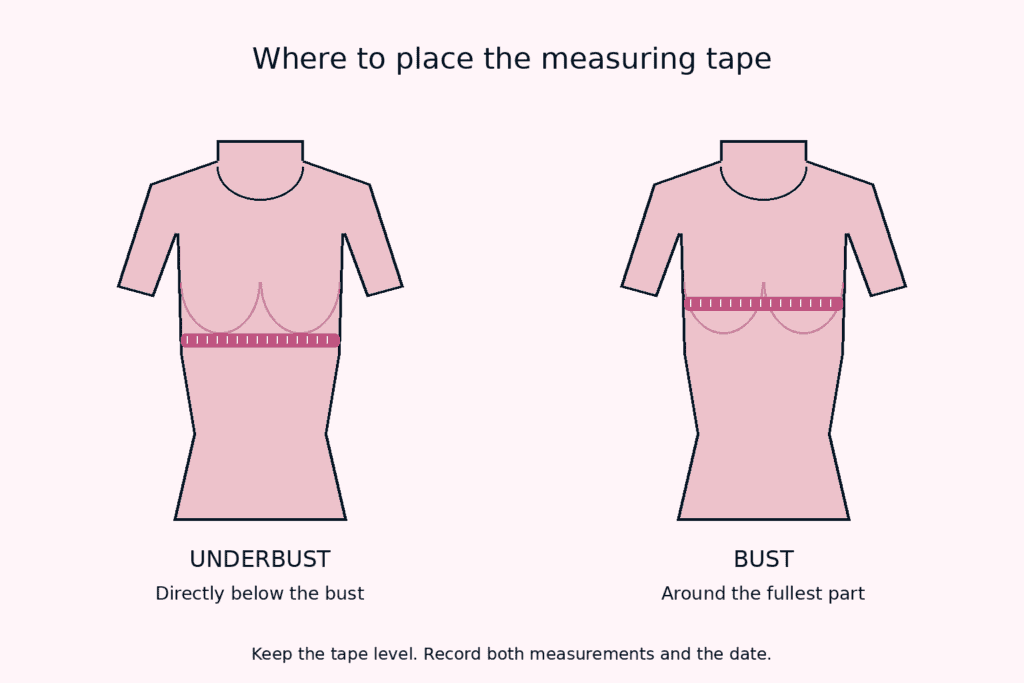
At the end of the day, when you are fullest, in a thin unpadded bra or nothing. Tape snug but not tight around the ribcage directly under the bust: that number, rounded, is the band. Tape loose around the fullest part, standing straight: that is the bust. The difference between them, in inches, is the cup: one inch is an A, two a B, three a C, four a D, five a DD, and so on. Write it down with the date, because the next one will be different and the dates are the timeline.

From the capsules
The Soft Landing Capsule
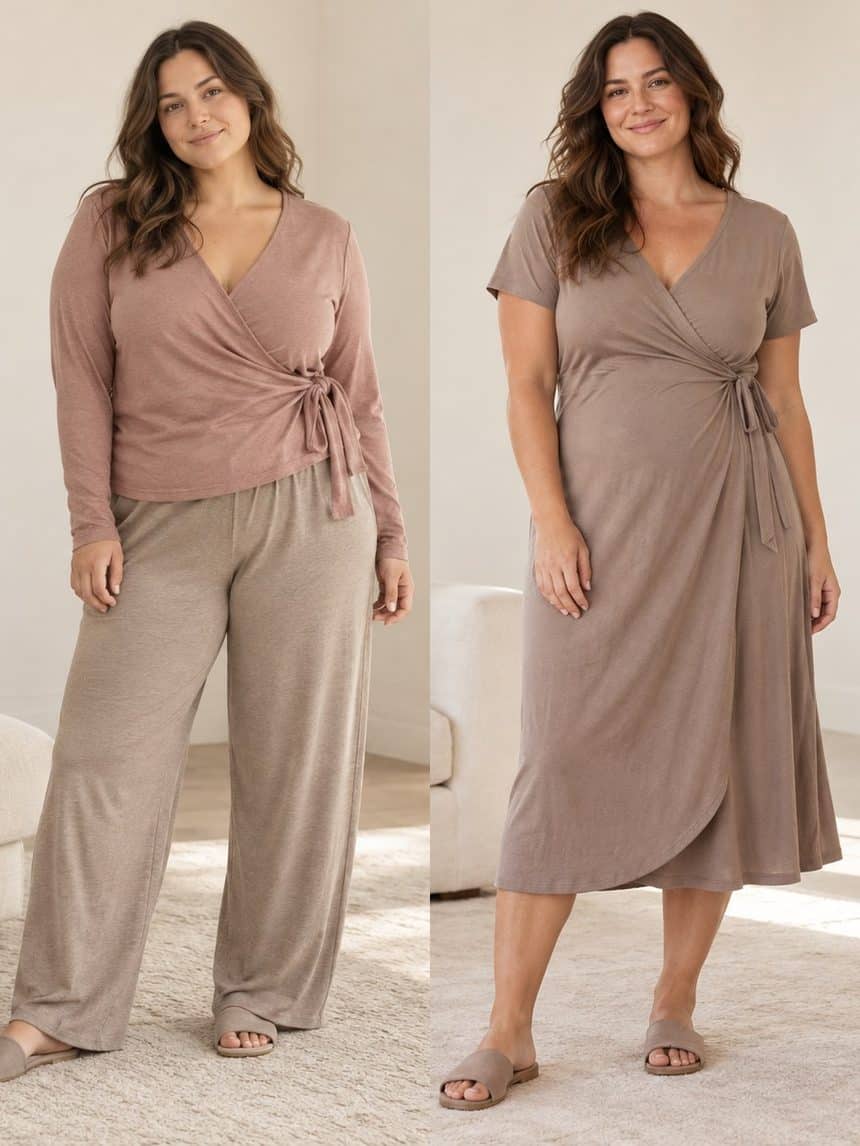
Twenty soft pieces, twenty-five outfits for the first weeks home, every one opening for a feed. $14.99 once, yours to keep.
Fitting a nursing bra from the numbers
The band should fasten on the loosest hook with two fingers underneath, so it has somewhere to go as the ribs settle. The cup should hold everything without spilling at the side or gaping at the top, with a pad in. Try it on at the end of the day, lean forward into it, and check the clip opens one-handed. If the centre does not sit flat against the breastbone, the cup is too small. How to pick the best nursing bra is the rest.
Free · paste a screenshot
Can you feed in it? Ask before you buy.
Paste a screenshot of any top, dress or jumpsuit from any shop and Will it feed? tells you if you can nurse or pump in it, how, and what to wear instead if not. One free look a day, three more with your email.
Honest and kind. It has looked at thousands of garments.
The two measurements for everything else
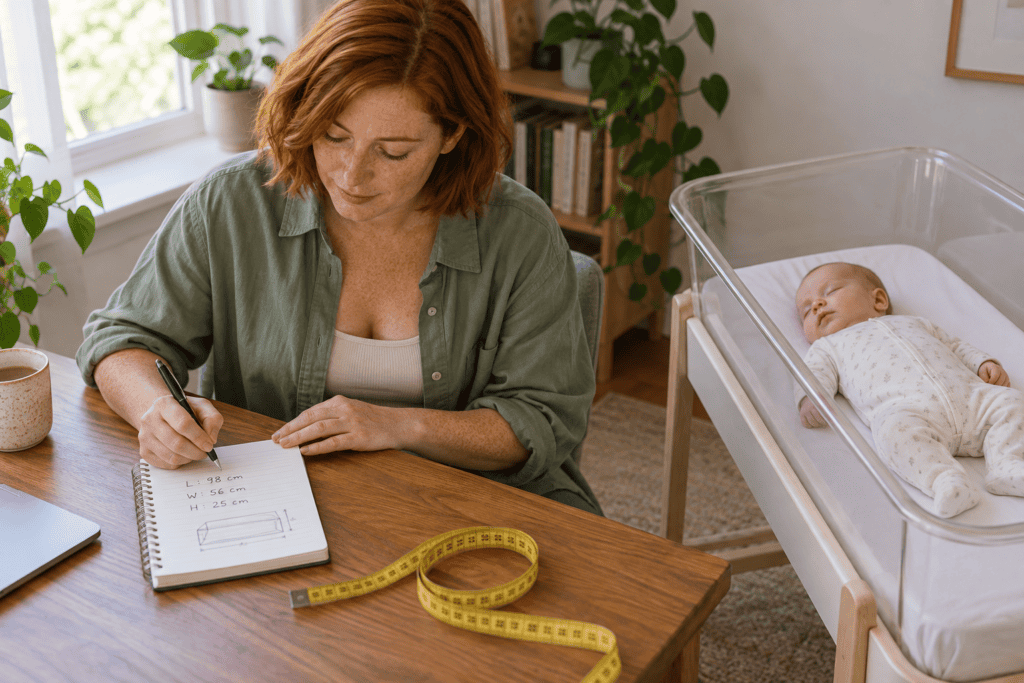
The chest, as above, which sizes shirts and tops: buy for the week-six number, and buy shirts one size up so they do not pull at the buttons. And the high hip, where a soft waistband sits above a scar, which sizes trousers and skirts: measure it at month two and buy the in-between size there rather than guessing at the waist. The changing-size dilemma is why that purchase is not wasted.
The things that do not need measuring
Wraps, ties, elastic backs, drawstrings and stretch. A wrap top fits the week-one chest and the month-six chest; soft-waisted joggers fit the week-one middle and the month-four one. The more of the wardrobe that flexes, the fewer times you measure. Finding your style again on a fluctuating body is the whole wardrobe built that way.
Free · five emails, five days
Five days, five small changes, and a wardrobe that works with your body as it is now.
One email a day for five days, each with one thing to do that takes less time than a feed. By Friday the closet makes sense again.
Free. Unsubscribe any time, no hard feelings.
A note on the numbers
They are a starting point for a fitting, not a verdict on anything. Brands differ by a size either way, bodies differ more, and the only test that matters is the one in the mirror at six in the evening with a baby in your arm. If the tape says one thing and the comfortable bra says another, the bra is right.
The Nursing Mama Fashion Commandments
Twelve rules I wish someone had told me postpartum. Print them. Screenshot them. Live by them.
- Nursing bra always. Regular bras become instruments of pain the day letdown surprises you.
- Nursing pads on your body + a spare pair in your bag. Every single time you leave the house. No exceptions.
- Extra top in your bag — for YOU, not the baby. Because leaks, spit-up, and coffee-spills don’t care about your outfit plan.
- If it takes more than 5 minutes to figure out how to nurse or pump in it, it’s not the right outfit today. Feeding access is comfort. Comfort is not optional.
- Belt under the bust (empire) or below the belly with drape — never at the belly button. Your postpartum body deserves flattery, not compression.
- Comfortable waistband is non-negotiable. Elastic, wrap, or pull-on. Zippers are a Sunday-only luxury for now.
- Dark tones, prints, or textures — not thin light solids. Because letdown marks are real and you deserve clothes that don’t advertise them.
- Machine-washable everything. Dry-clean is not real-mama fashion. If it can’t survive a spit-up rinse, it’s not in rotation.
- Cross-body bag only. Hands stay free for the carrier, the toddler, the coffee, the door, the meltdown.
- Comfortable shoes always. You’re carrying a car seat and a diaper bag. This is not the season for a heel you can’t run in.
- Get dressed BEFORE the kids see you if you can. It changes the whole day — for them and for you.
- One accessory — earrings, a lip color, a scarf — counts as “put together.” That’s the whole game. You get to feel like yourself again.
The timeline, to screenshot
Before baby: two soft bras and a sleep bra, with room. Days three to ten: nothing, let them stretch. Weeks three to six: measure, buy the real ones. Months three to six: check and replace one. After weaning: one proper fitting. Measure at the end of the day, write the date, buy once.
The bras I bought in week one with my first did not fit by week three, and the ones I bought in week three did not fit at month five, and I thought I was doing something wrong. I was only doing it at the wrong moments. The timeline is the same for most of us, and once you have it the measuring takes two minutes and the buying happens twice.
The Soft Landing Capsule is the first weeks dressed in pieces that flex while the sizes move, twenty-five outfits laid out and then worn, with three pictures of you in them on the house. Shapewear vs. milk supply is the companion post for the middle. And the postpartum wardrobe month by month is the same timeline for the rest of the closet.
Measure at the end of the day, write the date, buy at the right moment. The focus is on you, mama.

You deserve to be looked after too
A stylist who already knows you, every morning.
The Atelier is Anah every morning, already knowing your season, your shape and your closet. The community, the magazine, the planner, and Dress me for the mornings when choosing is the hard part.