
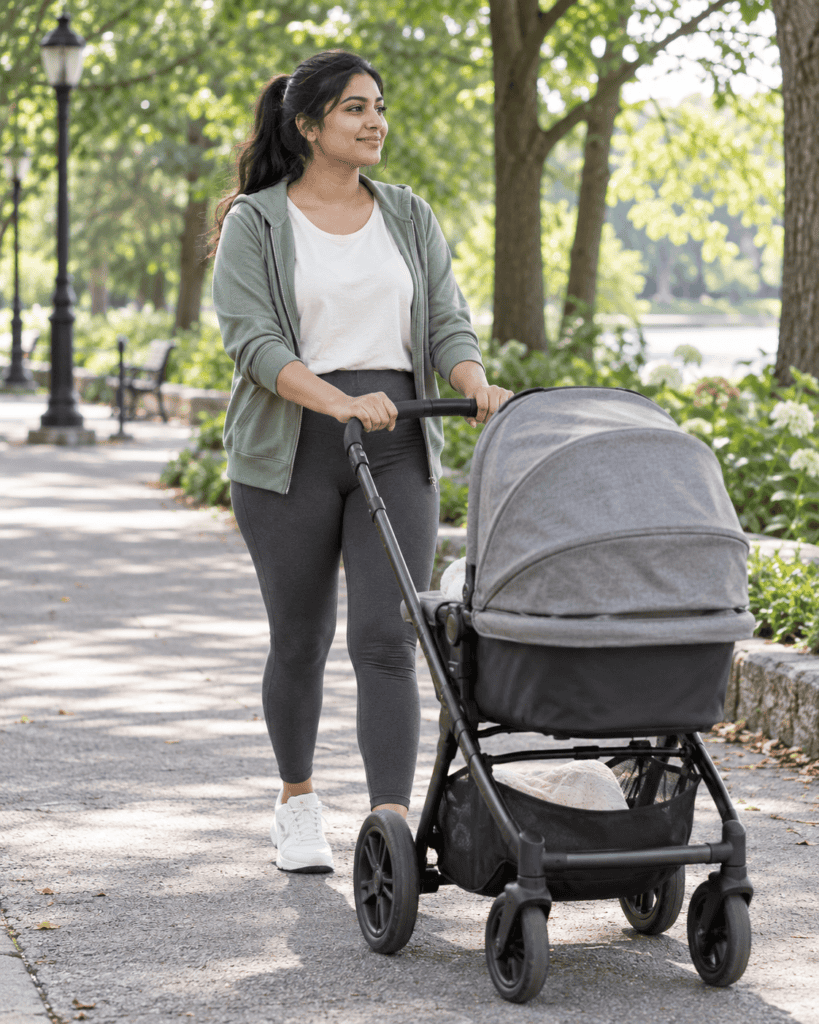

A friend said this to me in a park in April, the first time she had walked further than the shop since the birth: “I want my body back, but I’m scared of breaking something.” Both halves are real. The body after a baby is not the body before, and treating it as if it were is how the first run ends in a leak or a sore back. But the fear can also keep you on the sofa for a year, and the sofa is not where the reconnection happens either.
This is the gentle order that worked for me three times and that the women’s health physiotherapist I saw after my second would recognise: breath and pelvic floor first, then walking, then gentle strength, each stage with the signs that mean slow down. I am a mama, not a physio, and the two checks worth having are in here because they matter more than anything I can say. And because clothes are my corner, the kit that makes starting easier is at the end.
First: breath and the pelvic floor, from week one
Before anything else, lying down: breathe in and let the belly and the ribs expand, breathe out slowly and feel the pelvic floor and the deep belly gently draw in, as if lifting a small weight with the muscles between the hips. Ten slow breaths, a few times a day, from the first days if you feel able. This is the foundation every later step stands on, and it is also the thing most of us skip because it does not feel like exercise.
The two checks worth having
The six-week check with your doctor or midwife, where you say the actual words: “I want to start moving again; is there anything I should wait for?” And, if you can, one appointment with a women’s health physiotherapist, who will check the pelvic floor and the separation of the abdominal muscles and tell you where your body actually is. That one appointment saved me months of guessing with my second, and it is the single best thing on this page.
Then: walking, and more walking
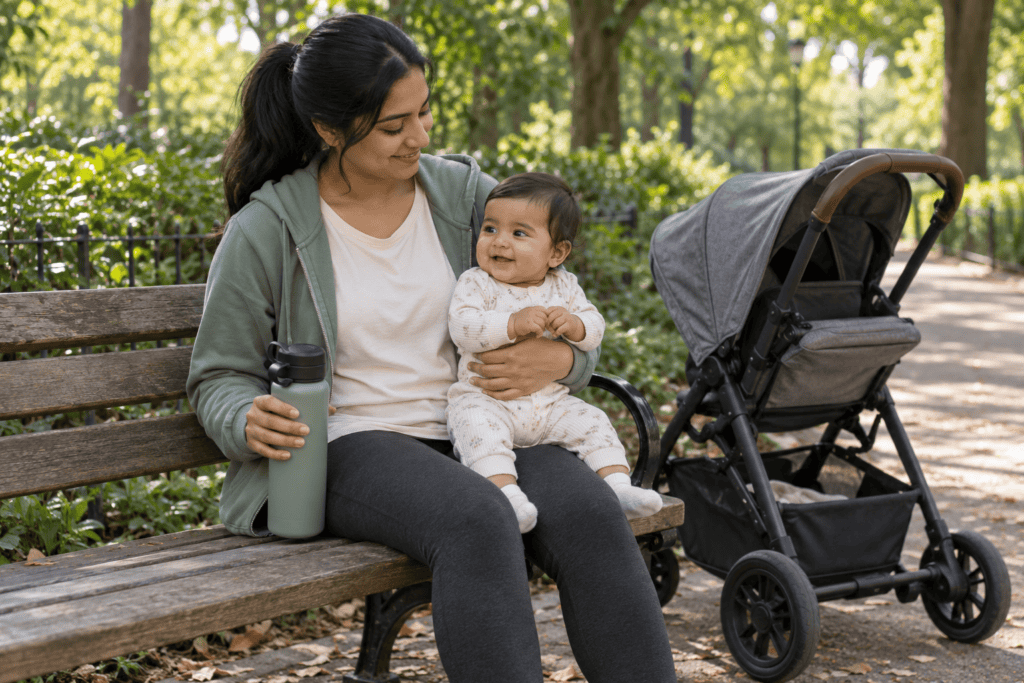
From whenever the first check says, and starting with ten minutes. The pram is the perfect walking partner: it sets a pace, it carries the bag, and it is the cover for the feed at the halfway bench. Add five minutes a week. Walking is the reconnection for most of the first three months, and it is enough. Carrier-friendly fashion is for the walks with the baby on you.
From the capsules
The Everyday Motion Capsule
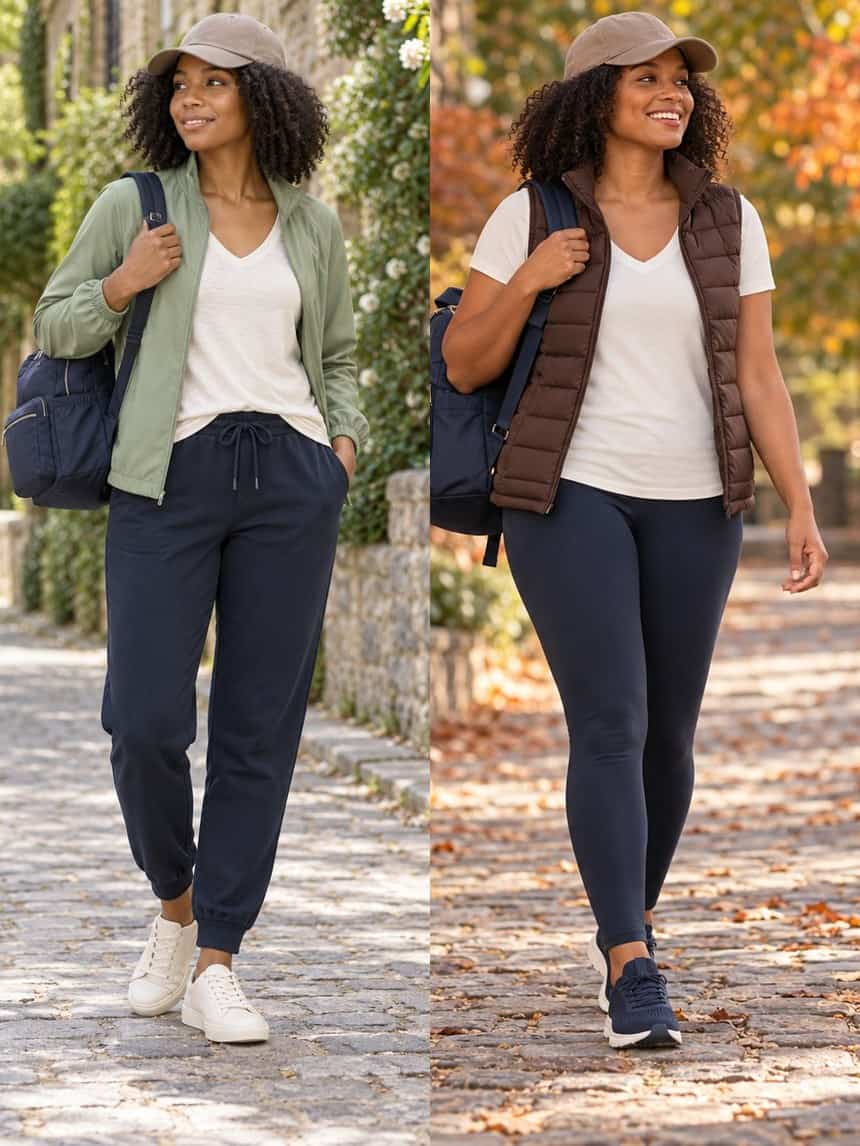
One hundred athleisure outfits for the walk, the school run and the park, every one opening for a feed. $27 once, yours to keep.
Then: gentle strength, from the floor up
Bridges, side-lying leg lifts, bird-dogs, supported squats to a chair, all with the breath from stage one, all slow. Ten minutes on the living-room floor while the baby watches from the mat. Build the strength that lifts a car seat and carries a toddler before you build anything else. Running, jumping and heavy lifting are later, usually after month three and after the physio has said so.
Free · takes ten seconds
Whatever time you have today, it counts.
Tell The Window how many minutes and how many hands you have free, and it picks one small thing for you: a stretch, a shower, a page of a book, ten minutes of nothing. A jar counts them up over the week.
No email needed. Works on your phone, one-handed.
The signs that mean slow down
Leaking when you move. Heaviness or dragging low in the pelvis. A back that aches afterwards. A visible dome down the middle of the belly when you sit up. Bleeding that returns or gets heavier after you exercise. Pain in a scar. None of these mean you have broken anything; all of them mean the body is asking for a slower stage, and a physio if it keeps happening.
Feeding and moving
Feed or pump before, so the chest is softer. A supportive, front-opening sports bra for the moving and off afterwards. Water before, during and after, because feeding is already thirsty work. The sweat and supply dilemma is the bra and the timing in full.
Free · tick as you pack
The hospital bag, then the fourth-trimester bag.
Packed for how you plan to feed, heal and travel, with the pump things and the recovery things in the right place. It remembers what you have ticked, and you can print it or have it emailed.
Free. Two lists, one for the birth and one for the weeks after.
The kit that makes starting easier
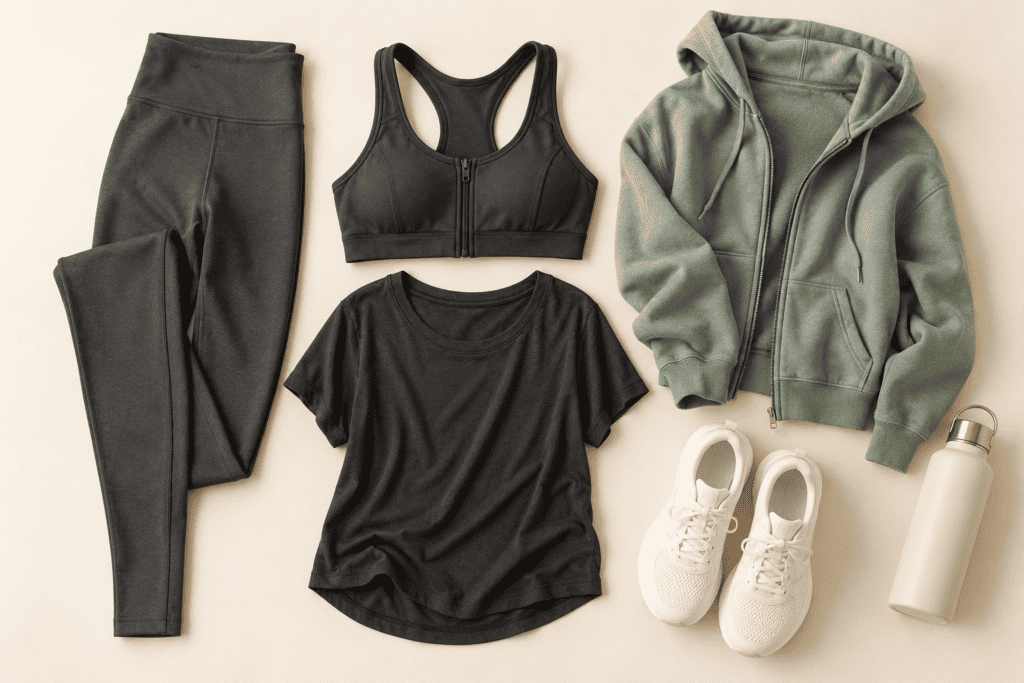
High-waisted leggings with a wide soft band that sits above a scar. A zip-front sports bra that opens for a feed without coming over your head. A loose dark tee over a clip tank. A zip hoodie for the walk back. Sneakers you can step into. The kit is never the obstacle if it opens and sits kindly; the obstacle is only ever the first ten minutes out of the door.
The bounce back is not the goal
Reconnection is. Knowing where your body is, trusting it to carry a car seat and a child, walking further each week, breathing properly. The body that comes out of this is stronger in the places that matter for the life you have now, and that is a better thing than the one in the old photographs.
My friend in the park walked ten minutes that day and forty by the end of the month, and saw a physio in May who told her where she actually was, which was further on than she feared and not as far as the magazines wanted. She started strength on the living-room floor in June. Nothing broke. She got her body back by getting to know the one she had.
The Everyday Motion Capsule is one hundred outfits for exactly this stage, the walk, the park and the living-room floor, every top opening for a feed, laid out and then worn, with three pictures of you in them on the house. Beyond the maternity leggings is what to wear as the walking becomes everyday life. And please book the two checks; they are the part that is not about clothes at all.
Breathe first, walk next, strength from the floor, slow down when the body says. The focus is on you, mama.

You deserve to be looked after too
A stylist who already knows you, every morning.
The Atelier is Anah every morning, already knowing your season, your shape and your closet. The community, the magazine, the planner, and Dress me for the mornings when choosing is the hard part.


