Choosing a breast pump can feel strangely high-stakes. You are tired, the options all look alike, and everyone around you has a strong opinion on manual vs electric breast pumps.
Start with how often you expect to pump, then consider comfort, milk-removal needs, access to power, and time for cleaning. If you are establishing supply or your baby is not feeding effectively, ask for an individualized pumping plan.
Below are the main differences and product examples to research. These are not a ranking or a guarantee that a particular pump will suit you. Check the current model, seller, warranty, and recall information before buying.
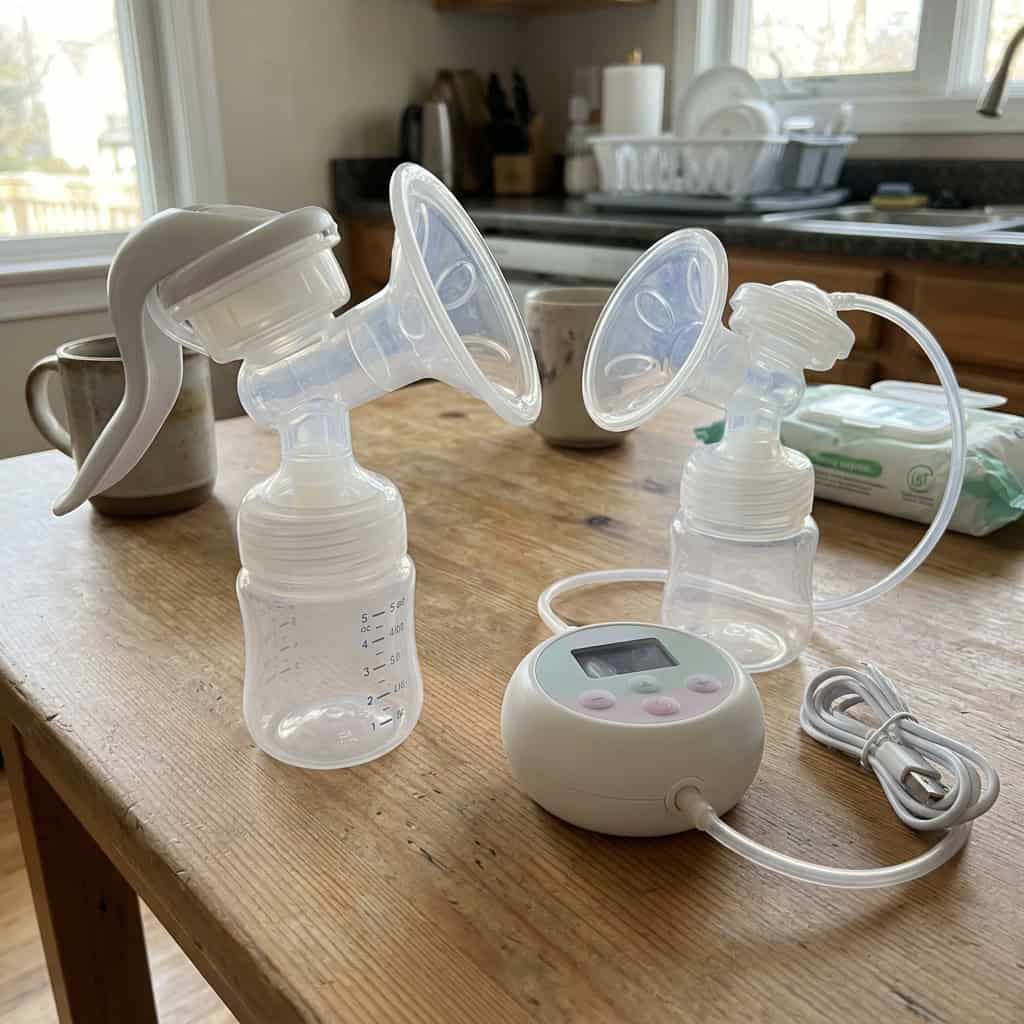

Manual vs electric: the real difference
A lever-style manual pump uses hand movements to create suction. A silicone suction pump, such as a haakaa, uses suction created when you squeeze it before attaching. These need no electricity, but they work differently from each other.
An electric pump uses a motor, and a double pump can express from both breasts at once. This may make regular pumping easier, although session length and effective milk removal vary.
Some parents use both an electric pump and a manual backup. A silicone suction pump actively removes milk rather than simply catching leaks; it may not meet your needs for a missed feed or scheduled pumping session.
Who each type suits
- A lever-style manual pump may suit occasional sessions or use as a backup. Consider hand comfort and how well it removes milk for you. Silicone suction pumps are a different option and should not automatically be treated as an equivalent replacement.
- An electric pump may suit frequent pumping or expressing for a baby who is not latching. Ask a qualified lactation professional about a suitable model and plan if you are establishing or maintaining supply.
What to look for in any pump
- Flange fit and comfortable, effective milk removal: ask for help if pumping hurts or output changes unexpectedly.
- Comfortable suction settings, with adjustable speed where available.
- Easy cleaning with few small parts.
- Portability: weight, battery and a way to carry it.
- Noise level, if you will pump at work or near a sleeping baby.
- Insurance: many US plans cover a breast pump, so check your benefits before buying.
Free · eight questions
What to buy first, in the order to buy it.
The Order asks about your feeding, your season and your days, then gives you twelve pieces in the order they earn their place, with a picture and a shop link for each. Nothing you do not need.
Free. The list can be emailed to you so it is there in the shop.
Manual pumps
1. haakaa Manual Breast Pump
The haakaa silicone pump uses suction to remove milk and has few parts to assemble. Check the exact model’s instructions for attachment, use, and cleaning; stronger suction should not be painful.
Good to know: A suction pump is not a passive leak catcher. Extra milk removal can affect supply, and it may not be an adequate substitute for your planned pumping sessions.
2. haakaa Gen. 2 Silicone Breast Pump with Cap
The Generation 2 pump is offered in different capacities, including 150 mL. Check the exact listing for the size and whether a cap is included. Do not assume a cap makes it leakproof for transport.
Good to know: The larger size can feel bulkier on a small frame, so check the listing photos to picture it in your bag.
3. Medela Harmony Manual Breast Pump
A lever-style manual pump from a well-known pump brand. You control the rhythm with your hand, which some moms find more comfortable than motor suction. A solid choice for occasional sessions or as an on-the-go backup.
Good to know: Hand fatigue is real with lever pumps. Switch hands and take short breaks during longer sessions.
4. Lansinoh Manual Breast Pump
Another lever pump, from a brand many moms already know from nipple cream and storage bags. It suits you if you pump a few times a week and want something simple, small and easy to understand.
Good to know: Check which flange size comes in the box and whether other sizes are available before you rely on it.
5. NatureBond Silicone Breast Pump
NatureBond offers silicone suction-pump sets with accessories. Check what the current set includes, follow its use instructions, and keep straps and small parts away from your baby. Use a suitable sealed container for stored milk.
Good to know: Wash every small piece separately, including the stopper, and let them dry completely before storing.
Electric pumps
6. Spectra S1 Plus Electric Breast Pump
The Spectra S1 Plus is a double electric pump with a built-in rechargeable battery. It is an option to compare for regular pumping; fit and effective milk removal still need checking.
Good to know: The S1 Plus has a rechargeable battery, while the S2 Plus uses outlet power. Confirm the power requirements of the exact model, especially for travel.
7. Spectra S2 Plus Electric Breast Pump
The Spectra S2 Plus is a double electric option for use near a suitable outlet. Compare its size, controls, and available flange sizes with your needs, and check insurance coverage before buying.
Good to know: Follow the model’s schedule for checking and replacing valves, membranes, and other parts. A drop in output can have several causes; do not assume replacing parts is the only answer.

From the capsules
The Back to Work Capsule
Two hundred workday outfits, every top opening for the eleven o'clock pump. $27 once, yours to keep.
See the capsule8. Lansinoh Signature Pro Double Electric Breast Pump
The Lansinoh Signature Pro is a double electric pump. Compare the exact model’s size, power options, and included accessories before deciding whether it fits your home or work routine.
Good to know: Check the flange sizes included. If the standard size is not right, sort out compatible sizes before your first long day back.
9. Elvie Double Wearable Breast Pump
Elvie Pump is an in-bra electric pump with app connectivity. Check the exact model and bra fit, and choose a session where you can monitor positioning and respond to discomfort or leaks. Portability does not make every activity suitable while pumping.
Good to know: Results vary with any pump. If output is unexpectedly low or you are concerned about supply, check positioning, parts, and fit and seek qualified support; app estimates alone do not confirm milk removal.

Free · tick as you pack
The hospital bag, then the fourth-trimester bag.
Packed for how you plan to feed, heal and travel, with the pump things and the recovery things in the right place. It remembers what you have ticked, and you can print it or have it emailed.
Free. Two lists, one for the birth and one for the weeks after.
Tips before you buy a pump
Call your insurance first. Many US plans cover a pump, and some let you choose from a list of models.
Get your flange size checked. Flanges should fit your nipple, not your breast size, and an IBCLC can help you measure. Pain is not a sign that pumping is working.
Start with low suction and increase only within a comfortable range. Follow the manufacturer’s cleaning instructions and public-health guidance: clean milk-contact parts after each use and sanitize when indicated.
Choose Support That Fits Your Feeding Needs
The useful choice is one that fits your comfort, feeding plan, and practical needs. If a pump is painful or is not removing milk effectively, ask for help rather than pushing through.
Your worth as a parent is not measured in ounces. The focus is on you, mama.

You deserve to be looked after too
A stylist who already knows you, every morning.
The Atelier is Anah every morning, already knowing your season, your shape and your closet. The community, the magazine, the planner, and Dress me for the mornings when choosing is the hard part.