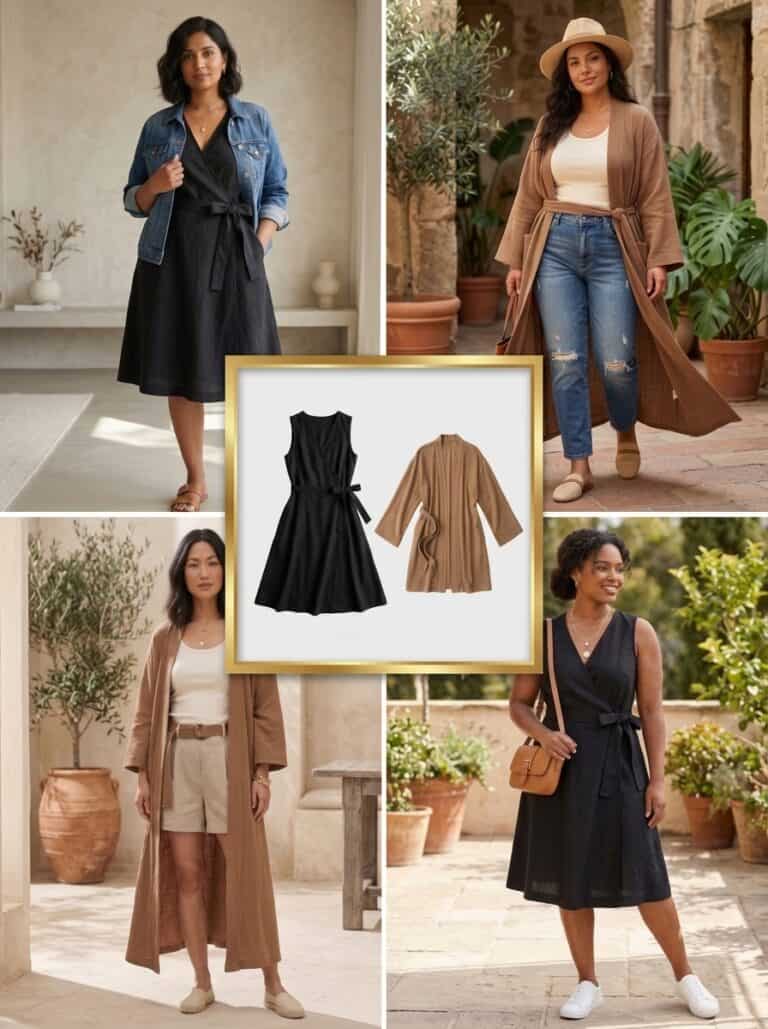
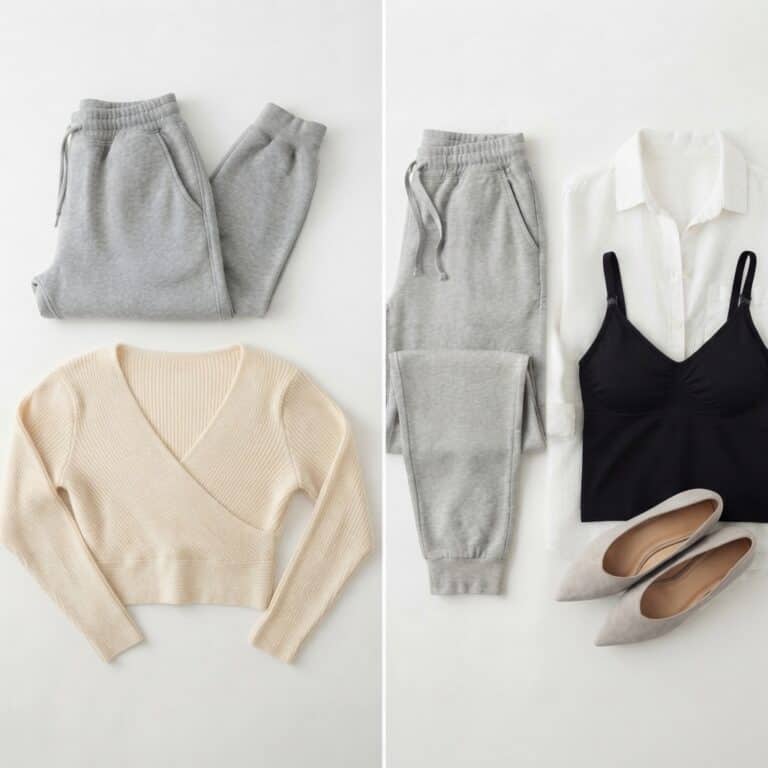
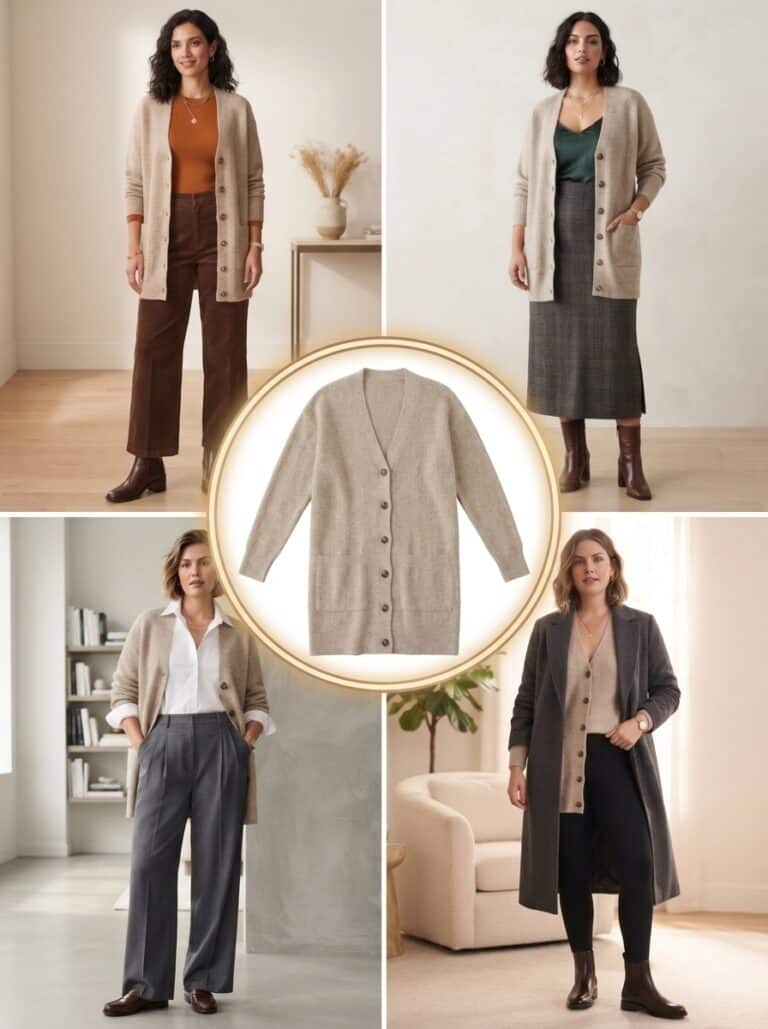
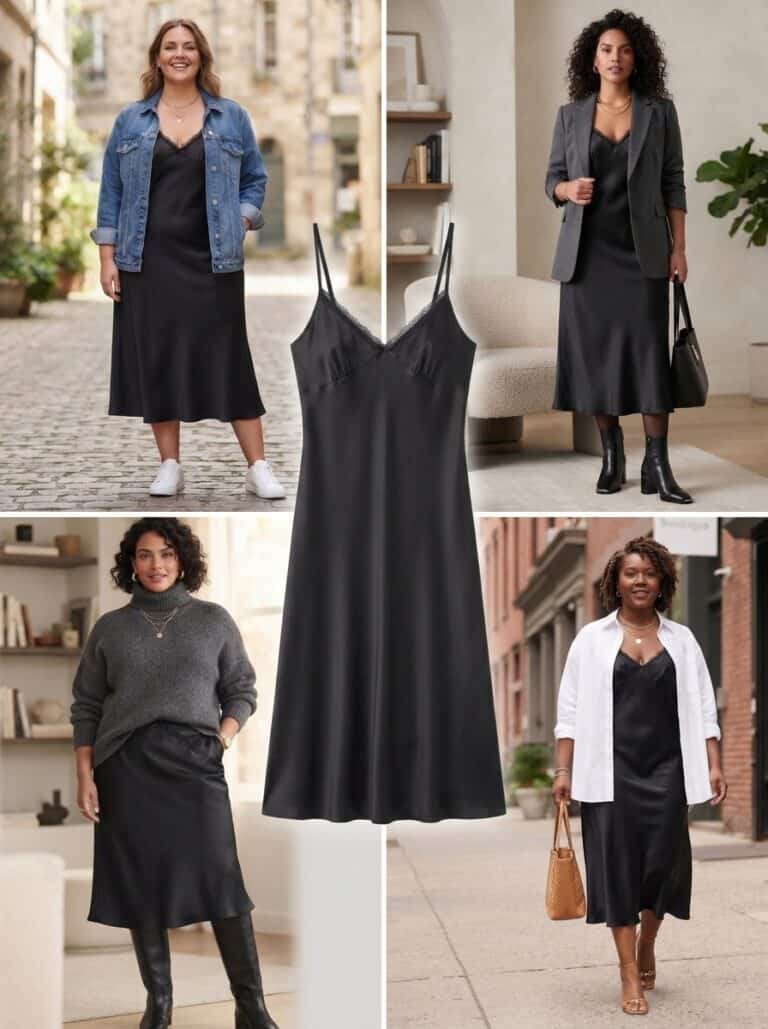
Nursing clothes are frumpy and expensive and nothing fits a new body, or so most of the messages in my inbox begin. The bra is where that sentence starts, because it is the one piece you cannot borrow from your old closet. I bought the wrong one three times with my first: too small at the end of the day, a wire that pressed where it should not, clips that took two hands while a baby screamed. By my third I had it down to a short list, and this is that list.
It covers the whole drawer: how to size a nursing bra when your size changes by the week, wire or no wire, how many you need, the sleep bra and the pumping bra, the five kinds of nursing pad and which to choose, and the things I would skip. A note first: I am a mama, not a lactation consultant. If a bra is leaving you with a hot, hard, painful patch or a fever, that is a call to your midwife today, not a shopping question.

How to size it when your size keeps changing
Measure at the end of the day, when you are fullest, and again in the second week when the milk has come in; the first days are not a reliable size. Band snug on the loosest hook, so it has somewhere to go as your ribcage settles. Cups with room for a pad and for the fullest hour, which means they will look a little generous first thing in the morning; that is right. If the centre of the bra does not sit flat against your breastbone, the cup is too small, whatever the label says.
Expect to buy one size in the first fortnight and another by month three. That is normal and it is why the first bras should be cheap and soft.
Wire or no wire
No wire for the first weeks. A wire pressed against a full breast is uncomfortable at best, and anything that sits hard on the breast for hours is a thing to avoid while supply is settling. Soft, wireless, stretchy, with a wide band. Once things settle, usually by the third month, a well-fitted wired nursing bra can come back for the days you want more shape; fit it carefully, make sure the wire sits fully on the ribs and not on breast tissue, and take it off at home.

The clips, the straps and the band
Clips you can open with one hand, by feel, without looking down, because the other hand is holding a baby. Try it in the changing room with your eyes shut. Straps wide enough not to dig under the weight; the thin pretty ones are for next year. A wide band with three or more rows of hooks, so the bra fits across a month of changes rather than a week. A drop-cup that opens fully and leaves the breast clear, not a flap that gets in the way.
From the capsules
The Soft Landing Capsule
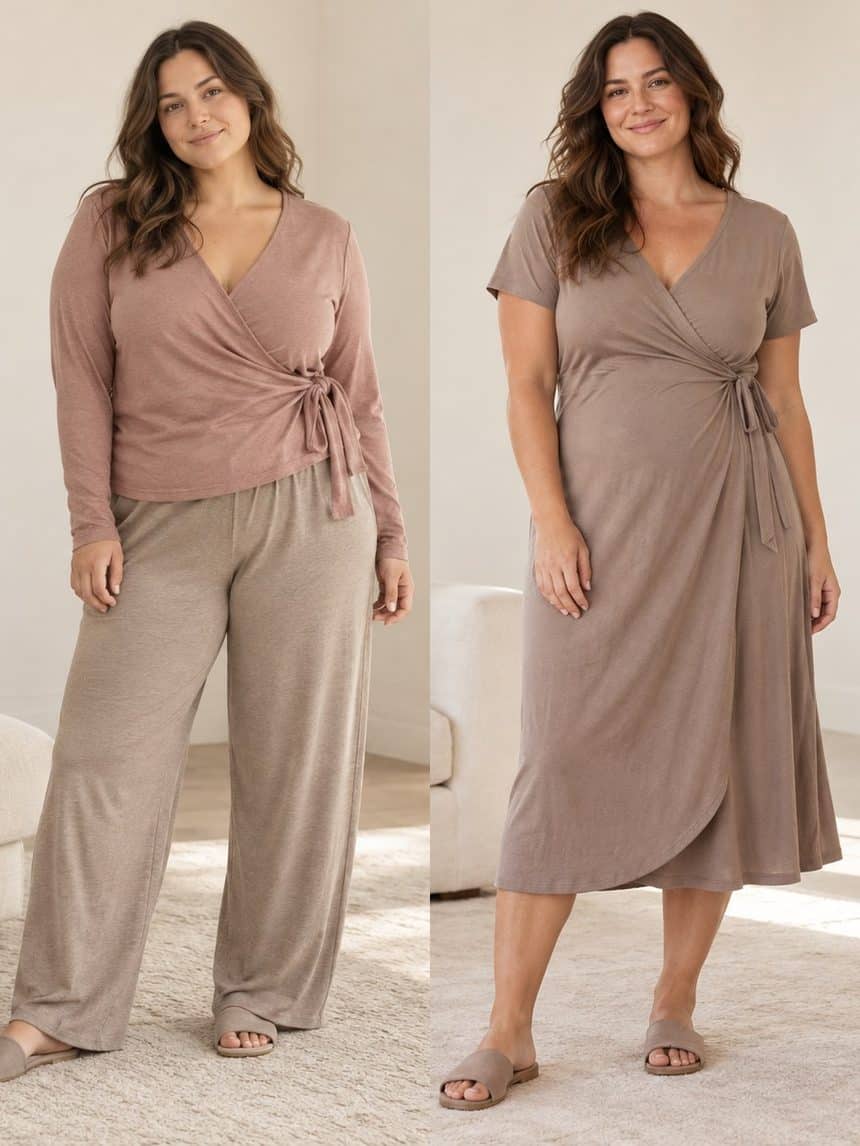
Twenty soft pieces, twenty-five outfits for the first weeks home, every one opening for a feed. $14.99 once, yours to keep.
How many you need
Three for the day, two to sleep in, and one more than you think for the leaking weeks. One on, one in the wash, one dry. Buy two first, wear them a week, then buy the rest in the size the week taught you. The first bras can be cheap; the ones you buy at month three can be better, because they will last the rest of the year.

Free · paste a screenshot
Can you feed in it? Ask before you buy.
Paste a screenshot of any top, dress or jumpsuit from any shop and Will it feed? tells you if you can nurse or pump in it, how, and what to wear instead if not. One free look a day, three more with your email.
Honest and kind. It has looked at thousands of garments.
The sleep bra
A soft crossover or pull-aside sleep bra that holds a pad flat and opens without a clip in the dark. Light support only; its job is the pad and a little comfort, not shape. Two of them. If you can sleep in it without noticing it, it is the right one.
The pumping bra, if you pump
A hands-free pumping bra, or a nursing bra with a pumping layer built in, pays for itself the first time you answer an email with both hands at eleven o’clock. The mamas I interviewed for the Back to Work capsule were unanimous on that. Size it like the nursing bra; the opening for the flange should hold it snug without pressing.

Free · takes ten seconds
Whatever time you have today, it counts.
Tell The Window how many minutes and how many hands you have free, and it picks one small thing for you: a stretch, a shower, a page of a book, ten minutes of nothing. A jar counts them up over the week.
No email needed. Works on your phone, one-handed.
The five kinds of nursing pad
Disposable pads, with a waterproof backing, for going out and for the heaviest weeks; change them when damp, not when soaked. Reusable cotton or bamboo pads for home, softer and cheaper over a year, in enough pairs to always have dry ones. Silicone pads, which press gently to stop a let-down rather than absorb it, for the dress with nowhere to put a pad. Hydrogel pads for sore, cracked skin in the early days, cooling and not for absorbing. And homemade pads cut from a folded muslin or an old soft tee, which work better than you would think in an emergency.
Choose by job: comfort against the skin first, then absorbency, then a contoured shape that does not show under a tee. Clothing hacks for milk leakage is what to wear over them.
Nursing lingerie and nighties
A button-front or wrap nightdress in a mid-weight cotton for the night feeds, and a camisole with clips for under everything else. The clip-down nursing tank is the piece that joins the underthings to the outfit: it holds a pad, it clips with one hand, and it is what makes an ordinary shirt or jumper a nursing top. Two of them, one pale, one dark.

The pretty lace nursing sets exist and some are lovely. Buy one at month three if you want it, for the evening the baby is with someone else, and not before.
The Nursing Mama Fashion Commandments
Twelve rules I wish someone had told me postpartum. Print them. Screenshot them. Live by them.
- Nursing bra always. Regular bras become instruments of pain the day letdown surprises you.
- Nursing pads on your body + a spare pair in your bag. Every single time you leave the house. No exceptions.
- Extra top in your bag — for YOU, not the baby. Because leaks, spit-up, and coffee-spills don’t care about your outfit plan.
- If it takes more than 5 minutes to figure out how to nurse or pump in it, it’s not the right outfit today. Feeding access is comfort. Comfort is not optional.
- Belt under the bust (empire) or below the belly with drape — never at the belly button. Your postpartum body deserves flattery, not compression.
- Comfortable waistband is non-negotiable. Elastic, wrap, or pull-on. Zippers are a Sunday-only luxury for now.
- Dark tones, prints, or textures — not thin light solids. Because letdown marks are real and you deserve clothes that don’t advertise them.
- Machine-washable everything. Dry-clean is not real-mama fashion. If it can’t survive a spit-up rinse, it’s not in rotation.
- Cross-body bag only. Hands stay free for the carrier, the toddler, the coffee, the door, the meltdown.
- Comfortable shoes always. You’re carrying a car seat and a diaper bag. This is not the season for a heel you can’t run in.
- Get dressed BEFORE the kids see you if you can. It changes the whole day — for them and for you.
- One accessory — earrings, a lip color, a scarf — counts as “put together.” That’s the whole game. You get to feel like yourself again.
What I would skip
Underwire in the first six weeks. Anything with a thin strap or a narrow band. Bras bought in week one in a size for month six. Shapewear over a healing middle. And the drawer of nursing-specific tops with panels; the tank under your own clothes does their job for less. What breastfeeding-friendly clothes actually are is the rest of that argument.
The bra is the one piece of nursing wear I would always buy, and the one piece I got wrong most often. Fit it full, wireless and soft to start, with clips you can open blind, and buy the rest once the first week has told you the size. Everything over it can be ordinary. Underneath is where the money goes.
If you are in the first weeks, the Soft Landing Capsule is twenty-five outfits for exactly this stage, built over these underthings, soft and open and dressed enough for the door, with three pictures of you in them on the house. Nursing-friendly loungewear for the first weeks is the free list. And when you are ready for the rest of the closet, the Year Round Capsule is the whole year.
Soft, full, one-handed. The focus is on you, mama.

You deserve to be looked after too
A stylist who already knows you, every morning.
The Atelier is Anah every morning, already knowing your season, your shape and your closet. The community, the magazine, the planner, and Dress me for the mornings when choosing is the hard part.