From the comments, and I have had the same thought in front of a mirror: “I am constantly leaking or covered in spit-up, and everything shows it.” The fabric a top is made of decides more about a feeding day than its shape does. A perfect wrap top in the wrong fabric shows every leak, clings where you least want it, and comes out of the wash a different size. The right fabric forgives all of that and you never think about it again, which is the point.
I learned fabric the expensive way: a drawer of pretty nursing tops after my first that I wore twice each because they were thin polyester and showed everything, followed by a drawer of thick cotton after my second that was kind but took two days to dry on a line in a flat with a toddler. By the third baby I had a short list of fabrics I trusted and two I would not buy at any price, and getting dressed got quieter.
This is that list, written for the day as it actually happens: the feed, the leak, the spit-up on the shoulder, the wash at eleven at night, the body that is a different size at seven in the morning than it was at seven the night before. Seven fabrics that behave, with what each one is for, and the two that do not.

1. Cotton jersey: the everyday
Soft, breathable, washes at forty and comes out the same. A cotton jersey tee or tank is the fabric of the first weeks, kind against a sore chest, and a mid-weight one hides a small leak long enough to get to the bathroom. Look for a little stretch so it moves with a chest that changes through the day.
Its one weakness is that a thin cotton jersey in a pale colour shows a wet patch. Mid-weight, or a dark colour, or both. The clip-down nursing tanks I live in are cotton jersey with a few percent of stretch, and they have survived three babies.

2. Modal: the one that drapes
Modal is the soft, cool, slightly heavy fabric that nursing sleepwear and good lounge pieces are made of. It drapes rather than clings, so it hangs away from a middle you are not sure about, and it stays soft wash after wash. It is cooler than cotton on a hot night and gentler on skin that is sensitive after birth.
Modal is the fabric I would choose for the wrap top and the lounge dress in the Soft Landing Capsule. It is slower to dry than cotton, so two of anything you wear daily.

3. Bamboo viscose: the night fabric
Softer than modal, very cool, and it wicks, which matters when you wake at 3am damp from a feed and a night sweat. Bamboo sleep bras, sleep tanks and pyjamas are the kindest thing you can put on a postpartum body at night. It pills a little over time and it is not cheap, so keep it for the night and the first weeks.
If your skin reacts to everything right now, bamboo is where I would start.

From the capsules
The Year Round Capsule
Two hundred nursing-friendly outfits from fifty-six pieces, fifty for every season, laid out and then worn. $29 once, yours to keep.
4. Linen: the summer shirt
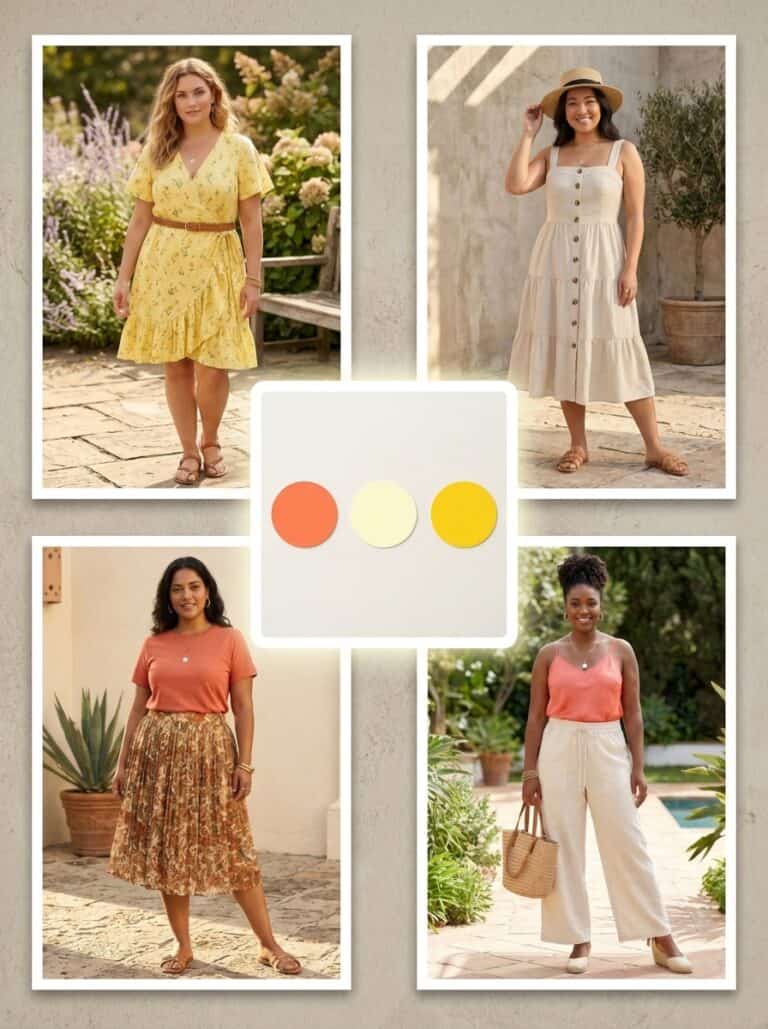
The only fabric that is honest about heat. A linen button-front shirt breathes, dries fast, and looks better creased than most fabrics look pressed, which is the right attitude for this year. Linen hides a leak better than cotton because the weave is textured and the colour is usually mid-tone.

Linen trousers with a soft waist are the summer bottom that forgives. Both are in the summer capsule. It wrinkles; let it.

Free · five emails, five days
Five days, five small changes, and a wardrobe that works with your body as it is now.
One email a day for five days, each with one thing to do that takes less time than a feed. By Friday the closet makes sense again.
Free. Unsubscribe any time, no hard feelings.
5. Stretch jersey blends: the wrap and the dress
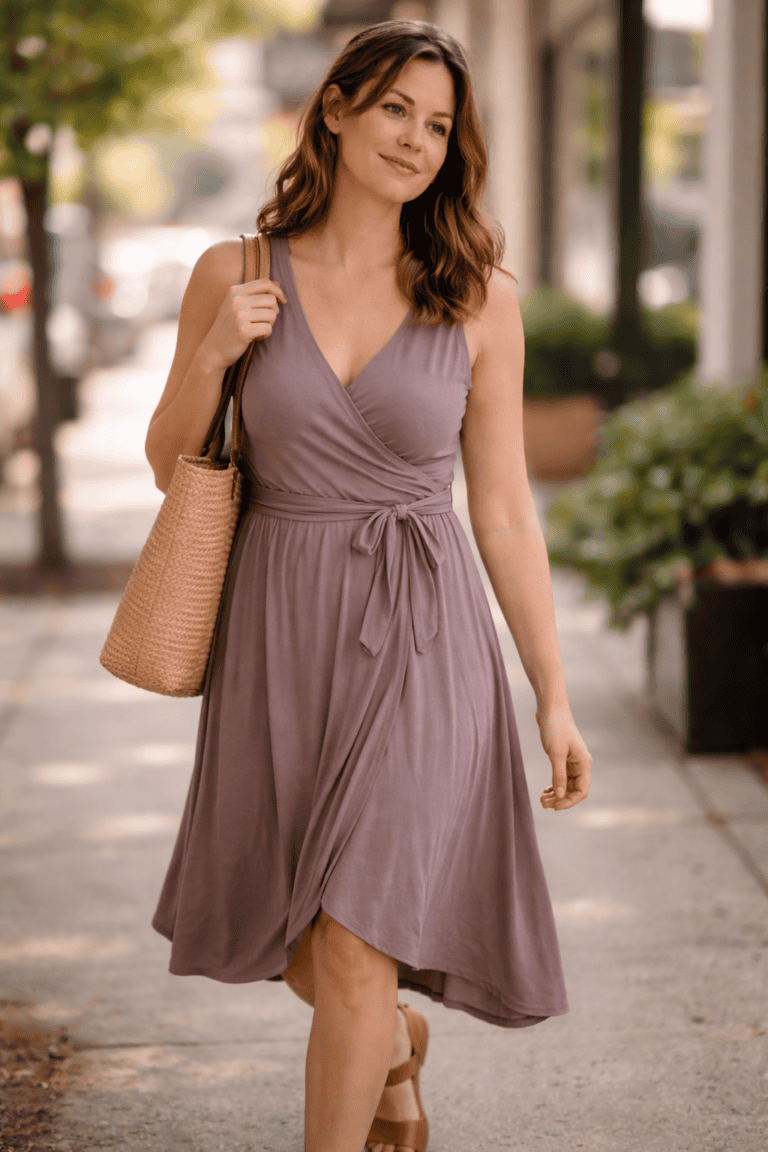
A jersey with ten to fifteen percent elastane is what makes a wrap top tie properly and a wrap dress fit at six weeks and six months. The stretch is the point: it moves with a chest that is a different size after each feed, and it recovers its shape in the wash. Look for a weight you cannot see through when you hold it to the window.
Thin stretch jersey is where most nursing-wear disappoints: it clings, it shows, it shines. Weight is the test. Ten ways to wear a wrap dress while nursing shows the fabric doing its work.

6. Merino and fine wool: the cold months
A fine merino base layer or a merino knit is warm without bulk, breathes, and does not hold smell, which matters when the laundry is behind. It is the fabric for the long-sleeved tee under a winter wrap dress and for the fine knit that lifts over a tank. Hand-hot wash, dry flat, and it lasts years.
Chunky wool knits are warm but they come off over the head; keep wool to the fine layers that lift. The winter capsule is built on this.
Free · paste a screenshot
Can you feed in it? Ask before you buy.
Paste a screenshot of any top, dress or jumpsuit from any shop and Will it feed? tells you if you can nurse or pump in it, how, and what to wear instead if not. One free look a day, three more with your email.
Honest and kind. It has looked at thousands of garments.
7. Ponte and heavy knit: the structure
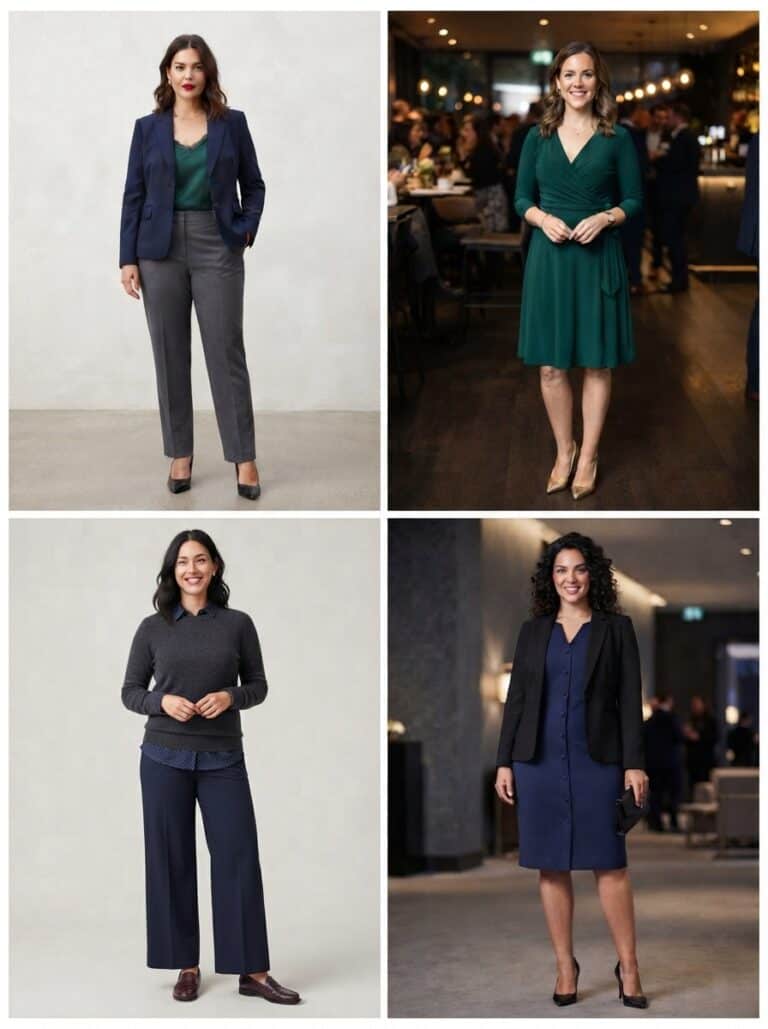
Ponte is the thick, stable double knit that good trousers and pencil skirts with soft waists are made of. It holds a shape, sits above a scar without digging, and looks tailored while behaving like a legging. It is the fabric that lets a nursing mama look like she is going to work.
A ponte trouser and a knit pencil skirt are the backbone of the Back to Work Capsule for exactly this reason.
The two I stopped buying
Thin polyester, especially with a sheen. It shows every leak as a dark circle, it clings to a damp body, it holds smell, and it looks like what it cost. Most cheap nursing tops are made of it, which is why most cheap nursing tops get worn twice. And pure silk, as a daily fabric: it is beautiful, it is in the Back to Work Capsule for the one dressy day, and it shows a leak in seconds. A silk blouse is for the day you have a fresh pad and twenty minutes to spare, not for Tuesday.
Everything else is a question of weight and colour. Mid-weight over thin, mid-tone or dark over pale, and most fabrics behave.
The Nursing Mama Fashion Commandments
Twelve rules I wish someone had told me postpartum. Print them. Screenshot them. Live by them.
- Nursing bra always. Regular bras become instruments of pain the day letdown surprises you.
- Nursing pads on your body + a spare pair in your bag. Every single time you leave the house. No exceptions.
- Extra top in your bag — for YOU, not the baby. Because leaks, spit-up, and coffee-spills don’t care about your outfit plan.
- If it takes more than 5 minutes to figure out how to nurse or pump in it, it’s not the right outfit today. Feeding access is comfort. Comfort is not optional.
- Belt under the bust (empire) or below the belly with drape — never at the belly button. Your postpartum body deserves flattery, not compression.
- Comfortable waistband is non-negotiable. Elastic, wrap, or pull-on. Zippers are a Sunday-only luxury for now.
- Dark tones, prints, or textures — not thin light solids. Because letdown marks are real and you deserve clothes that don’t advertise them.
- Machine-washable everything. Dry-clean is not real-mama fashion. If it can’t survive a spit-up rinse, it’s not in rotation.
- Cross-body bag only. Hands stay free for the carrier, the toddler, the coffee, the door, the meltdown.
- Comfortable shoes always. You’re carrying a car seat and a diaper bag. This is not the season for a heel you can’t run in.
- Get dressed BEFORE the kids see you if you can. It changes the whole day — for them and for you.
- One accessory — earrings, a lip color, a scarf — counts as “put together.” That’s the whole game. You get to feel like yourself again.
How to wash and care for all of it so it still fits next year
Cold water, inside out, on a short cycle; milk and most spit-up come out at thirty, and heat sets both. Treat a mark before it dries: cold water and a little soap on the spot, not hot water, which cooks milk protein into the fibre. A mild detergent with no bleach and no fabric softener, because softener coats the fibres and makes a cotton tank hold less and dry slower. Air dry the knits flat and the tanks on a line; the tumble dryer is what shrinks the merino and tires the elastic in the clips.
Wash the hand-wash things by hand, which in the first year means the silk and the fine wool and nothing else. Repair a clip or a seam the week it goes rather than the month after, because a nursing tank with one working clip is a tank you stop wearing. Rotate three of everything so no piece is washed every day. And do not over-wash the knits: a cardigan worn over a tank is clean after four wears, not one. All of that is what makes the cheap pieces last the year and the good pieces last three babies.
The pretty polyester drawer after my first was not a fashion mistake. It was what happens when you shop for how a thing looks on a hanger and not for what the day will do to it. Fabric is the part of getting dressed nobody tells you about, and it is the part that decides whether you think about your clothes once in the morning or forty times before lunch.
If you want a whole wardrobe where the fabrics have already been chosen for the day, the Year Round Capsule is fifty-six pieces across the seasons in the fabrics above, with every outfit laid out and worn and three pictures of you in them on the house. If you are holding a top in a shop and cannot tell whether the fabric will behave, Will it feed reads the screenshot and tells you, free. And if you want someone to think about all of this for you each morning, from your own drawers, that is Anah inside the Atelier.
Mid-weight, mid-tone, two of everything. Then stop thinking about it. The focus is on you, mama.

You deserve to be looked after too
A stylist who already knows you, every morning.
The Atelier is Anah every morning, already knowing your season, your shape and your closet. The community, the magazine, the planner, and Dress me for the mornings when choosing is the hard part.