Fabric can affect the feel and care of a nursing outfit, but it does not decide everything about the day. A soft material can still have an awkward opening, while a useful cut may need more careful washing. The best fabric for breastfeeding is the one in a garment that works for your comfort, access and routine.
I learned fabric the expensive way: a drawer of pretty nursing tops after my first that I wore twice each because they were thin polyester and showed everything, followed by a drawer of thick cotton after my second that was kind but took two days to dry on a line in a flat with a toddler. By the third baby I had a short list of fabrics I trusted and two I would not buy at any price, and getting dressed got quieter.
Here are seven fabric categories to compare, plus details to check before buying or washing. There is no fiber that automatically hides every mark, suits every skin or lasts for a particular number of babies.

1. Cotton jersey: the everyday
Cotton jersey can be a comfortable option for a tee or tank. Its stretch, weight and feel vary, so try the actual garment and check its care label. Do not assume it can be washed at a set temperature, stay the same size or hide a leak.
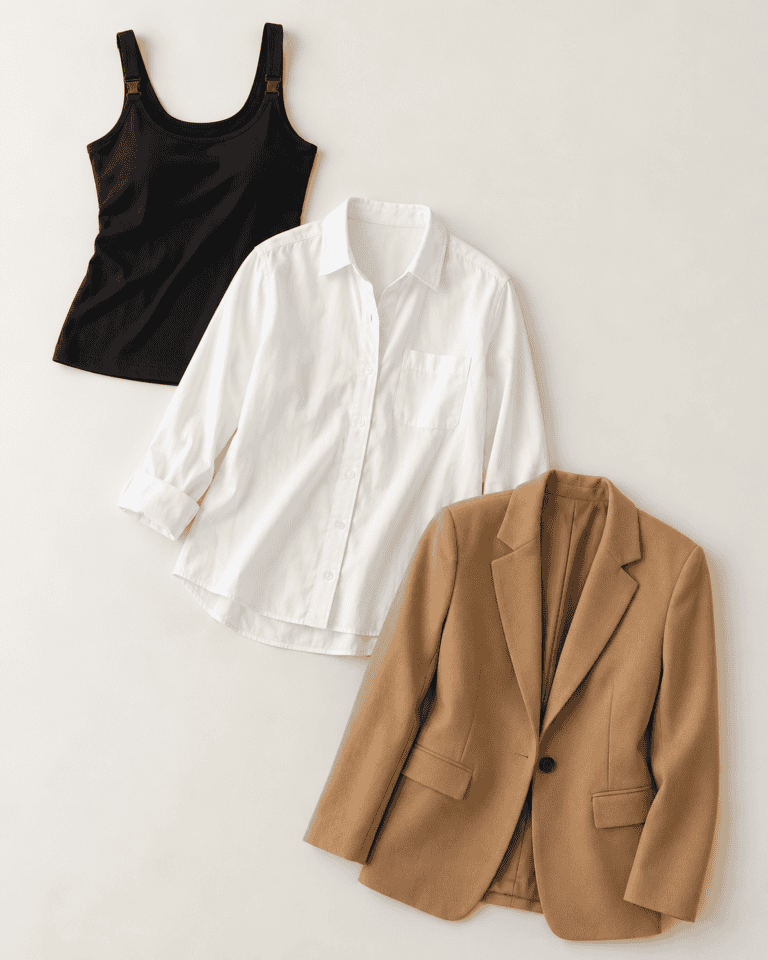
A thinner or lighter-colored jersey may show more than you want when damp, but a thick or dark fabric can still show marks. Clip-down nursing tanks are one layer to compare if you like extra coverage; they do not guarantee that milk stays off an outer top.

2. Modal: the one that drapes
Modal fabrics often have a soft feel and fluid drape, but blends and construction vary. Check whether the garment clings, feels too warm or gives the room you want. It is not automatically cooler than cotton or suitable for every sensitive skin.
A modal-blend wrap or lounge dress is one option to consider with the Soft Landing Capsule. Check the garment’s actual care requirements and drying time in your home rather than assuming modal always dries more slowly than cotton.

3. Bamboo viscose: the night fabric
Bamboo viscose is a processed cellulose fiber used in some sleepwear and underwear. The feel, weight and moisture performance vary by garment. A bamboo label does not guarantee cooling, wicking or a softer feel than modal. Choose by the actual fabric and care label.
If clothing irritates your skin, stop using the irritating piece and ask for advice if symptoms persist. Switching to bamboo is not a universal treatment for skin reactions.

4. Linen: the summer shirt
A linen shirt can be an option for warm weather if you like its feel and wrinkles. Check weight, opacity, openings and the care label. Texture does not guarantee that it will hide milk better than cotton, and blends can behave differently.
Linen pants with a soft waist are the summer bottom that forgives. Both are in the summer capsule. It wrinkles; let it.

Free · five emails, five days
Five days, five small changes, and a wardrobe that works with your body as it is now.
One email a day for five days, each with one thing to do that takes less time than a feed. By Friday the closet makes sense again.
Free. Unsubscribe any time, no hard feelings.
5. Stretch jersey blends: the wrap and the dress
Stretch jersey may give a wrap or dress useful movement, but a fixed ten-to-fifteen-percent elastane requirement is not a fit rule. Check the actual recovery, opacity, opening and size range. No stretch percentage guarantees the same fit at six weeks and six months.
Try a jersey’s opacity and fit in the actual garment; a heavier fabric is not automatically better for every season or person. Ten ways to wear a wrap dress while nursing offers outfit ideas, with access still needing a test.

6. Merino and fine wool: the cold months
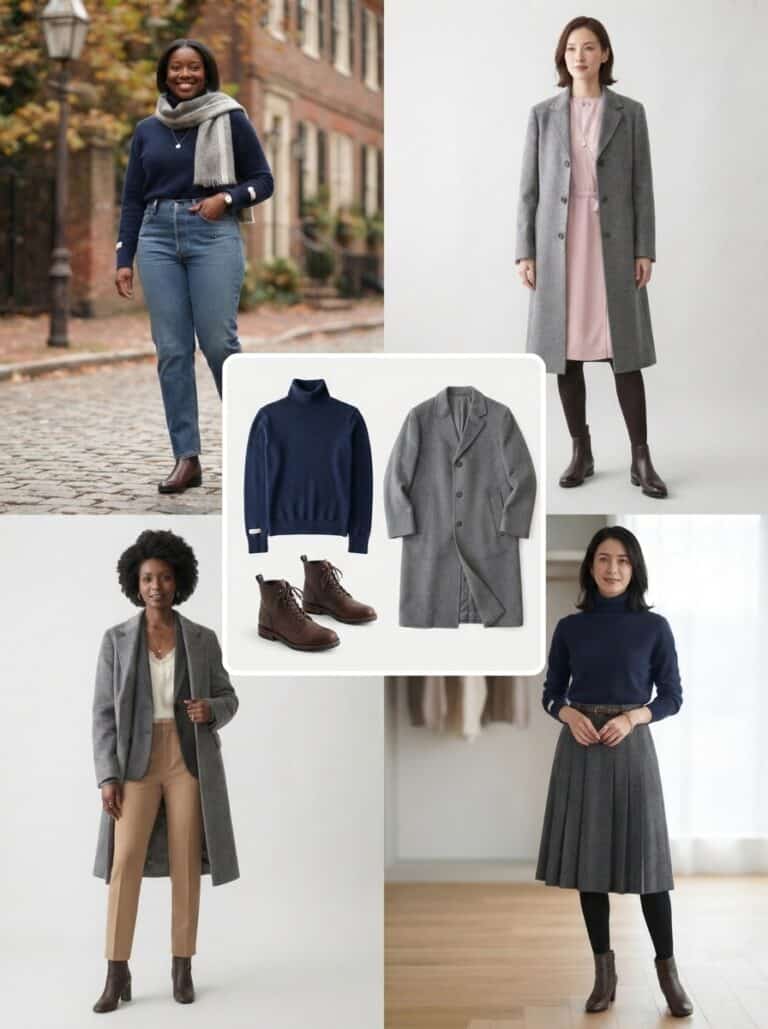
A fine wool or merino layer may give warmth if you like it against your skin. Check the full fiber content and washing instructions; some pieces require hand-washing, while others allow a specified machine cycle. Wool can hold marks or odors and does not automatically last for years.

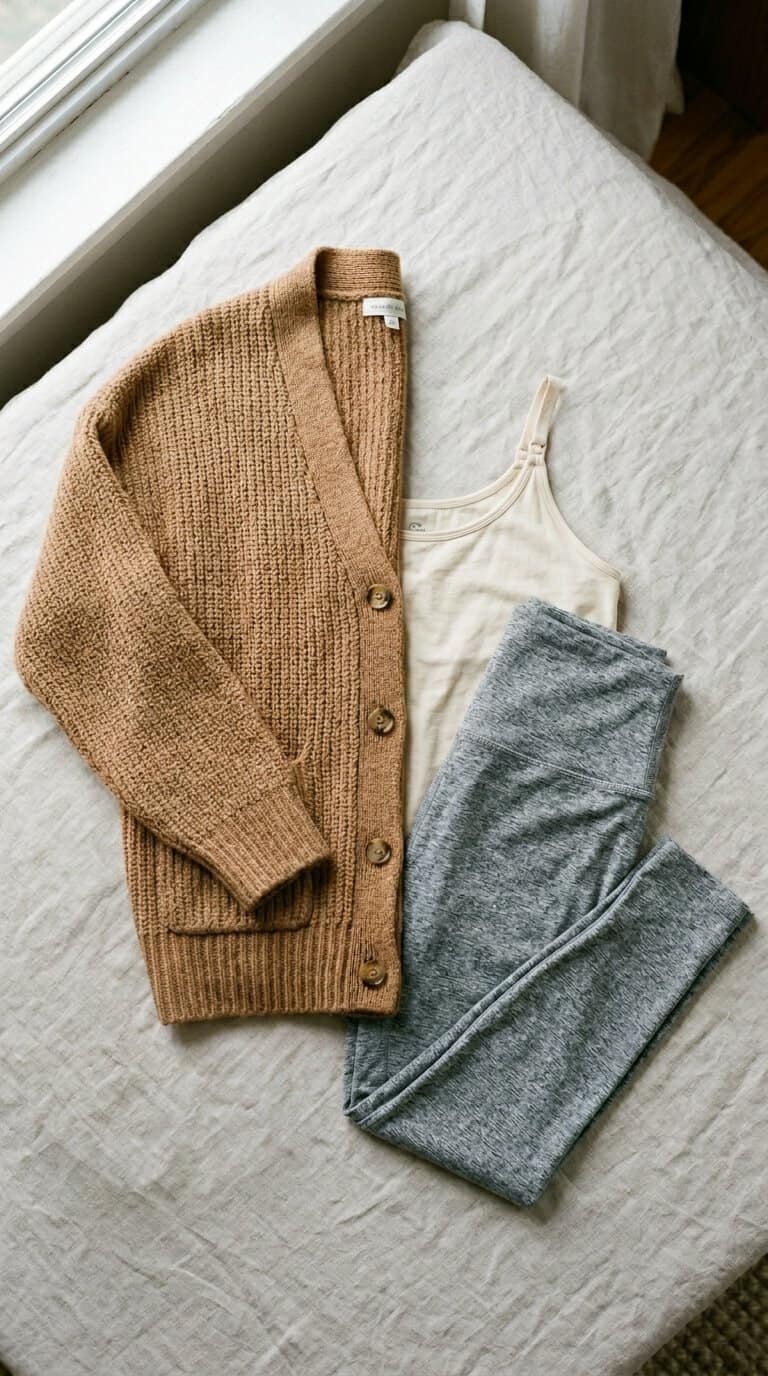
A loose chunky knit may lift comfortably too, while a fine knit can still be restrictive. Check the cut and every inner layer. The winter capsule offers more clothing ideas.
Free · one photo, two minutes
One photo, and Anah reads your colouring.
Upload a full-length photo and First Look gives you your palette card, your shape notes and a first capsule sketch. The place to start if you have never done any of this.
Free, once, no card. Your photo is used for that look only.
7. Ponte and heavy knit: the structure
Ponte is a stable double-knit construction used in some pants, skirts and dresses. Its weight, stretch and fiber blend vary. Check the waistband and seams while seated; the fabric itself does not establish where a garment sits in relation to a scar.
From the capsules
The Year Round Capsule
Two hundred nursing-friendly outfits from fifty-six pieces, fifty for every season, laid out and then worn. $29 once, yours to keep.
A ponte pant and a knit pencil skirt are the backbone of the Back to Work Capsule for exactly this reason.
Best fabric for breastfeeding: two categories to compare carefully
Thin synthetic tops and silk pieces may have care or opacity details you want to check, but neither needs a blanket ban. A low price does not establish poor quality, and silk does not require you to reserve it for a particular day. Use the label, actual fit and your preferences to decide.
Weight, color, construction and finish all affect a garment, and the result varies. Wear the piece you enjoy when it works for your day, without expecting a fabric category to behave identically every time.
The Nursing Mama Fashion Commandments
Twelve rules I wish someone had told me postpartum. Print them. Screenshot them. Live by them.
- Nursing bra always. Regular bras become instruments of pain the day letdown surprises you.
- Nursing pads on your body + a spare pair in your bag. Every single time you leave the house. No exceptions.
- Extra top in your bag — for YOU, not the baby. Because leaks, spit-up, and coffee-spills don’t care about your outfit plan.
- If it takes more than 5 minutes to figure out how to nurse or pump in it, it’s not the right outfit today. Feeding access is comfort. Comfort is not optional.
- Belt under the bust (empire) or below the belly with drape — never at the belly button. Your postpartum body deserves flattery, not compression.
- Comfortable waistband is non-negotiable. Elastic, wrap, or pull-on. Zippers are a Sunday-only luxury for now.
- Dark tones, prints, or textures — not thin light solids. Because letdown marks are real and you deserve clothes that don’t advertise them.
- Machine-washable everything. Dry-clean is not real-mama fashion. If it can’t survive a spit-up rinse, it’s not in rotation.
- Cross-body bag only. Hands stay free for the carrier, the toddler, the coffee, the door, the meltdown.
- Comfortable shoes always. You’re carrying a car seat and a diaper bag. This is not the season for a heel you can’t run in.
- Get dressed BEFORE the kids see you if you can. It changes the whole day — for them and for you.
- One accessory — earrings, a lip color, a scarf — counts as “put together.” That’s the whole game. You get to feel like yourself again.
Follow the care label rather than one wash routine
Check each garment’s washing and drying instructions before treating marks. For suitable washable, colorfast fabric, a cool rinse may help with fresh milk; use a compatible product as directed and test first. Do not assume a cold short cycle, no softener or air-drying is the right instruction for every piece.
Hand-wash only where instructed, dry fully and repair damage if practical. Decide when to wash from the garment’s condition and care guidance, rather than a fixed four-wear rule. Quantities depend on your laundry access and budget, not a compulsory three of everything.
The pretty polyester drawer after my first was not a fashion mistake. It was what happens when you shop for how a thing looks on a hanger and not for what the day will do to it. Fabric is the part of getting dressed nobody tells you about, and it is the part that decides whether you think about your clothes once in the morning or forty times before lunch.
The Year Round Capsule offers outfit ideas shown laid out and worn, with three pictures of you in them on the house. Will it feed can suggest possible openings from a photo, but cannot confirm fabric performance, fit or safe access. Anah inside the Atelier can help plan combinations from your own clothes.
Choose by feel, fit, access and the care label. The focus is on you, mama.

You deserve to be looked after too
A stylist who already knows you, every morning.
The Atelier is Anah every morning, already knowing your season, your shape and your closet. The community, the magazine, the planner, and Dress me for the mornings when choosing is the hard part.