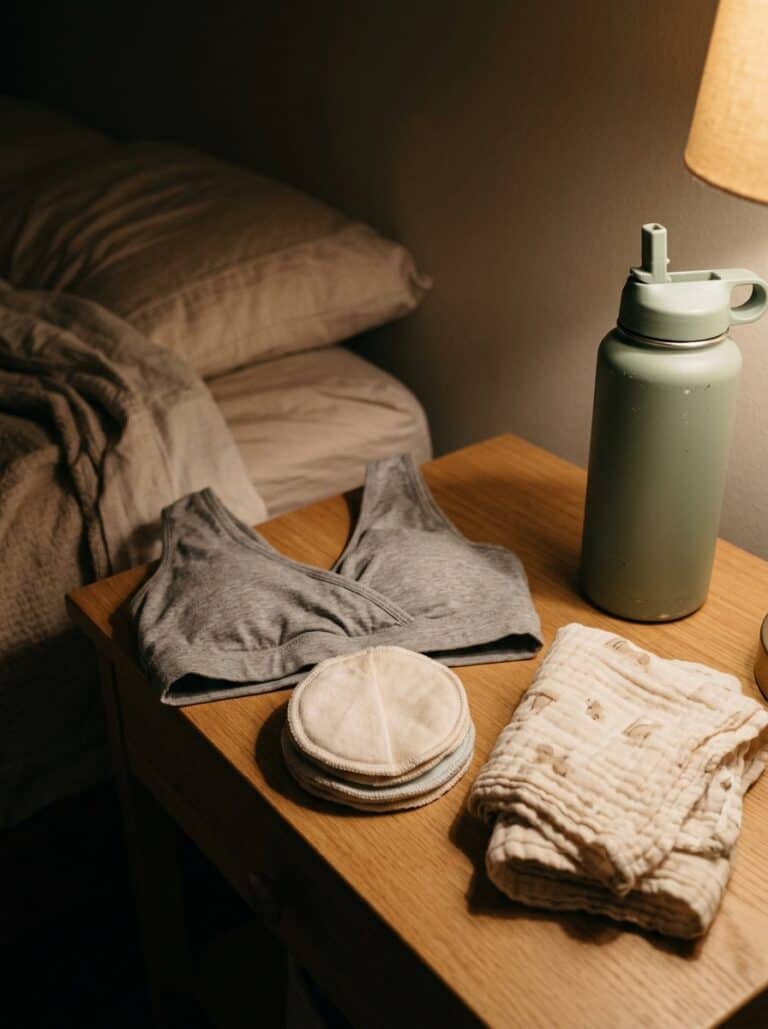
You can choose a beautiful breastfeeding-friendly outfit and still find yourself wrestling with the layer underneath. The shirt opens, but the bra does not move the way you expected. Or your pumping bra works with one set of collection parts and becomes awkward with another.
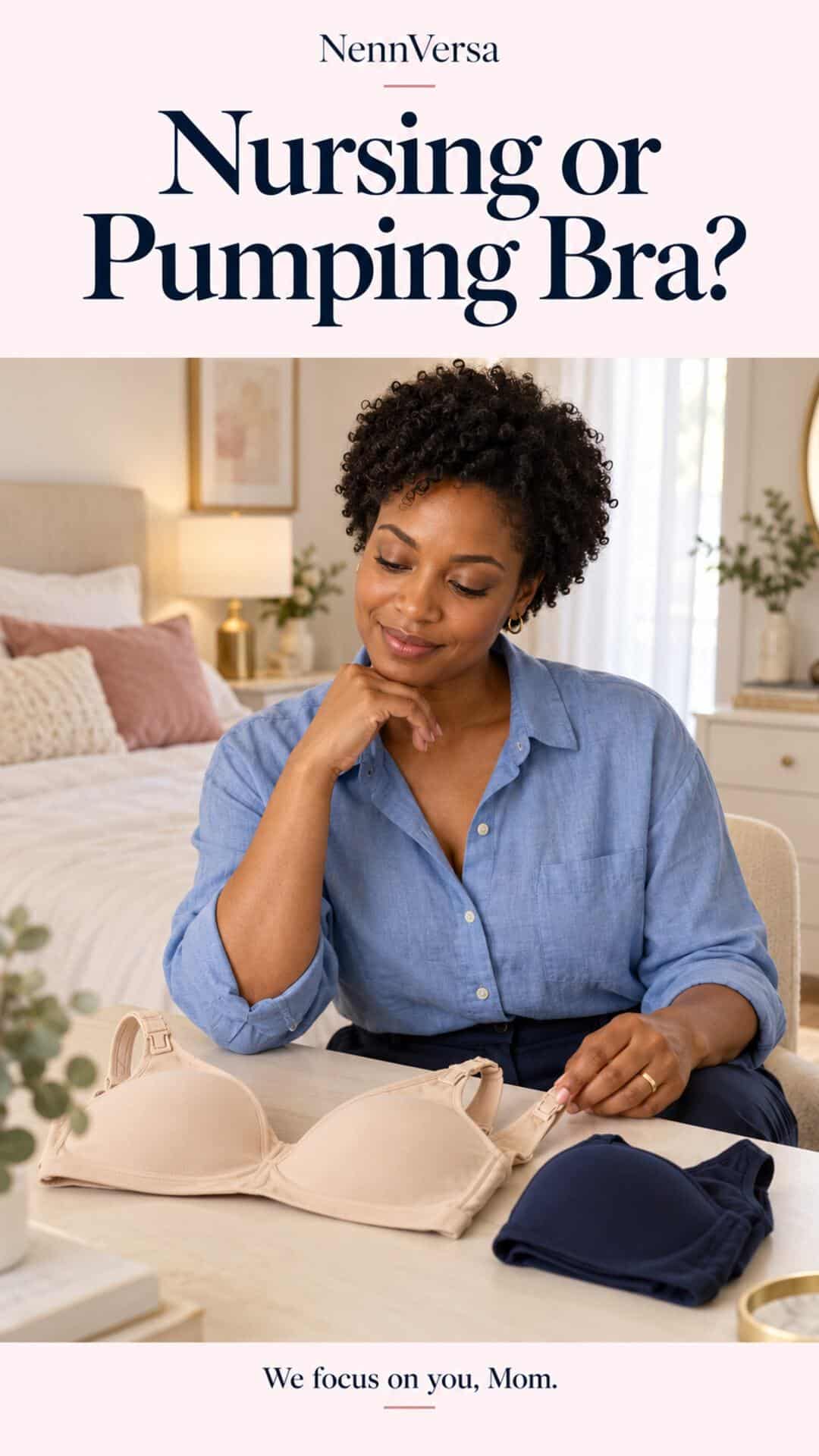
The most useful question is not which bra is universally best. It is which bra makes your actual feeding routine and clothing easier to use. Nursing, pumping, and combination bras solve different access problems, and the label alone does not tell you whether a particular design will work for you.
Start with the equipment and clothes you already use. Then choose the smallest practical bra rotation that supports your day, your comfort, and your laundry routine.
The three categories at a glance
| Type | Main job | What to check |
|---|---|---|
| Nursing bra | Move fabric away for direct breastfeeding, often through drop-down cups or pull-aside panels. | Can you open, position, and close it comfortably under your usual tops? |
| Pumping bra | Support compatible pumping components during a session. | Does its construction work with your exact shields, connectors, cups, or bottles? |
| Combination bra | Offer both nursing access and a pumping-support function. | Do both functions work for you, and are the extra layers comfortable? |
These are broad descriptions, not interchangeable specifications. A bra designed around conventional flanges may have openings that are irrelevant to an in-bra collection cup. A bra marketed for wearable pumping may not support external bottles. Read the individual product instructions.
Begin with your feeding day
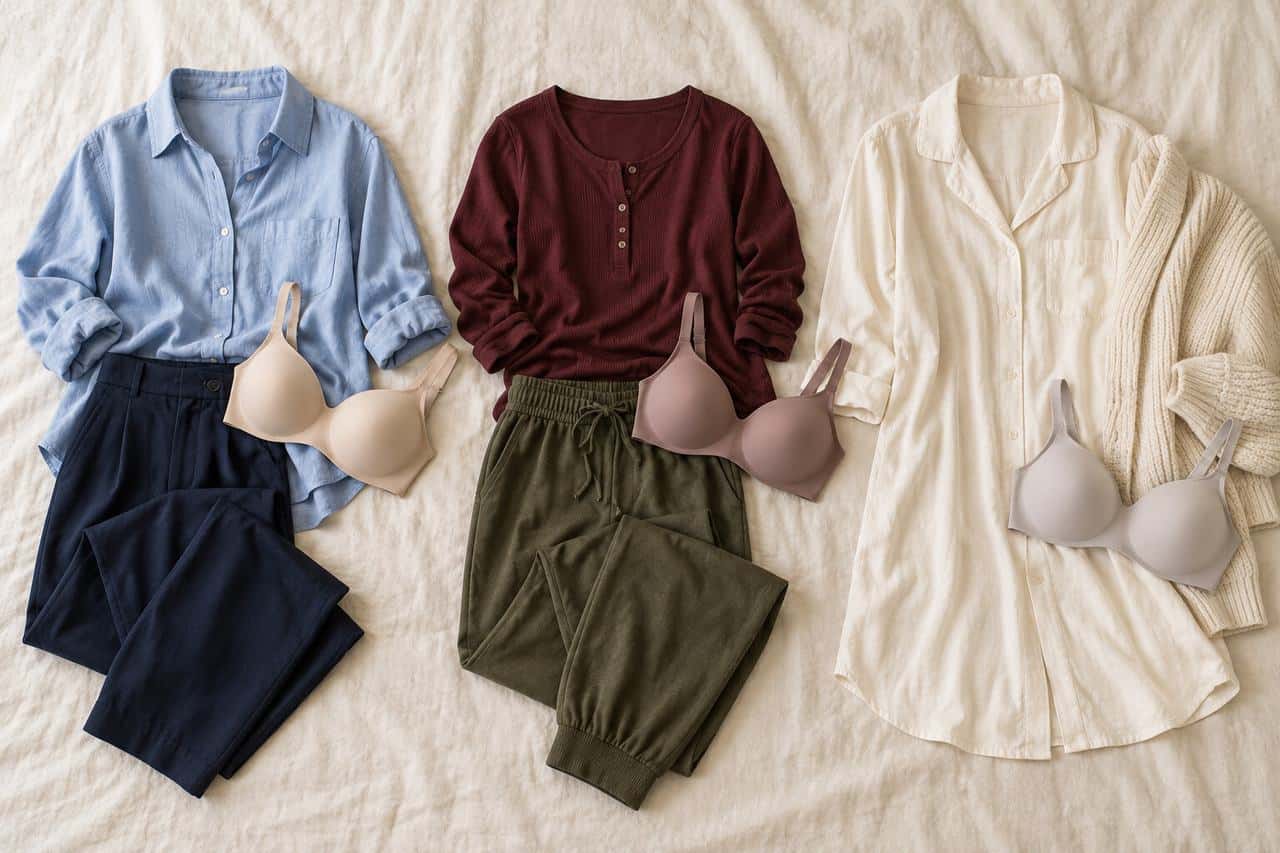
Write down what the bra needs to do on an ordinary day. Perhaps you nurse at home, pump once while away, and change into different clothes at night. Perhaps you pump throughout the day and need easy equipment access more often than drop-down cups. Perhaps your routine is still taking shape.
Your answers can point toward a starting option:
- Mostly direct nursing: prioritize comfortable nursing access with the clothes you wear most.
- Conventional pumping sessions: check a compatible pumping bra or an appropriate pumping garment you put on for the session.
- Regular nursing and pumping: compare a combination bra with the simpler option of changing for pumping.
- Wearable pumping: follow the pump maker’s bra guidance rather than assuming every pumping bra is suitable.
You do not have to choose one category for every hour of the day. An additional garment used for pumping may be more comfortable than wearing a complicated combination bra all day. Equally, changing may be the task you most want to eliminate.
Check compatibility before adding to your basket
Look up the exact pump model, not just its brand. Check whether the bra’s opening can accommodate the relevant component and whether assembly is possible in the order the instructions require. Do not force a connector through a small opening or improvise a modification because a listing says “universal.”
Check the pump and bra instructions together. Confirm the support arrangement, how the components pass through the opening and whether any accessories are required. The FDA recommends reading the complete pump manual before first use. A general clothing label cannot replace those instructions.
If the seller cannot explain compatibility clearly, ask before purchasing. Save the answer alongside the product information, especially if you are deciding between two similarly named styles. Product photos of a different pump are not proof that yours will fit.
Try the bra as part of an outfit
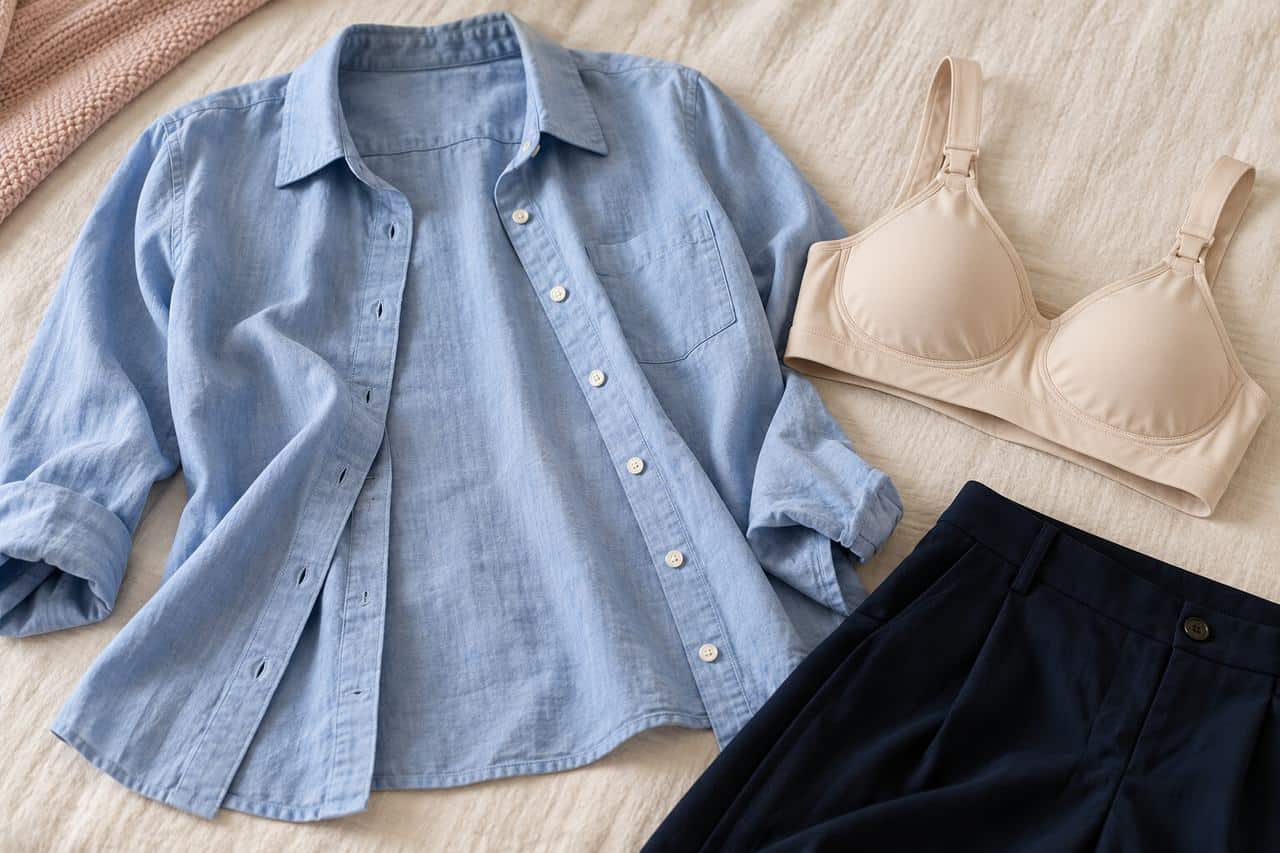
A bra fitting and an outfit test answer different questions. First, check comfort and support. Then put on the top or dress you intend to wear and practice the access sequence while seated.

For a button-front shirt, can you reach the cup fastening without opening more of the shirt than you prefer? With a liftable tee, does the bra panel move clear of the breast, or do several fabric layers gather in the same place? If you pump, can you insert and remove the equipment through the clothing opening without distorting it?
Finish the sequence. Close the bra and restore the outfit. Check whether a strap twisted, a removable pad folded, or an inner panel needs more adjustment than you want to manage during your day. A design can technically provide access while still being a poor match for your routine.
Pay attention to the band, cups, and straps
Use the manufacturer’s measuring instructions and size chart for the specific style. A size that works in one bra may not translate directly to another. If the band seems suitable but the cups do not contain your breast comfortably, simply moving to a larger all-over size may create a different problem.
The Australian Breastfeeding Association’s fitting guidance highlights adjustability, comfortable support, usable openings, and help from trained fitters. It also describes fuller-bust options with more substantial bands, straps, and cup construction.
Try the bra with any breast pads you actually use. Check for rubbing edges, uncomfortable seams, cups that cut in, or straps that need constant readjustment. Do not treat discomfort as something you must tolerate to obtain support or a smooth outline.
With pumping equipment, the bra’s fit is only one part of the setup. A comfortable bra does not confirm flange fit or correct pump positioning. If pumping is painful or the equipment does not sit comfortably, seek appropriate fitting or clinical help rather than repeatedly tightening the bra.
Compare the convenience with the extra fabric
A combination bra can reduce clothing changes, but the extra function may mean additional panels, seams, fastenings, or fabric. Those details may be worthwhile for your routine, or they may feel cumbersome under a close-fitting top.
Try two ordinary situations: sitting through a meal and wearing the bra beneath your most-used daytime outfit. Think about your climate and indoor temperature. You are evaluating whether the construction feels manageable for you, not whether a more elaborate product looks more prepared.
A simple nursing bra plus a separate pumping garment is a legitimate choice. So is a combination style that you genuinely like wearing. Convenience should be measured by the steps it removes from your life.
Build a rotation around washing and drying
Before buying a multipack, test one style if the retailer’s purchase and return conditions allow it. Check those conditions before opening packaging, removing tags, washing, or using the bra; intimate-apparel policies vary.
From the capsules
The Back to Work Capsule
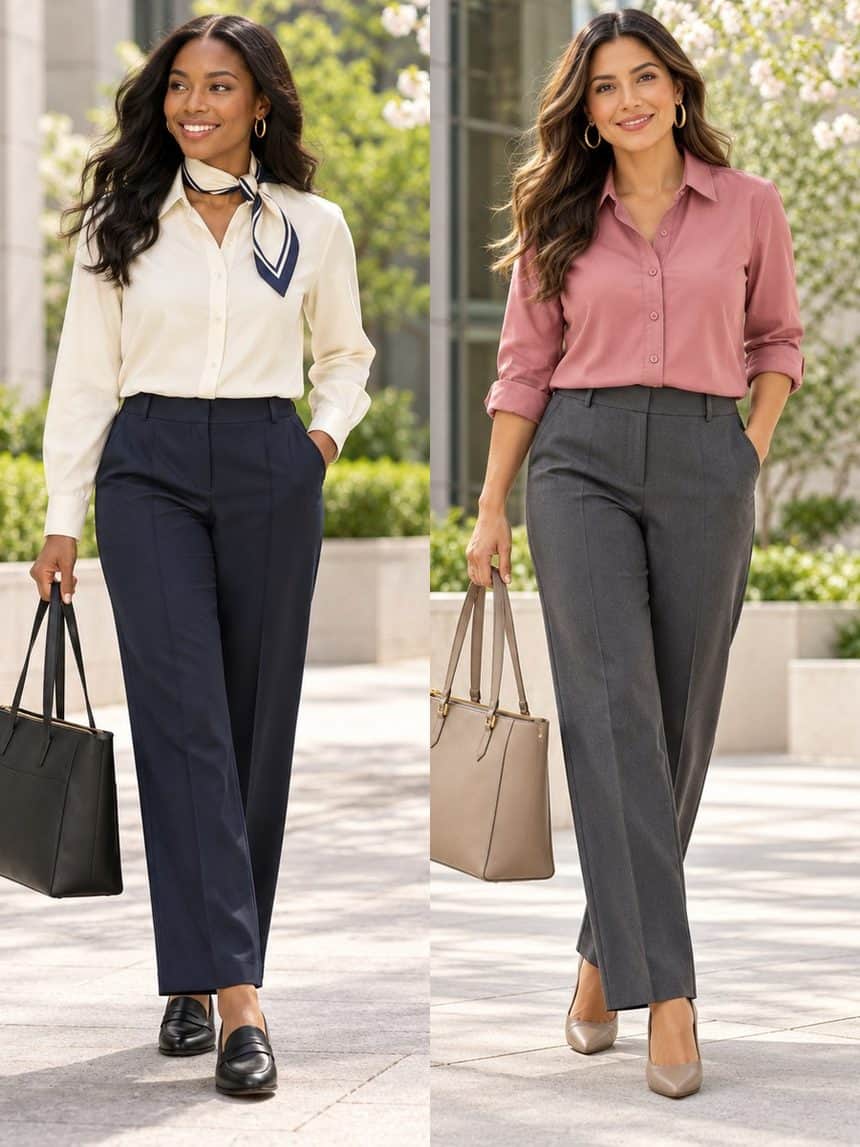
Two hundred workday outfits, every top opening for the eleven o'clock pump. $27 once, yours to keep.
Once a style works, consider how quickly it returns from washing to ready-to-wear. Follow its care label. Removable pads, multiple layers, and drying restrictions may change how easily a small rotation works in your home.
For example, one mother may prefer two everyday nursing bras and a pumping garment used for sessions. Another may prefer several copies of one combination style. These are examples to evaluate, not a required shopping list. Your usable supply depends on comfort, use, and care turnaround.
Make a short decision note
For each candidate, record: my pump or feeding setup; my likely outfit; what opens; what supports the equipment; what feels comfortable; and what still needs checking. A clear note such as “works with my shirt, but I cannot reconnect the cup comfortably” is more useful than a vague four-star impression.
If you are comparing bras online, look for photographs that show the internal construction and openings. Reviews may help you identify questions, but another person’s body, equipment, and size are not a fit guarantee for yours.
Common questions
Do I need both a nursing bra and a pumping bra?
Not necessarily. Start with the functions your routine requires and the instructions for your equipment. One compatible design may cover them, or separate garments may be simpler and more comfortable.
Can I use a nursing bra with a wearable pump?
Some wearable pumps are designed for use with suitable nursing bras, but the requirements vary. Check your exact pump’s instructions and trial the complete setup. “Nursing bra” by itself is not a compatibility guarantee.
Should I buy several bras before birth?
A limited starting selection gives you room to reassess fit and feeding needs. Avoid committing your entire budget to an untested style or a size you hope will work later.
The Nursing Mama Fashion Commandments
Twelve rules I wish someone had told me postpartum. Print them. Screenshot them. Live by them.
- Nursing bra always. Regular bras become instruments of pain the day letdown surprises you.
- Nursing pads on your body + a spare pair in your bag. Every single time you leave the house. No exceptions.
- Extra top in your bag — for YOU, not the baby. Because leaks, spit-up, and coffee-spills don’t care about your outfit plan.
- If it takes more than 5 minutes to figure out how to nurse or pump in it, it’s not the right outfit today. Feeding access is comfort. Comfort is not optional.
- Belt under the bust (empire) or below the belly with drape — never at the belly button. Your postpartum body deserves flattery, not compression.
- Comfortable waistband is non-negotiable. Elastic, wrap, or pull-on. Zippers are a Sunday-only luxury for now.
- Dark tones, prints, or textures — not thin light solids. Because letdown marks are real and you deserve clothes that don’t advertise them.
- Machine-washable everything. Dry-clean is not real-mama fashion. If it can’t survive a spit-up rinse, it’s not in rotation.
- Cross-body bag only. Hands stay free for the carrier, the toddler, the coffee, the door, the meltdown.
- Comfortable shoes always. You’re carrying a car seat and a diaper bag. This is not the season for a heel you can’t run in.
- Get dressed BEFORE the kids see you if you can. It changes the whole day — for them and for you.
- One accessory — earrings, a lip color, a scarf — counts as “put together.” That’s the whole game. You get to feel like yourself again.
Your next useful step
Choose one bra you own, one everyday top, and your actual feeding setup. Practice opening and restoring the whole outfit while seated. Write down the one part that makes it difficult before you shop.
For help building more outfits around the underlayers that work for you, explore NennVersa and The NennVersa Atelier.
Your bra should support your day. You do not have to organize your entire wardrobe around a fastening you dislike.