You do not have to give up high necklines because you are breastfeeding. A crew neck, mock neck or turtleneck can belong in a useful nursing wardrobe. The question is where the garment opens, or whether it lifts comfortably from the hem.
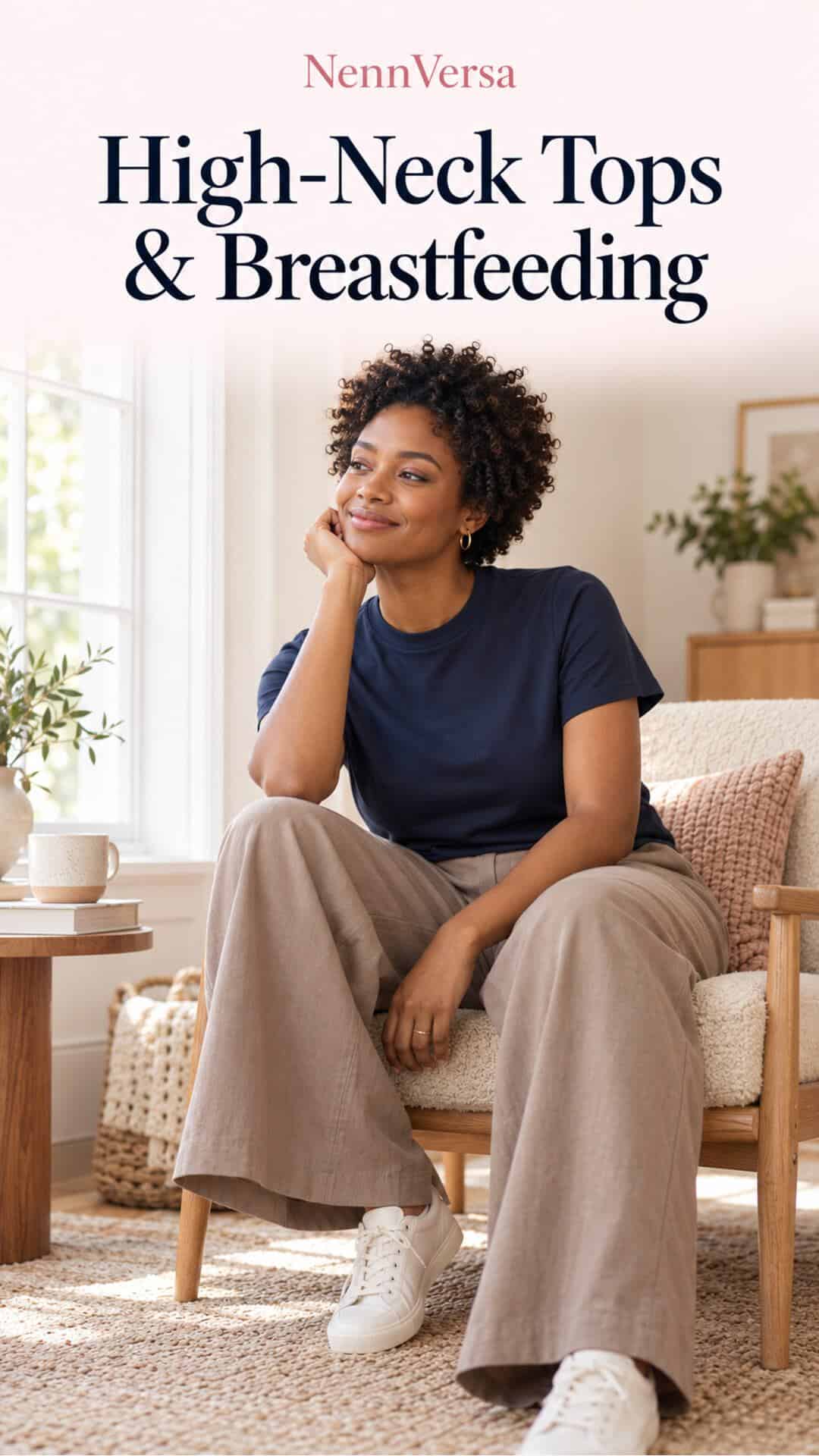
That distinction matters when a top looks exactly like your style. Its neckline may be perfect for work, a family gathering or simply how you enjoy getting dressed. You need a practical route through the clothing as well as a look you like.
Start by separating neckline from access. The neckline describes the top edge. Feeding access describes the movement you use to reach your breast. Those two features do not have to be in the same place.
Look for an access route, not a stretchy collar
A high-neck top does not need to pull down from the neck to work. Trying to stretch a firm collar lower can feel awkward and distort a garment that was never designed to open there.
Instead, inspect the front, sides, seams and hem. Does an overlapping panel lift? Is there a functional zip? Can you lift the whole top without gathering an uncomfortable amount of fabric? Does an inner layer open too?
A photograph of a woman wearing a top cannot answer all of this. If the listing calls it nursing-friendly, look for an image or demonstration of the actual opening. Treat an unexplained label as a question to resolve, rather than a feature you can rely on.
Compare the main ways a high-neck top can work
| Construction | Possible access route | What to check |
|---|---|---|
| Ordinary separate top | Lift from the hem | Length, fabric bulk and whether the underlayer is reachable |
| Overlapping front panel | Lift or move the outer panel | Where the inner openings sit on your body |
| Designed side opening | Open a zip or other fastening | Reach, opening length and access on each side |
| Opening built into a seam | Release a concealed closure | Whether it is functional and whether a lining blocks it |
These are construction possibilities, not promises that every version works well. A small side zip may be decorative or intended only to help you put the top on. An overlapping panel may sit too high or too low for you. Check the garment you intend to wear.
Try the high-neck pieces you already own
Choose one separate top and the bottom you would actually pair with it. A light crew-neck tee may lift easily, while a thick, long turtleneck may create more fabric than you want to manage. The difference is the complete garment, not just the neck shape.
Practise the clothing movement while seated and without your baby in your arms. Lift the hem, reach the underlayer and restore everything. Notice whether you can do this without pulling hard or repeatedly readjusting the top.
If the garment is tucked in, include untucking and retucking in the trial. A high neckline that works beautifully untucked may become inconvenient with a full tuck, a belt and a fitted skirt. You can change the styling without abandoning the top.
Decide how much torso coverage you want
If you lift the outer top, you may be comfortable with your abdomen uncovered. If you prefer more coverage, an accessible nursing tank underneath is one option. Check that it stays where you want it and that its opening works with your bra.
The NHS describes clothing and layering choices as matters of personal comfort and taste. You can choose a lifting top, an opening garment or an additional layer according to your own preferences.
More coverage does not always require more layers. A purpose-made top with a well-positioned opening might give you what you want on its own. Conversely, a familiar tee and tank may feel simpler than a specialised garment with several unfamiliar panels.
Check the underlayer as carefully as the top
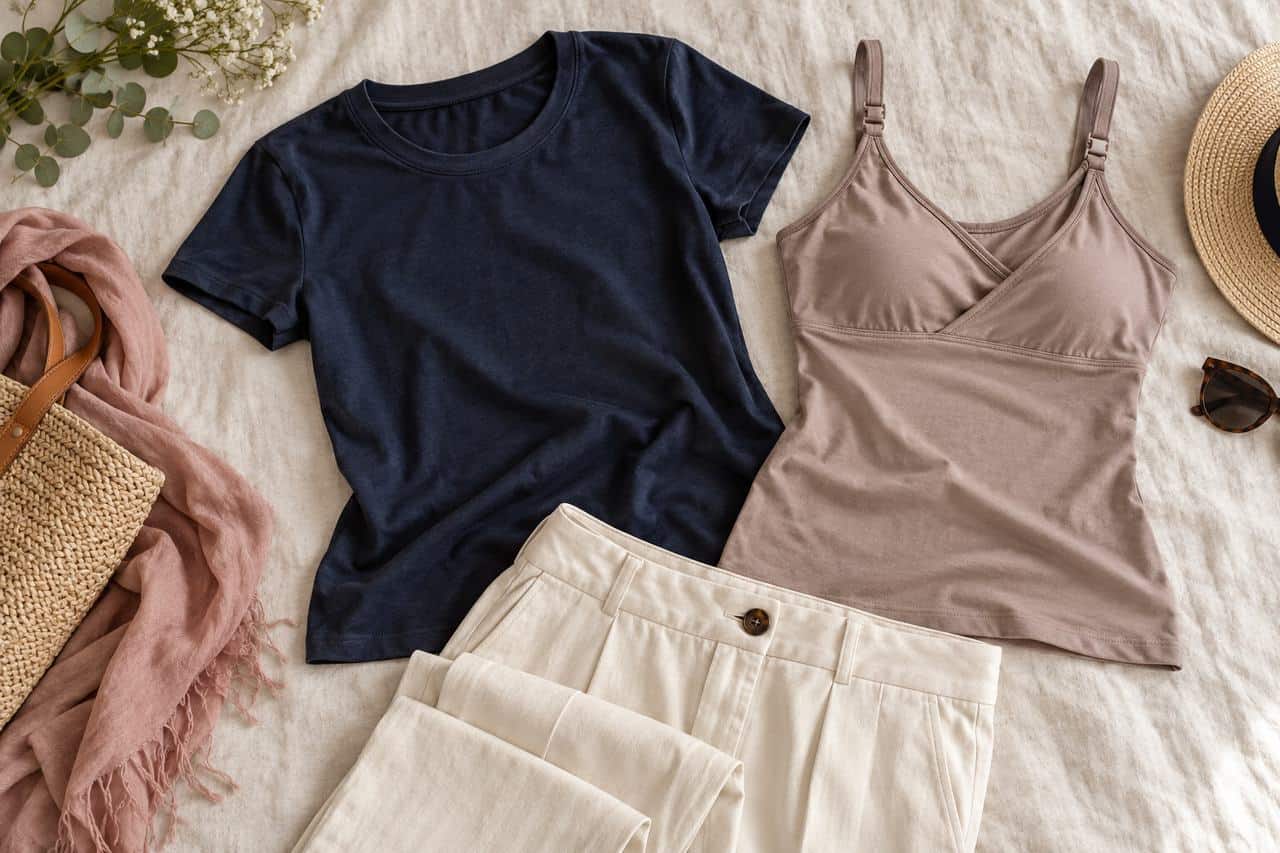
A usable outer opening is only part of the route. Once you have opened it, can you reach the bra clip or move the cup? Does a tank, lining or support panel remain in the way?
For example, a side-opening top might expose the area you need but make a shoulder clip awkward to reach. A lifting top might work easily with one bra and require too much rearranging with another. Try the exact combination rather than assessing the two garments separately.
Also check the return journey. Close the cup, replace any pad you use and settle the outer fabric. If the outfit takes more adjusting afterwards than you want, change one layer and repeat the trial.
High-neck dresses need a different check
A separate top can often lift from its hem. A high-neck dress may have no convenient equivalent, especially if it has a fixed waist, fitted skirt or lining. Do not assume that the same neckline means the same access.
Look for a real feeding opening in the bodice and check it through every layer. A back zip used for dressing does not provide the same route as an accessible front or side opening. If you need to remove much of the dress, decide whether that is practical for the occasion.
For a similar appearance with more flexibility, try a high-neck top with a coordinating skirt. The two pieces can create the continuous look you enjoy while letting the upper layer move independently.
Try three complete outfit ideas

A crew-neck tee with comfortable trousers
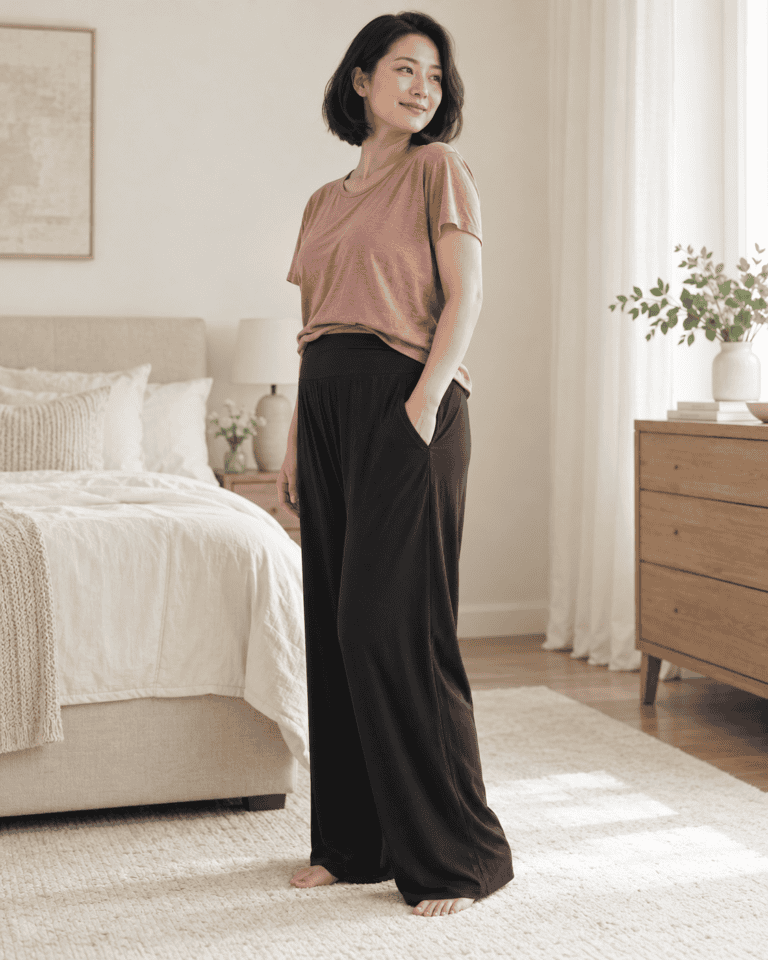
Start with a liftable navy tee, taupe pull-on trousers and familiar trainers. Add an accessible tank only if you want it. Keep the tee untucked during the first trial so you can assess its length and bulk without another styling step.
If you like more definition, test a small front tuck afterwards. Choose it because you enjoy the shape and can restore it easily.
A mock-neck access top with a midi skirt
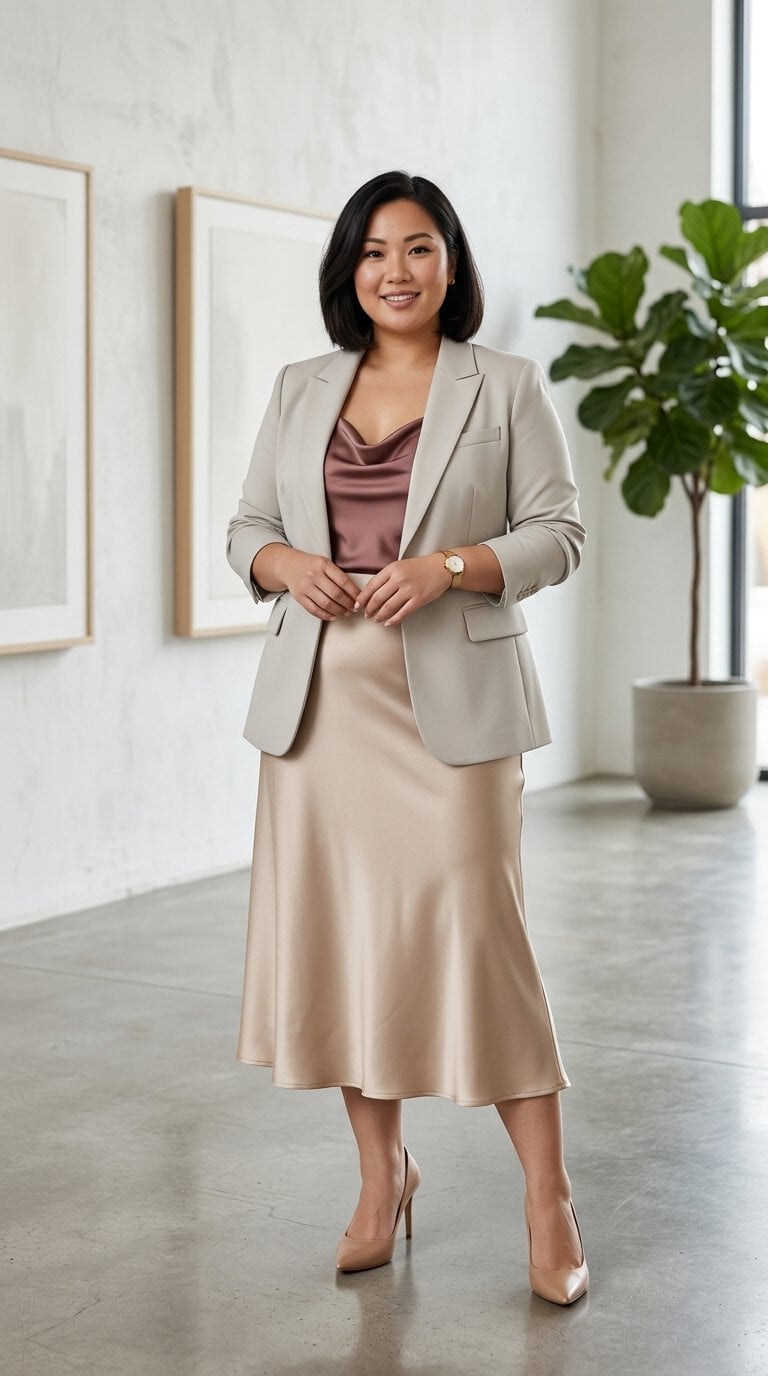
Try a burgundy mock-neck top with a genuine opening and an olive skirt. Check where the access panel sits when the skirt’s waistband changes how the top hangs. Sit down and reach the opening on each side.
This combination can feel dressed up with flats and simple earrings. The opening does not need to be visible to be useful, but it does need to be reachable.
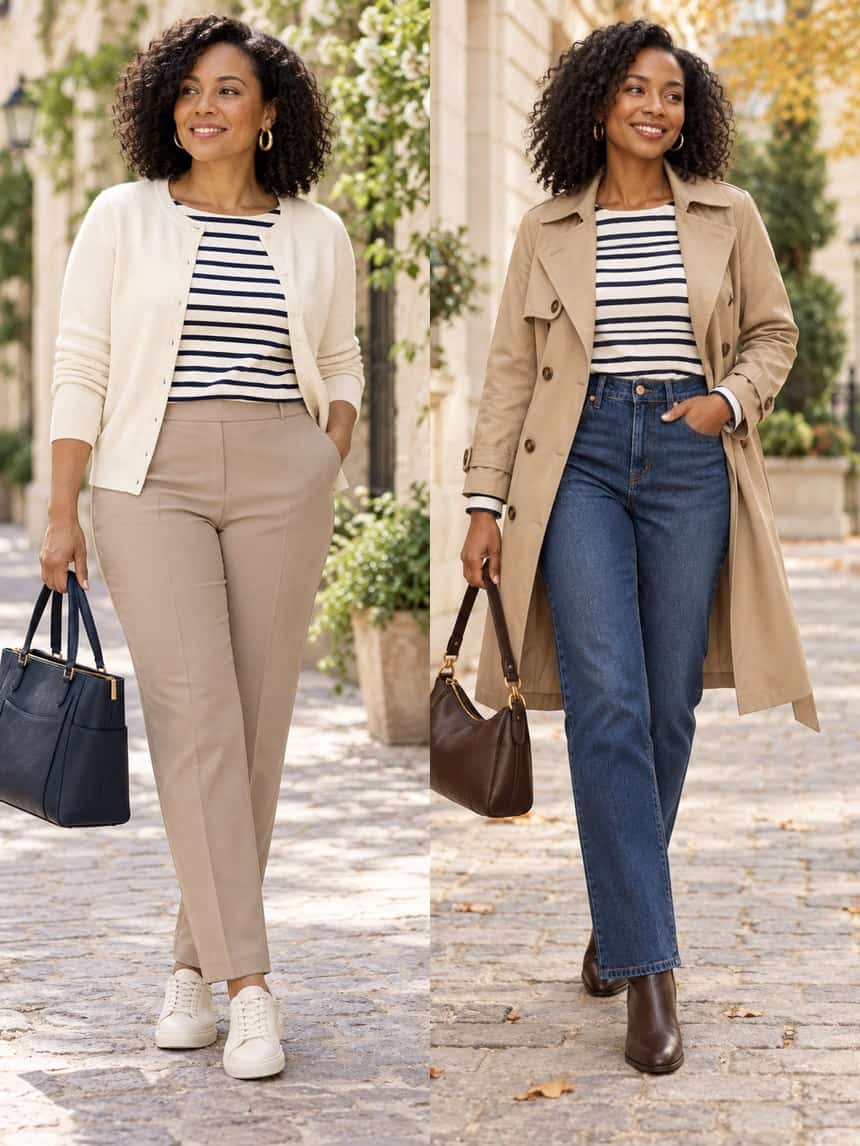
A light turtleneck with an open cardigan
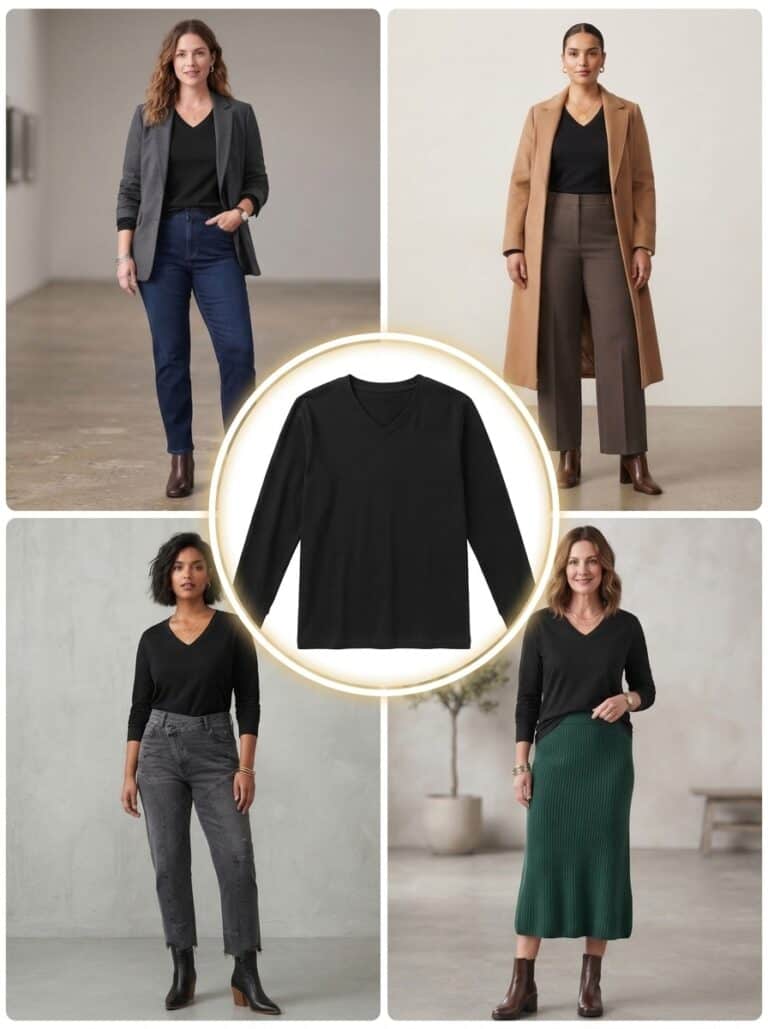
A lightweight lifting turtleneck, straight-leg trousers and an open cardigan may work for a cooler setting. Test how much fabric gathers when the turtleneck lifts and whether the cardigan sleeves or fronts interfere.
From the capsules
The Year Round Capsule
Two hundred nursing-friendly outfits from fifty-six pieces, fifty for every season, laid out and then worn. $29 once, yours to keep.
If the outfit becomes cumbersome, try a thinner layer or a different top. You do not need to make a favourite winter piece perform every task.
Keep breastfeeding and pumping checks separate
An opening that works for direct feeding may not give enough room to position or remove your pump. If you do both, assess each task with the actual bra and equipment you use.
Check whether the fabric pulls across the setup, whether you can reach the controls and whether removal is manageable. Follow the manufacturer’s instructions for your exact equipment. Do not stretch a small opening or tighten clothing simply to make the pump less noticeable.
Ask a seller a question they can answer
Instead of asking only whether a top is breastfeeding-friendly, request the details that determine how you will use it:
“Could you show the feeding opening on both sides, including the inner layer? Please confirm whether any lining remains fixed underneath, how far the opening extends and where it sits relative to the shoulder. I would also like the garment length for my chosen size.”
Check the care instructions and return conditions before ordering. A useful opening still needs to come in a garment you can comfortably wear and look after. If a seller cannot show the feature, you can wait for clearer information.
Questions moms often ask
Does a high neckline mean a top is unsuitable for breastfeeding?
No. A liftable separate top or a garment with a usable access opening may work well. Inspect and try the complete route through the layers.
Can I pull down an ordinary turtleneck?
Do not rely on forcing the collar down. Check whether lifting from the hem is comfortable or choose a garment designed with another opening.
Do I need a nursing tank underneath?
Only if it helps with the coverage or access you want. Try the outfit both ways when practical; an extra layer can help or add unnecessary work.
The Nursing Mama Fashion Commandments
Twelve rules I wish someone had told me postpartum. Print them. Screenshot them. Live by them.
- Nursing bra always. Regular bras become instruments of pain the day letdown surprises you.
- Nursing pads on your body + a spare pair in your bag. Every single time you leave the house. No exceptions.
- Extra top in your bag — for YOU, not the baby. Because leaks, spit-up, and coffee-spills don’t care about your outfit plan.
- If it takes more than 5 minutes to figure out how to nurse or pump in it, it’s not the right outfit today. Feeding access is comfort. Comfort is not optional.
- Belt under the bust (empire) or below the belly with drape — never at the belly button. Your postpartum body deserves flattery, not compression.
- Comfortable waistband is non-negotiable. Elastic, wrap, or pull-on. Zippers are a Sunday-only luxury for now.
- Dark tones, prints, or textures — not thin light solids. Because letdown marks are real and you deserve clothes that don’t advertise them.
- Machine-washable everything. Dry-clean is not real-mama fashion. If it can’t survive a spit-up rinse, it’s not in rotation.
- Cross-body bag only. Hands stay free for the carrier, the toddler, the coffee, the door, the meltdown.
- Comfortable shoes always. You’re carrying a car seat and a diaper bag. This is not the season for a heel you can’t run in.
- Get dressed BEFORE the kids see you if you can. It changes the whole day — for them and for you.
- One accessory — earrings, a lip color, a scarf — counts as “put together.” That’s the whole game. You get to feel like yourself again.
Keep the neckline you enjoy
Take one high-neck piece from your wardrobe and check its actual access route. A small change to the underlayer, tuck or outer layer may be enough to make it useful again.
For more ways to build complete outfits around your feeding routine and personal taste, explore NennVersa and The NennVersa Atelier. Your preferences deserve a place in the practical decisions, too.