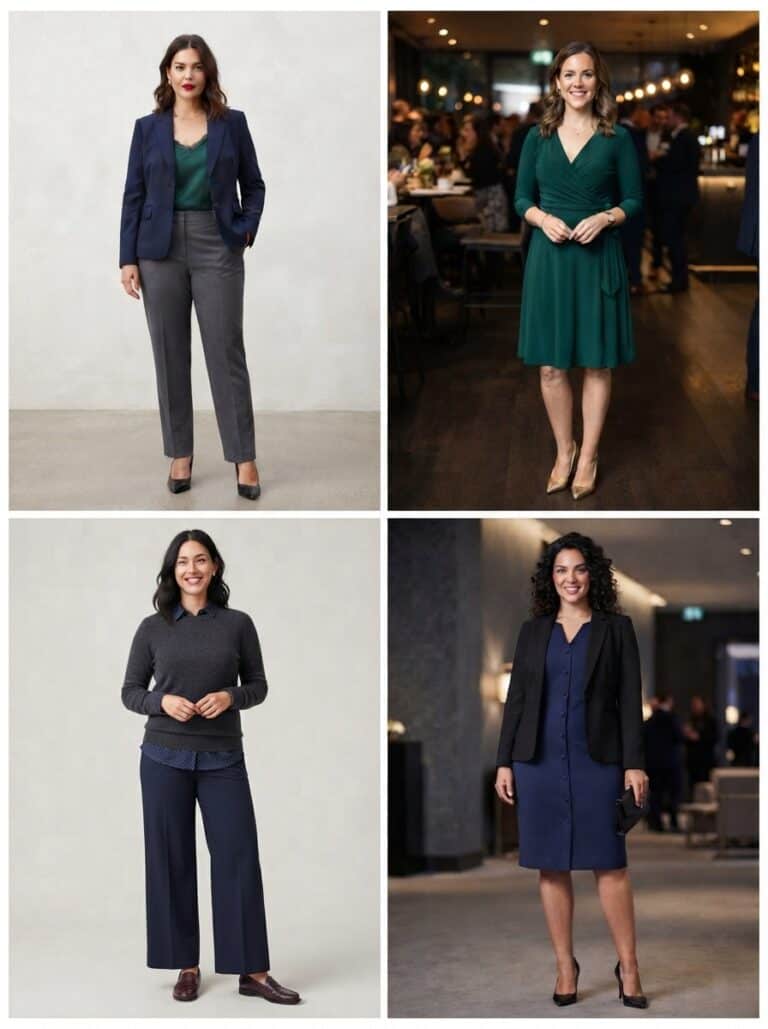
A top can fit across the bust and still feel tight through the upper arms. A dress can have enough room at the hips but put its feeding opening in an awkward place. A pair of trousers can close comfortably while standing and change completely once you sit.
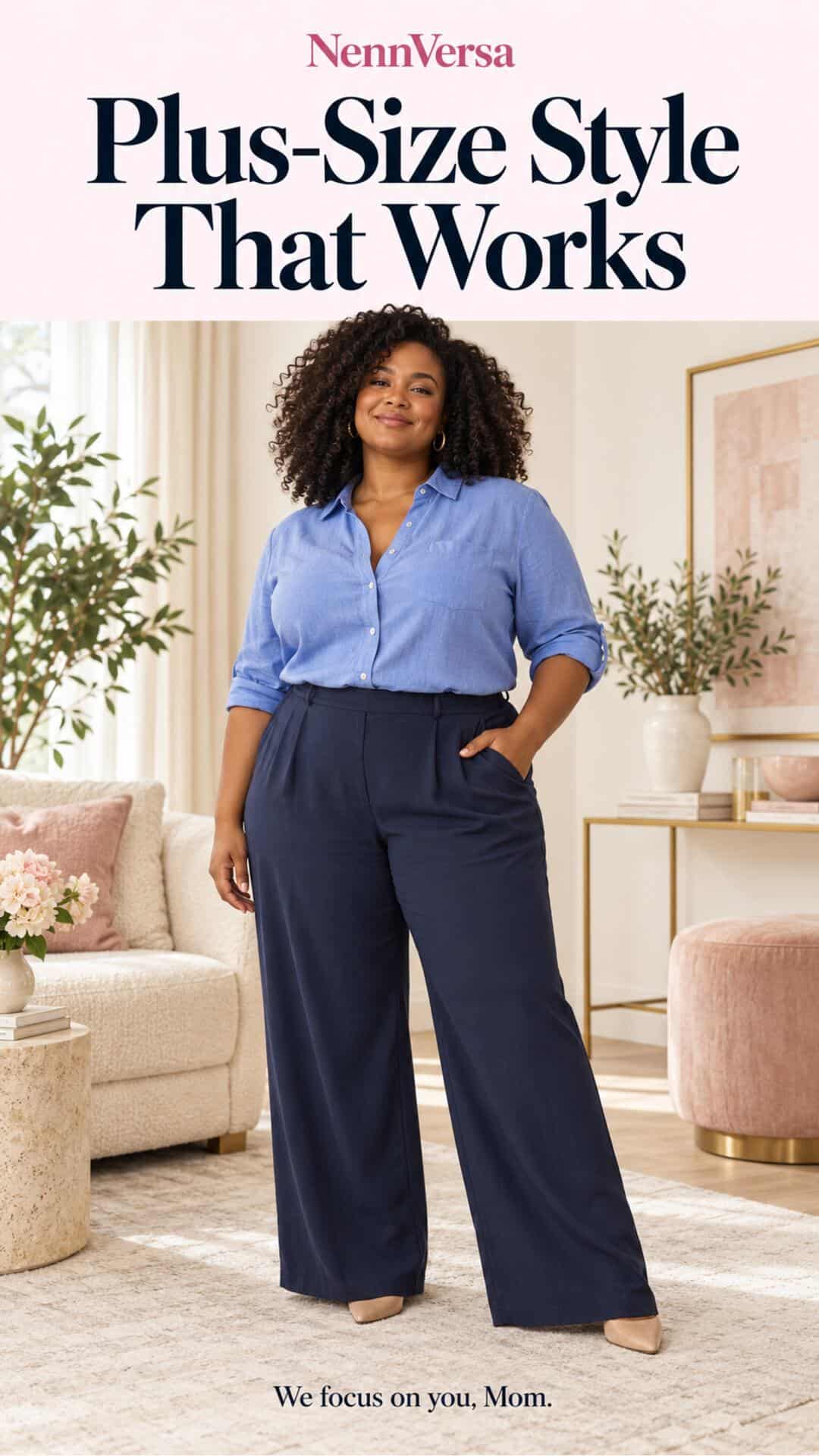
Shopping for plus-size nursing clothes works better when you assess the whole garment, rather than treating one size label or one body measurement as the answer. You deserve clothes that fit your current body and make feeding practical, in colours and shapes you actually enjoy.
This is not a guide to looking smaller. It is a guide to getting useful information, choosing the room you want, and recognising when a cut simply is not doing its job for you.
Start with your preferred fit
Before comparing products, name the silhouette you enjoy. You might like a defined waist, an easy straight shirt, wide-leg trousers, a close-fitting knit, or a fluid dress. None of those preferences belongs to one body size.
Then add practical needs: a sleeve that allows forward reach, an opening you can see and manage, a waistband that stays comfortable while seated, or a hem that gives you your preferred coverage.
Keep style and function in the same brief. “A burgundy top with a defined shape and an opening I can use while seated” is a better shopping target than “something that hides everything.” You can want a flattering outfit without making concealment its only purpose.
Check fit across the whole garment
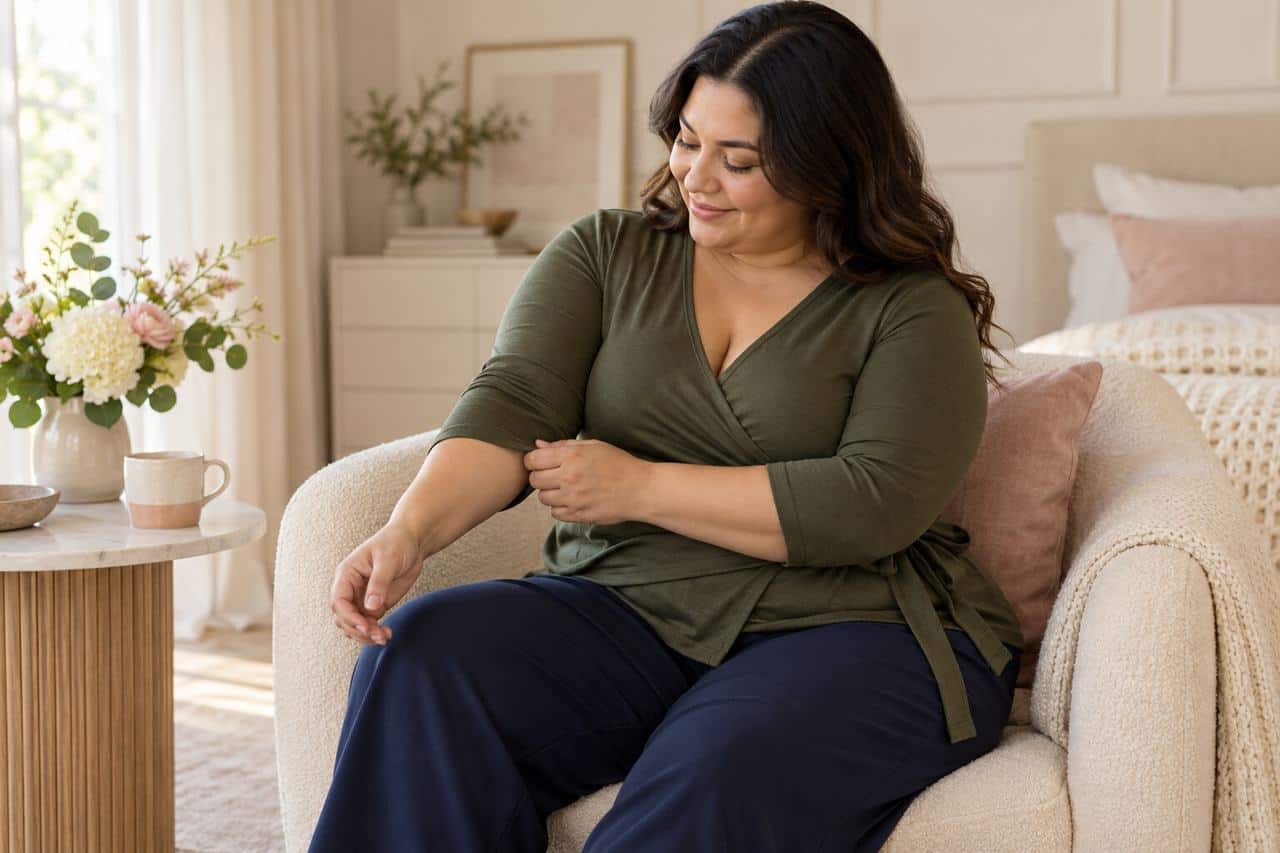
For a top or dress, move through the fit deliberately:
- Shoulders: Does the shoulder area support the intended shape without restricting your reach?
- Upper arms: Can you reach forward and bend your elbows comfortably?
- Bust and front closure: Does the garment have enough room without relying on strained fastenings?
- Abdomen and hips: Does the fabric fall or stretch the way you want when seated?
- Length: Where do the front and back hems sit on your body?
- Opening placement: Can you reach the intended access route with the actual underlayer in place?
These checks help explain why sizing up does not solve every issue. Extra width may come with more shoulder or neckline room than you want, while an opening remains in an unhelpful position. Another cut can be more useful than another size in the same cut.
Ask for measurements connected to your fit questions
You do not need to collect every measurement a retailer offers. Start with the areas that usually determine whether you keep a garment.
If sleeves are often restrictive, ask for the upper-arm measurement and how it is taken. If a dress waist sits too high, ask for the shoulder-to-waist length. If shirts ride up at the front, compare front length and room through the body rather than asking only for overall length.
Keep body measurements separate from finished-garment measurements. A chart describing the body intended to wear a size is not the same as a measurement taken across the clothing. Compare like with like, using the same method and units.
A garment you already like can be a useful reference. Lay it flat, note where you measured, and take a photograph of the method. The reference does not guarantee another garment will fit identically, but it gives you a better question to ask.
Check the opening with your actual underlayer
A nursing label is not enough. Look at whether buttons function, whether a wrap is genuinely movable, and whether a fixed lining sits behind the visible opening. For a liftable top, consider how much fabric you need to gather and where it will sit.
Try the garment with the bra or underlayer you intend to wear. Check access to each side separately while seated. If you pump, also check the full equipment setup using the relevant manufacturer instructions; a roomy top does not verify support or compatibility.
Coverage is your preference to define. You may want a higher neckline, a covered abdomen, more upper-arm coverage, or none of those things. Choose for your own comfort rather than a rule about what plus-size mothers should show.
Give bottoms a seated test
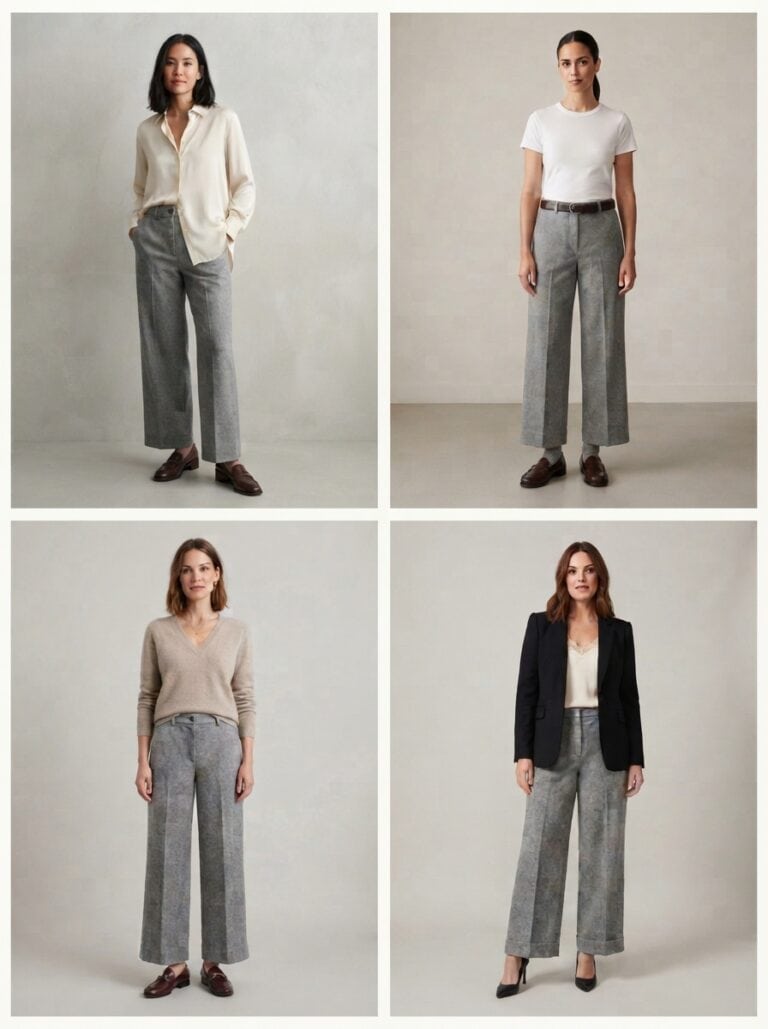
With trousers and skirts, the waistband is only part of the fit. Rise, seat, hip room, leg shape, and fabric behaviour all matter. A larger waistband does not necessarily fix a rise that feels too short or a cut that pulls when you sit.
Try an ordinary chair, lean forward gently, and stand again. Notice whether you keep adjusting the waistband, whether the fabric pulls across the lap, and whether the hem works with your intended shoes.
Stretch can add flexibility, but it should not be a reason to accept constant pressure or a garment that continually shifts. A pull-on style, a fixed waistband, or an adjustable design may work; assess the actual construction rather than choosing by category alone.
Build three outfits around the fit you want
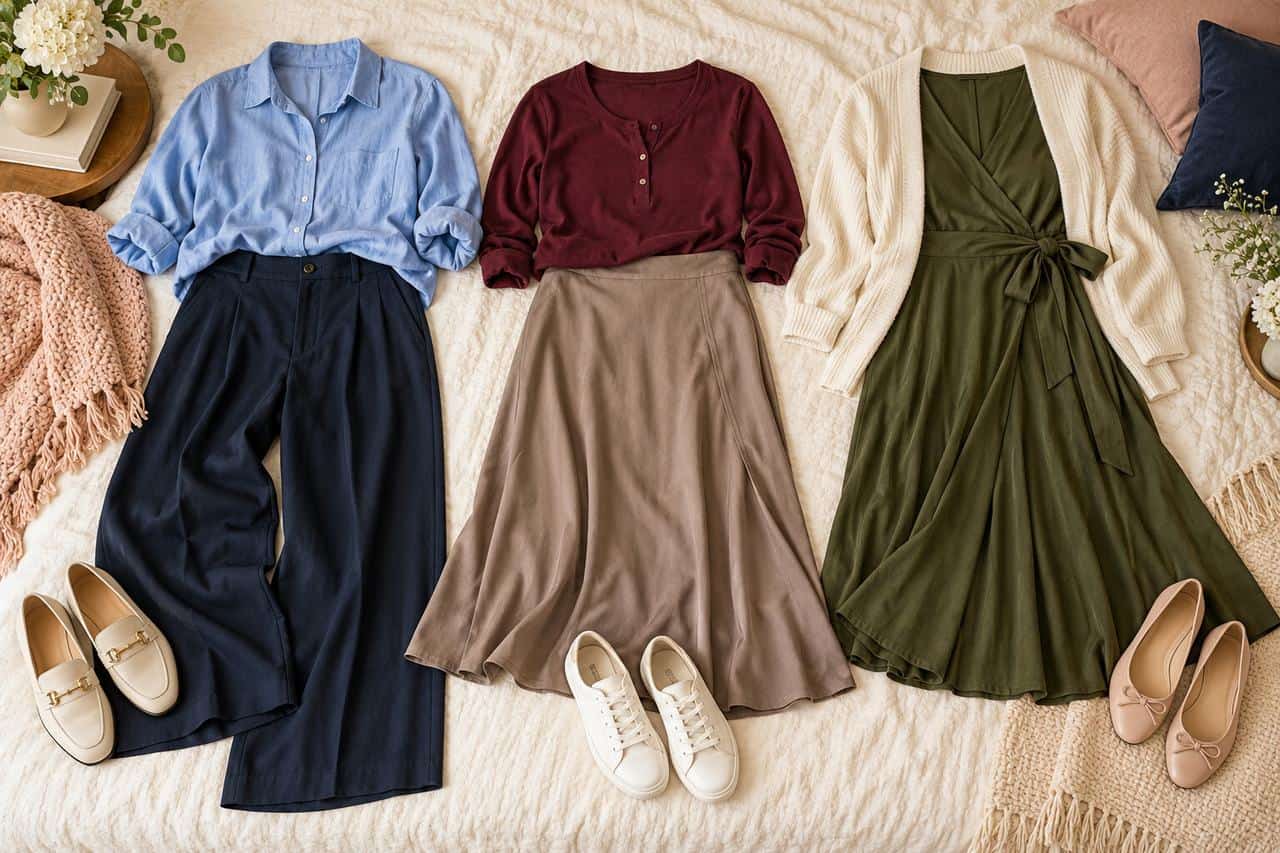
A shirt and wide-leg trousers
Try a blue button-front shirt with navy wide-leg trousers and cream loafers. Choose the shirt for comfortable bust and arm room, then decide whether you prefer it untucked, partially tucked, or arranged another way.
The trousers do not need to “balance” your body to earn their place. They need to feel comfortable, move well, and create a shape you enjoy. Check the shirt’s opening with the full outfit before leaving home.
A Henley and midi skirt
A burgundy Henley with a taupe skirt gives you a softer outfit with a visible access candidate. Confirm that the real placket opens far enough and that any underlayer also works. A short decorative placket is not automatically useful for feeding.
Choose the skirt’s rise and waistband by your seated comfort. Sneakers or flats can keep the outfit practical without changing its colour story.
A true wrap dress with an optional cardigan
An olive wrap dress and ivory cardigan can work for a lunch, gathering, or ordinary day when you want a dress. Check panel overlap, tie position, neckline comfort, and any fixed inner layer.
The cardigan is optional. Use it because you want the warmth or styling, not because a dress must be covered. If the wrap needs constant securing or adjusting, try another dress construction.
From the capsules
The Year Round Capsule
Two hundred nursing-friendly outfits from fifty-six pieces, fifty for every season, laid out and then worn. $29 once, yours to keep.
Shop with a question list, not an apology
You are entitled to useful product information. A direct message can be simple:
“Please share the garment’s chest, upper-arm, and front-length measurements in this size, including how they are taken. Do the front buttons open, and is there a lining? I also need the return conditions for this item.”
Check photographs critically. A model’s size label or height cannot tell you how a garment will sit on your own proportions. Reviews may identify questions worth asking, but another person’s fit description is not a substitute for the information you need.
If a shop cannot provide enough detail and returns would be difficult, you do not have to accept the uncertainty. Spending more time searching for clearer information can be more useful than repeatedly ordering unsuitable pieces.
Keep the evidence from successful outfits
When something works, record why. Perhaps the sleeves have room without excess fabric at the shoulder, the front is long enough when seated, or the waistband stays comfortable through the day.
Save the style name, size, composition, relevant measurements, and an outfit photograph if you like. Use those notes as a reference rather than assuming that every future item from the brand will fit the same way.
You can also note an unsuccessful detail without criticising your body: “This opening sits too high for me,” or “This sleeve restricts my reach.” That wording keeps the problem where it belongs: in the relationship between a particular garment and your needs.
Questions moms often ask
Should I always size up for breastfeeding?
No. Start with current measurements, desired fit, and the garment’s construction. A different cut may solve a problem more effectively than additional overall width.
Do all nursing outfits need a loose top?
No. A closer fit can work if it feels comfortable and its opening is usable. Check movement and access rather than following a universal silhouette rule.
Can regular plus-size clothes work?
Yes, when their construction provides the access and comfort you need. Assess ordinary shirts, wraps, separate tops, and front-opening dresses individually.
The Nursing Mama Fashion Commandments
Twelve rules I wish someone had told me postpartum. Print them. Screenshot them. Live by them.
- Nursing bra always. Regular bras become instruments of pain the day letdown surprises you.
- Nursing pads on your body + a spare pair in your bag. Every single time you leave the house. No exceptions.
- Extra top in your bag — for YOU, not the baby. Because leaks, spit-up, and coffee-spills don’t care about your outfit plan.
- If it takes more than 5 minutes to figure out how to nurse or pump in it, it’s not the right outfit today. Feeding access is comfort. Comfort is not optional.
- Belt under the bust (empire) or below the belly with drape — never at the belly button. Your postpartum body deserves flattery, not compression.
- Comfortable waistband is non-negotiable. Elastic, wrap, or pull-on. Zippers are a Sunday-only luxury for now.
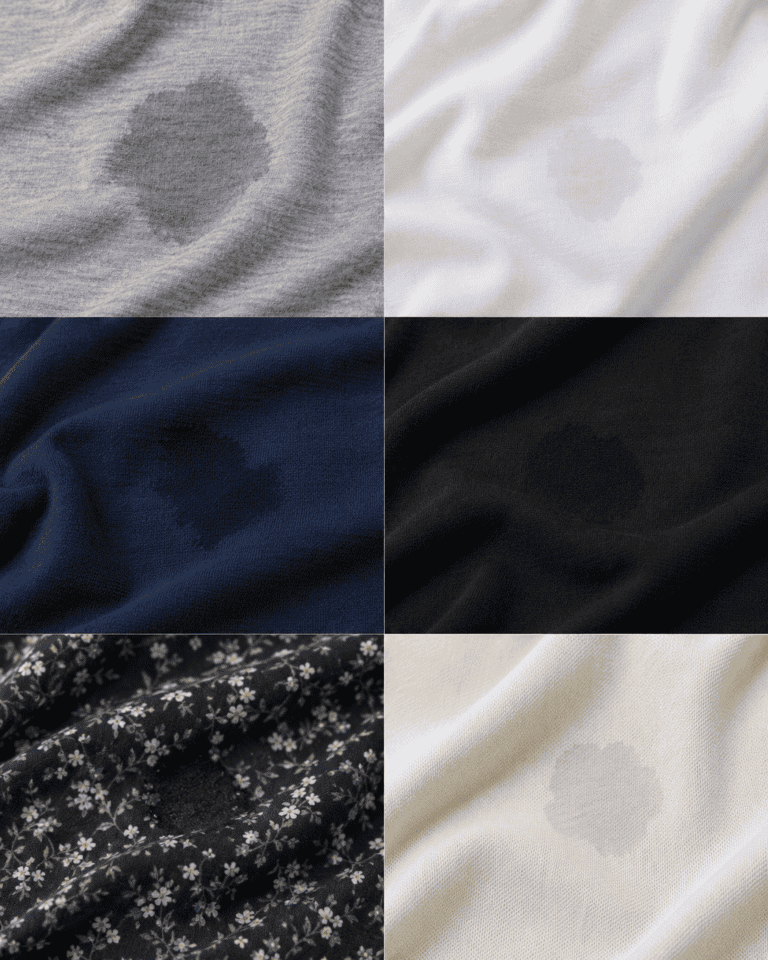
- Dark tones, prints, or textures — not thin light solids. Because letdown marks are real and you deserve clothes that don’t advertise them.
- Machine-washable everything. Dry-clean is not real-mama fashion. If it can’t survive a spit-up rinse, it’s not in rotation.
- Cross-body bag only. Hands stay free for the carrier, the toddler, the coffee, the door, the meltdown.
- Comfortable shoes always. You’re carrying a car seat and a diaper bag. This is not the season for a heel you can’t run in.
- Get dressed BEFORE the kids see you if you can. It changes the whole day — for them and for you.
- One accessory — earrings, a lip color, a scarf — counts as “put together.” That’s the whole game. You get to feel like yourself again.
Let the outfit fit your life
A useful wardrobe has room for your preferences as well as your practical needs. You do not need to earn colour, shape, or comfortable clothes by changing your body first.
Explore NennVersa and The NennVersa Atelier for more ways to build feeding-friendly outfits around your everyday life. We focus on you, Mom.