Your old trousers may close but feel uncomfortable when you sit. Your maternity clothes may still feel good at the waist while looking different through the hips. The next size up in a favorite shirt may fit your bust and leave too much fabric at the shoulders.
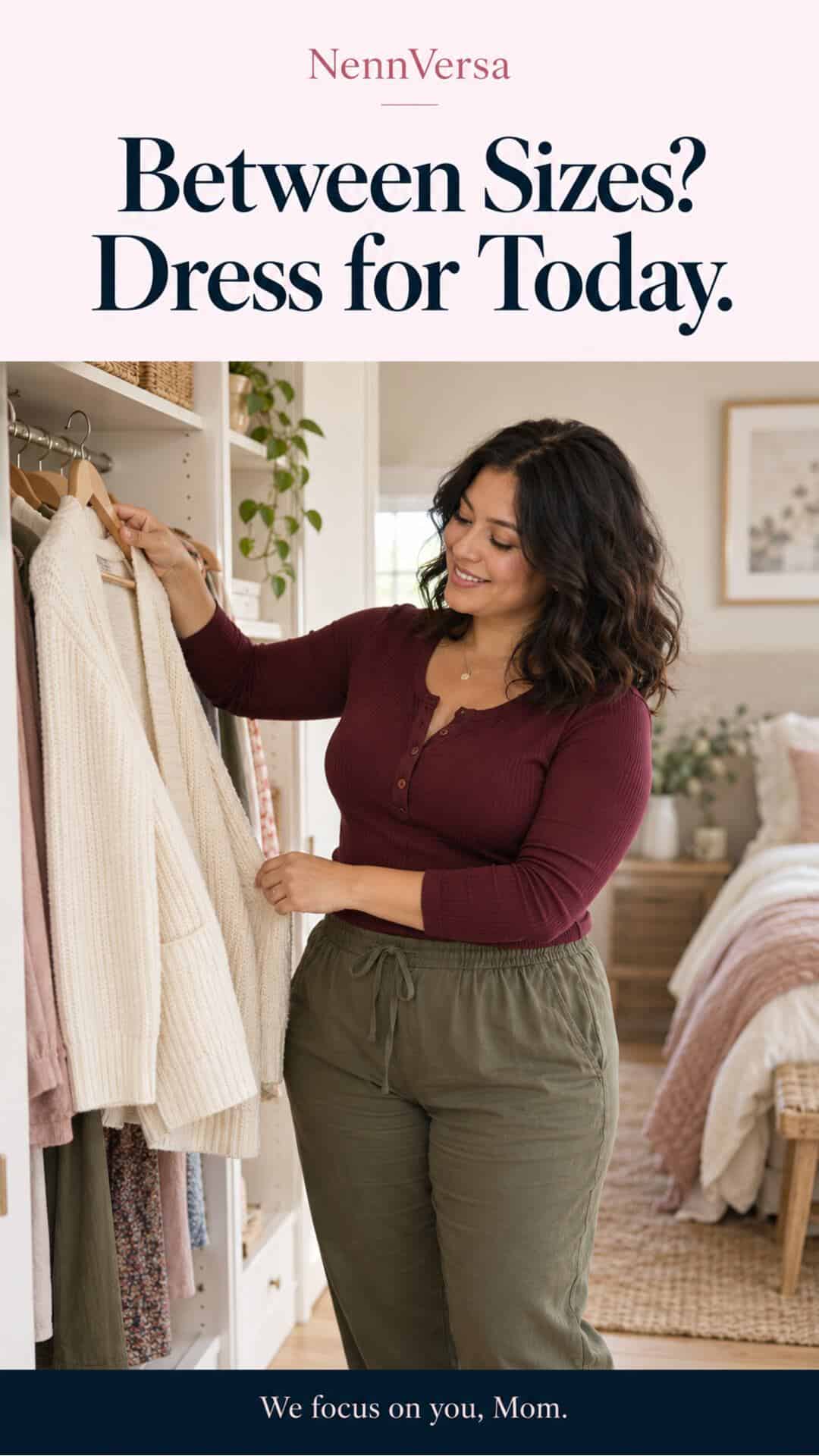
Being between sizes is a clothing problem to solve, not a deadline for changing your body. You deserve clothes that work now, even when you do not know what you will want to wear in a few months.
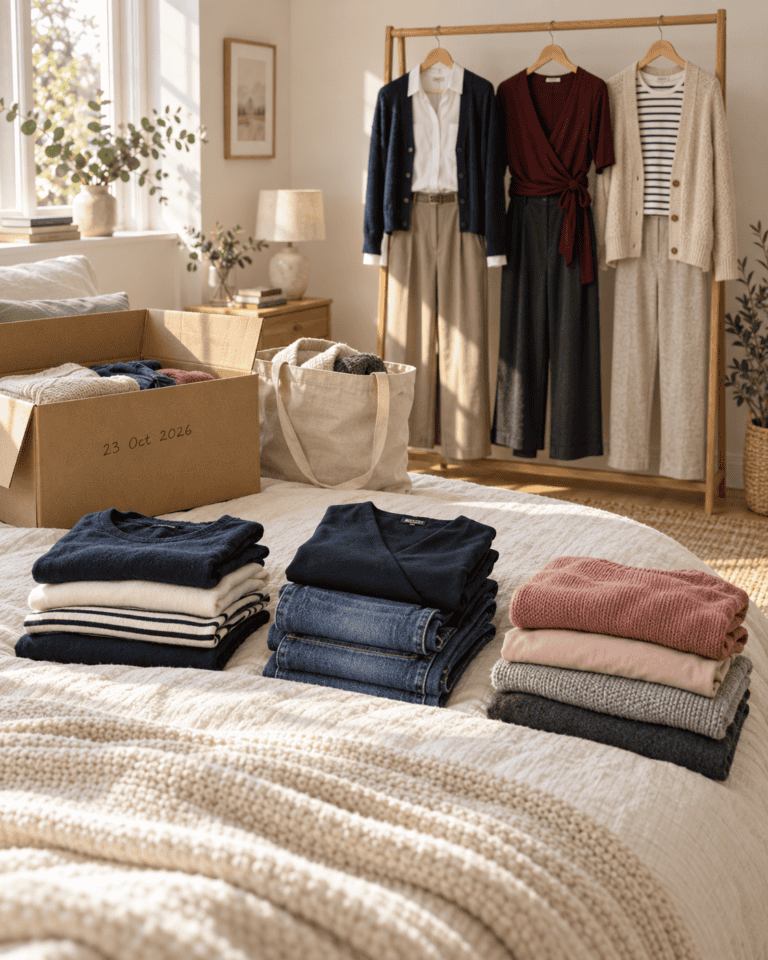
A useful approach is to build a small wardrobe for the life you are living today. Start with comfortable pieces, connect them into complete outfits, and make a few careful changes where a specific gap remains.
Separate size labels from fit decisions
A label can help you find a starting point, but it does not tell you where a garment has room. Two trousers with the same label can have different rises, waistbands, thigh widths, and seat shapes. Two shirts can fit very differently across the bust and shoulders.
When a garment almost works, name the exact issue. “Too small” is less useful than “comfortable standing, but the waistband presses when I sit.” “Too big” is less useful than “the bust fits, but the shoulder seam hangs too far down for the look I want.”
That description helps you decide whether to try a different size, a different cut, a minor alteration, or another garment entirely. It also stops every fitting-room disappointment from becoming a judgment about your body.
Make three temporary groups
Choose a manageable part of your wardrobe, such as your everyday tops and two drawers. You do not have to complete a full closet reset while caring for a baby.
- Comfortable now: pieces you can wear, sit in, and use for your current routine.
- One clear fix: pieces with a specific practical adjustment, such as a hem or missing button.
- Not for today: pieces you do not want to assess or wear right now.
The third group does not need a predicted return date. Put it somewhere that leaves your daily choices visible. You can keep clothes you love without making yourself try them on every morning.
Do not place a garment in the “one clear fix” group unless the fix is real and manageable. “Wear it after I change shape” is not an alteration task.
Choose flexible fit without making everything oversized
Flexible clothes can give you room to adjust, but different details solve different problems. An elastic back waist offers a different fit from an all-around drawstring. A true wrap gives an adjustable closure, while a stitched wrap-look front does not.
| If this is the difficulty | A detail to try | What to check |
|---|---|---|
| The waist feels different seated | Comfortable stretch, a different rise, or an adjustable waist | Pressure, rolling, and whether the waistband stays where you want it |
| The bust needs more room | A cut with more bust ease or shaping | Button gaps, shoulder fit, and armhole depth |
| The hips fit but the waist does not | A different waist-to-hip proportion or a feasible alteration | Whether changing the waist preserves comfortable access and movement |
| Everything feels visually too loose | A clearer shoulder, sleeve, or hem line | Whether one adjustment gives the shape you like without tightening the whole outfit |
You can enjoy a relaxed silhouette. You can also prefer a more defined one. Neither choice needs to be explained as hiding or correcting your body.
Free · five emails, five days
Five days, five small changes, and a wardrobe that works with your body as it is now.
One email a day for five days, each with one thing to do that takes less time than a feed. By Friday the closet makes sense again.
Free. Unsubscribe any time, no hard feelings.
Build a few complete outfits before buying individual pieces
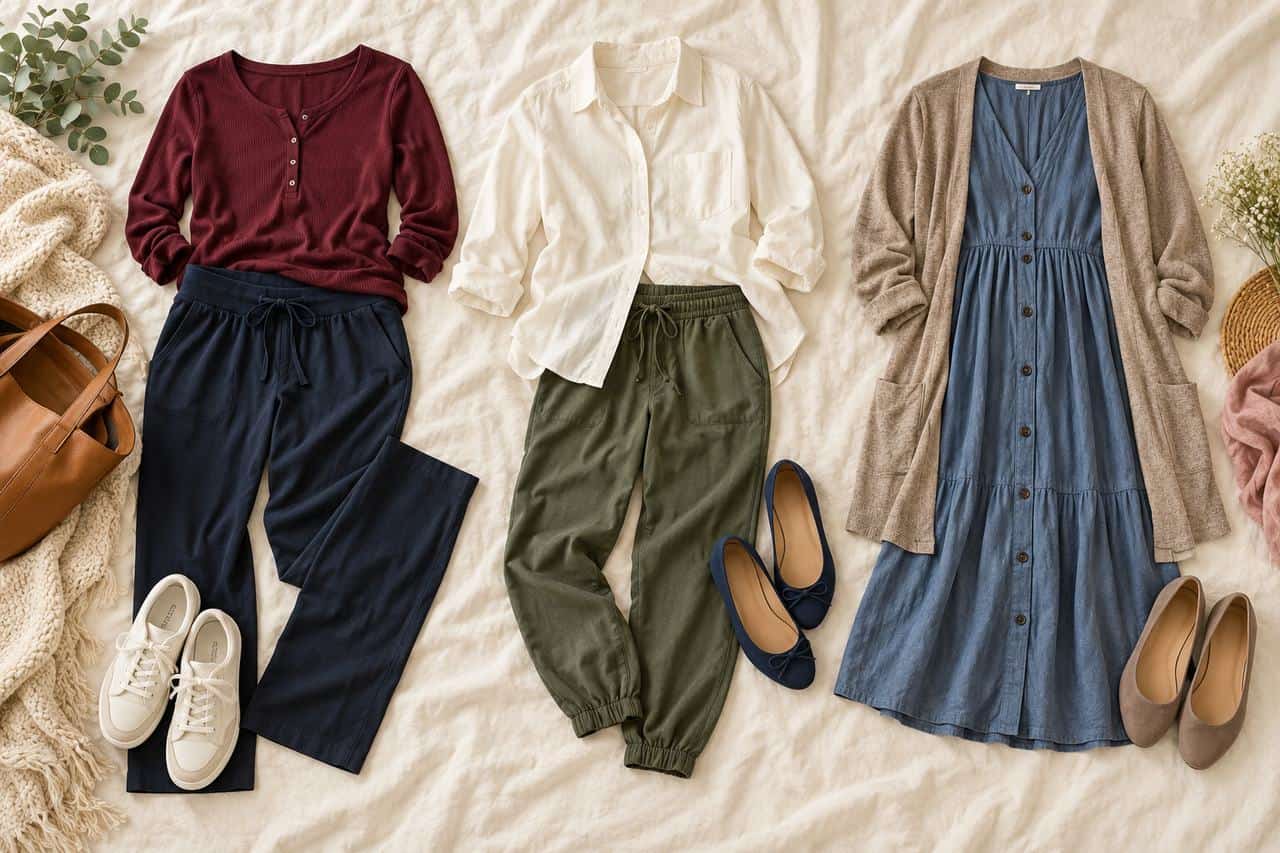
Lay out one top, one bottom, the actual underlayer, and the shoes you would wear together. If you nurse or pump, test that access too. A top that only works with a bra you do not own is not yet a complete outfit.
Try these starting combinations with pieces already available:
- A functioning button-front shirt with comfortable pull-on trousers and familiar flats.
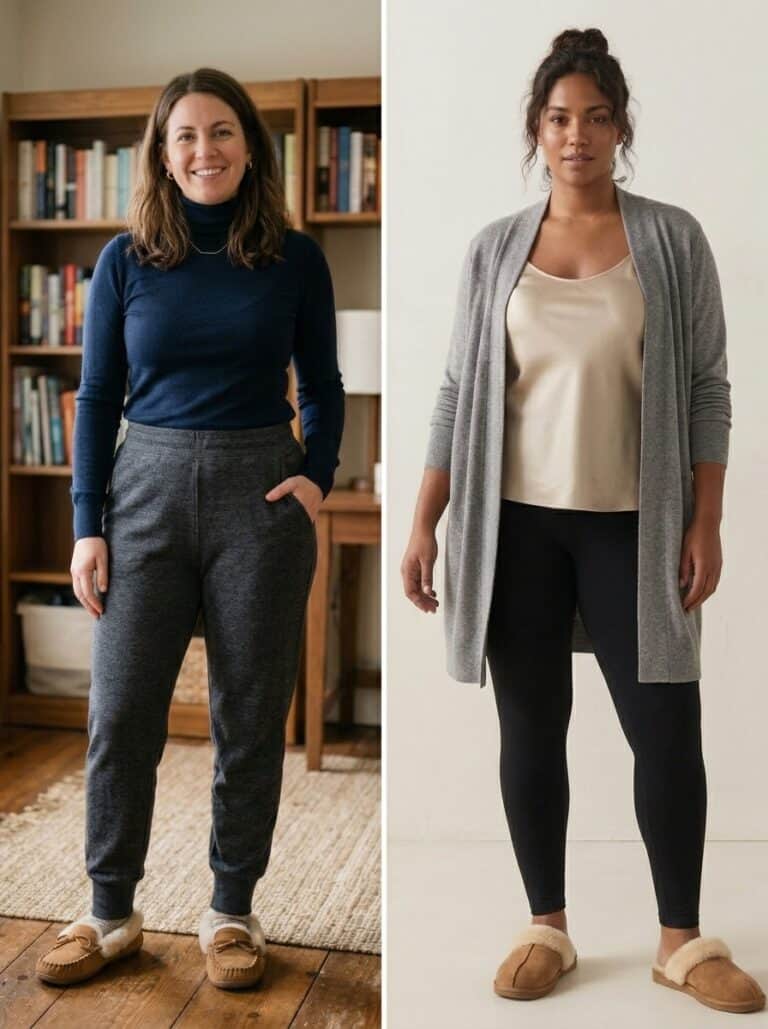
- A usable Henley with soft joggers and sneakers.
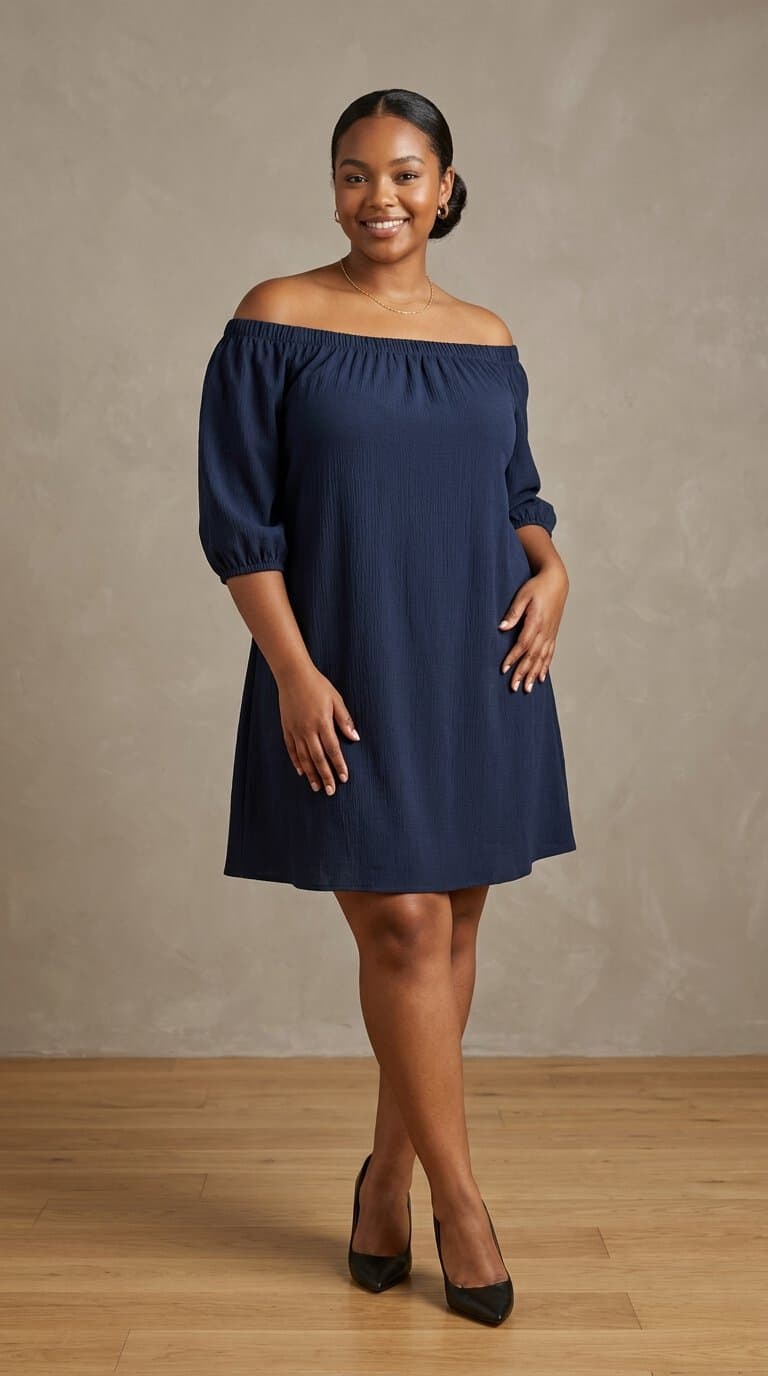
- An accessible dress with an open cardigan and shoes suited to your outing.
- A liftable tee with a comfortable skirt and an underlayer that works for your feeding needs.
Use the formulas as possibilities, not a list to purchase. If you wear uniforms, spend most days at home, or live somewhere very warm, your smallest useful wardrobe will look different.
Use the seated test to decide what stays in rotation

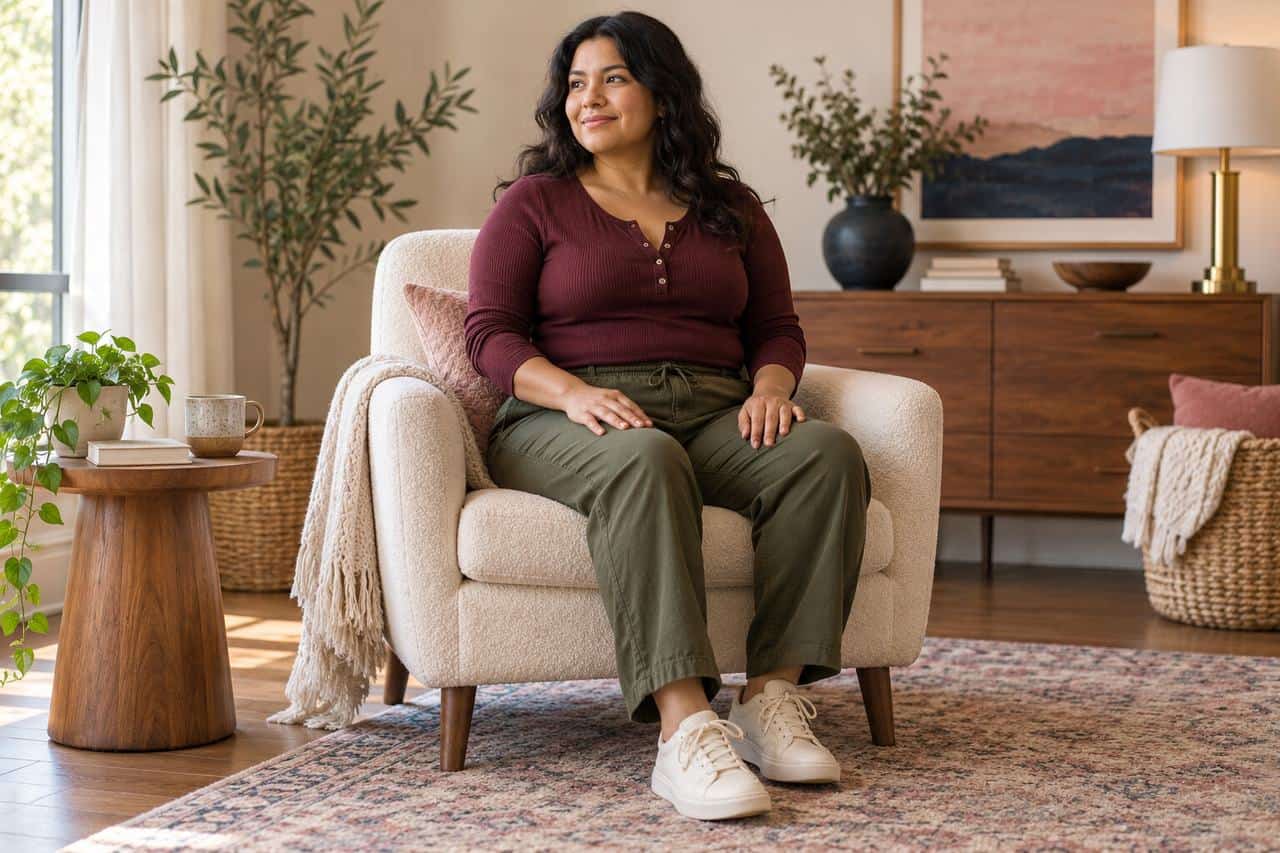
Stand in front of a mirror if you want to see the outfit, but do not make that the entire trial. Sit in the kind of chair you normally use. Reach comfortably, stand again, and check the clothing after moving.
Notice whether you keep pulling at the neckline, flattening the waistband, or correcting the hem. Check pockets with the small things you actually carry. A garment that needs constant management may be technically wearable but still a poor choice for a low-energy day.
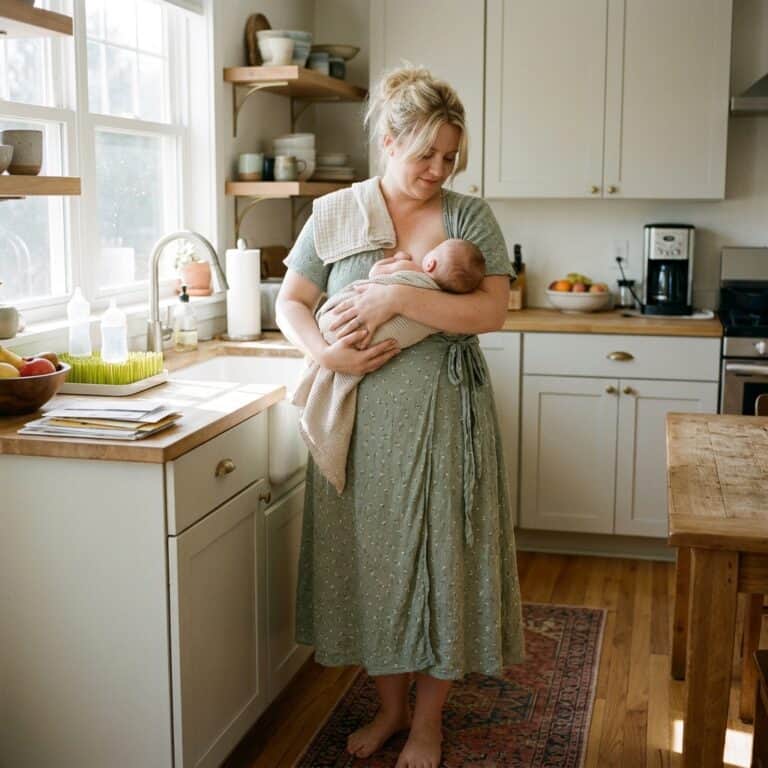
For nursing or pumping, try the opening with the underlayer rather than judging access from a product description. For recovery-related discomfort or restrictions, follow your care team’s advice; no waistband style is automatically suitable for everyone.
Buy the missing connection
Suppose three tops are comfortable, but your only usable bottom is a pair of joggers. If you want an outfit for appointments or work, one suitable pair of trousers may create more options than three additional tops.
Or perhaps your clothes fit, but the underlayer makes every neckline difficult. In that case, a better-matched bra or camisole may be the useful purchase. Write down the problem before browsing so that an attractive sale does not decide for you.
A good purchase note is specific: “One washable bottom that feels comfortable seated and works with my blue shirt and burgundy Henley.” It is easier to evaluate than “I need a whole new style.”
Use a temporary budget without treating comfort as temporary
You may not want to invest heavily while your preferences and fit are changing. Set a budget that respects that reality. Borrowing, buying secondhand, reusing maternity pieces, and choosing a small number of new items can all be part of the same wardrobe.
Check the condition, measurements, and return options of secondhand purchases. A low price does not help if you cannot wear the item. Equally, a simple piece that you wear repeatedly can deserve a place in your wardrobe even if it is not your long-term style ideal.
Keep one or two personal details you enjoy: a color, a familiar shoe shape, an earring, or a favorite open layer. Practical clothes do not have to feel anonymous.
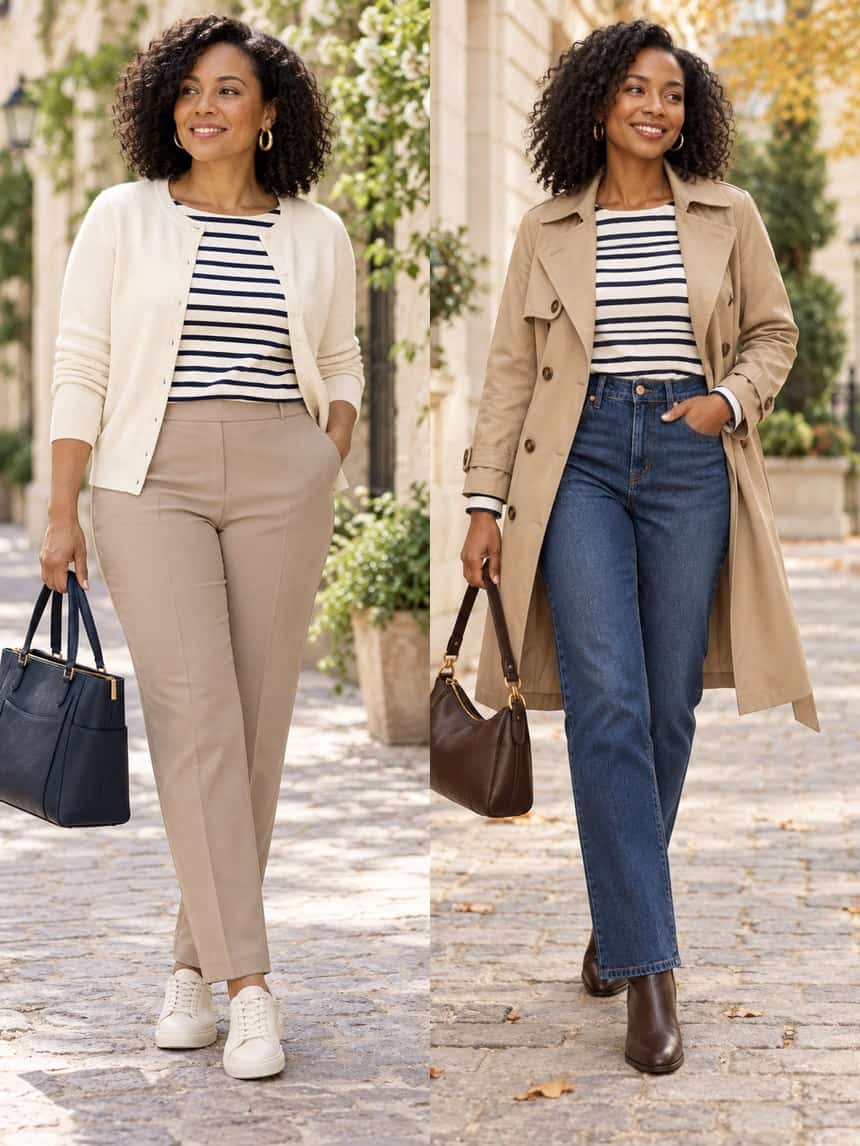
From the capsules
The Year Round Capsule
Two hundred nursing-friendly outfits from fifty-six pieces, fifty for every season, laid out and then worn. $29 once, yours to keep.
Keep a short fit note for online shopping
If measurements feel useful, record them privately and follow the retailer’s measuring instructions. You can also measure a garment that currently fits well and compare it with garment measurements in a listing. Confirm whether the website is showing body measurements or finished-garment measurements; they are not the same thing.
Include your own comfort notes. For example: “I prefer more room at the upper arm,” or “this rise feels good sitting.” Those observations help you choose construction, rather than chasing one numerical size across every store.
Check your notes again when the fit of your current clothes changes. You do not need a weekly measurement appointment with yourself.
Reassess when there is a reason
A change of season, returning to work, or noticing that a current outfit no longer feels comfortable can be a useful review point. Reassess a few relevant pieces rather than emptying the whole wardrobe again.
If something in storage fits comfortably and you want to wear it, bring it back. If it fits but you no longer like it, that is also information. Your style is allowed to change alongside your routine.
Common questions
Is it okay to keep wearing maternity clothes?
Yes, if they feel comfortable and useful to you. Check their present fit and feeding access. The category on the label does not determine when you must stop wearing them.
Should I buy the larger size when I am between two?
Compare the actual fit. The larger size may solve the problem, or it may create extra fabric elsewhere. Another cut can be a better answer than choosing between two imperfect sizes.
How many pieces do I need?
Start with enough complete outfits for your routine and washing turnaround. There is no required capsule number. Identify the repeated gap before expanding the wardrobe.
The Nursing Mama Fashion Commandments
Twelve rules I wish someone had told me postpartum. Print them. Screenshot them. Live by them.
- Nursing bra always. Regular bras become instruments of pain the day letdown surprises you.
- Nursing pads on your body + a spare pair in your bag. Every single time you leave the house. No exceptions.
- Extra top in your bag — for YOU, not the baby. Because leaks, spit-up, and coffee-spills don’t care about your outfit plan.
- If it takes more than 5 minutes to figure out how to nurse or pump in it, it’s not the right outfit today. Feeding access is comfort. Comfort is not optional.
- Belt under the bust (empire) or below the belly with drape — never at the belly button. Your postpartum body deserves flattery, not compression.
- Comfortable waistband is non-negotiable. Elastic, wrap, or pull-on. Zippers are a Sunday-only luxury for now.
- Dark tones, prints, or textures — not thin light solids. Because letdown marks are real and you deserve clothes that don’t advertise them.
- Machine-washable everything. Dry-clean is not real-mama fashion. If it can’t survive a spit-up rinse, it’s not in rotation.
- Cross-body bag only. Hands stay free for the carrier, the toddler, the coffee, the door, the meltdown.
- Comfortable shoes always. You’re carrying a car seat and a diaper bag. This is not the season for a heel you can’t run in.
- Get dressed BEFORE the kids see you if you can. It changes the whole day — for them and for you.
- One accessory — earrings, a lip color, a scarf — counts as “put together.” That’s the whole game. You get to feel like yourself again.
Make tomorrow easier
Choose one comfortable outfit for tomorrow and put the complete combination together. Move the clothes that trigger repeated, unhelpful try-ons out of your daily view.
For more support building combinations that reflect your current body and preferences, explore The NennVersa Atelier.
You do not need to reach a future size before you are allowed to feel comfortable, recognizable, and dressed.