You want to feel covered, but you do not want to spend every feed moving a shirt, a camisole, a cardigan, and a scarf out of the way. Perhaps the extra layers feel hot. Perhaps they bunch around your waist. Perhaps you simply prefer an outfit that takes less arranging.
Begin with the areas you personally want covered, then choose a clear feeding-access route. That usually produces a more useful outfit than adding another layer whenever something feels uncertain.
Modesty can mean different things to different women. You might prefer a high neckline, covered upper arms, abdominal coverage while feeding, or a particular dress length. You do not need all of those things to belong in this conversation, and your preferences may change with the setting.
Name the coverage you actually want
Think separately about the outfit before a feed, during access, and after you have settled again. A shirt can feel covered when buttoned but open more broadly than you prefer. A lifting tee can provide the neckline you love while exposing your stomach. Identifying the specific concern helps you choose a specific solution.
Write one sentence: “I want my outfit to cover…” Add only the areas that matter to you. Then add: “I am comfortable opening…” This might be the centre front, one side, or the lower edge of a top.
A preference is not an instruction for everyone else. You are allowed to want more coverage, less coverage, or different coverage on different days without explaining the choice.
Choose one main access route
Try to make the outer garment and underlayer work together. If the shirt opens at the front, check that you can reach the bra opening through it. If the top lifts, decide whether you want a suitable nursing tank beneath it to cover your abdomen.
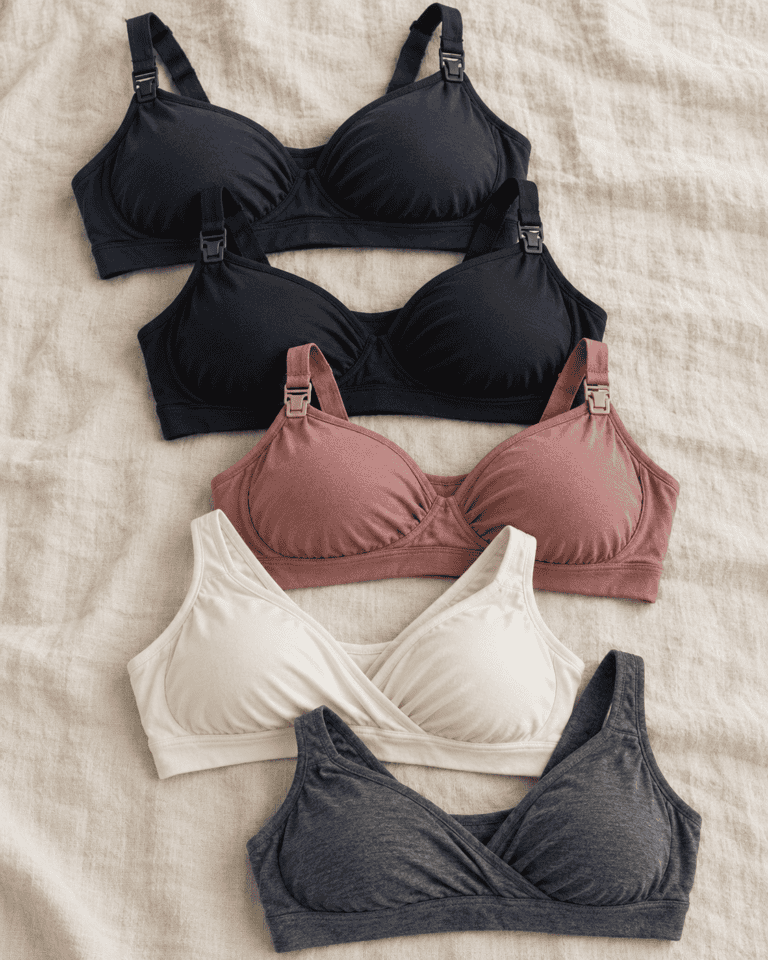
The Australian Breastfeeding Association’s bra guidance notes that clothing and bra openings can feel fiddly when they require different movements. The practical lesson is to test the actual pair instead of assuming two nursing-friendly labels guarantee an easy outfit.
One clear route does not always mean one layer. It means you know which piece moves first, which moves next, and where the fabric will rest. A two-layer combination you understand can feel simpler than one complicated dress.
Match the solution to the coverage concern
| Your preference | A combination to try | Check before wearing |
|---|---|---|
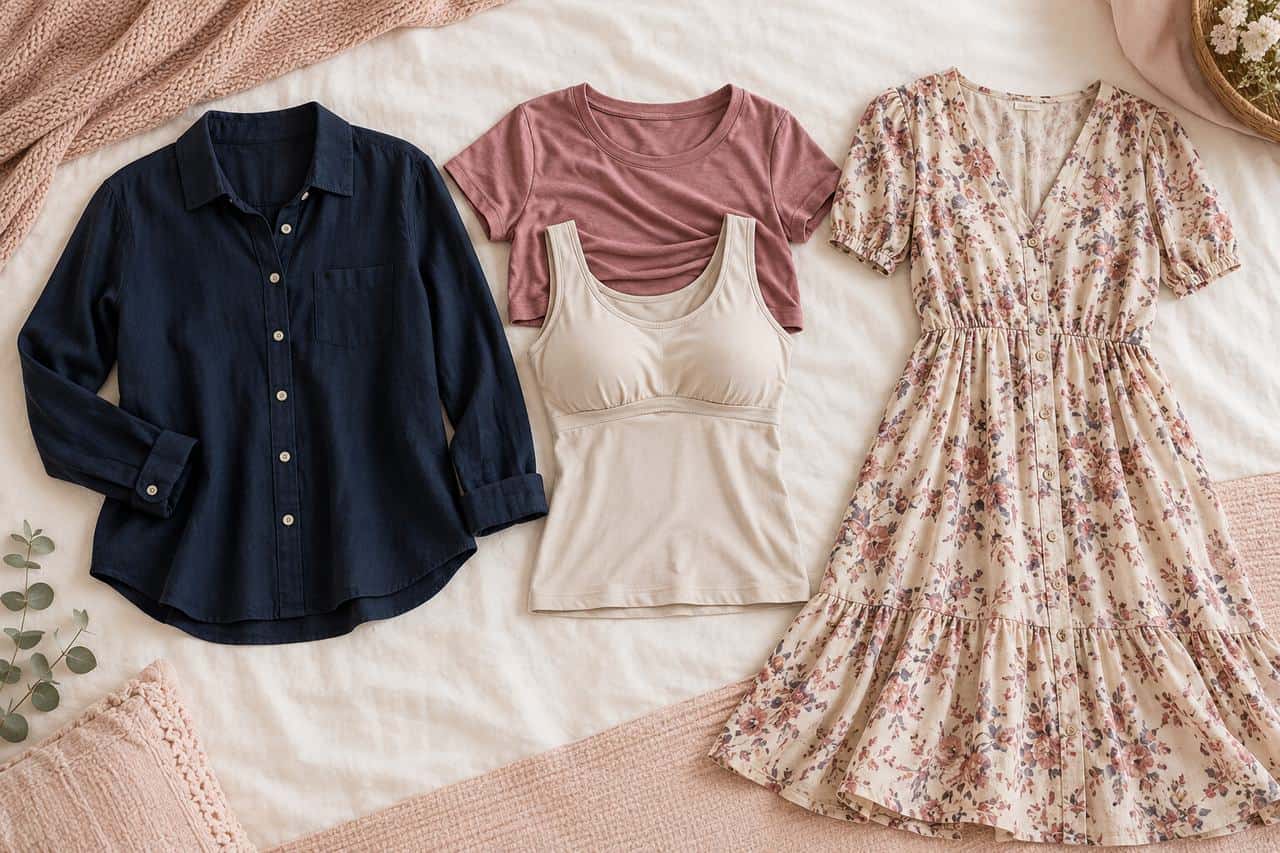
| Keep the abdomen covered when lifting a top | A suitable nursing tank beneath a separate tee. | The tank’s access, heat, and whether the lifted tee stays manageable. |
| Keep a higher neckline between feeds | A high-neck top with a tested lifting route, or a designed opening. | Where the opening sits on your body and whether inner layers also open. |
| Cover upper arms without a cardigan | A comfortable sleeved shirt with a functioning front opening. | Sleeve mobility, bust room, and the depth of opening you need. |
| Keep a longer hem and avoid lifting a whole dress | A dress with a usable front or designed nursing opening. | Lining, waist seams, and access while seated. |
| Keep the back covered while reaching or leaning | A top with enough back length and comfortable bottoms. | The full outfit during normal movement, not only standing. |
The goal is not to select every row. Choose the one or two that solve your actual concerns and start there.
Let the garment do the coverage work
If you always add a camisole because a blouse is sheer, consider whether a less sheer shirt would simplify the outfit. If you wear a cardigan solely because the sleeves feel too short, a sleeved top may remove the need for that extra piece.
This does not mean replacing clothes immediately. It gives you a useful criterion when you next need something. Look at the garment in daylight, including its back and sleeves. Check whether seams, buttons, or a lining create a different appearance when you sit.
Try the colour you actually plan to buy. Two versions of the same shirt can look different against your underlayer. Product photographs, especially bright studio images, do not tell you everything about coverage in ordinary light.
Try four outfit formulas with fewer adjustments
A sleeved shirt with comfortable trousers
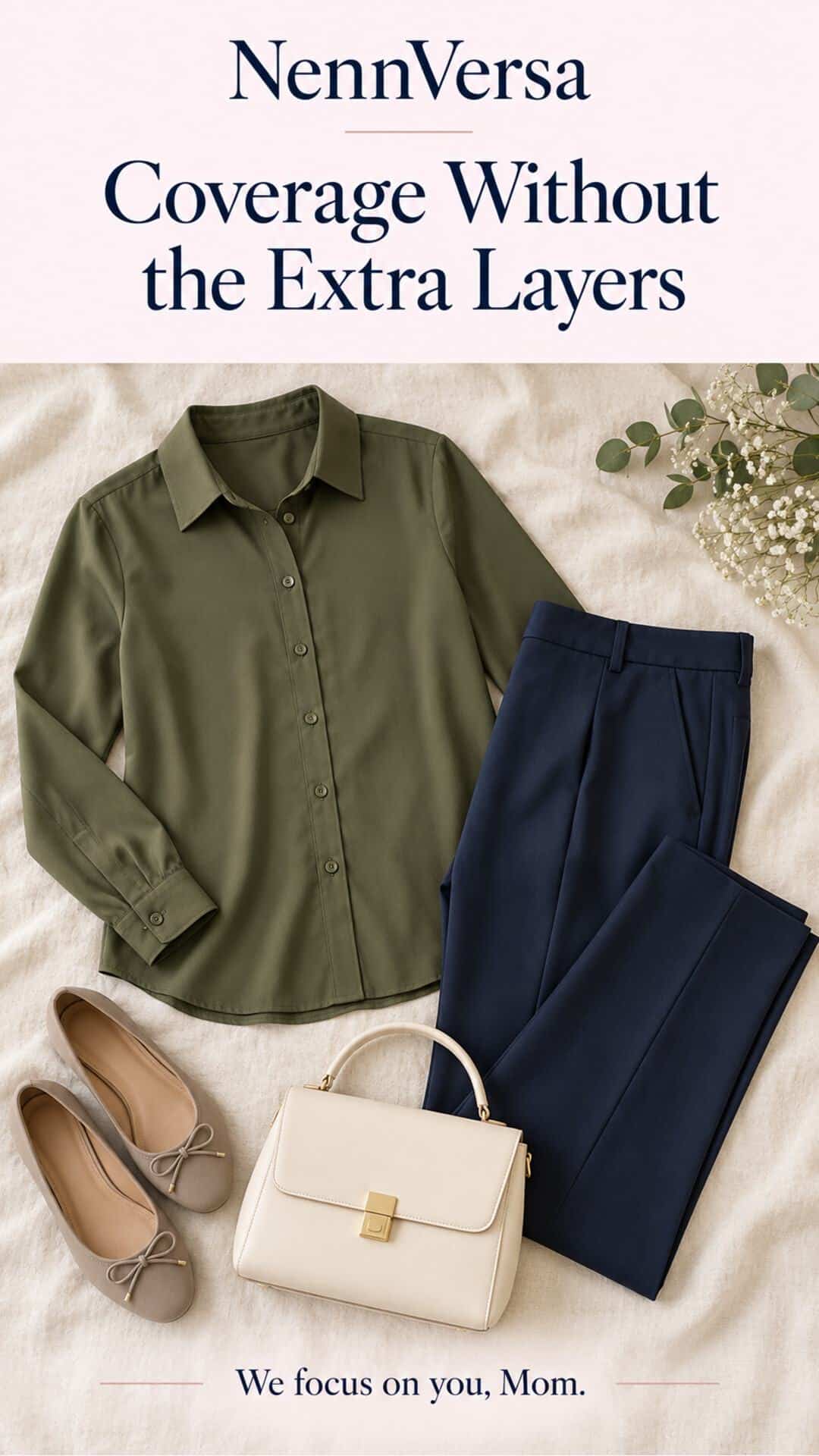
Choose a shirt that opens far enough for your preferred feeding access and has room through the bust when seated. Pair it with trousers that do not require a complicated belt or fastening to feel comfortable. Leave the shirt untucked or use a small tuck you can restore easily.
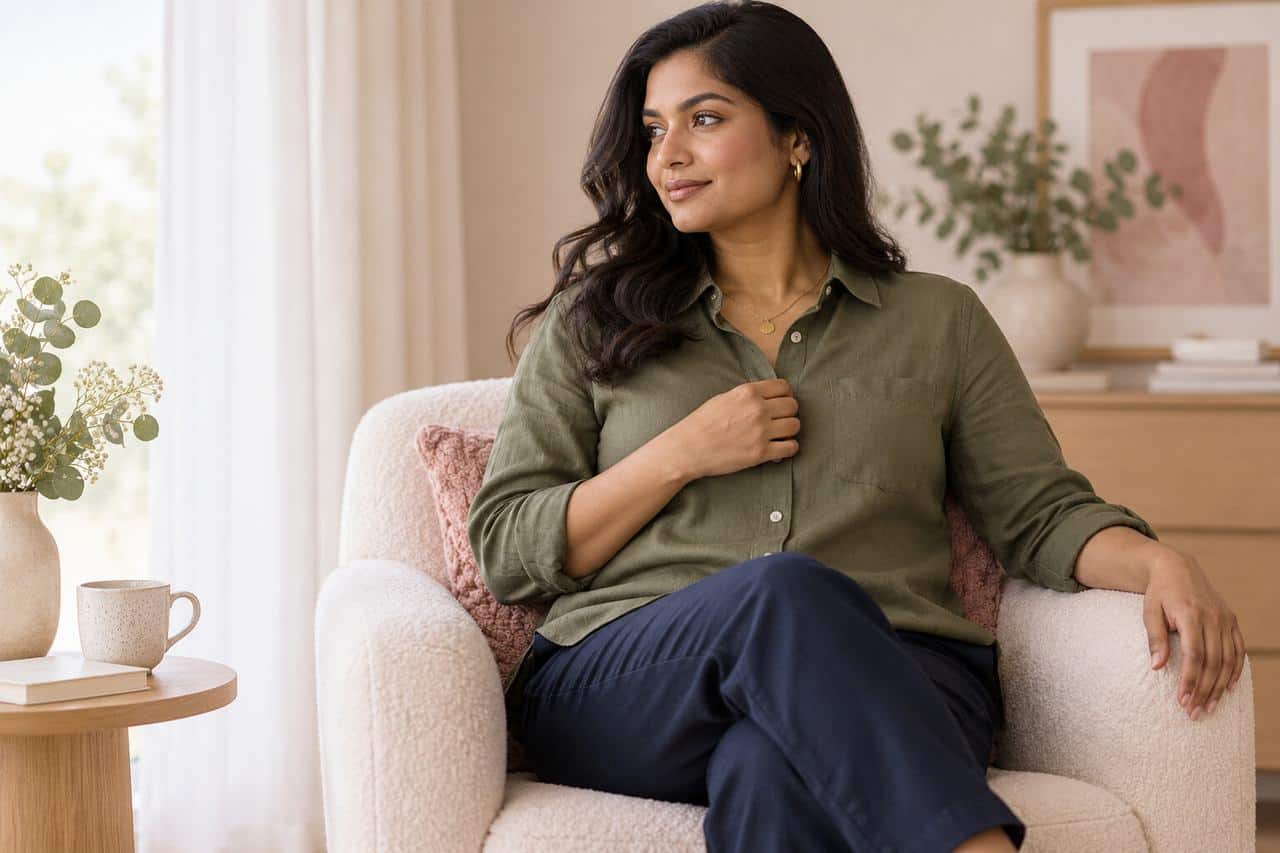
For example, an olive shirt, navy trousers, and loafers can feel complete without a third clothing layer. Earrings or a favourite bag can provide the finishing detail if you want one.
A lifting tee with a nursing tank
This can work when abdominal coverage matters more to you than reducing the outfit to a single top. Choose a tee that lifts without pulling the tank upward. Check the combined bulk at the shoulders and waist.
Keep the remaining outfit simple: pull-on trousers or a skirt, plus shoes suited to your day. If the combination feels too warm, do not keep adding different camisoles in search of perfection; try a front-opening route instead.
A higher-neck nursing top with a skirt
A purpose-made top can be worthwhile when it provides a coverage-and-access combination you cannot achieve comfortably with existing clothes. Inspect where its zips or panels sit and how much fabric you must move.
A midi skirt or wide-leg trousers can complete the outfit without requiring the top to be long. The important test is whether you like the coverage when sitting, reaching, and feeding, not whether the shape follows a particular modest-fashion formula.
A genuinely accessible dress
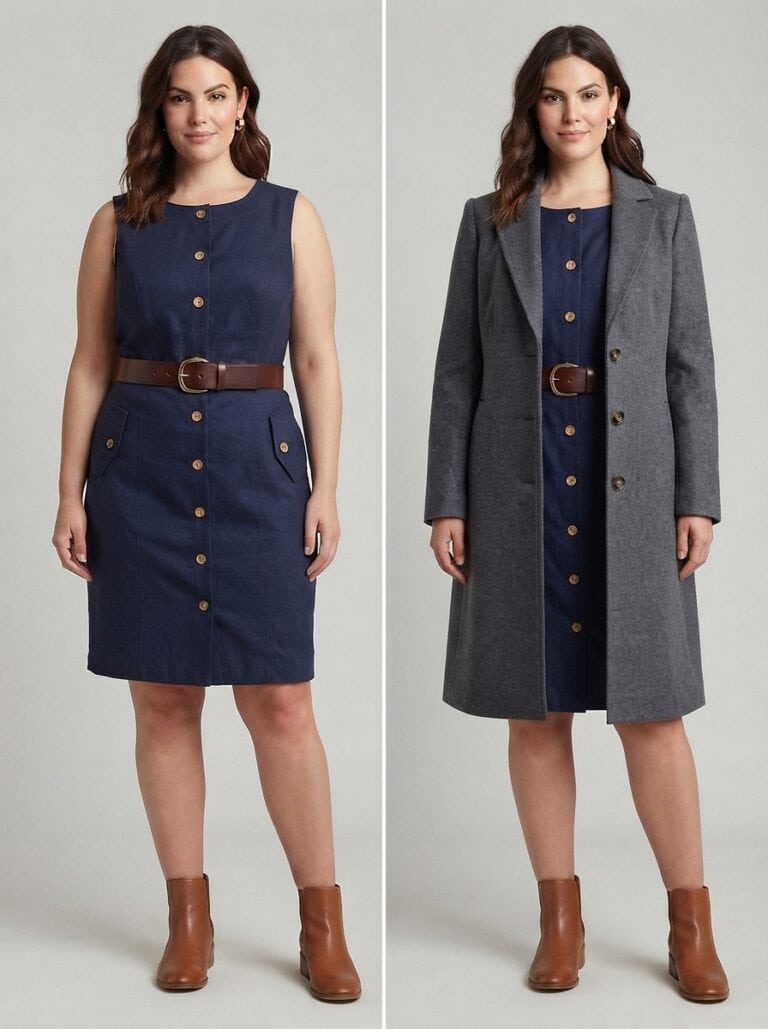
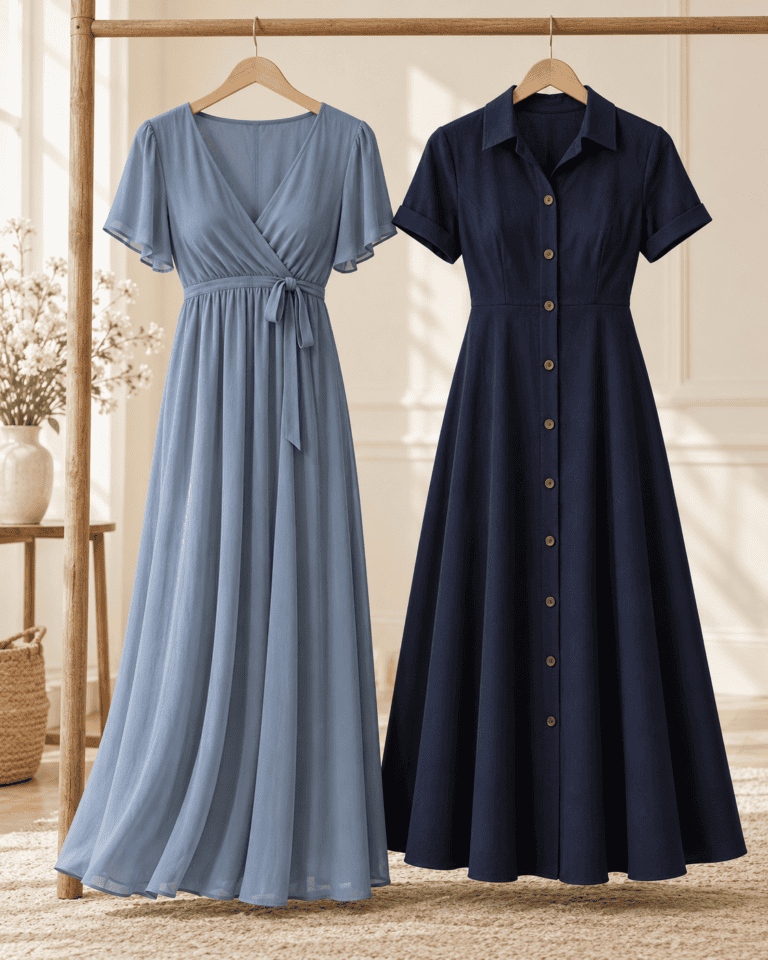
Try a sleeved dress with functioning buttons or a designed opening and an underlayer you have already checked. A true wrap may also suit you, depending on how its overlap behaves and the coverage you prefer.
If you need a fixed insert that prevents access, that specific arrangement may not work. Consider a different dress or ask a tailor about a suitable alteration rather than improvising a fastening during a feed.
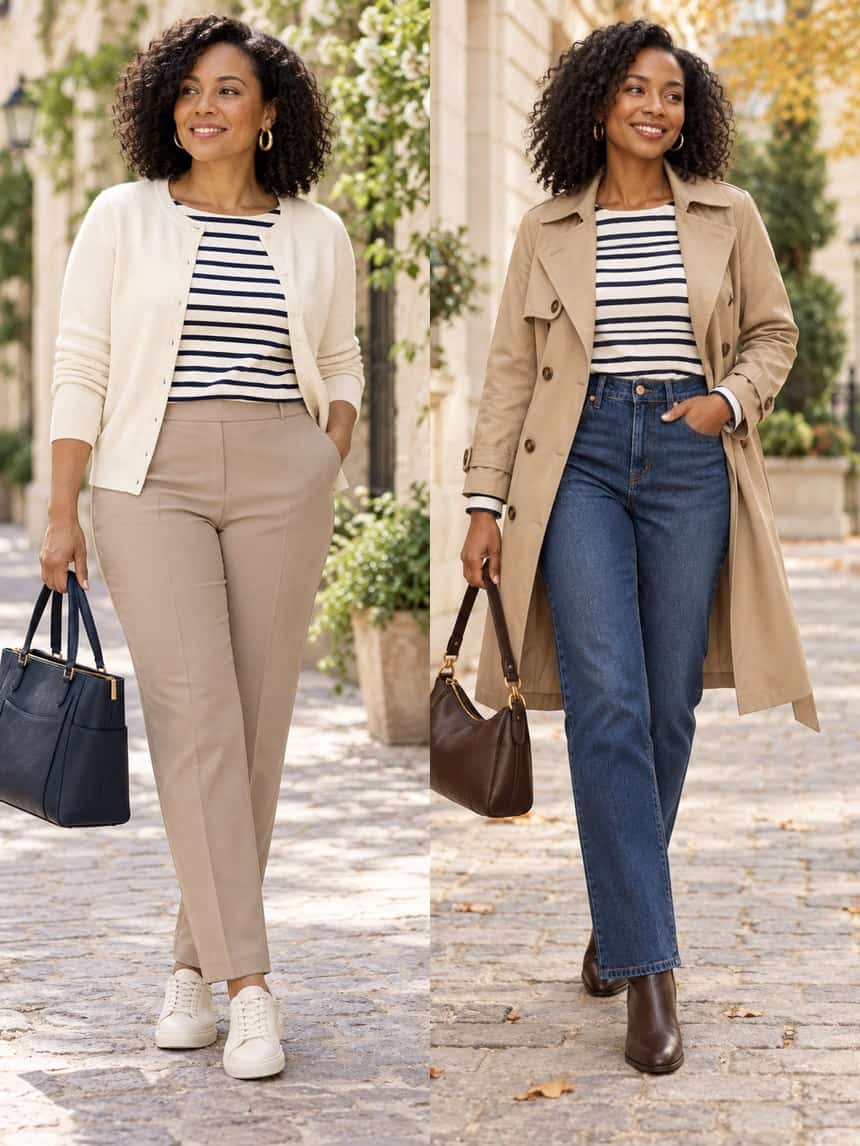
From the capsules
The Year Round Capsule
Two hundred nursing-friendly outfits from fifty-six pieces, fifty for every season, laid out and then worn. $29 once, yours to keep.
Rehearse the moment of opening
While your baby is safely settled elsewhere, sit down and practise opening the outfit. Look at how far each side moves. Can you choose how much to open? Can you reach the bra fastening without pulling the entire neckline aside?
Then close everything again. Some outfits feel fine during access but leave a folded lining, twisted strap, or uneven tuck afterward. A good reset matters when you want to return to a conversation, appointment, or meal without checking five separate layers.
During feeding, keep loose fabric clear of your baby’s face. If you choose a nursing cover, use it according to its instructions, keep your baby visible to you, and remove it if it gets in the way. A cover is optional and does not replace checking the clothing beneath it.
Make a setting plan without making clothing do everything
At home, you might feel happy opening a shirt broadly. At a family gathering, you may prefer a smaller opening or a quieter seat. Both choices can fit the same wardrobe.
If having a private space would help, check what is available before an unfamiliar outing. Clothing cannot guarantee the environment you want, and you do not need to solve every setting by wearing more fabric. Planning a seat or asking someone to help with your bag may make the outfit easier to use.
Common questions
Can I breastfeed in a high-neck top?
Possibly. A separate top might lift, or it might have a designed opening elsewhere. A fitted high-neck dress with no other access is a different proposition. Judge the complete construction, including any lining.
Do I need to wear a cover to dress modestly?
No. A cover is a personal choice. Clothing openings, your position, and your preferred setting may provide the coverage you want. You can also choose a cover on some occasions and leave it at home on others.
What if I keep changing my mind about coverage?
Keep two reliable combinations rather than demanding one outfit meet every preference. An opening shirt and a tee-with-tank combination give you different options without rebuilding your wardrobe.
The Nursing Mama Fashion Commandments
Twelve rules I wish someone had told me postpartum. Print them. Screenshot them. Live by them.
- Nursing bra always. Regular bras become instruments of pain the day letdown surprises you.
- Nursing pads on your body + a spare pair in your bag. Every single time you leave the house. No exceptions.
- Extra top in your bag — for YOU, not the baby. Because leaks, spit-up, and coffee-spills don’t care about your outfit plan.
- If it takes more than 5 minutes to figure out how to nurse or pump in it, it’s not the right outfit today. Feeding access is comfort. Comfort is not optional.
- Belt under the bust (empire) or below the belly with drape — never at the belly button. Your postpartum body deserves flattery, not compression.
- Comfortable waistband is non-negotiable. Elastic, wrap, or pull-on. Zippers are a Sunday-only luxury for now.
- Dark tones, prints, or textures — not thin light solids. Because letdown marks are real and you deserve clothes that don’t advertise them.
- Machine-washable everything. Dry-clean is not real-mama fashion. If it can’t survive a spit-up rinse, it’s not in rotation.
- Cross-body bag only. Hands stay free for the carrier, the toddler, the coffee, the door, the meltdown.
- Comfortable shoes always. You’re carrying a car seat and a diaper bag. This is not the season for a heel you can’t run in.
- Get dressed BEFORE the kids see you if you can. It changes the whole day — for them and for you.
- One accessory — earrings, a lip color, a scarf — counts as “put together.” That’s the whole game. You get to feel like yourself again.
Keep the solution specific to you
Choose tomorrow’s coverage priorities, test one access route, and remove any layer that has no useful job. Comfort and personal style both belong in the decision.
For help turning those preferences into outfits you can repeat, explore The NennVersa Atelier. Your wardrobe can respect your coverage choices and still feel individual.