The dress looks perfect on the screen. The colour feels like you, the shape looks comfortable, and the description says “nursing friendly.” What the photographs do not show is whether the buttons open, whether the lining moves, or whether the access point will sit in a useful place on your body.
Buying breastfeeding clothes online becomes easier when you replace a broad question (“Will this work?”) with a few specific checks. You are looking for a garment that fits your current body, gives you an access route you can use, and belongs in the life you actually have.
You do not need an entirely new wardrobe to make progress. One dependable shirt that works with your existing bottoms can be more useful than a basket of promising tops that each require another purchase.
Start with one job for the garment
Before opening another shopping tab, finish this sentence: “I need a piece for ___ that works with ___.” For example: a top for office days that works with navy trousers and your pumping setup; a dress for family lunches that opens at the front; or a comfortable layer that does not get caught in your feeding routine.
Add your actual constraints. Perhaps you need upper-arm coverage, a washable fabric, a longer back hem, or an opening that does not rely on tiny buttons. Separate must-haves from preferences. A colour you love is a preference. An opening you can reach is a functional requirement.
This short brief gives you a reason to stop scrolling. When a listing cannot meet the job, you can leave it behind without trying to invent a different life for it.
Check the opening before the size chart
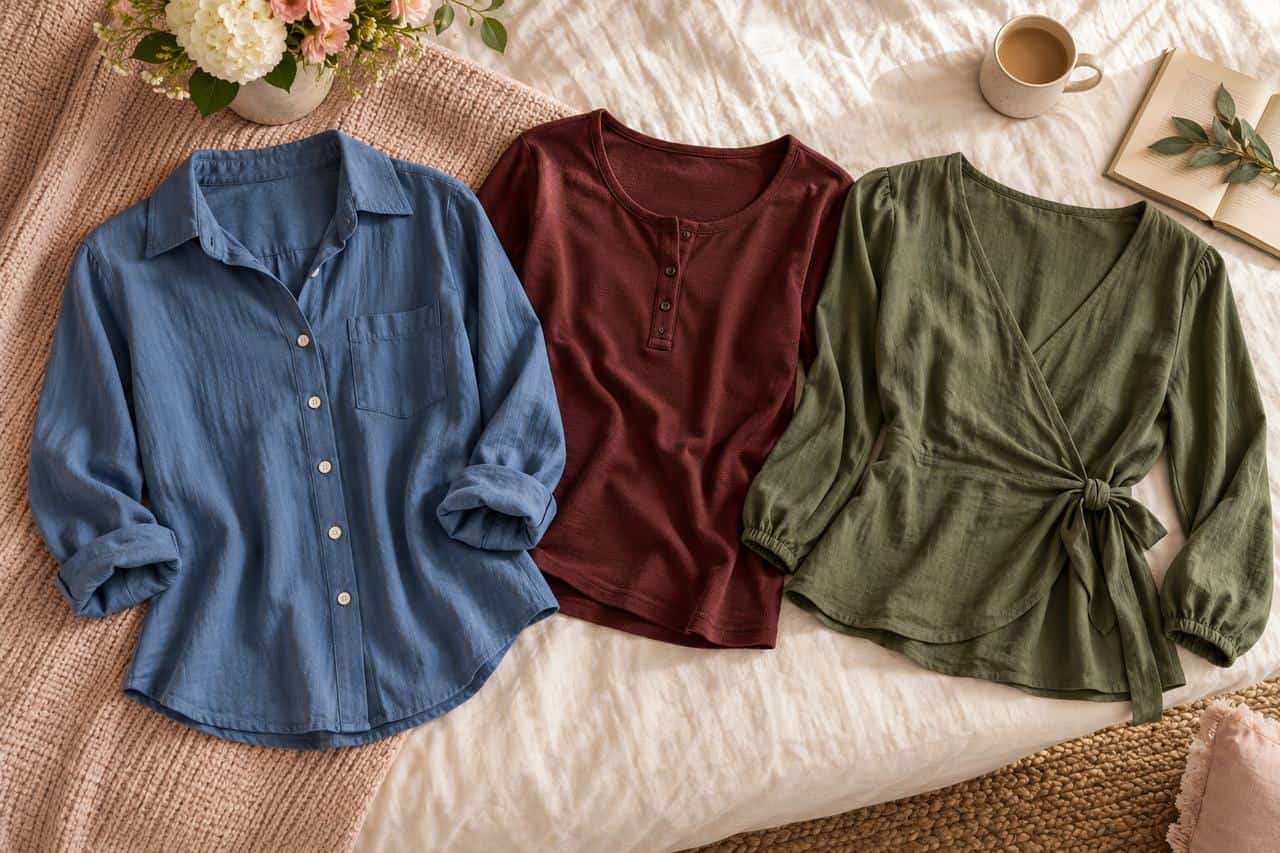
“Maternity,” “stretchy,” and “nursing friendly” do not describe the same feature. A garment can accommodate a changing abdomen and still provide no practical feeding access. Look for photographs or a video showing the actual construction.
- Button front: Do the buttons genuinely open, and how far does the opening extend?
- Henley: Is the short placket deep enough for your intended access, rather than merely decorative?
- True wrap: Can the overlapping panels move? Is there a fixed insert underneath?
- Designed nursing opening: Where is it, how does it open, and does the inner layer also allow access?
- Liftable separate top: Does its length and shape let you lift it comfortably with your chosen bottom and underlayer?
Do not infer an opening from a neckline alone. A low neckline may still be firm or narrow. A high neckline may conceal a well-designed opening. The useful information is how the whole garment works, including its lining.
Keep body measurements and garment measurements separate
A body size chart describes the body the brand intends a size to fit. A finished-garment measurement describes the clothing itself. They answer different questions. A shirt usually needs some room around the body; the amount that feels right depends on its cut, fabric, and your preferences.
Compare a listing’s garment measurements with a similar garment you already enjoy wearing. Use the same method: a flat chest width is not the same number as a full bust circumference. Ask where a length starts and whether a waistband measurement is relaxed or stretched.
For a shirt, useful comparisons may include upper-arm room, chest width, shoulder width, and front length. For trousers, consider waist, hips, rise, and inseam. For a dress, add the location of the waist seam and feeding opening. You do not need every possible measurement; you need the ones connected to your usual fit frustrations.
Read the fabric and care details together
A fibre name is only part of the story. Two cotton tops can feel very different because of their weight, knit or weave, finish, seams, and stretch. “Soft” in a description cannot tell you whether a neckline feels scratchy or a double layer feels heavy to you.
Check the full composition, lining, and care information. If a garment needs care you cannot realistically manage, include that in your decision before ordering. A beautiful top that is usually waiting for specialist cleaning may not solve an everyday shortage.
The US Federal Trade Commission’s care-label guidance explains the role of care instructions on covered clothing. Wherever you shop, ask for the actual item’s care directions rather than assuming that every garment made from a particular fibre can be washed the same way.
Ask the seller questions that can be answered
A message such as “Is this good for breastfeeding?” invites a vague reply. A better message names the construction and measurements you need:
“Could you confirm whether the front buttons open and whether there is a fixed lining underneath? For size L, please share the flat chest width and front length, including where you measure from. I also need to know the care instructions and whether this colour and size can be returned after a clean indoor try-on.”
If you pump, ask about the garment’s opening and room, but verify equipment requirements with your pump or bra manufacturer. A clothing seller cannot establish compatibility simply by describing a top as “pump friendly.”
Keep the response with your order information. If a seller cannot clarify a detail that determines whether you can use the item, waiting is a reasonable decision.
Understand the full cost of trying it
Before paying, check delivery charges, return postage, the return window, refund method, and any exclusions affecting that exact item. Underwear, clearance pieces, or personalised items may have different conditions. Policies also vary by seller and country; do not assume a familiar marketplace gives every listing identical terms.
The FTC’s online-shopping advice recommends checking sellers, total costs and return policies, reading reviews critically, and keeping purchase records. Treat reviews as clues: repeated comments about a short opening are useful, but another person’s comfortable fit is not a guarantee for you.
A simple comparison note can contain six entries: item, usable opening, relevant measurements, care, total cost, and return deadline. That is enough to compare two candidates without building an elaborate shopping spreadsheet.
From the capsules
The Year Round Capsule
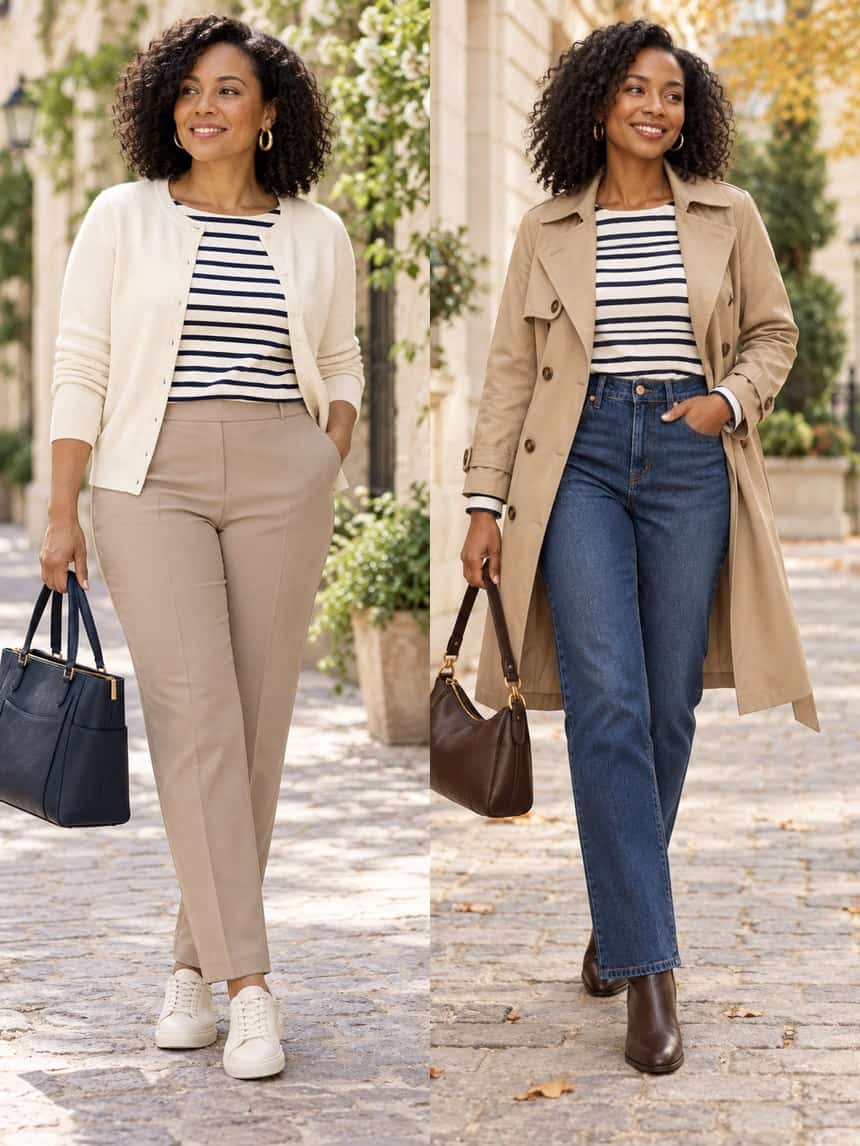
Two hundred nursing-friendly outfits from fifty-six pieces, fifty for every season, laid out and then worn. $29 once, yours to keep.
Build a useful try-on appointment at home

When the parcel arrives, keep the packaging and tags intact until you understand the return conditions. Try the garment clean and indoors, with the underlayer and bottom you intend to wear. Avoid an actual feed, pump session, washing, or alteration until you have decided to keep it and checked any relevant restrictions.
Stand, sit, reach forward, and restore the clothing after opening it. Look for a waistband that changes position when you sit, buttons that strain, sleeves that limit your reach, or an opening that is awkward beneath another layer. Check opacity in ordinary daylight.
Give the piece a complete outfit. A shirt may look unfamiliar with the wrong trousers but work beautifully with your usual skirt. Equally, a garment that only works if you buy a new bra, new bottom, and new shoes may be a larger purchase than its price suggests.
Use a keep, clarify, or return decision
Keep when the garment meets the original job, feels comfortable in motion, and works with a real outfit. Clarify when one answer is missing and you still have time to obtain it. Return when a functional requirement fails or you find yourself planning several uncertain fixes.
Set your own decision point before the seller’s deadline, allowing time for packing and shipping. A return parcel left by the door is still an unfinished task. Put the collection or drop-off into the same reminder as the decision.
Questions moms often ask
Should I order my pre-pregnancy size?
Use current measurements and the specific brand’s chart. A familiar size label can be a starting point, but it cannot replace the fit information for this garment.
Is sizing up enough to make a shirt nursing friendly?
It may add room, but it does not create a functional opening or move a fixed lining. Check access and fit as separate requirements.
Should I order several sizes at once?
Only if the cost, temporary payment hold, return conditions, and return workload suit you. Asking for a key measurement first may avoid unnecessary orders.
The Nursing Mama Fashion Commandments
Twelve rules I wish someone had told me postpartum. Print them. Screenshot them. Live by them.
- Nursing bra always. Regular bras become instruments of pain the day letdown surprises you.
- Nursing pads on your body + a spare pair in your bag. Every single time you leave the house. No exceptions.
- Extra top in your bag — for YOU, not the baby. Because leaks, spit-up, and coffee-spills don’t care about your outfit plan.
- If it takes more than 5 minutes to figure out how to nurse or pump in it, it’s not the right outfit today. Feeding access is comfort. Comfort is not optional.
- Belt under the bust (empire) or below the belly with drape — never at the belly button. Your postpartum body deserves flattery, not compression.
- Comfortable waistband is non-negotiable. Elastic, wrap, or pull-on. Zippers are a Sunday-only luxury for now.
- Dark tones, prints, or textures — not thin light solids. Because letdown marks are real and you deserve clothes that don’t advertise them.
- Machine-washable everything. Dry-clean is not real-mama fashion. If it can’t survive a spit-up rinse, it’s not in rotation.
- Cross-body bag only. Hands stay free for the carrier, the toddler, the coffee, the door, the meltdown.
- Comfortable shoes always. You’re carrying a car seat and a diaper bag. This is not the season for a heel you can’t run in.
- Get dressed BEFORE the kids see you if you can. It changes the whole day — for them and for you.
- One accessory — earrings, a lip color, a scarf — counts as “put together.” That’s the whole game. You get to feel like yourself again.
Buy for the morning you want to make easier
The best purchase has a clear place in your life: a shirt you can open, a dress you can sit in, a layer you do not have to fight. Save the details of pieces that work so your next decision starts with evidence from your own wardrobe.
For more practical ways to build outfits around feeding, comfort, and your personal style, explore NennVersa and The NennVersa Atelier. We focus on you, Mom.