“Just tell me what needs doing” can sound helpful when you are already keeping track of everything. But if you have to remember that the spare top was used, find a clean replacement, explain which pouch it belongs in, and check that it was packed, much of the work is still yours.


Sharing packing and restocking means sharing the noticing, deciding, finishing, and following up. A checklist can support that agreement. It cannot replace it.
You do not need an elaborate family management system to begin. Choose one recurring task, agree what finished looks like, and give one person responsibility for the whole loop. Start small enough that the change can survive an ordinary tired evening.
Look at the whole task, including the invisible parts
Take the outing bag as an example. Packing it involves more than putting items inside. Someone notices what was used, knows which clothes still fit, checks what remains, finds replacements, and deals with the bag when it comes home.
If one adult completes only the visible packing while another supplies every instruction, the task has been divided without fully sharing responsibility. That does not mean the arrangement can never work. It means you should name what each person is actually doing before deciding it feels fair.
Write the task in order: inspect, replace, pack, confirm readiness, unpack, and reset. You may discover that the most tiring part is monitoring supplies or remembering the return, not physically packing the bag.
Choose one complete loop to share first

Start with a manageable job that happens often enough to practice. Examples include restocking the outing bag after it is used, returning clean spare clothes to their pouch, or preparing the next day’s lunch and its final-additions reminder.
Agree who owns the loop for a particular period. Ownership means noticing when it is needed and completing it without a fresh assignment each time. It also means asking specific questions when information is genuinely missing.
Try a direct conversation: “I need the bag reset after outings without me checking every pocket. Can you own emptying it, replacing what was used, and leaving a note if something is missing? Let’s agree on what it needs to contain.”
Choose the wording that suits your relationship, but keep the request concrete. “Help more” expresses a real need; “own the bag reset after Saturday outings” gives both people something observable to discuss.
Agree what finished means
A task can look complete while still leaving the next person with work. A clean shirt on the dryer is not a restocked pouch. A wiped bag containing yesterday’s wet clothes is not ready to leave.
Write a short definition that includes the final location and any important conditions. For example: “The spare-clothes kit is ready when the clean, dry top and required underlayer are in the blush pouch, the used-clothes pouch is empty and usable, and both are back in the bag.”
| Task | Finished means | If it cannot be finished |
|---|---|---|
| Spare clothing | Suitable clean, dry replacement returned to its pouch | Leave a note naming the missing piece |
| Outing bag | Used items removed and agreed contents replenished | Mark the specific gap before the next outing |
| Food preparation | Food prepared and stored appropriately, with a departure reminder | Agree an alternative rather than leaving an empty container |
| Small refill basket | Current supplies restored to the agreed level | Add the exact needed item to the shared shopping list |
The goal is clarity, not perfection. Choose standards that support the next use. Matching folds and color-coded pouches are optional unless they solve a real problem for your household.
Make the information available once
Keep the packing list where the packing happens. Include details another person cannot reasonably guess, such as the child’s current clothing size, which spare shirt works with your usual outfits, and where refill supplies live.
Use the same names on the list and containers. If the list says “mom pouch” but every drawer holds a pink pouch, finding it still depends on asking you. A photograph of the finished kit can help if it is easier than a long written description.
Let the person taking ownership help create the reference. They can write down what they need to know, identify unclear steps, and choose their own reminder method. You should not have to design a complete management system before sharing one household job.
Separate personal choices from practical preparation
You may need to decide which bra feels comfortable or which pump arrangement works for your body. Those choices do not make every surrounding task your responsibility. Another adult can put away clean clothes, locate compatible supplies, or maintain the packing list once the necessary information is clear.
Some tasks also have safety-related instructions. For example, pump equipment needs an appropriate cleaning, drying, and storage routine. Keep the CDC’s pump-cleaning guidance and the manufacturer’s instructions available to the person doing that job. A shortcut should not be introduced simply because someone is unfamiliar with the process.
Distinguish those requirements from preferences. The clean kit’s protection matters. Whether the spare top is folded in thirds or rolled may not. Agree which details affect use and let the owner choose the rest.
Use restocking cues that do not depend on memory
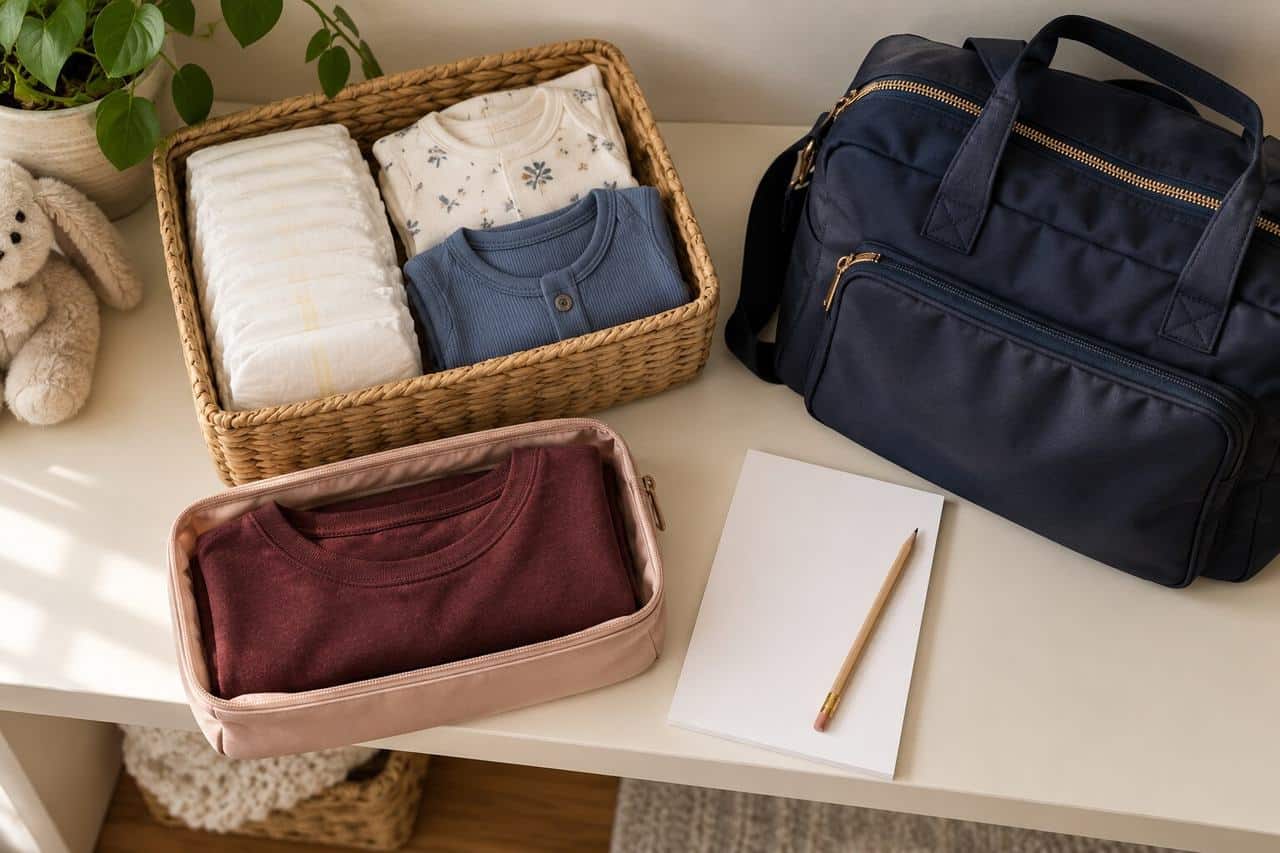
Pick a visible point that triggers action. The last spare top leaving the shelf can trigger a laundry check. A small refill basket dropping below the agreed level can trigger a shopping-list entry. An empty used-clothes pouch can signal that the bag reset is finished.
Make the trigger specific enough that two people interpret it similarly. “Low on supplies” is vague. “When this basket has only one outing’s supply left, add the item to our shopping list” is easier to act on.
The exact quantity depends on your household’s use, storage, and shopping routine. Review it after trying the system. The aim is enough notice to replace things without storing more than your space or budget comfortably allows.
Plan for exceptions before they become last-minute problems
Someone will be ill, work late, or discover that the expected clean shirt is still wet. Agree what happens then. Ownership includes communicating a problem early enough for an alternative, not silently abandoning the task.
A useful handover sounds like: “The bag is restocked except for your navy top, which is still drying. The burgundy shirt is clean if you want to use it. I can pack that once you confirm.” It gives the state, the issue, and a possible next step.
If the same exception happens repeatedly, change the arrangement. Perhaps the task belongs earlier in the day, the drying time is longer than expected, or the owner cannot reliably do it at the agreed time. Treat the pattern as information.
Review the arrangement without turning it into a daily inspection
After a few uses, have a short check-in. Ask what was easy, what information was missing, and which step remained unfinished. You do not need to score each other or examine every packed item indefinitely.
If you are accustomed to checking everything, reducing that habit can take practice. Start with one clearly defined loop and allow the other person to carry it through. If something important is missed, discuss the specific failure and update the arrangement.
A checklist cannot solve a persistent refusal to share responsibility. If the agreement is repeatedly ignored, the issue may need a broader conversation about workload, support, and expectations rather than another prettier printable.
Adapt this if you are parenting alone
You may not have another adult available to own daily tasks. That is a real constraint, and organization does not create another pair of hands. Use the same method to reduce repeated decisions: one bag home, one visible list, and one clear definition of ready.
If occasional help is available, request a whole useful job. “Please wash, dry, and return the spare tops to this drawer” can be more helpful than general offers that require you to decide what to delegate in the moment.
You can also reduce the scope. Fewer bags, fewer pouches, and fewer separate restocking locations mean less to monitor. Keep the pieces of the system that make life easier and let the rest go.
Your questions, answered
Do we need a shared app?
No. A paper card, note on the fridge, or a shared list you already use can work. Choose the place both people will actually consult.
What if my partner packs differently?
Check whether the result meets the agreed functional requirements. If everything necessary is ready, secure, and findable, the different method may be fine.
How do we keep the list current?
Include updates in the owner’s role and agree how changes are communicated. A new clothing size or different outing routine should update the shared reference rather than remain in one person’s memory.
Share one whole job this week
Choose the loop, name its owner, and agree on the finish. Give it a fair trial before adding more tasks or more tools.
You deserve support that includes the thinking as well as the doing. For wardrobe routines and practical postpartum style resources that make more room for you, explore The NennVersa Atelier.