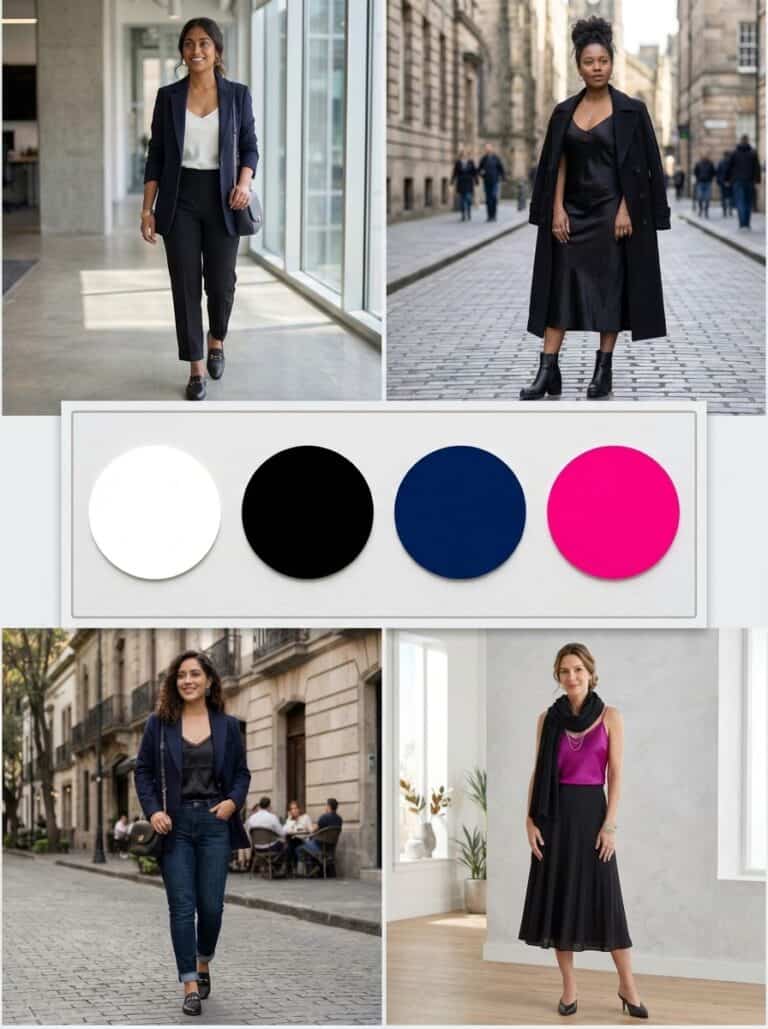
A top can look long enough on a hanger and still ride up when you sit. A dress can have the right skirt length but put its waist seam too high. A nursing opening can be present without landing where it is useful.
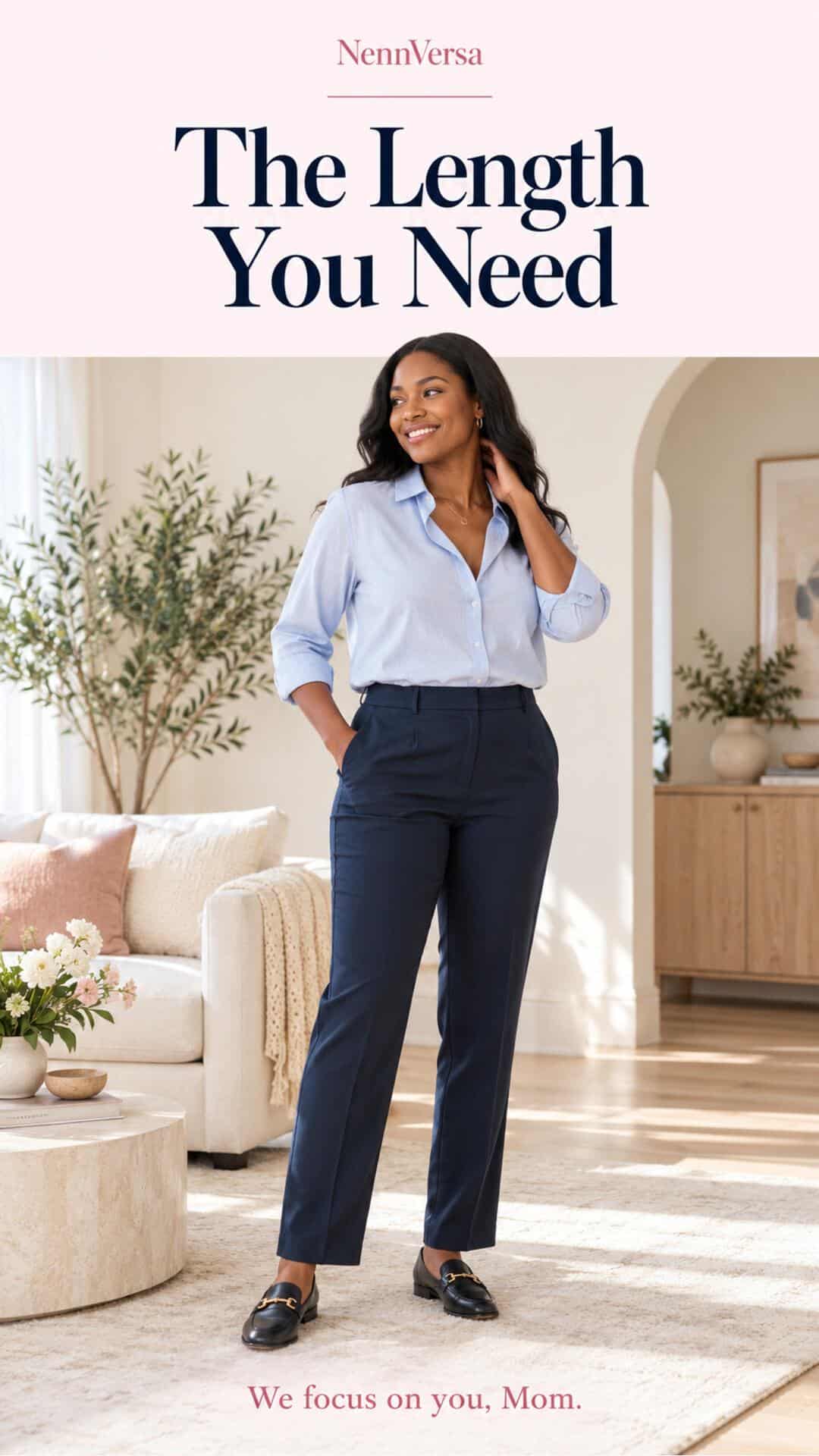
If you are tall or have a long torso, “just size up” may create extra width without fixing the missing length. It can leave you with dropped shoulders, loose cuffs, or a wider neckline and the same original problem.
Find out where you need additional length, then check that part of the garment. Torso length, sleeve length, rise, inseam, and the placement of feeding access are separate decisions. You do not need every piece in your wardrobe to come from a tall range.
Identify your own length pattern
You may be tall with relatively long legs, a long torso, or both. You may need longer sleeves but be comfortable in standard-length tops. Postpartum fit changes can also mean a top sits differently across your bust or middle than it used to.
Start with a garment you like wearing now. What works about its length? Where does its hem sit when you stand, sit, and reach? Compare it with the piece that keeps frustrating you.
Save the useful difference in your notes. “I need more front length when seated” tells you more than “all tops are too short.” A precise problem gives you more ways to solve it.
Check front, back, and seated length
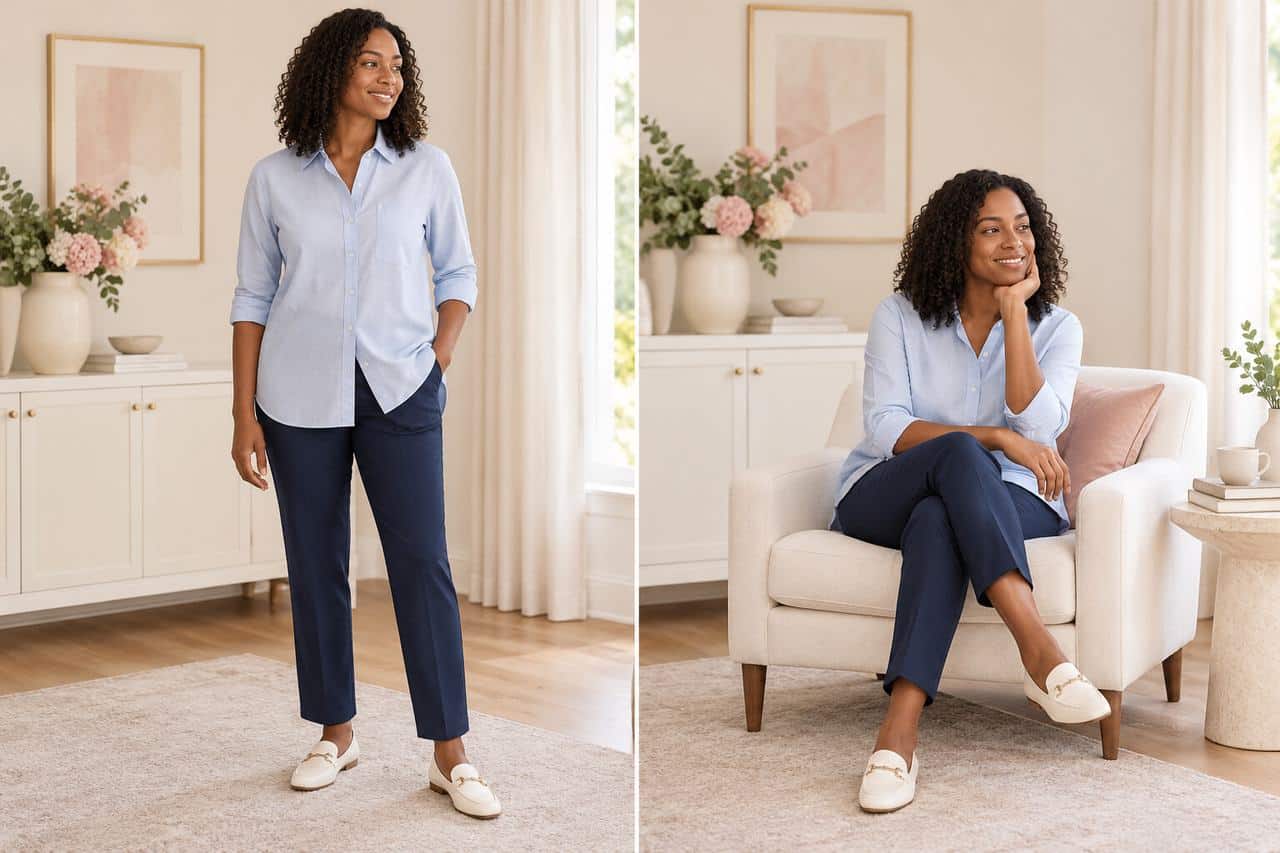
Put on the bra or tank you intend to use. Stand normally, then sit in a chair and reach forward as you might when picking up a bag. Look at how the top moves at the front and back.
A curved or longer back hem may provide the coverage you like, but check whether the front is also comfortable. A top that becomes shorter over your bust may need a different cut, more room, or more length, not necessarily a longer back.
Try the outfit with the actual trousers or skirt. Coverage depends on the relationship between the two pieces. A top that works with one rise may leave a gap with another.
Locate the opening before buying the top
For nursing clothing, opening placement matters as much as total length. Try a zip or panel while seated and check whether you can reach your breast without pulling the whole top out of position.
For an ordinary button-front shirt, see how far it opens. A Henley with a short placket may not provide enough access, even if its body and sleeves are generously long. A true wrap needs its own trial because the crossover and tie position may sit differently on you.
Look beneath the outer fabric. A lining or attached insert can limit access in a garment that otherwise seems ideal. If the opening does not work comfortably, choose a different construction rather than repeatedly tugging it into place.
Choose trousers by rise as well as inseam
Longer legs alone do not solve an uncomfortable fit through the seat or waist. Sit down and check the rise before deciding whether a pair of trousers is right for you.
You may like a higher waistband, a mid-rise, or a soft adjustable band. Choose according to comfort and the rest of the outfit. The highest available rise is not automatically the best postpartum choice.
Then check the hem with your intended shoes. A full-length trouser should not drag where it could catch underfoot. If you prefer a cropped length, choose it deliberately rather than feeling obliged to describe every short pair as a styling choice.
Use a length-and-placement shopping card
| Garment area | What to record | What to ask the retailer |
|---|---|---|
| Top length | The front and back length of a similar top you like. | Where the product measurement begins and ends. |
| Sleeves | The sleeve length and shoulder style you prefer. | Whether the listed length includes a dropped shoulder. |
| Trouser fit | A comfortable rise and preferred inseam. | Whether tall options change the rise as well as the leg length. |
| Dress proportions | Where you want the waist seam and hem. | Bodice length, opening length, and lining construction. |
| Nursing access | The opening type that works with your underlayer. | Whether the fastening is functional and where it sits. |
Measure comparable garments in a consistent way. A length from the highest shoulder point cannot be compared directly with one measured from the back of the neck unless you account for the difference. Use the retailer’s measurement instructions where available.
Try three outfits with practical coverage

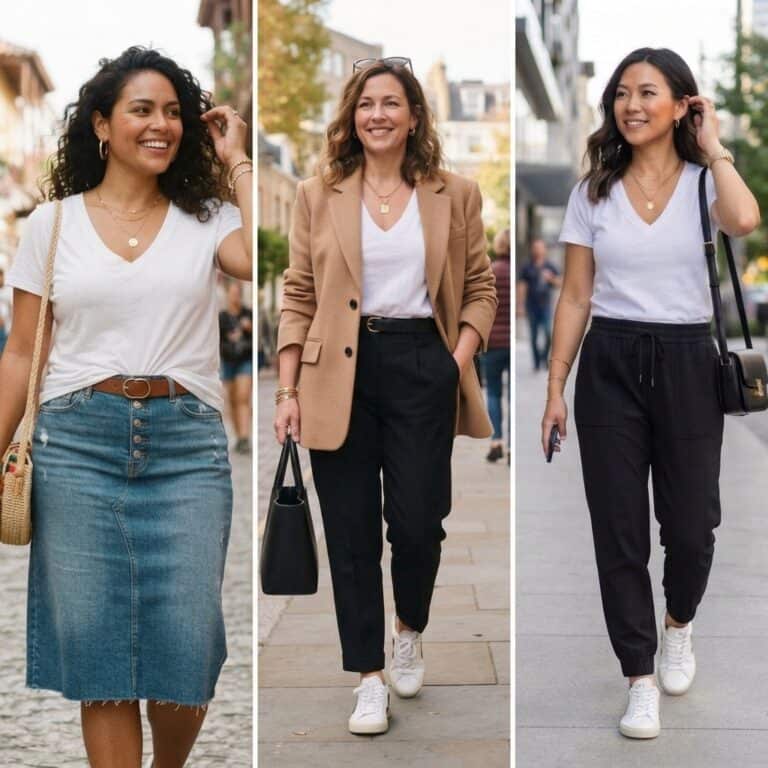
A longer shirt with straight-leg trousers
Try a functioning button-front shirt with enough front and back length, comfortable trousers, and everyday shoes. Leave the shirt untucked if that feels easiest, or use a small tuck you can undo and restore.
A pale blue shirt with navy trousers works as a simple starting point. You can change the colours without changing the principle: the shirt opens, the waistband feels comfortable, and the two pieces still meet the way you want when you sit.
A lifting top with an accessible longer tank
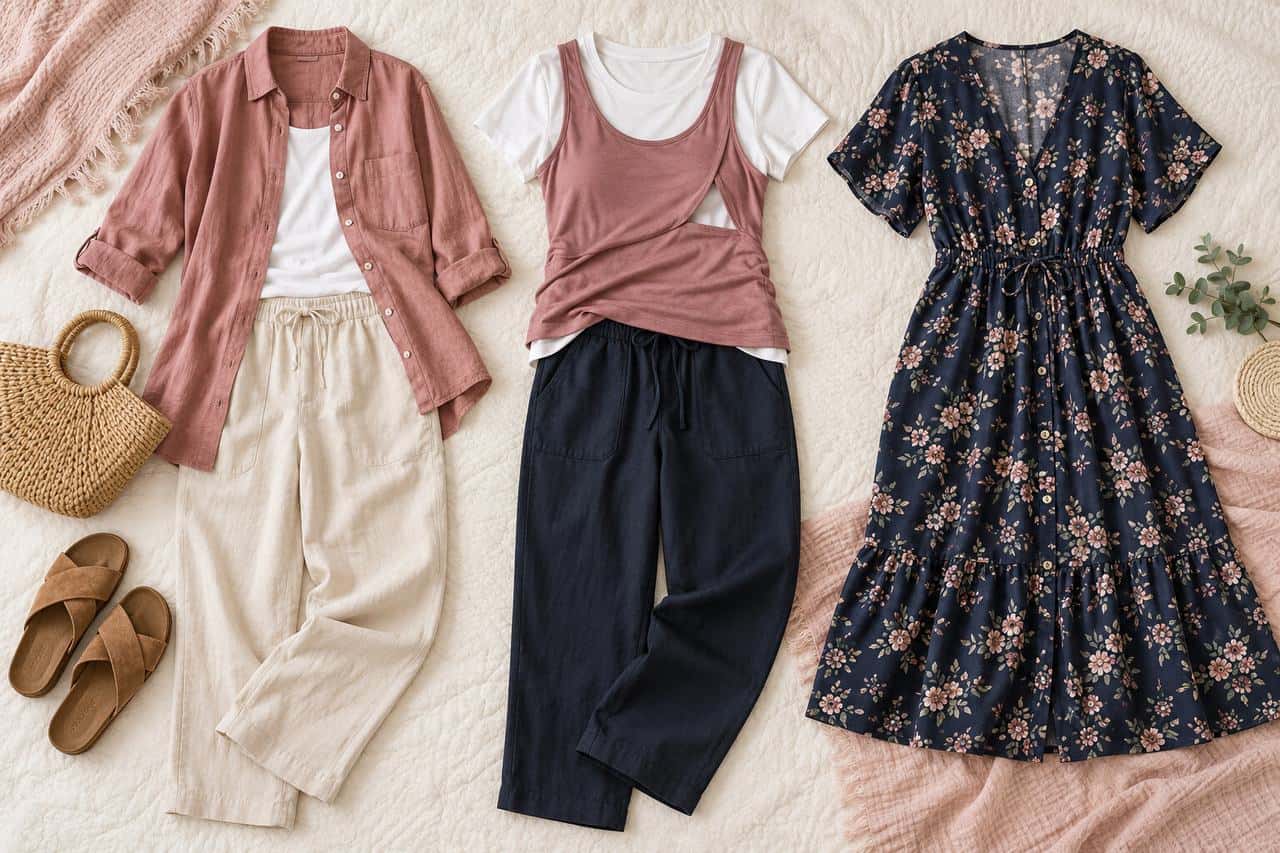
If you like lifting a tee but prefer abdominal coverage, try a nursing tank that has sufficient torso length and a usable opening. Check that the top lifts independently rather than dragging the tank upward.
The tank does not need to be pulled down under tension all day. If it repeatedly rides up, try a different cut or a different access route. An opening shirt may be more comfortable than repeatedly correcting two layers.
A dress with a bodice that fits
Look beyond the skirt length. Check the shoulders, bust room, waist seam, and feeding opening. A tall-range dress may help if the standard bodice is too short, but inspect the brand’s actual measurements.
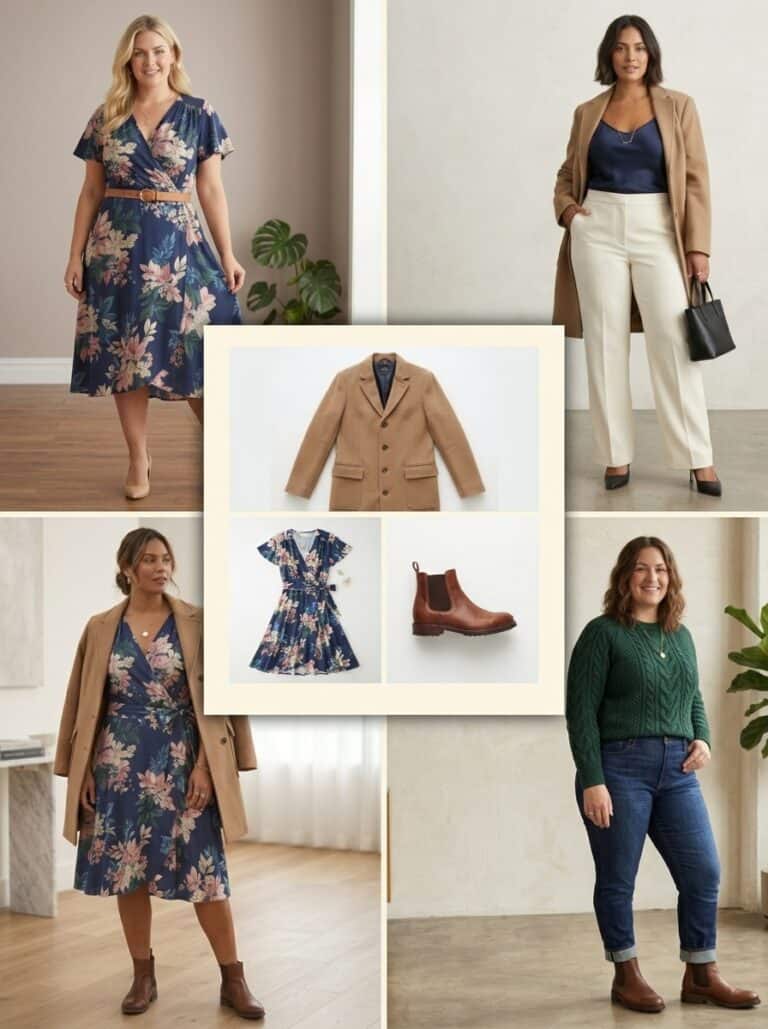
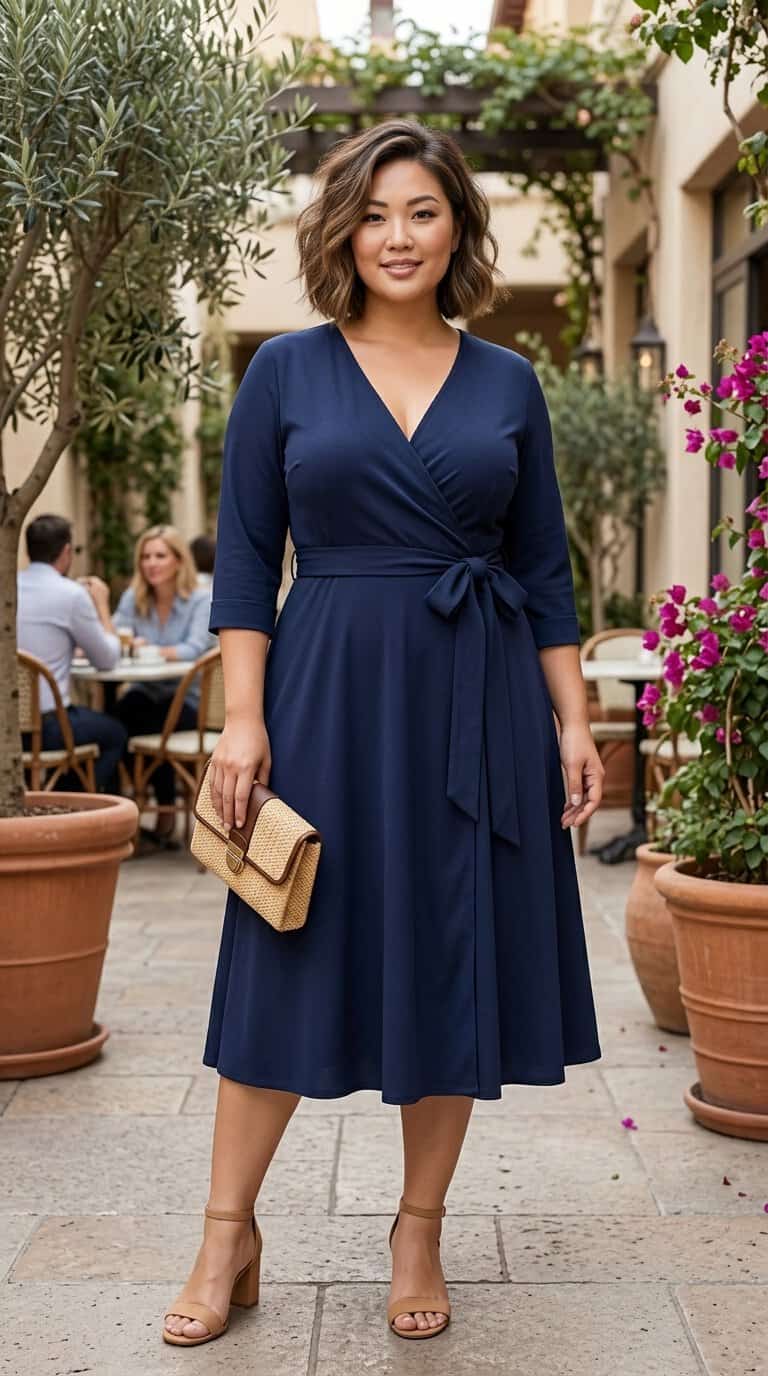
A front-opening midi dress can be a useful option with flats and an open cardigan. A true wrap may suit you too, provided its overlap and tie position work on your body. Keep the combination you enjoy rather than choosing a dress solely because it is long.
Keep short pieces when you like their purpose
A cropped cardigan or shorter jacket can be a deliberate part of a tall wardrobe. It does not need to cover the same area as the top underneath. Check the combined outfit and whether the layer moves easily for feeding.
Similarly, an ankle-length trouser can look and feel exactly right if that is the length you want. The useful distinction is between a chosen silhouette and a garment you keep adjusting because it does not fit your needs.
From the capsules
The Year Round Capsule
Two hundred nursing-friendly outfits from fifty-six pieces, fifty for every season, laid out and then worn. $29 once, yours to keep.
You do not need to avoid heels, long lines, or matching colours to appear less tall. Style is not a correction exercise. Choose what you enjoy and make the functional details work.
Check which alterations are realistic
Some hems have enough fabric allowance to be lengthened; others do not. Letting down a hem can also reveal a crease, faded line, or different finish. Ask a tailor to assess the actual garment before relying on that solution.
Adding a contrasting cuff or hem can become an intentional design detail if you like the result, but it does not fix a misplaced waist seam or feeding opening. Treat each issue separately.
If you are considering a new purchase, compare the cost and uncertainty of alteration with trying a different cut. Keep return conditions in mind before washing or changing anything.
Plan for the movements that expose a length problem
A mirror check while standing still is only the beginning. Sit, reach for a bag, put on an outer layer, and practise the feeding access without your baby in your arms. Then restore the outfit.
Notice whether the top stays caught above the waistband, whether a sleeve pulls when you reach, or whether the dress needs constant straightening. Those details tell you which piece to change.
Save one successful combination in your phone with the exact underlayer and shoes. When a long-enough top finally works, you should not have to rediscover the whole outfit next week.
Common questions
Will sizing up make a top long enough?
Sometimes it changes length, but it also changes other measurements. Check the product information rather than assuming. A different cut or tall version may provide the length with a better fit elsewhere.
Do tall moms need longline nursing tanks?
Only if that length suits the outfit and coverage they want. A long tank is one option, not an essential. Front-opening shirts and suitable dresses may work without it.
What if tall ranges are expensive or limited?
Prioritise the categories where standard lengths repeatedly fail. You may need specialist trousers but be comfortable in ordinary shirts. Second-hand options and a tailor’s assessment can also be useful when the exact measurements are available.
The Nursing Mama Fashion Commandments
Twelve rules I wish someone had told me postpartum. Print them. Screenshot them. Live by them.
- Nursing bra always. Regular bras become instruments of pain the day letdown surprises you.
- Nursing pads on your body + a spare pair in your bag. Every single time you leave the house. No exceptions.
- Extra top in your bag — for YOU, not the baby. Because leaks, spit-up, and coffee-spills don’t care about your outfit plan.
- If it takes more than 5 minutes to figure out how to nurse or pump in it, it’s not the right outfit today. Feeding access is comfort. Comfort is not optional.
- Belt under the bust (empire) or below the belly with drape — never at the belly button. Your postpartum body deserves flattery, not compression.
- Comfortable waistband is non-negotiable. Elastic, wrap, or pull-on. Zippers are a Sunday-only luxury for now.
- Dark tones, prints, or textures — not thin light solids. Because letdown marks are real and you deserve clothes that don’t advertise them.
- Machine-washable everything. Dry-clean is not real-mama fashion. If it can’t survive a spit-up rinse, it’s not in rotation.
- Cross-body bag only. Hands stay free for the carrier, the toddler, the coffee, the door, the meltdown.
- Comfortable shoes always. You’re carrying a car seat and a diaper bag. This is not the season for a heel you can’t run in.
- Get dressed BEFORE the kids see you if you can. It changes the whole day — for them and for you.
- One accessory — earrings, a lip color, a scarf — counts as “put together.” That’s the whole game. You get to feel like yourself again.
Buy for the missing measurement
Before your next purchase, write down the one length or placement detail that needs to change. That turns a vague search for “better postpartum clothes” into a decision you can assess.
For help combining those well-fitting pieces into everyday outfits, explore The NennVersa Atelier. Your clothes should make room for your frame, your feeding routine, and your taste.