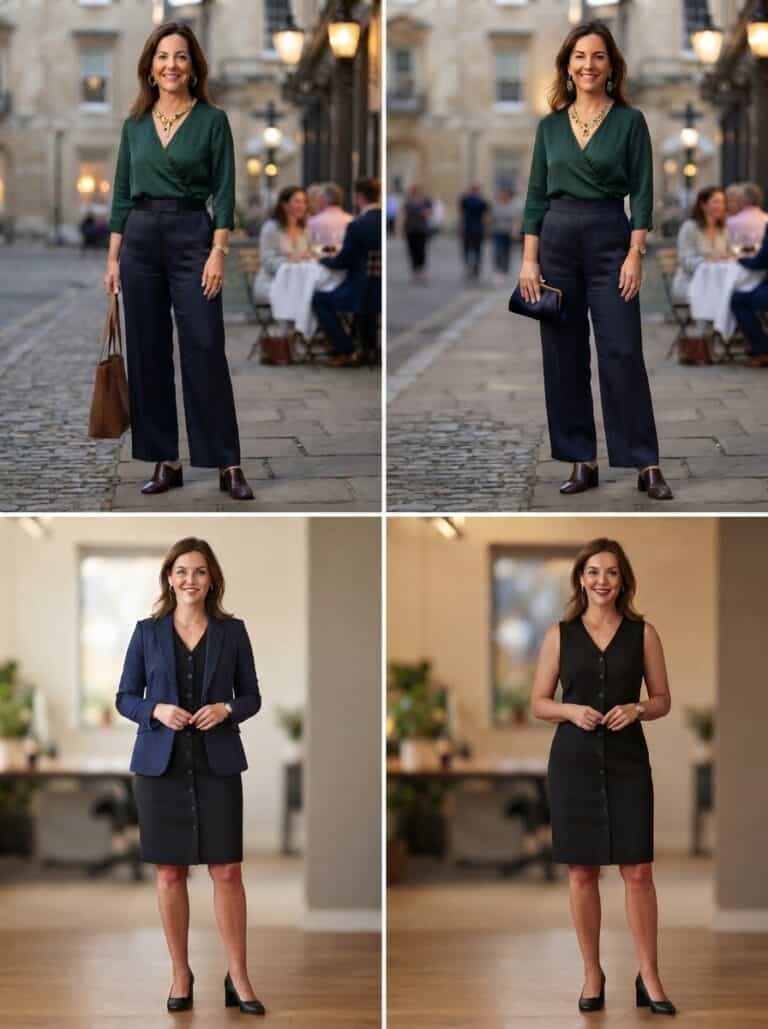
The shirt has enough room across your bust, but the shoulder seams sit halfway down your arms. The nursing opening is lower than you expected. The trousers feel comfortable around your middle, yet the rise and leg length make the whole outfit awkward.
If this sounds familiar, you may be dealing with proportions as well as size. Buying a smaller size will not necessarily fix the problem, particularly when you need more room in one area and less length in another.
For petite postpartum dressing, check where a garment’s important features sit on your body. Look at shoulders, openings, waist seams, sleeves, and hems before deciding whether to size up, size down, or try a different cut.
Petite does not describe one body shape
You can be petite with a fuller bust, broad shoulders, a soft middle, curvy hips, or any combination of those features. You may have relatively long legs and a shorter torso, or need shorter sleeves without needing a shorter body length.
Retailers use different size ranges and grading, so treat “petite” as a place to look, not a guarantee. A standard-range top may suit you better than a petite version if you need its torso length. Petite trousers may work well while a petite dress puts its waist seam somewhere you dislike.
Your objective is a garment that fits the body you have now. There is no requirement to make that body appear taller, smaller, or closer to a previous shape.
Check the shoulders before judging the overall size
Put on the underlayer you plan to wear. Look at the shoulder area and move your arms. Does the neckline shift noticeably? Are the sleeves restrictive, or is there more fabric than you want beneath the arms?
Some shirts intentionally have dropped shoulders. That is a design choice, not automatically a fit fault. The useful question is whether you enjoy the shape and can move comfortably in it.
If a shirt fits your bust only when the shoulders become much broader than you prefer, try a different cut before buying another size of the same style. Bust shaping, stretch, or a different distribution of room may help. Judge the construction, not simply the word “relaxed.”
Find the feeding opening on your actual torso
An opening that looks convenient in a product photograph may land differently on you. Put the top on and check whether its zip, panel, crossover, or button placket reaches a usable position.
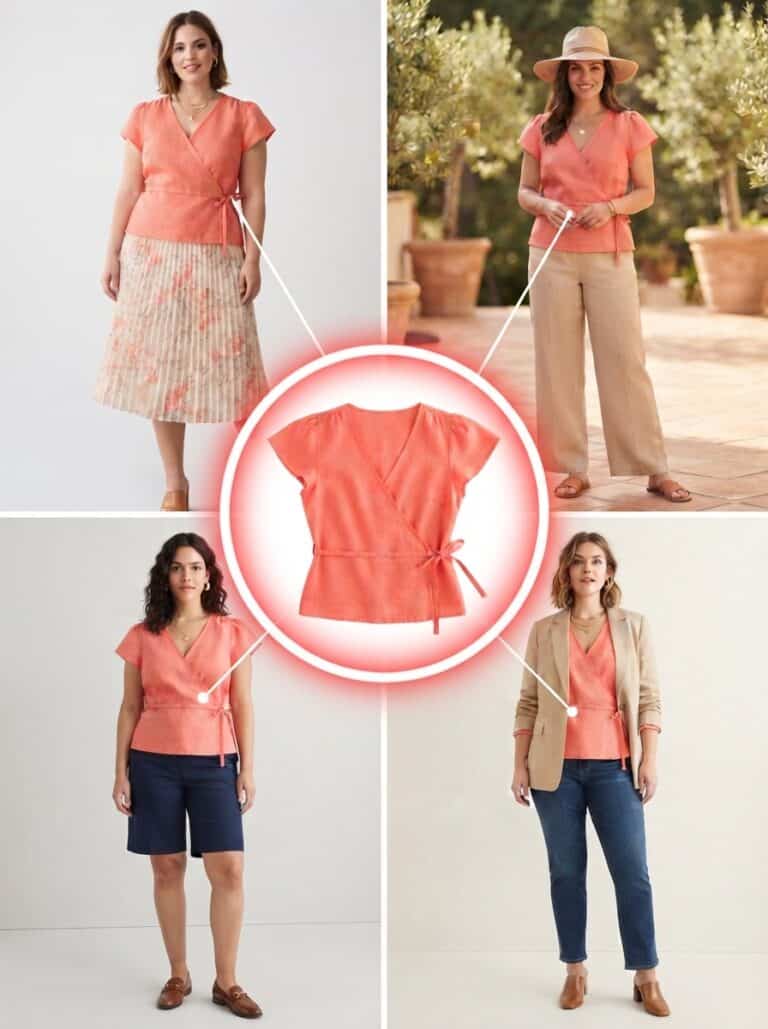
For a Henley, inspect how far the buttons open rather than counting them. For a nursing panel, check whether the fabric beneath it moves comfortably. For a wrap, see whether its crossover and tie sit where you want them.
Try the opening while seated, with the actual bra or nursing tank underneath. If you have to pull the whole garment upward or sideways to reach its intended opening, another construction may be easier. A purpose-made top is only useful if its access works on your body.
Separate waist comfort from rise and length
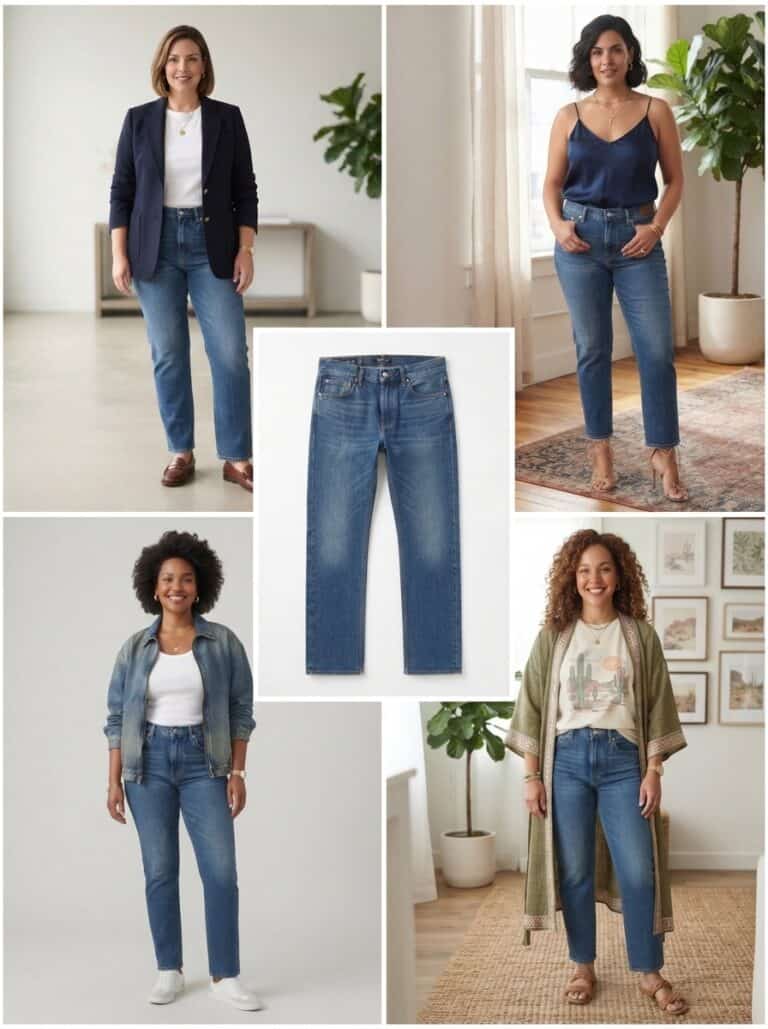
When trousers feel wrong, the waistband measurement may not be the only reason. Look at where the rise places the waistband, how much room you have through the seat, and whether the fabric feels comfortable when you sit.
A high rise is an option, not a universal postpartum solution. You may prefer a different rise or a softer band depending on your comfort. Do not keep a waistband that presses unpleasantly just because it is marketed for postpartum wear.
Check the hem with the shoes you expect to wear. A length that works with one pair may drag with another. If the overall fit is good, shortening a straightforward hem may be worth considering; if the rise itself is wrong, hemming the legs will not solve that.
Use a fit map before shopping
| Area | Question to ask | Useful note to save |
|---|---|---|
| Shoulders and sleeves | Can I reach comfortably without the neckline shifting more than I want? | Preferred shoulder shape and sleeve length. |
| Bust and access | Does the garment have room and a reachable opening? | The opening type that worked with my underlayer. |
| Torso | Does the top finish where I like it when seated? | Length of a similar top I enjoy wearing. |
| Waist and rise | Is the waistband comfortable in my usual sitting position? | Where I prefer the band to sit. |
| Leg or skirt length | Does the hem work with my everyday shoes? | Preferred finished length and intended shoes. |
Keep body measurements separate from garment measurements. Retailer size charts may describe the body the item is intended to fit, while product measurements describe the garment itself. Check which one you are reading before comparing numbers.

Try three outfits with deliberate lengths
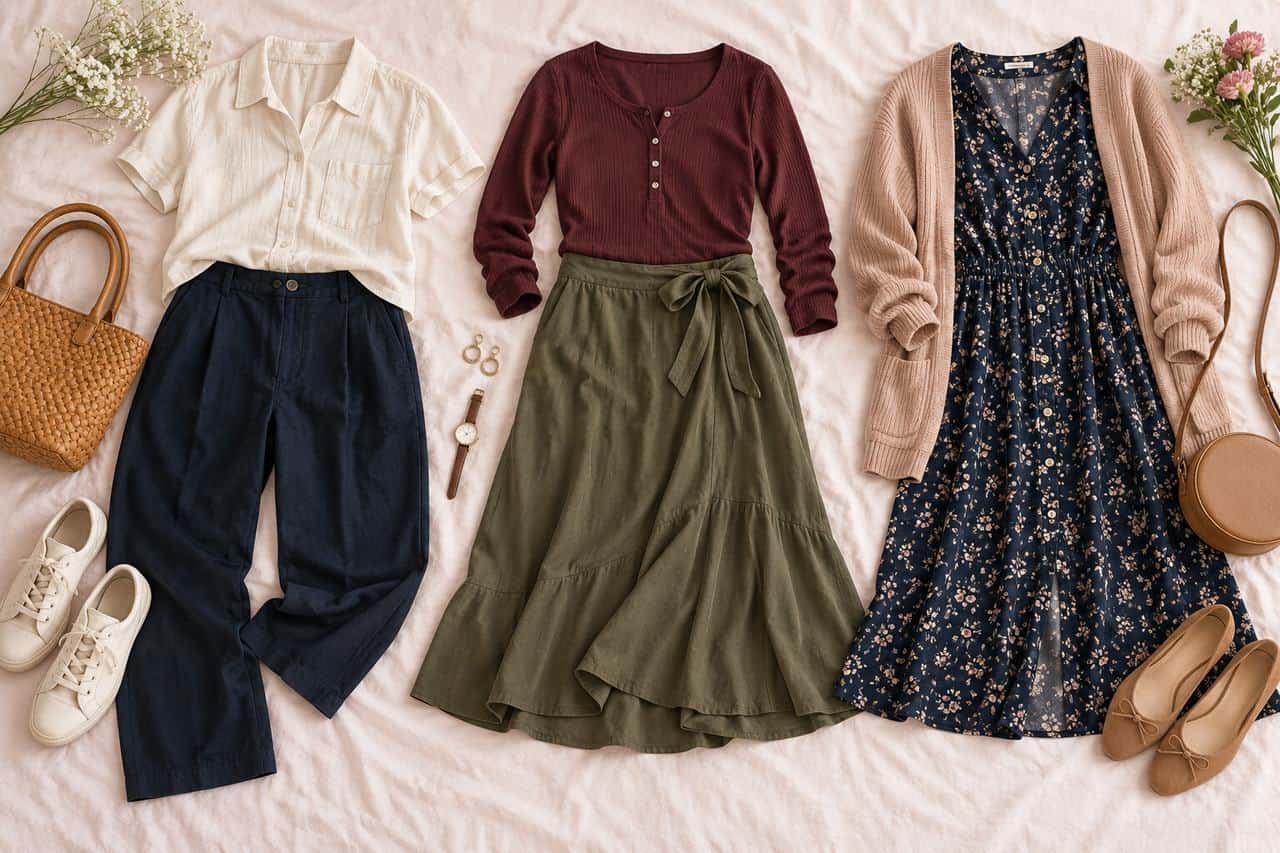
A shorter shirt with relaxed trousers
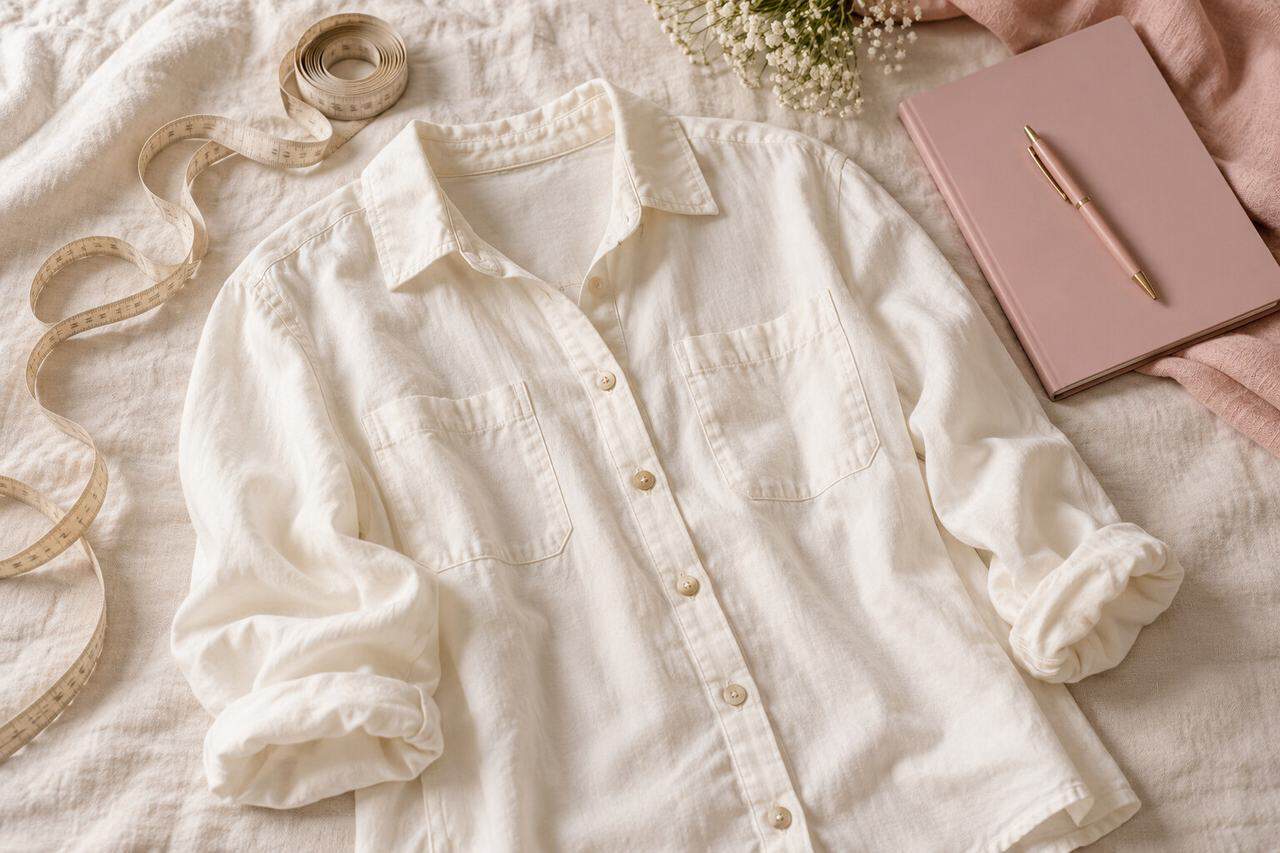
Choose a functioning button-front shirt that finishes at a point you like, without needing a large tuck. Pair it with comfortable trousers and the flats or sneakers you wear most often.
For example, an ivory shirt with navy straight-leg trousers can feel tidy and easy without a cropped hem or fitted waistband. If the shirt is longer, try leaving it open over an appropriate accessible tank and checking whether you like the resulting shape.
A Henley with a skirt
Choose a Henley whose opening works, then pair it with a skirt that sits comfortably. Check where the top ends against the skirt’s waistband. You might like it untucked, lightly tucked, or a little shorter.
A burgundy top and olive skirt offer colour without needing extra pieces. The skirt can be any length you enjoy, provided you can move safely and the hem does not interfere with your day.
A dress with a well-placed waist seam
Try a front-opening or genuinely accessible dress. Look at the position of the waist seam before focusing on the hem. If the waist sits too low or the bodice feels too long, a petite cut may help more than shortening the skirt.
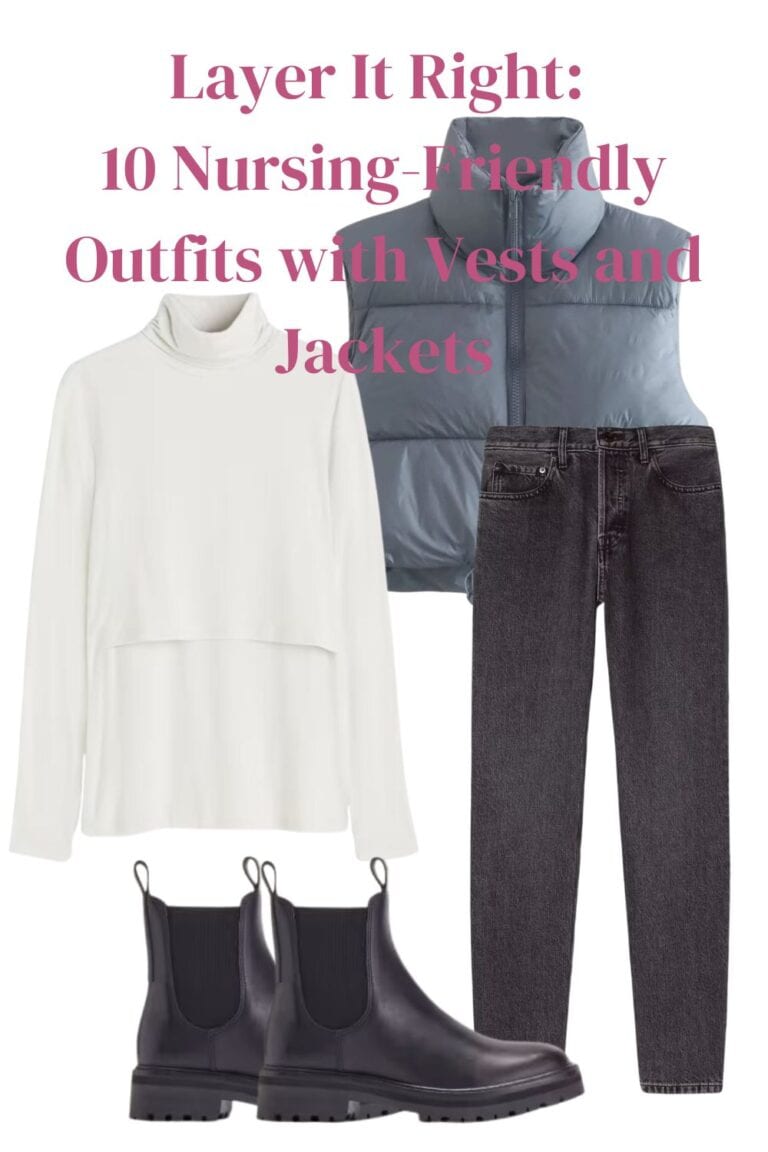
Add a cardigan only if you want its warmth or appearance. Check where the cardigan ends against the dress. A shorter layer can create one effect and a longer layer another; neither is forbidden because you are petite.
Use proportion choices as options, not rules
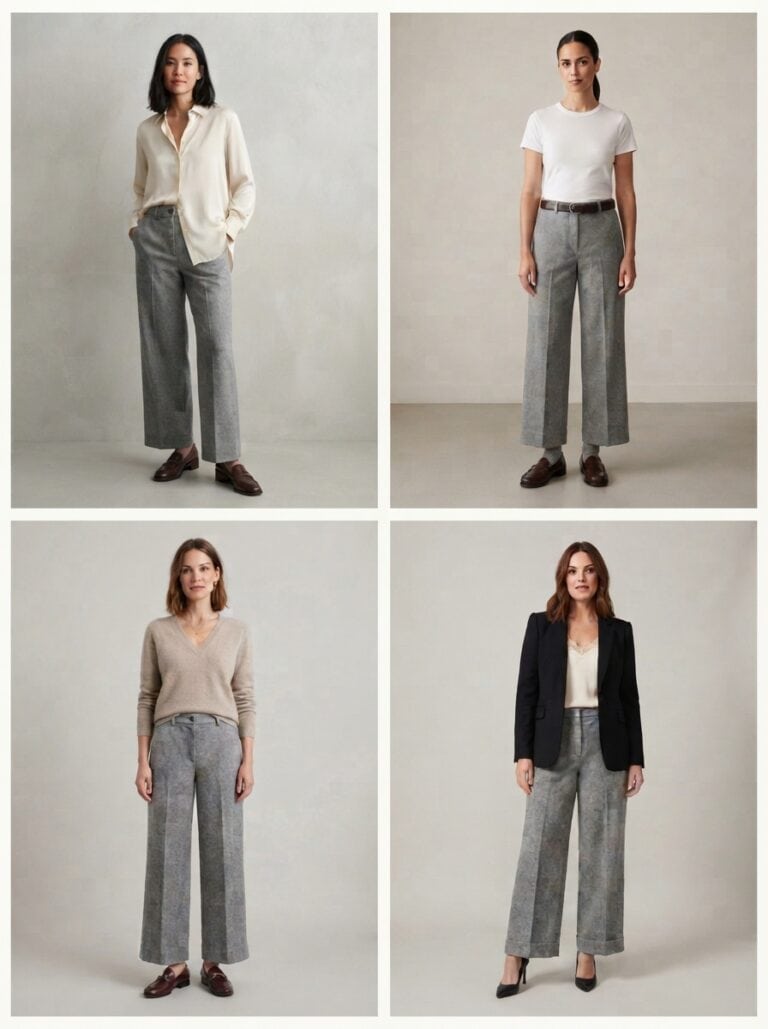
You may enjoy a shorter top with wider trousers because the two lengths feel balanced to you. You may prefer a long, open shirt over narrow trousers. You may love a roomy dress with flat shoes.
Take a quick outfit photo if it helps you see the combination, but pay equal attention to how it feels. A picture cannot tell you whether a waistband digs, a zip is reachable, or a sleeve pulls while you hold your baby.
From the capsules
The Year Round Capsule
Two hundred nursing-friendly outfits from fifty-six pieces, fifty for every season, laid out and then worn. $29 once, yours to keep.
There is no need to ban large bags, midi skirts, wide legs, or oversized pieces. Choose how much volume you want and where you want it. Personal style does not have a height qualification.
Decide whether an alteration solves the real problem
Ask a tailor about a specific outcome: shortening the sleeves, adjusting a straightforward hem, or assessing whether a waist seam can be moved. Bring the underlayer and shoes you intend to wear.
Changes around shoulders, bust shaping, nursing openings, or a complicated lining can be more involved than a hem. Get an assessment and price before buying a garment on the assumption that it can be fixed.
If you are still deciding whether to keep a purchase, check return conditions before altering or washing it. For clothes already in your wardrobe, a small adjustment to a frequently worn piece may be more valuable than several new tops that have the same problem.
Make an online-shopping note that saves time
Write down three things: a measurement from a similar garment you like, the fit problem you are trying to avoid, and the feeding opening you need. Ask the retailer about missing measurements rather than guessing from a model’s height alone.
Try one item before ordering several colours. A style can be promising without being the right style for your shoulders, torso, and current bust together. Keep the information from the trial even if you return the garment.
Common questions
Should petite moms avoid oversized clothes?
No. Decide whether the volume feels intentional and comfortable to you. Check sleeves, access, and the amount of fabric you must manage during feeding. “Oversized” should describe a shape you chose, not a compromise you dislike.
Is petite sizing the same as a smaller size?
No. Petite ranges may change lengths and feature placement as well as measurements around the body. Those changes vary by brand, so use its charts and the actual garment details.
Can I mix petite and standard pieces?
Absolutely. Your most useful combination may include standard tops, petite trousers, and an altered dress. Consistency between labels matters much less than comfort and usable access.
The Nursing Mama Fashion Commandments
Twelve rules I wish someone had told me postpartum. Print them. Screenshot them. Live by them.
- Nursing bra always. Regular bras become instruments of pain the day letdown surprises you.
- Nursing pads on your body + a spare pair in your bag. Every single time you leave the house. No exceptions.
- Extra top in your bag — for YOU, not the baby. Because leaks, spit-up, and coffee-spills don’t care about your outfit plan.
- If it takes more than 5 minutes to figure out how to nurse or pump in it, it’s not the right outfit today. Feeding access is comfort. Comfort is not optional.
- Belt under the bust (empire) or below the belly with drape — never at the belly button. Your postpartum body deserves flattery, not compression.
- Comfortable waistband is non-negotiable. Elastic, wrap, or pull-on. Zippers are a Sunday-only luxury for now.
- Dark tones, prints, or textures — not thin light solids. Because letdown marks are real and you deserve clothes that don’t advertise them.
- Machine-washable everything. Dry-clean is not real-mama fashion. If it can’t survive a spit-up rinse, it’s not in rotation.
- Cross-body bag only. Hands stay free for the carrier, the toddler, the coffee, the door, the meltdown.
- Comfortable shoes always. You’re carrying a car seat and a diaper bag. This is not the season for a heel you can’t run in.
- Get dressed BEFORE the kids see you if you can. It changes the whole day — for them and for you.
- One accessory — earrings, a lip color, a scarf — counts as “put together.” That’s the whole game. You get to feel like yourself again.
Choose the fit detail that matters most tomorrow
Start with the garment that repeatedly frustrates you. Identify whether the problem is width, length, feature placement, or access. Then test one different option.
For help building complete looks around the pieces that fit your frame and your feeding routine, explore The NennVersa Atelier. You can dress with intention without following rules about how tall you should look.