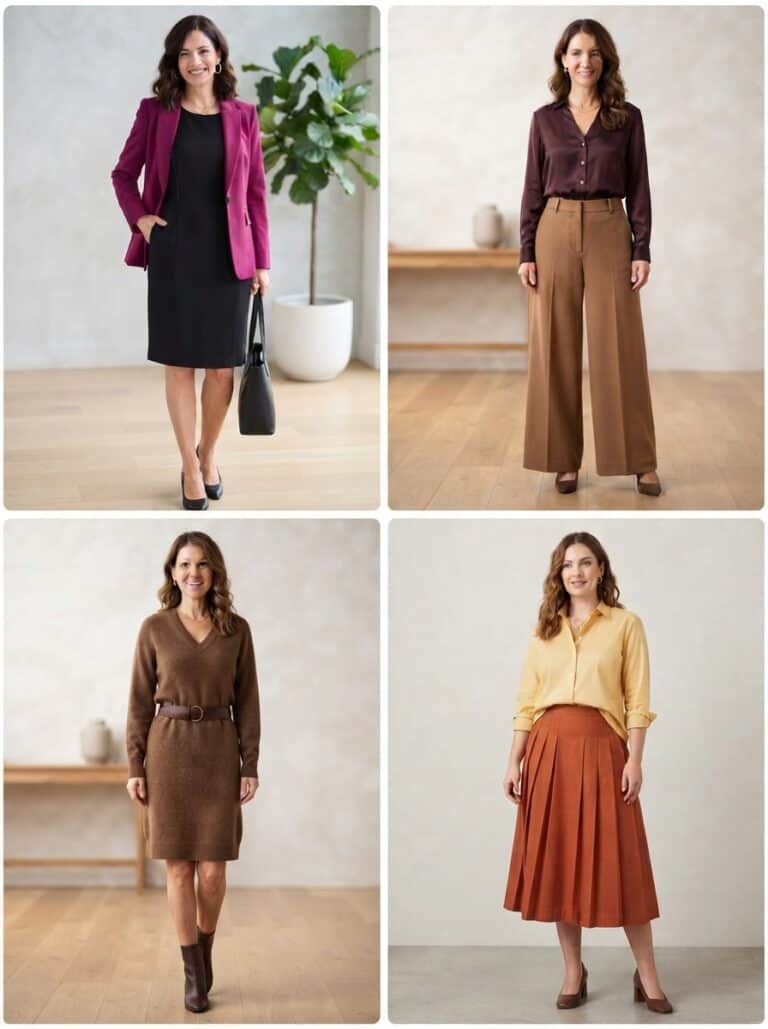
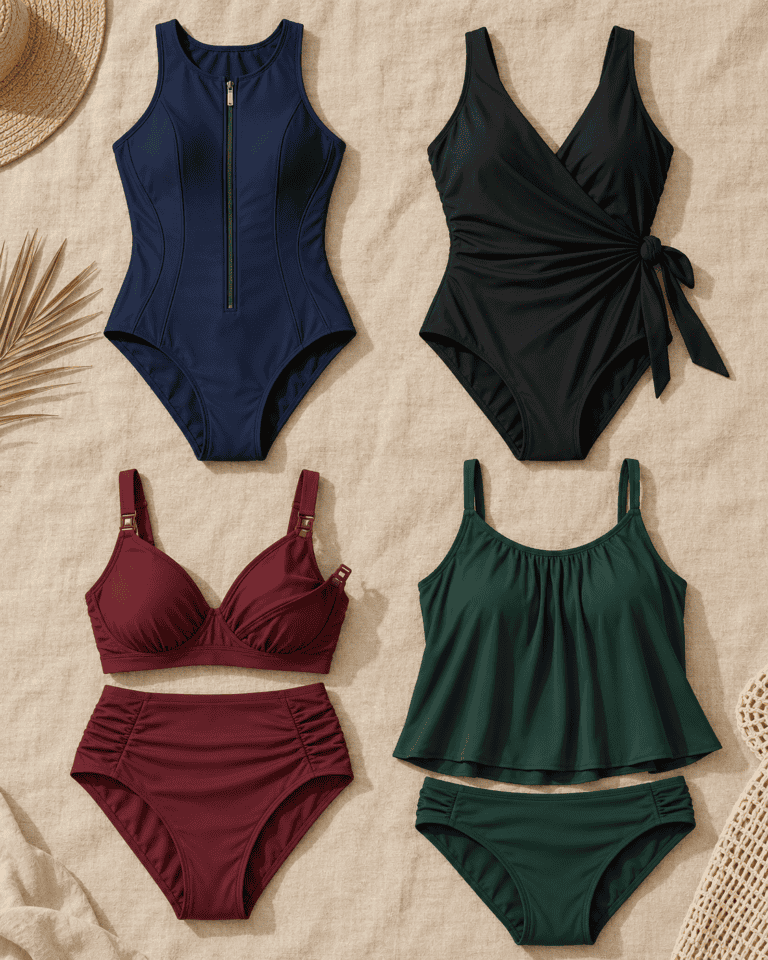
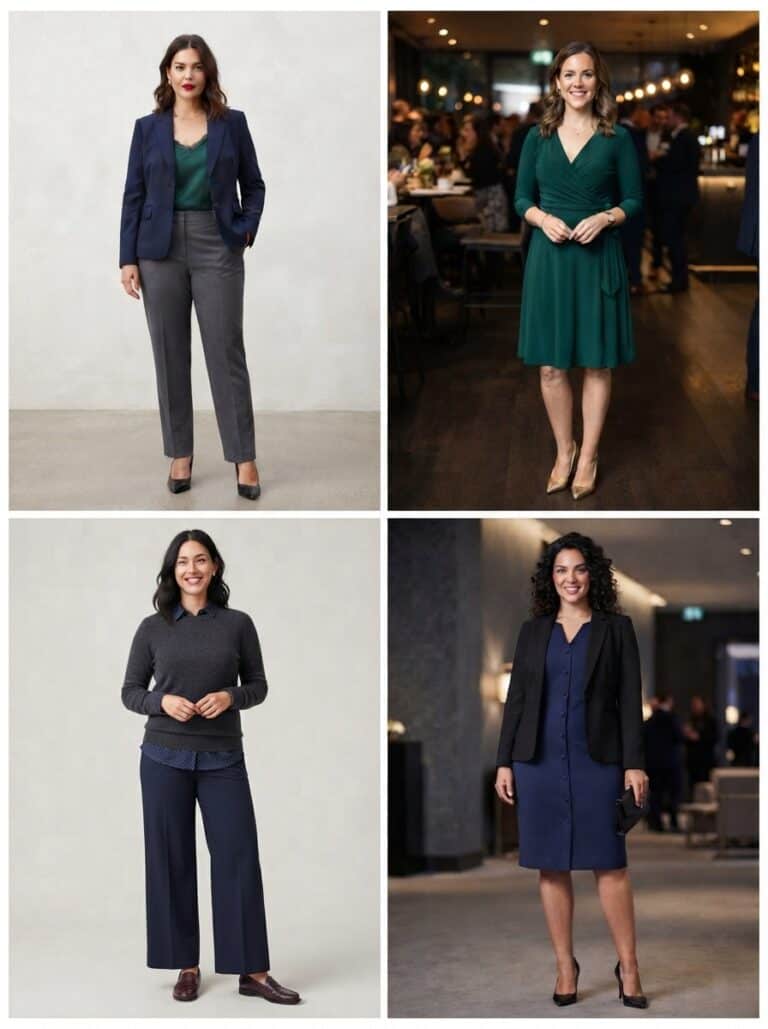
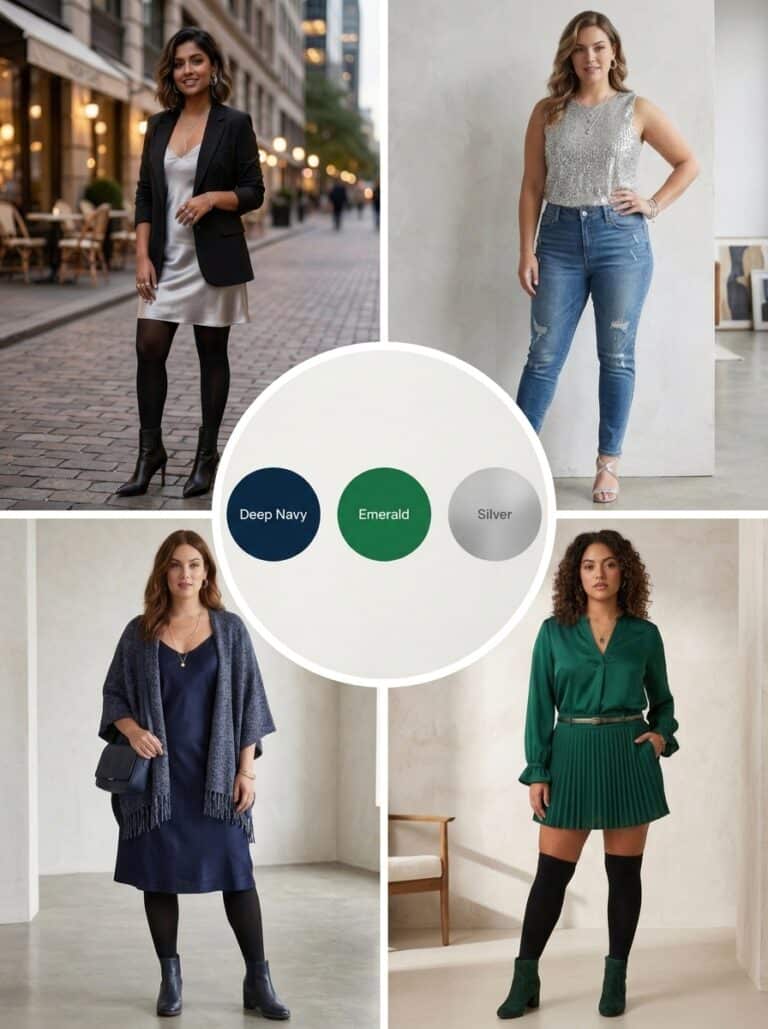
The top fits, the colour feels right and the feeding opening works. Then you notice a bra strap at the shoulder, a cup edge above the neckline or a pad outline beneath the fabric. You add another layer, adjust the strap and wonder why a simple outfit has become so complicated.
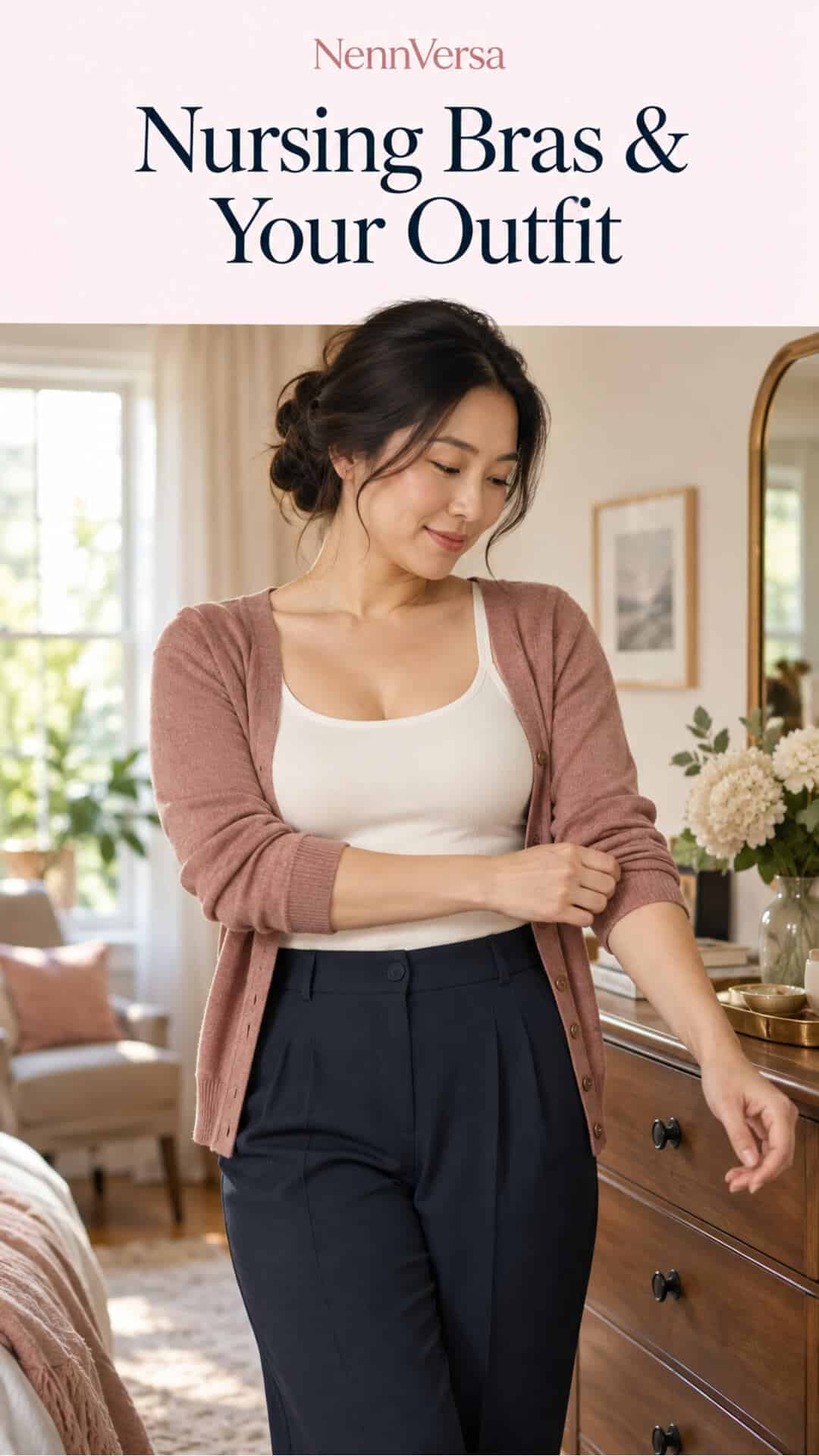
You are allowed to leave those details visible. You are also allowed to prefer a smoother or more covered finish. If you want to change the appearance, start by identifying exactly what is showing. Different problems need different adjustments.
The aim is to keep a comfortable, usable underlayer and find clothes that work with it. You should not have to make the bra painful, block its opening or build an outfit too warm for your day just to hide a seam.
Identify which detail you want to change
“My bra shows” can describe several things: colour visible through fabric, the physical outline of a cup, a strap outside the shoulder line, a cup edge above the neckline, or a folded pad creating a bump.
Try the outfit in the light where you will wear it. Look from the front and side, then sit and reach. A top that appears opaque in a dim bedroom may look different near a window. An armhole that covers the bra while standing may move when you reach forward.
Choose the one detail that bothers you most. Changing everything at once makes it harder to tell what helped and can leave you with unnecessary purchases.
Match the shoulder line to the strap position
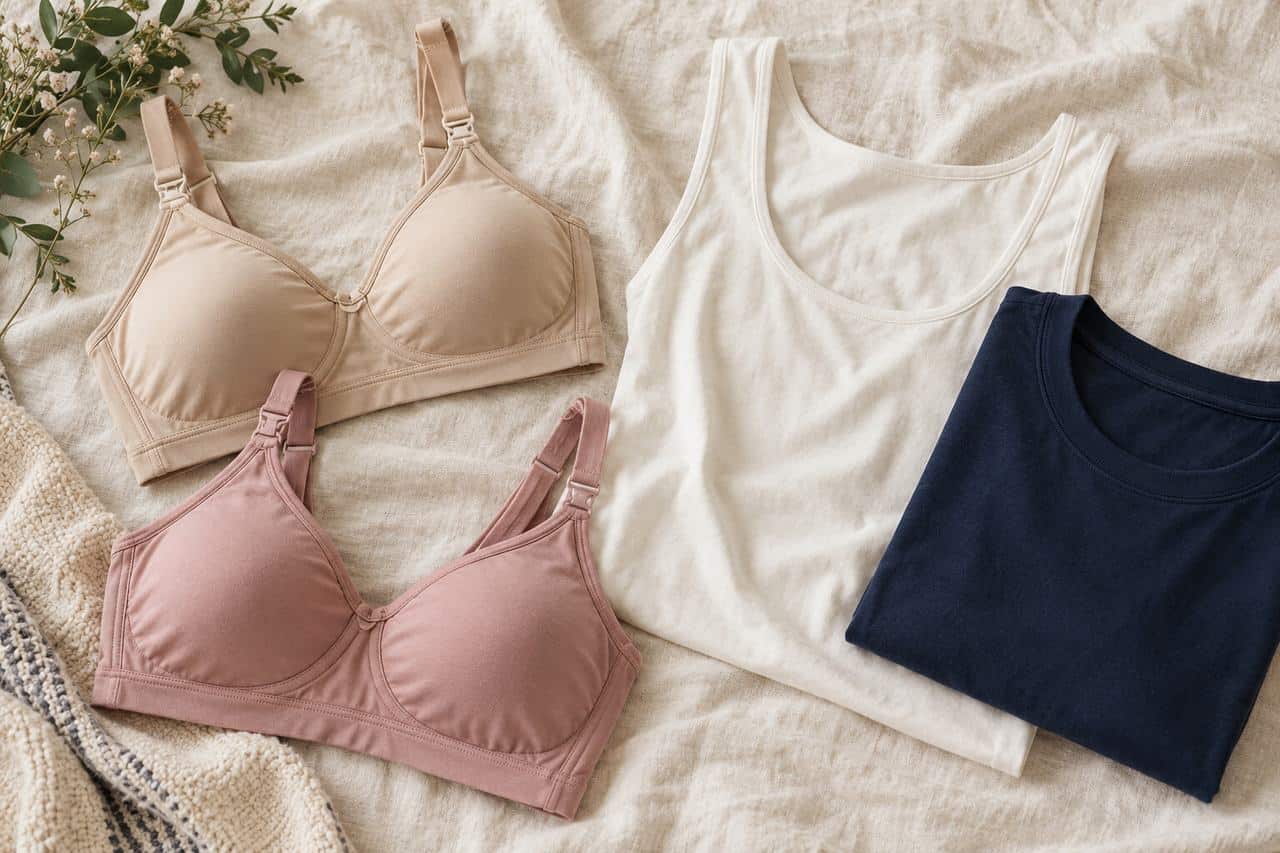
If a strap sits outside the top’s shoulder, compare their positions. A wide neckline, narrow shoulder section or cutaway armhole may simply leave that part of the bra uncovered. Tightening the strap will not necessarily move it to a better place.
Try a top with a shoulder shape that follows the bra you comfortably wear. A different neckline width or armhole cut may solve the problem while keeping the same bra. If you prefer the original top, decide whether a visible strap suits the look.
Only change a bra’s strap configuration if that style is designed to allow it. An improvised clip or cross-back arrangement can change the fit and make nursing clips harder to reach. Recheck support, comfort and access after any permitted adjustment.
Check neckline and cup coverage together
A higher-coverage bra cup may sit above a lower neckline. That does not necessarily mean either garment is the wrong size. Their shapes may simply be poorly matched for the finish you want.
Try the top with another comfortable bra you already own, or try a neckline that covers the preferred bra. A scoop, V-neck and square neck can expose different areas even when they look similarly low on a hanger.
With a wrap top, check the overlap while seated. If you add an accessible camisole for coverage, include its opening in the trial. You are solving the neckline relationship; you do not need to turn every outfit into three separate layers.
Separate colour contrast from texture
| What shows | A useful first experiment | What it cannot promise |
|---|---|---|
| Bra colour through a light top | Compare lower-contrast colours under that exact fabric | One colour will not disappear under every top or on every skin tone |
| Cup seam or edge | Try another cup construction or outer fabric with more body | A colour change will not remove a physical ridge |
| Folded removable pad | Check the pad is positioned according to the garment instructions | Repositioning will not correct an unsuitable cup fit |
| Breast-pad outline | Check placement and compare with the top you intend to wear | Extra compression is not a useful concealment strategy |
“Nude” is not one universal shade. Compare actual colours against your skin and the outer fabric. A shade described as beige may still create a strong contrast for you, and a white bra can be noticeable beneath some white tops.
Let the outer fabric do some of the work
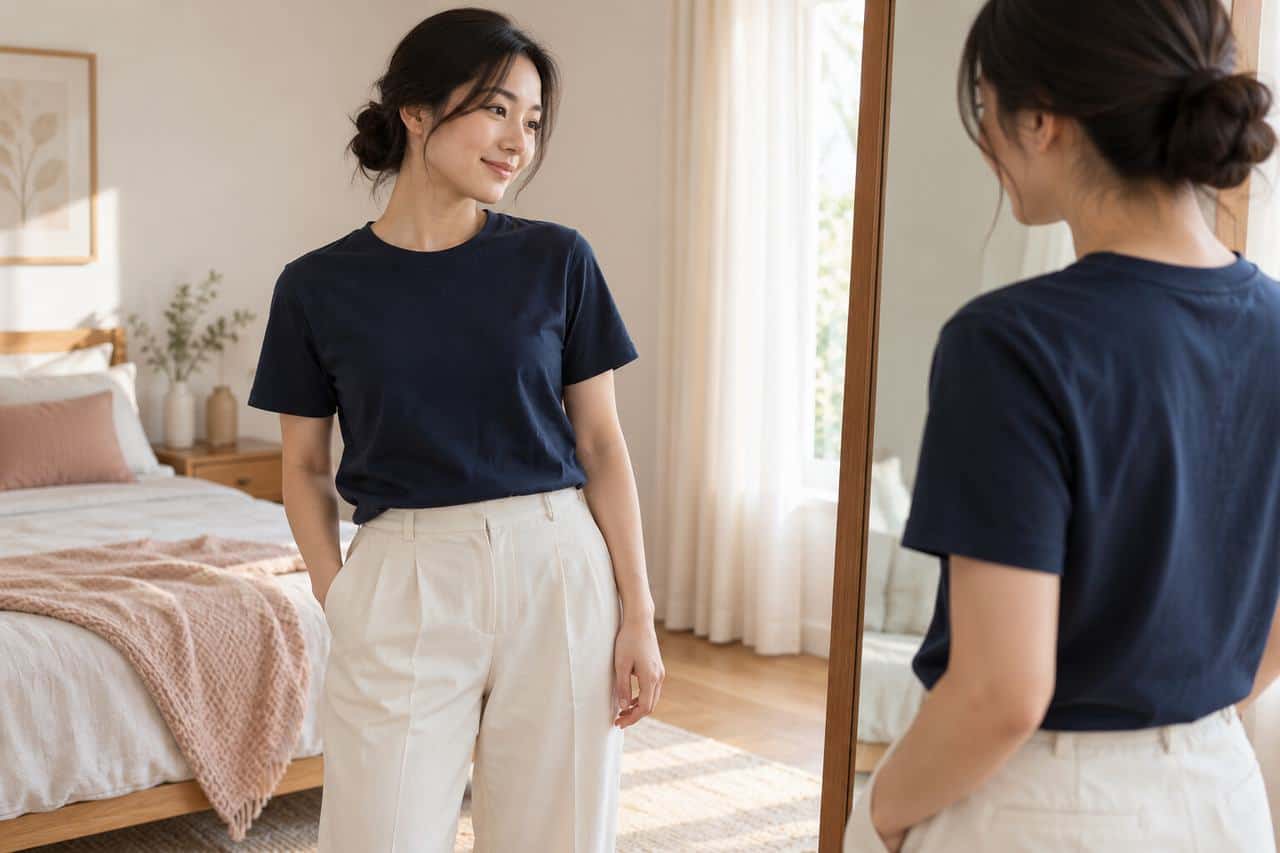

A very fine, close-fitting knit tends to follow what is beneath it. A fabric with more body, a different drape or some surface texture may create the appearance you prefer. This is a reason to compare construction, not to ban light colours or fitted clothes.
Hold two familiar tops over the same bra, then try them on. Notice whether the difference comes from thickness, fit, texture or colour. A print you enjoy may make an outline less noticeable, but it will not change the underlying comfort or access.
A roomier cut can help the fabric fall away from the cup edge. Check that it gives you the shape you want at the shoulders and sleeves too. You do not need to buy an oversized top when a different fabric solves the specific problem.
Check removable padding after washing and feeding
If your bra contains removable pads, a pad that has folded or shifted can create a shape you did not notice when you first got dressed. Follow the bra’s instructions for positioning, removal and care.
After opening and closing a nursing cup, check whether the pad lies as intended. If it repeatedly moves, consider whether that construction suits your routine. A style with different padding or cup construction may be easier for you.
Do not add padding simply to smooth every line. Additional bulk can change how the bra and top feel. If you use breast pads, assess the arrangement you actually need rather than a simplified version created only for the fitting-room mirror.
Keep comfort and feeding access in the decision
A smooth-looking outfit is not useful if its straps dig, its band feels restrictive or its opening becomes hard to reach. If you cannot find a comfortable bra fit, a trained fitter may help. Breast or nipple pain needs appropriate care rather than repeated wardrobe adjustments.
The Australian Breastfeeding Association’s bra guidance encourages considering both comfort and how the bra works with your clothes. That combination is more useful than choosing an underlayer for its appearance alone.
For pumping, follow the requirements of the actual equipment. Do not substitute an incompatible bra or tighten the outfit to make a device less visible. Check direct-feeding access and pumping access separately if your day includes both.
Try three outfit combinations
A textured tee with relaxed trousers
Choose a tee with the opacity and shoulder shape you prefer, paired with comfortable trousers. Try it over your everyday nursing bra in daylight and while seated. A navy textured tee with taupe trousers is one possible starting point.
If the top lifts for feeding, check how the fabric gathers and settles afterwards. The best-looking standing combination still needs a manageable opening.
From the capsules
The Soft Landing Capsule
Twenty soft pieces, twenty-five outfits for the first weeks home, every one opening for a feed. $14.99 once, yours to keep.
An opening shirt with an optional tank
A blue button-front shirt can provide another fabric layer over the bra without requiring a separate cover. If you want to wear several buttons open, an accessible tank may give you the neckline you prefer.
Try the shirt alone first, then add the tank only if it serves a purpose. Check the full route to the bra and the temperature of the complete outfit.
A wrap top with a compatible neckline
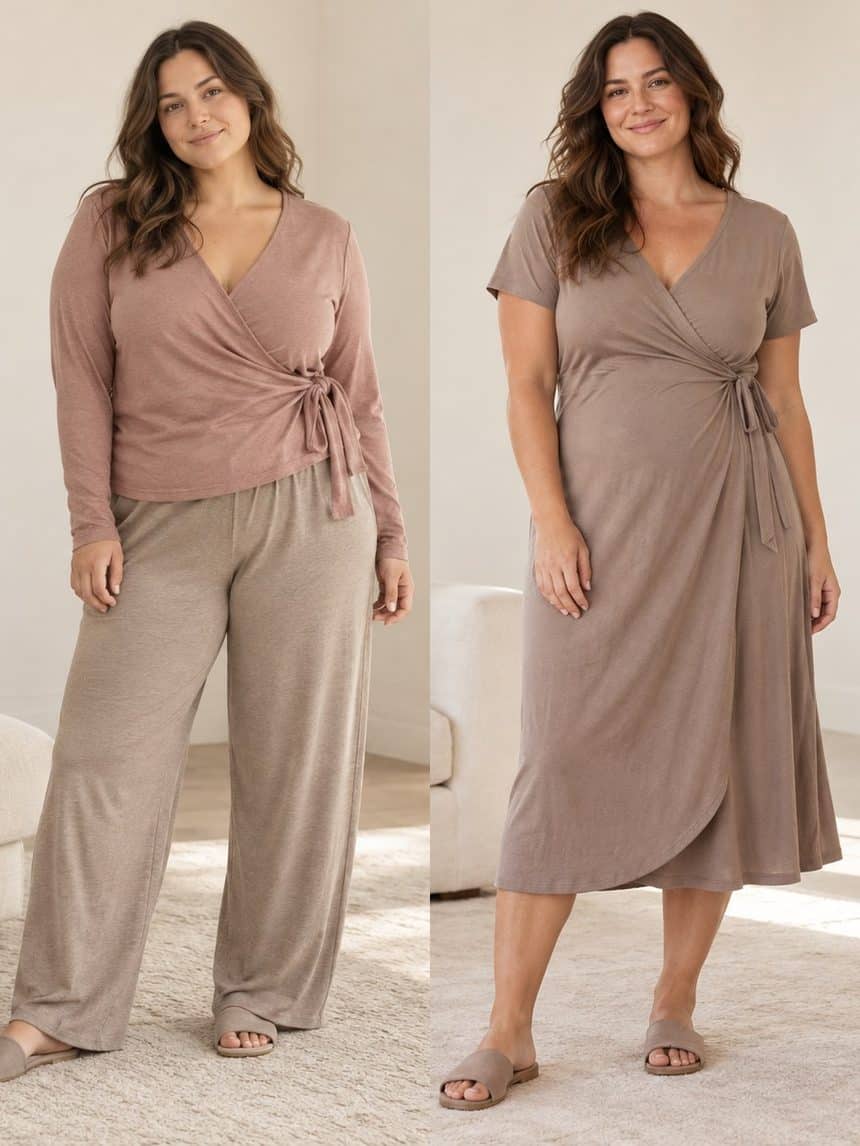
Try a burgundy true-wrap top with a bra whose cup edge sits where you want beneath the overlap. Add a skirt or trousers with a waistband that feels comfortable seated.
Restore the wrap after a clothing-access rehearsal and look at its neckline again. If it requires constant correction, another wrap cut or an opening blouse may be a more useful choice.
Make one useful note before shopping
Describe the relationship you want to improve: “A shoulder section wide enough to cover these straps,” “A neckline that sits above this cup edge,” or “An ivory top with more opacity.”
That brief helps you inspect product photographs and ask better questions. Look for inside views, close-ups and fabric information. Check return conditions before buying intimate apparel, and avoid purchasing several untested styles just to chase an invisible finish.
If a familiar outfit already works, record its exact bra and top together. You may need a repeatable pairing rather than a replacement for every piece in your drawer.
Questions moms often ask
Is it wrong if my nursing bra strap shows?
No. Visibility is a styling preference. You can leave it visible, choose a coordinating colour or change the garment relationship if you want a different finish.
Will a seamless bra solve every outline?
No. Edges, padding, fit and outer fabric still affect the result. Try the actual combination rather than relying on one product description.
Do I need a camisole under light tops?
Only if you want it and it works for your comfort and feeding access. A different outer fabric or better-matched bra colour may be enough.
The Nursing Mama Fashion Commandments
Twelve rules I wish someone had told me postpartum. Print them. Screenshot them. Live by them.
- Nursing bra always. Regular bras become instruments of pain the day letdown surprises you.
- Nursing pads on your body + a spare pair in your bag. Every single time you leave the house. No exceptions.
- Extra top in your bag — for YOU, not the baby. Because leaks, spit-up, and coffee-spills don’t care about your outfit plan.
- If it takes more than 5 minutes to figure out how to nurse or pump in it, it’s not the right outfit today. Feeding access is comfort. Comfort is not optional.
- Belt under the bust (empire) or below the belly with drape — never at the belly button. Your postpartum body deserves flattery, not compression.
- Comfortable waistband is non-negotiable. Elastic, wrap, or pull-on. Zippers are a Sunday-only luxury for now.
- Dark tones, prints, or textures — not thin light solids. Because letdown marks are real and you deserve clothes that don’t advertise them.
- Machine-washable everything. Dry-clean is not real-mama fashion. If it can’t survive a spit-up rinse, it’s not in rotation.
- Cross-body bag only. Hands stay free for the carrier, the toddler, the coffee, the door, the meltdown.
- Comfortable shoes always. You’re carrying a car seat and a diaper bag. This is not the season for a heel you can’t run in.
- Get dressed BEFORE the kids see you if you can. It changes the whole day — for them and for you.
- One accessory — earrings, a lip color, a scarf — counts as “put together.” That’s the whole game. You get to feel like yourself again.
Choose the finish you want, without extra struggle
Keep the comfortable pieces, identify the visible detail and change one part of the pairing. You can create a smoother finish without treating normal bra lines as a problem you must solve.
Explore NennVersa and The NennVersa Atelier for practical help making the pieces you own work together. Your comfort and your taste both belong in the outfit.