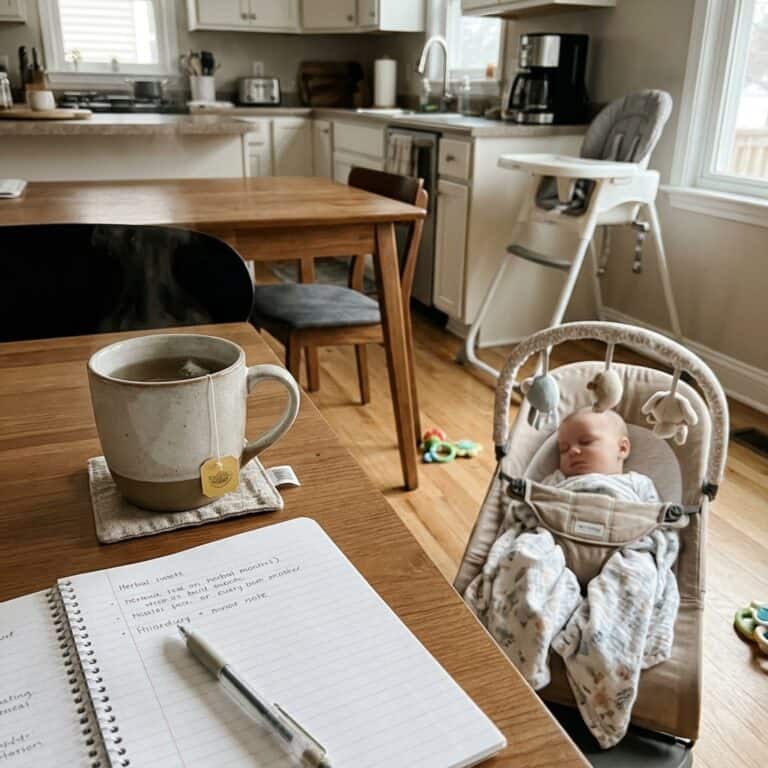
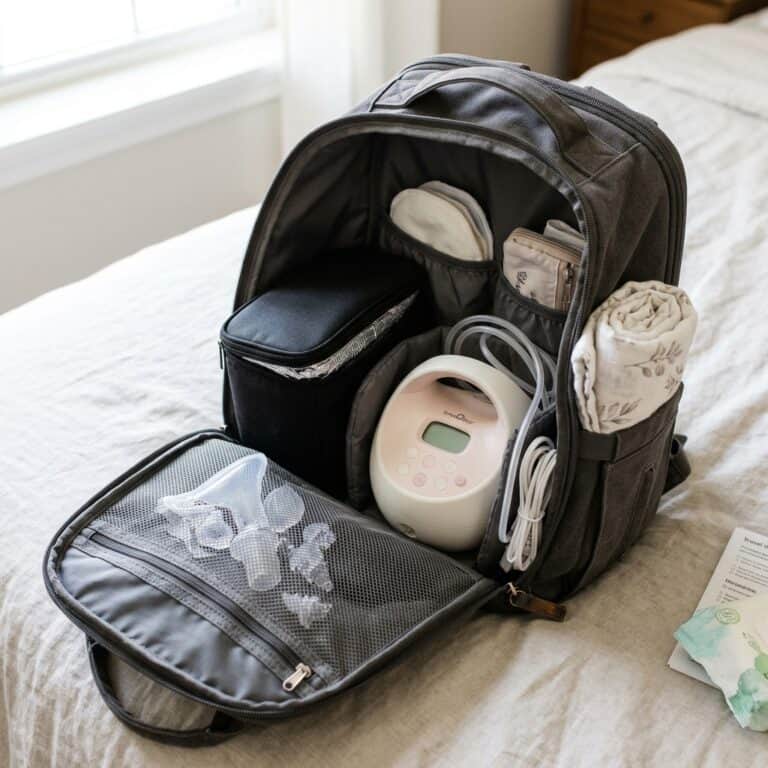
The entryway inspiration pictures have a bench, six hooks, matching baskets, and enough space to turn a stroller around. Your front door opens into the living room, the shoes already have nowhere to go, and you need a place for the baby’s outing bag that is not the middle of the sofa.
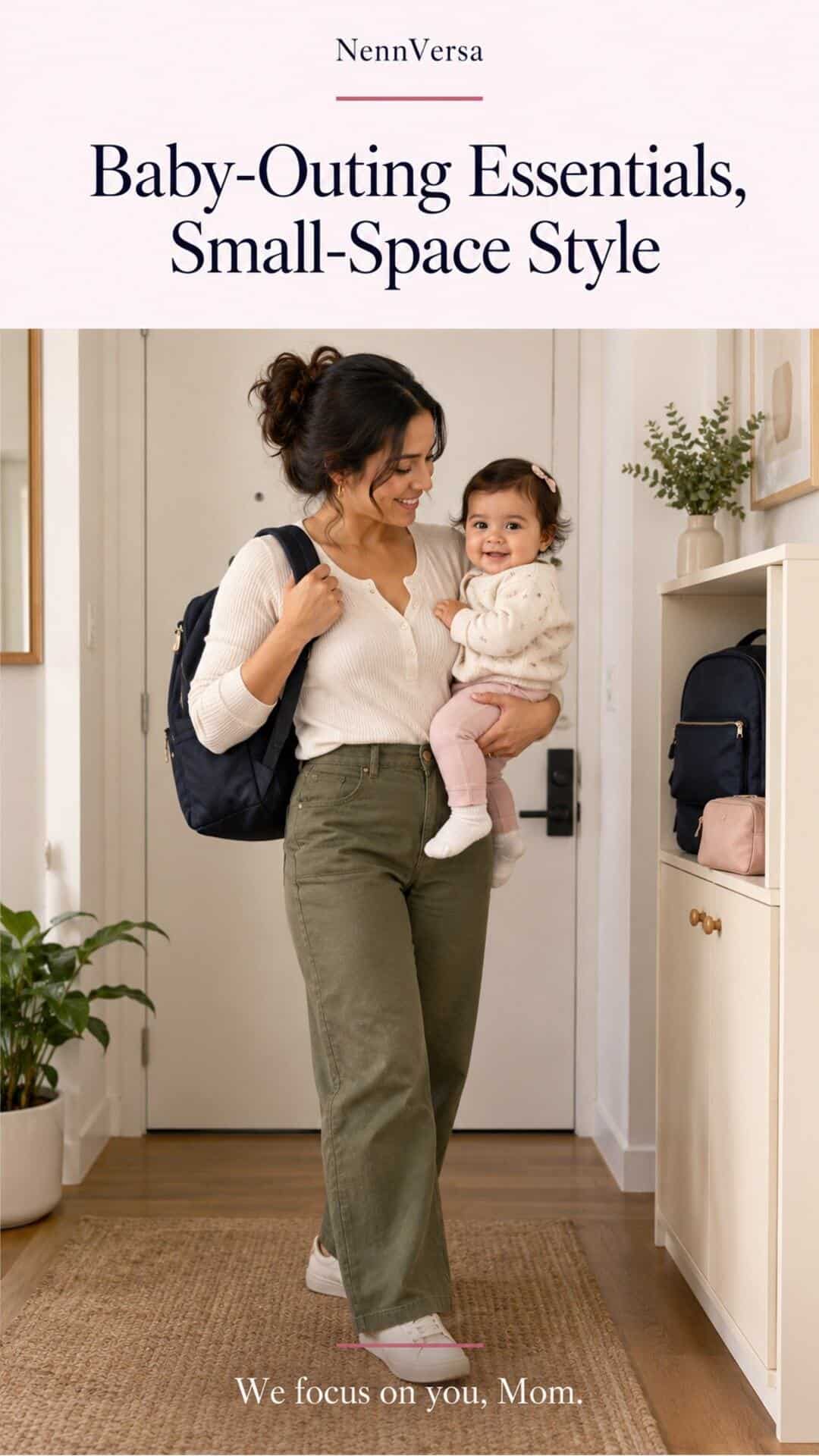

You can organize baby-outing essentials without a mudroom. The useful starting point is a small home for the items you use most, a separate place for extras, and a clear reminder for anything added at the last minute.
The goal is to make leaving and coming home easier while keeping your actual home comfortable to live in. A single cupboard shelf can do more than a crowded wall of organizers if everyone knows what belongs there.
Choose the place you pass on the way out
Walk from the spot where you usually get ready to the door you actually use. Notice the surfaces you already reach for. A narrow cabinet in the living room, a shelf in a coat cupboard, or a basket in your bedroom may be more useful than installing something directly beside the entrance.
Check the door swing and walking route before adding storage. The bag should not block a doorway, create a trip hazard, or make it difficult to move through the room. Keep straps, small items, and other hazards out of children’s reach.
Try a temporary home first. Use an existing basket for a few departures and returns. If you keep placing the bag somewhere else, notice why. The real route is telling you more than the location you chose on paper.
Separate everyday items from reserve supplies
A small station cannot hold every item your family might need. Give it the everyday bag, a modest refill supply, and the personal items you repeatedly forget. Store the bulk packages and less-used equipment elsewhere.
For example, keep a few replacement diapers, one clean child outfit, and your spare-top pouch near the bag. The unopened pack of diapers can stay in its usual storage place. Refill the small supply when it reaches an agreed low point.
This arrangement creates a useful distinction: the station helps you prepare for the next outing; reserve storage supports the station. Combining the two often turns a small shelf into an overstuffed cupboard where nothing is easy to see.
Pick one of four small-space arrangements
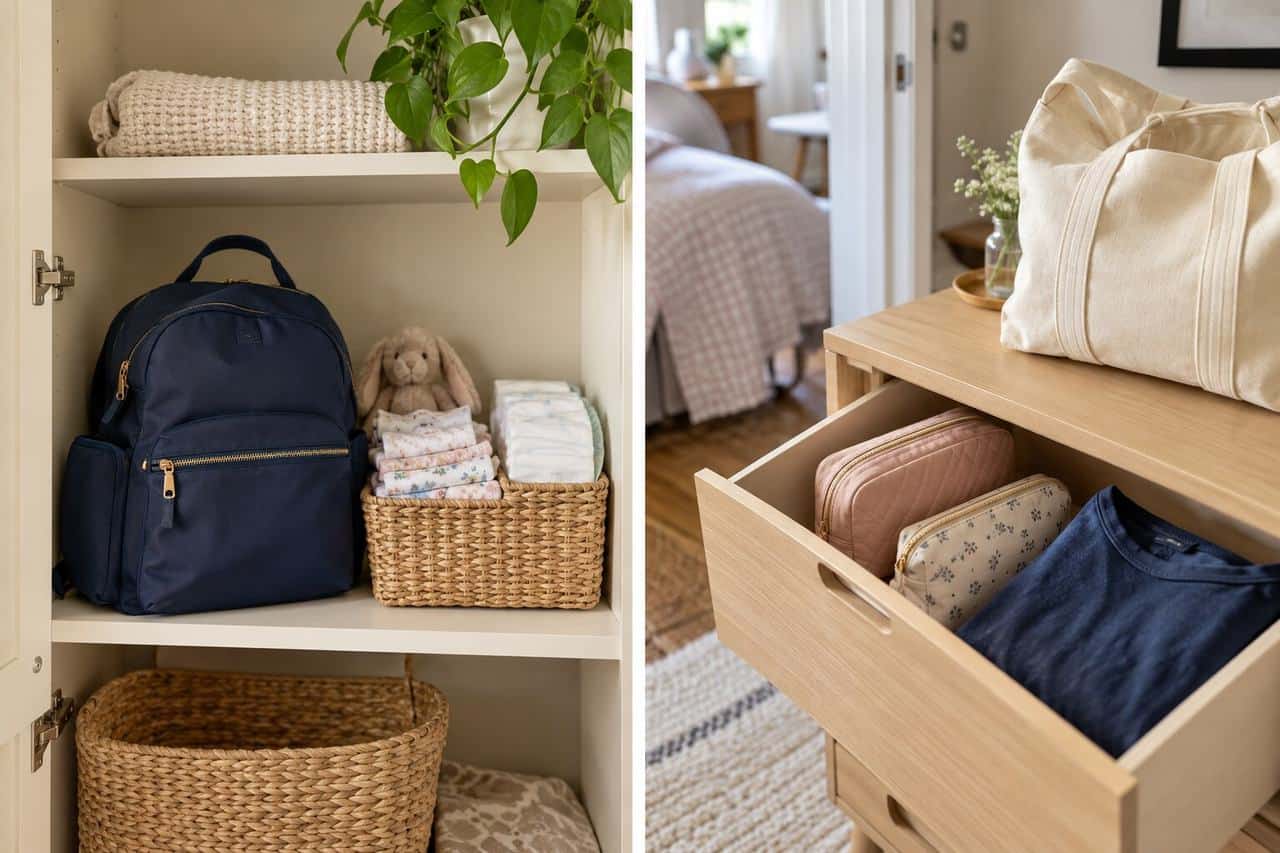
A cupboard shelf
Clear one shelf at a comfortable height. Put the packed bag on one side and a small refill container on the other. A closed cupboard can reduce visual clutter, provided everyone knows that the shelf is the bag’s home.
Measure the bag when it is packed. A shelf that accommodates an empty bag but requires you to squash it after packing will be frustrating. Keep frequently needed items at the front.
A drawer and a nearby bag space
A drawer can hold your spare clothing, outing checklist, and small refill supplies. The bag can sit on a neighboring shelf or another stable, appropriate surface. Everything does not have to fit inside one container.
Use a simple divider only if items keep getting mixed together. You can begin with small boxes you already own. The drawer should open without pouches catching on each other.
A portable basket
A basket can bring packing supplies to the table and return them to a cupboard afterward. This is useful when there is no permanent packing surface or when another adult prepares the bag in a different room.
Choose a size you can handle comfortably. The basket holds supplies; it does not need to become a second overfilled outing bag. Keep it in a stable location away from the main walking route.
A wall hook with a small closed container
If a hook suits your space, choose one appropriate for the wall and the loaded bag’s weight and install it as directed. Do not assume a removable hook can carry a heavy backpack because it held a jacket.
Keep the rest of the items contained nearby. A hook does not solve loose wipes, spare clothes, and papers spreading across the nearest chair. Avoid creating a cluster of dangling straps where children can reach them.
Give each pouch one clear job
Use as many categories as your outings need, but begin simply. One pouch might hold your own small essentials. Another might hold a clean child outfit. A separate container can hold used clothing when required.
Name pouches by purpose rather than by who usually packs them. “Clean clothes” is easier for a visiting grandparent to understand than “the pink one with the things I like.” Color can help, but a plain label removes guesswork.
Do not put clean feeding equipment into a general pocket with loose personal items. Keep equipment appropriately clean, dry, and protected, following its care instructions. A tidy-looking shelf does not establish that its contents are ready to use.
Keep last-minute items on a reminder
Your phone may still be charging. Your lunch or expressed milk may need to stay cold. Put a brief final-additions note with the bag instead of moving those items to the entryway early.
Use a specific reminder: “Phone from charger; cooler from kitchen.” Vague notes such as “feeding things” can still leave the person packing unsure what to collect. Adapt the list to your own feeding arrangement and the length of the outing.
If you transport expressed milk, follow a reliable storage plan. The CDC’s storage guidance explains cooler transport with frozen ice packs. Keep the storage steps with that routine, rather than treating a bag’s insulated-looking pocket as proof that it will maintain a suitable temperature.
Give your own essentials a permanent place
It is easy for the entire station to become a display of what the baby might need. Reserve a small space for you: keys, wallet, a useful spare top, and whatever you repeatedly need on the route.
If your bag changes, put your small personal essentials in one transferable pouch. Move that pouch as a unit and check its contents when your routine changes. Keep important items secure and out of children’s reach.
Include the things that make your own day workable. A cardigan for a cold appointment room or the correct work badge may matter more than another toy. Your needs are part of the outing, not an optional extra after the bag is full.
Make coming home part of the setup
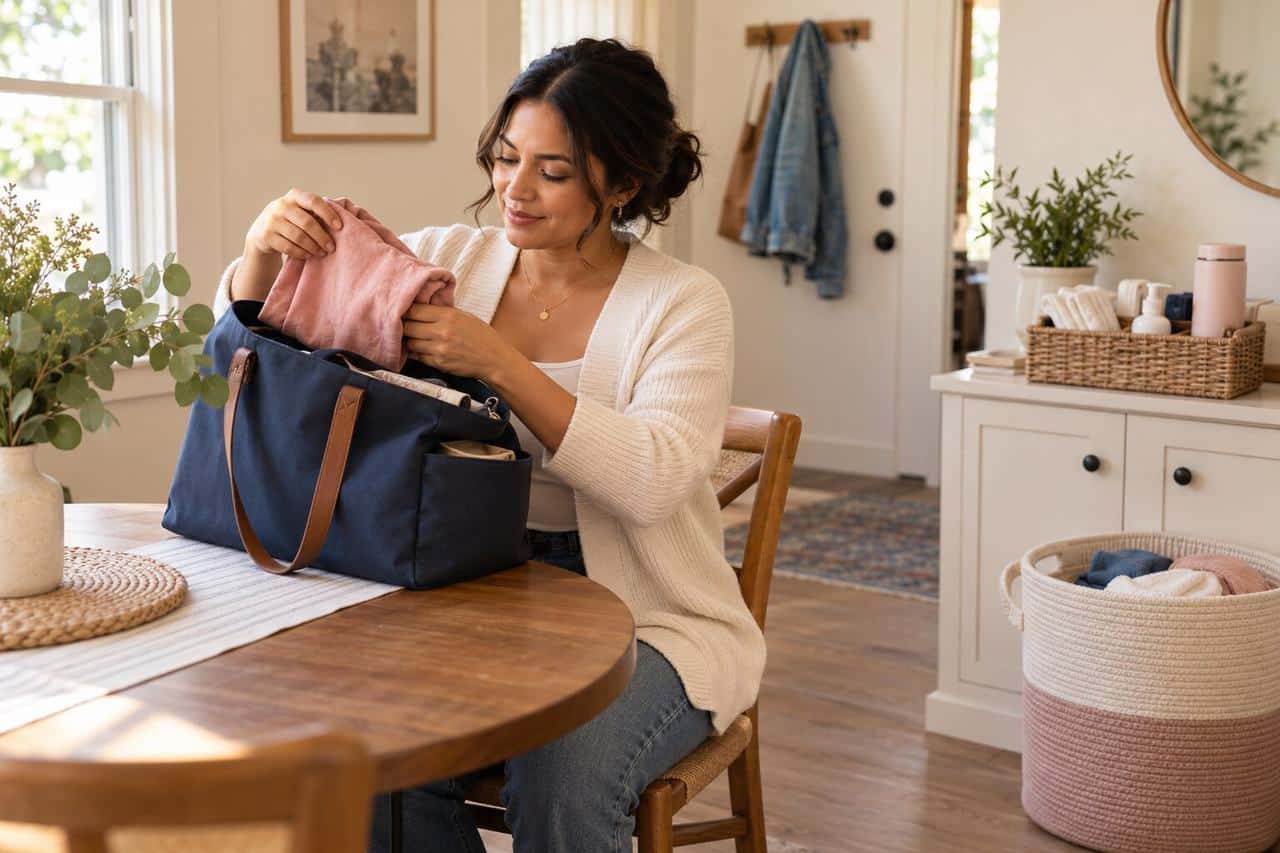
Choose where you will open the returning bag. Remove anything needing prompt storage or cleaning first. Then separate used clothes, rubbish, and items that need replacing. Return the bag to its home only when its condition is clear.
A simple routine might be: empty on the table, deal with time-sensitive items, send used clothes to laundry, refill from the small reserve, and put the bag back. If you cannot finish, leave a clear note identifying what is missing.
Try to avoid a permanent “sort later” pile on the floor. If a temporary container helps, give it a narrow purpose and an agreed next step. Otherwise it becomes a second bag full of forgotten work.
Make the system usable by another person
Show a partner, family member, or caregiver the bag’s home and the refill supplies once. Then let them use it. If they cannot find an item, improve the label or location rather than assuming the answer must always come from you.
Use a short packing card that includes current clothing sizes and any relevant specifics. Update the information when needs change, and agree who notices those changes. A checklist helps only if it reflects the items your family uses now.
When another adult takes the baby out, they can own the return as well as the departure. Bringing the bag home includes dealing with what was used and identifying what needs replacing.
What to buy after the arrangement has proved useful
A narrow cabinet, washable pouch, correctly rated hook, or shallow drawer divider may help a particular problem. Measure the space and packed items before buying. Check how doors and drawers will open, not just whether the organizer fits in a photograph.
If the problem is too many supplies, more containers may not solve it. Reduce what lives at the station first. If the problem is that nobody refills it, agree ownership before upgrading the basket.
Your questions, answered
Can the station live in my bedroom?
Yes. If that is where you pack and the bag is easy to collect on departure, it can be the best location. Add a visible final-additions reminder if cold items are elsewhere.
Should the bag stay fully packed?
It can stay prepared with appropriate clean, dry essentials. Add time-sensitive items when needed and review clothing sizes, supplies, and the outing’s requirements.
What if I share a very small home?
Choose a contained arrangement that can be put away, such as one shelf or a portable basket. Agree its boundaries so packing supplies do not take over shared living space.
Clear one small space today
Choose the bag’s home, add a small refill container, and write the three things you most often forget. Use the setup before improving its appearance.
A practical home can make room for your needs without a renovation. For more gentle systems and outfit support that keep you in the picture, explore The NennVersa Atelier.