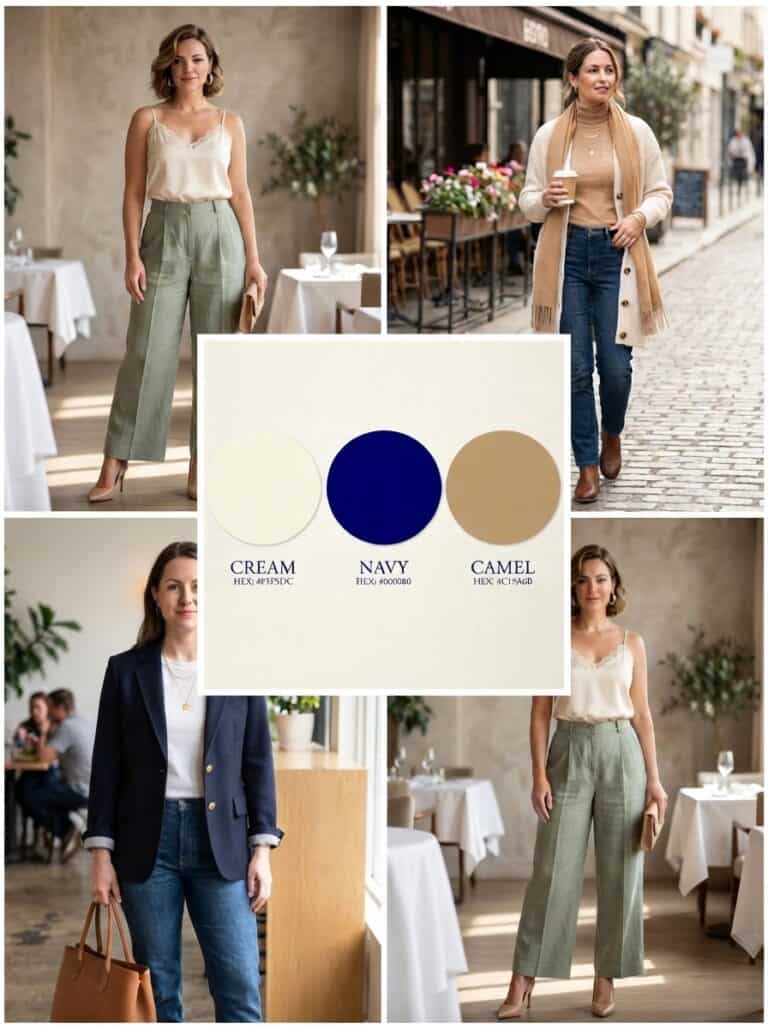
A nursing tank beneath a tee beneath a cardigan may work on a cool day. In warm weather, the same combination can feel like too much clothing before you have even left the house.
You still want usable feeding access, the coverage you prefer, and an outfit that feels like something you chose. You may also be moving between outdoor heat and strong air conditioning, which makes “wear less” an incomplete answer.
Start with an accessible main garment, then add only the layers your day needs. Check the complete outfit in ordinary light, while seated, and with the bra or tank you intend to wear. The best warm-weather option is one you find comfortable and straightforward to use.
Choose your access route before adding layers
Think about how you prefer to reach your breast. A functioning front-opening shirt can work over a suitable bra without a camisole. A lifting tee may be useful with a nursing tank if abdominal coverage matters to you. A dress needs an opening that works without lifting the entire garment.
Each route has different fabric to manage. A loose shirt may move aside easily, while a thick tee can form a bulky fold when lifted. A designed nursing panel may provide coverage you like, but check its inner layers as well as the visible fabric.
Try the simplest combination that meets your preferences first. If you keep adding layers to correct sheerness, a low neckline, or an awkward opening, another main garment may be easier to wear.
Judge the whole fabric, not one promising word
“Cotton,” “linen,” “bamboo,” or “summer” on a listing does not tell you everything about how a garment will feel. Weight, weave or knit, lining, fit, and the number of layers all contribute to the experience of wearing it.
A lightweight shirt may suit you better than a densely knitted top, even if both have a familiar fibre label. Equally, a loose dress may have a substantial lining that changes how it feels. Check the actual garment rather than relying on a universal ranking of fabrics.
If shopping online, look for close-up photographs, lining information, and care instructions. If you can try the piece at home, spend a little time sitting and moving in it before removing tags. Comfort is easier to judge in use than in a brief mirror pose.
Check opacity without automatically adding a tank
Try the garment in daylight with the underlayer you plan to use. Look at the back, sleeves, and areas where the fabric stretches or pulls. A shirt may seem opaque when hanging loosely but look different over a fuller bust.
If the coverage is not what you want, you have options: a different colour, a less sheer version, another cut, or an underlayer you find comfortable. You do not have to solve every transparency issue with an extra full-length camisole.
Choose according to your own preference. There is no requirement to make bra lines or straps invisible. The useful question is whether you feel comfortable in the outfit as you intend to wear it.
Try four outfits with fewer moving parts
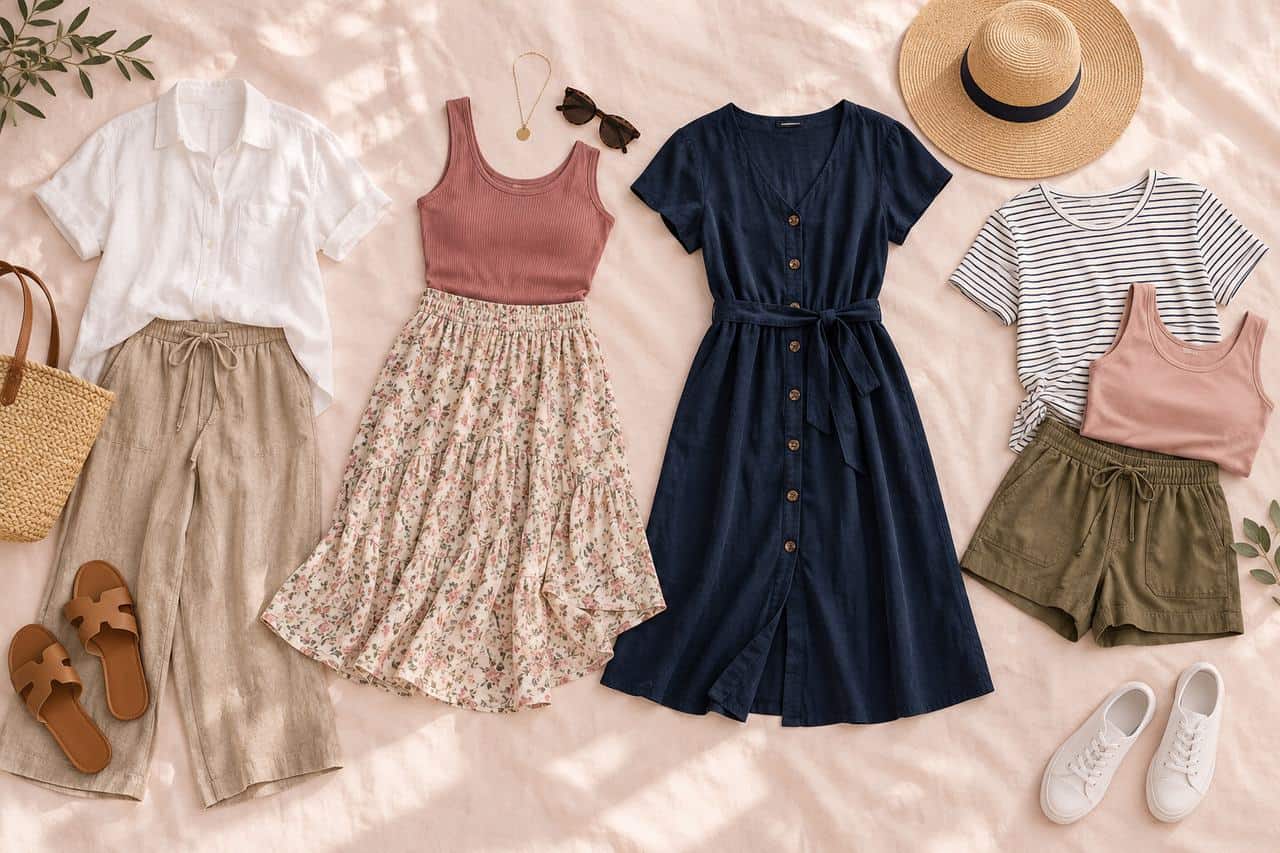
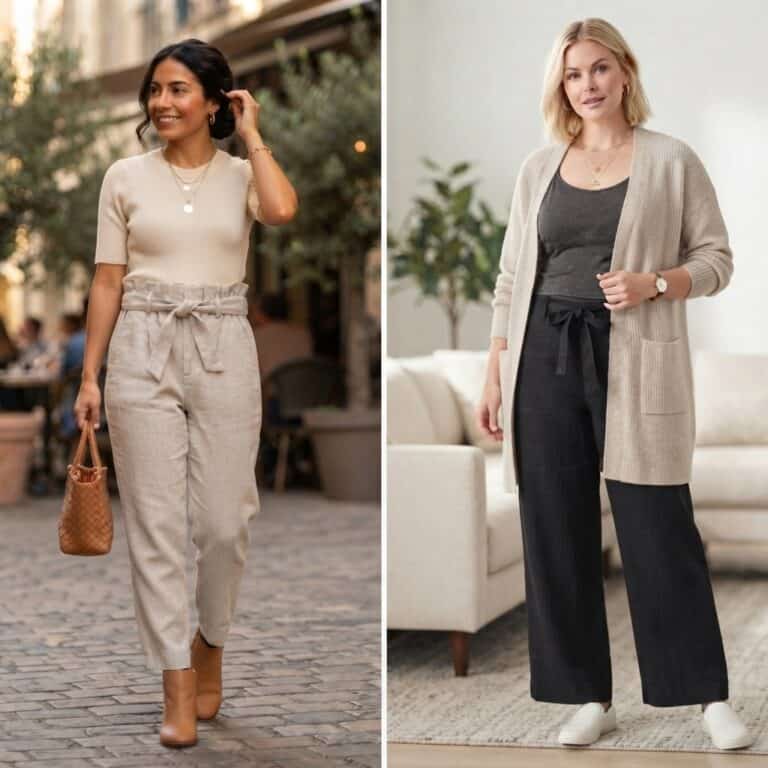
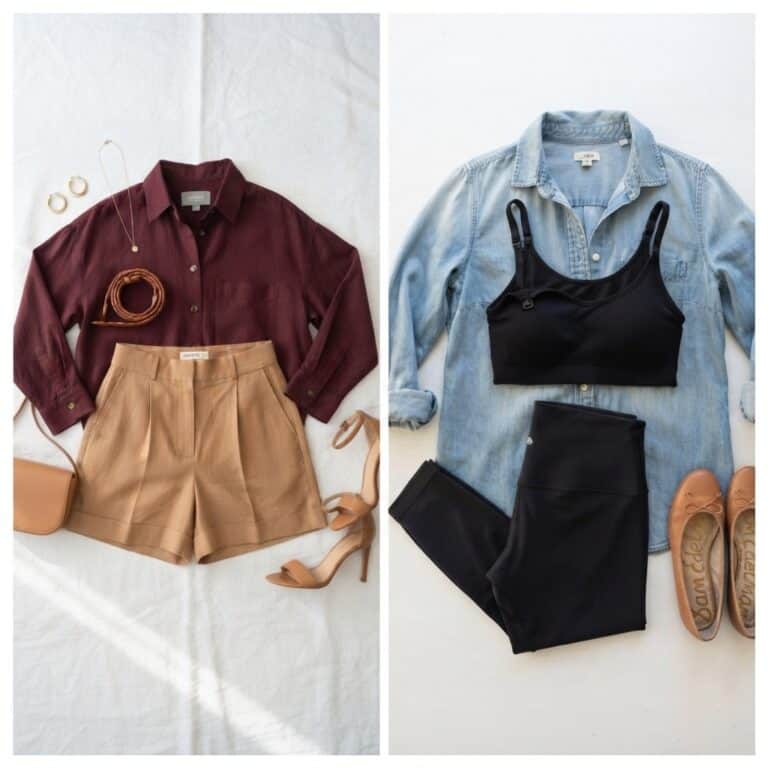
A short-sleeve shirt with pull-on trousers
Try a functioning button-front shirt with comfortable trousers and everyday sandals or sneakers. Check that the sleeves let you reach easily and that the shirt opens far enough while seated.
A blue shirt with taupe trousers is one example. Leave it untucked if that is comfortable, or use a small tuck that is easy to restore. The outfit does not need a cardigan to count as finished.
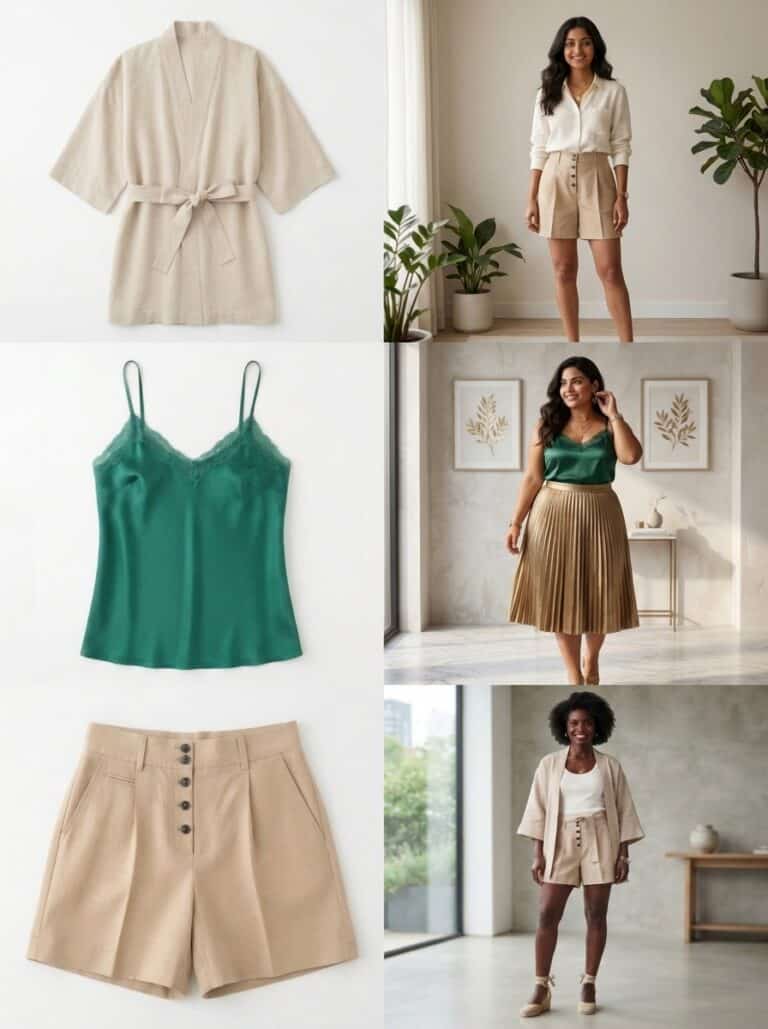
A nursing tank with a skirt
If you like wearing a tank as an outer top, check its coverage, support arrangement, and feeding opening. Pair it with a skirt whose waistband feels comfortable when you sit.
A navy tank and olive midi skirt can feel simple without being the same outfit as your sleepwear. Keep a separate light layer available for air conditioning if you want one, rather than wearing it throughout the warm part of the day.
A usable front-opening dress
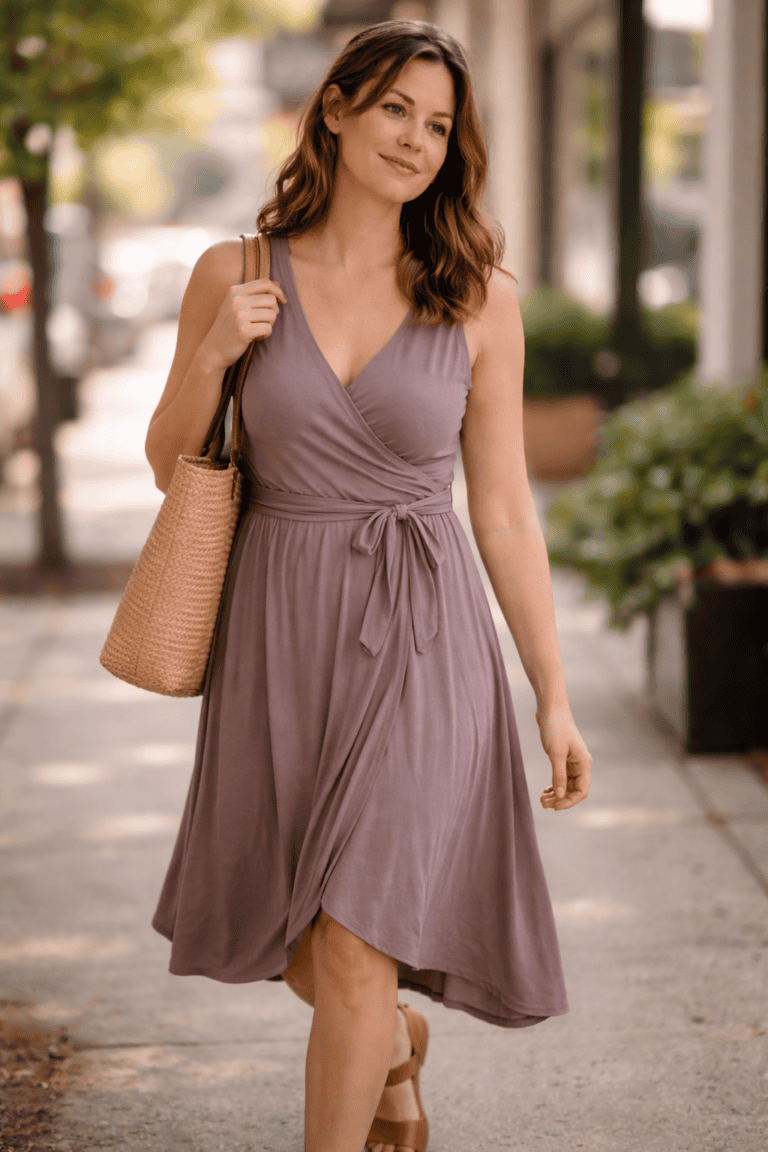
Choose a dress with real access through both outer fabric and lining. Check whether its waist seam allows the opening to move as you need. Decorative buttons and a shallow placket are not enough information.
Try the dress with the intended bra and shoes. If you like more sleeve coverage, choose a sleeve you enjoy wearing rather than automatically adding a second garment over a sleeveless dress.
A lifting tee with a suitable underlayer
This remains a valid option if it is your preferred route. Choose a tee that lifts comfortably and an accessible underlayer that does not pull upward with it. Test the combined feel rather than assuming two layers are always too many.
Keep the rest of the outfit straightforward: shorts, trousers, or a skirt that suit your plans. Your comfort matters more than achieving the fewest possible pieces.

Plan for air conditioning as a separate part of the day
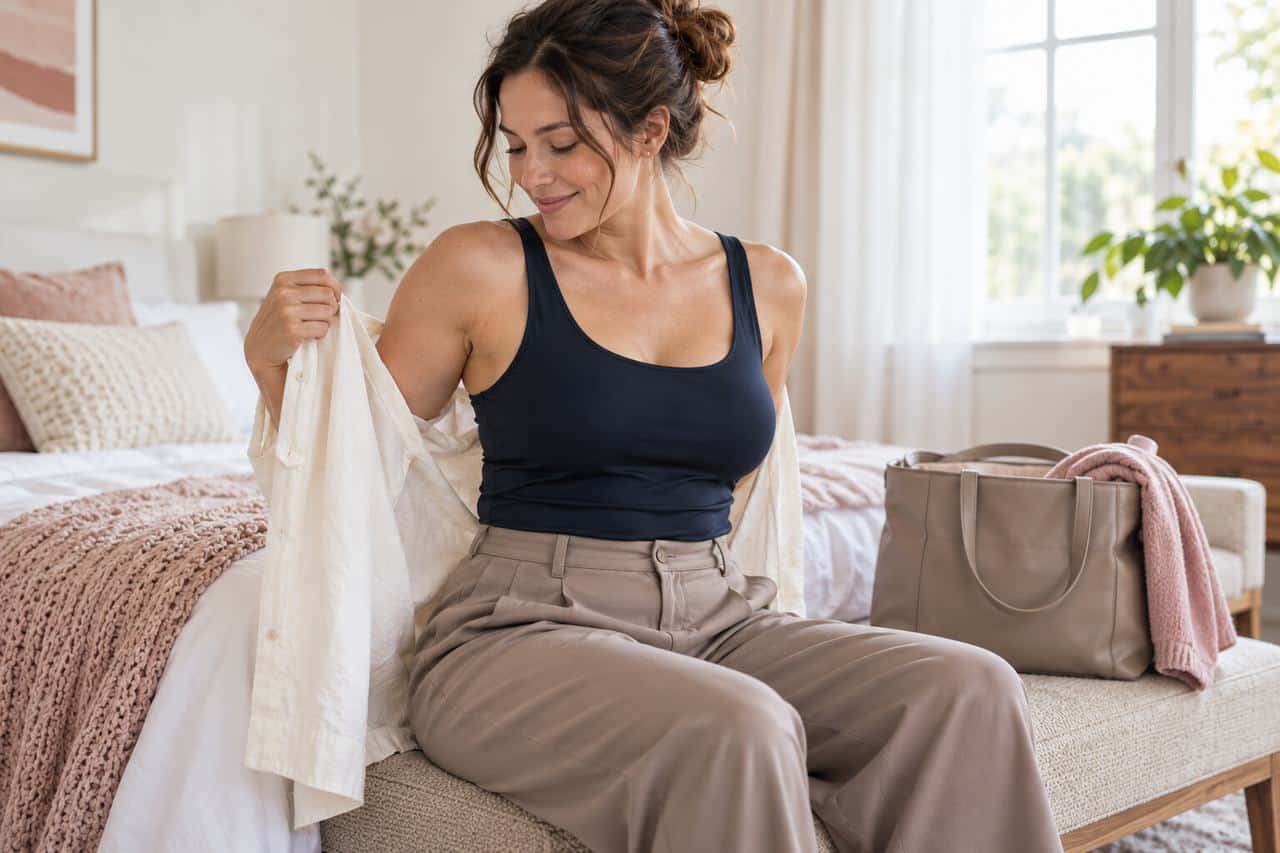
A removable shirt, light cardigan, or jacket can be useful indoors. Pick one that works with several outfits and folds into the bag you actually carry.
Check how it affects feeding access. A fitted jacket may need to come off, while an open shirt may simply move aside. Include that movement in your try-on so the extra layer does not undo the convenience of the outfit underneath.
For example, wear a tank and comfortable trousers in the warmer setting, then add an open shirt in a cool café or office. You are using the layer when it has a job, rather than treating it as a permanent requirement.
Give damp pads and clothing a practical backup
If you use breast pads, keep clean replacements where you can reach them. The HSE advises changing breast pads often or when wet. An outfit that disguises a damp patch does not remove the need to change the pad.
From the capsules
The Year Round Capsule
Two hundred nursing-friendly outfits from fifty-six pieces, fifty for every season, laid out and then worn. $29 once, yours to keep.
Choose a spare top that works with the same bottom and underlayer. If you regularly need a different bra or tank as well, include that based on your experience. Keep clean items separate from used ones.
A print or deeper colour may make some marks less noticeable, but it is not a promise of invisible leaks. You do not need to restrict your entire wardrobe to dark colours. A useful spare is a more flexible plan than avoiding every colour you enjoy.
Make the outfit easier to care for
Warm-weather clothing may enter your wash rotation frequently. Before buying, check whether you can maintain it with the time and drying space available. A beautiful top that needs care you cannot manage may spend most of its life waiting to be washed.
Keep the pieces you reach for most often easy to find when clean and dry. If you use a removable layer only briefly, assess its care needs according to its condition and label rather than washing it automatically with every top.
For specific milk or spit-up marks, use a suitable garment-care method. Do not spray perfume or a clothing freshener onto a damp feeding area as a substitute for changing or cleaning it.
Use a warm-weather outfit check before leaving
- Can I open the main garment and underlayer comfortably while seated?
- Does the outfit provide the coverage I want in daylight?
- Is every layer doing something useful?
- Do I have a removable layer if I expect a cool indoor setting?
- Does the spare top work with what I am already wearing?
- Can I manage the fastenings and restore the outfit without a complicated tuck?
This is a clothing check, not a complete heat-safety plan for you or your baby. Choose an appropriate environment for your outing and follow local health guidance when conditions are very hot.
Common questions
Is a nursing tank essential in warm weather?
No. It may suit your preferred access and coverage, but an opening shirt or dress can work without one. Test the combination you want to wear rather than treating the tank as a compulsory layer.
Can I wear fitted clothes?
You can choose a fitted silhouette if it feels comfortable and allows usable access. Check how the fabric behaves when seated and opened. “Fitted” does not need to mean restrictive, and a roomier cut is also a valid preference.
What if I want my arms and stomach covered?
Try a comfortable sleeved shirt with a front opening, or an accessible sleeved dress. Choosing coverage in the main garment may be easier than building it from several additional layers.
The Nursing Mama Fashion Commandments
Twelve rules I wish someone had told me postpartum. Print them. Screenshot them. Live by them.
- Nursing bra always. Regular bras become instruments of pain the day letdown surprises you.
- Nursing pads on your body + a spare pair in your bag. Every single time you leave the house. No exceptions.
- Extra top in your bag — for YOU, not the baby. Because leaks, spit-up, and coffee-spills don’t care about your outfit plan.
- If it takes more than 5 minutes to figure out how to nurse or pump in it, it’s not the right outfit today. Feeding access is comfort. Comfort is not optional.
- Belt under the bust (empire) or below the belly with drape — never at the belly button. Your postpartum body deserves flattery, not compression.
- Comfortable waistband is non-negotiable. Elastic, wrap, or pull-on. Zippers are a Sunday-only luxury for now.
- Dark tones, prints, or textures — not thin light solids. Because letdown marks are real and you deserve clothes that don’t advertise them.
- Machine-washable everything. Dry-clean is not real-mama fashion. If it can’t survive a spit-up rinse, it’s not in rotation.
- Cross-body bag only. Hands stay free for the carrier, the toddler, the coffee, the door, the meltdown.
- Comfortable shoes always. You’re carrying a car seat and a diaper bag. This is not the season for a heel you can’t run in.
- Get dressed BEFORE the kids see you if you can. It changes the whole day — for them and for you.
- One accessory — earrings, a lip color, a scarf — counts as “put together.” That’s the whole game. You get to feel like yourself again.
Choose a combination you can repeat
Build one outfit for the warmer part of your day and decide which removable layer, if any, belongs with it. Keep the access route clear and the spare practical.
Explore The NennVersa Atelier for help making more combinations from your own clothes. Your warm-weather wardrobe can be useful, comfortable, and recognisably yours.
My Warm-Weather Outfit Builder can help you record the opening, coverage, removable layer, and spare that suit your day.