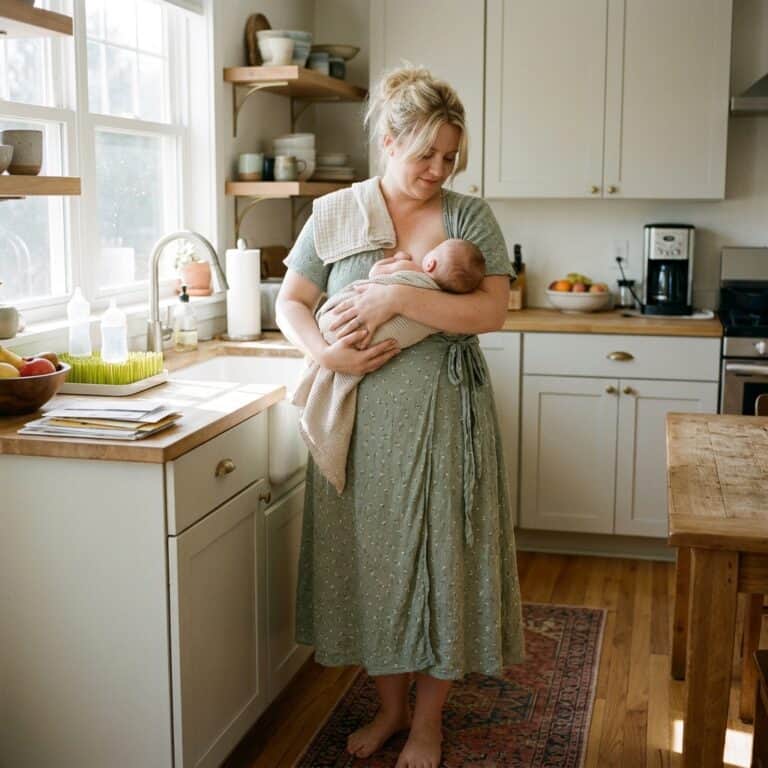
The trousers feel fine in front of the mirror. Then you sit down to feed, and the waistband folds into an edge, presses on a sensitive area, or slides until you keep pulling it back up. By lunchtime, you are thinking about your clothes far more than you wanted to.
A comfortable postpartum waistband is not determined by one label. High rise, mid rise and fold-over styles describe different arrangements, but the height, firmness, width and position of the actual band matter more than the name.
You can use the clothes you already own to work out what feels better today. The aim is a bottom you can sit, move and feed in comfortably, not a waistband that promises to change your body.
Separate the rise from the waistband
Rise describes the distance from the crotch seam towards the waist. The waistband is the construction around the top of the garment. A high-rise trouser can have a rigid narrow band, a soft broad band, or elastic at the back. Those will not necessarily feel alike.
Likewise, two pairs described as mid rise may land at different places on your torso. Your proportions, the garment’s cut and how it fits through the hips and seat affect where the top edge settles.
Instead of deciding that all high-rise trousers are uncomfortable, describe the specific issue: “The firm top edge presses when I sit,” or “The rise pulls down at the back.” That gives you something useful to compare.
Compare the three options by what they do
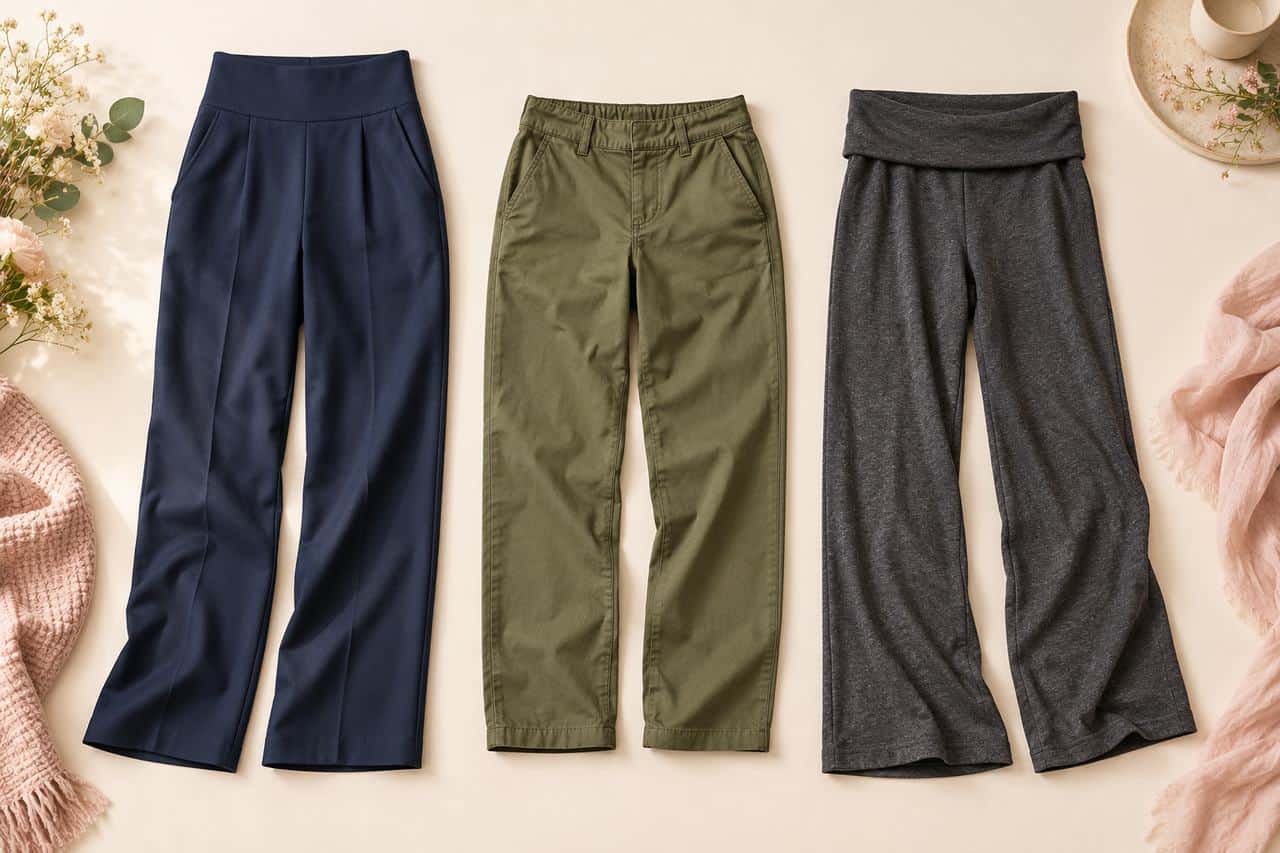
| Option | Why you might enjoy it | What to check |
|---|---|---|
| High rise | More torso coverage, including when a separate top lifts. | Where the upper edge sits, seated pressure, rolling and room through the rise. |
| Mid rise | A lower placement that may suit your preferred shape and sensation. | Whether it lands on an area you find sensitive and whether the back stays where you want it. |
| Fold-over band | A choice of band height in a garment designed to fold. | Whether the folded fabric becomes bulky, twists or creates a firmer edge. |
There is no universal winner. A broad band can distribute the feeling of contact over a larger area, but a tight broad band can still feel restrictive. A fold-over design gives an adjustment option; it does not guarantee comfort in every position.
Identify the sensation you want to change
Try naming what is happening before buying a replacement. Is the top edge digging in? Is a seam rubbing? Is the band rolling? Does the garment pull across the lap? Are you constantly lifting it back into place?
Each observation suggests a different experiment. A softer edge may help when the edge itself bothers you. More room through the seat may matter when sitting pulls the whole garment down. A different rise may work when the band lands in an uncomfortable place.
If you are recovering from a caesarean or have a healing wound, follow your care team’s instructions about clothing and any prescribed support garment. Do not use a fashion waistband as a substitute for clinical advice. Pain or a wound concern deserves a conversation with your clinician, not repeated experiments with tighter clothes.
Do a seated try-on before making the decision
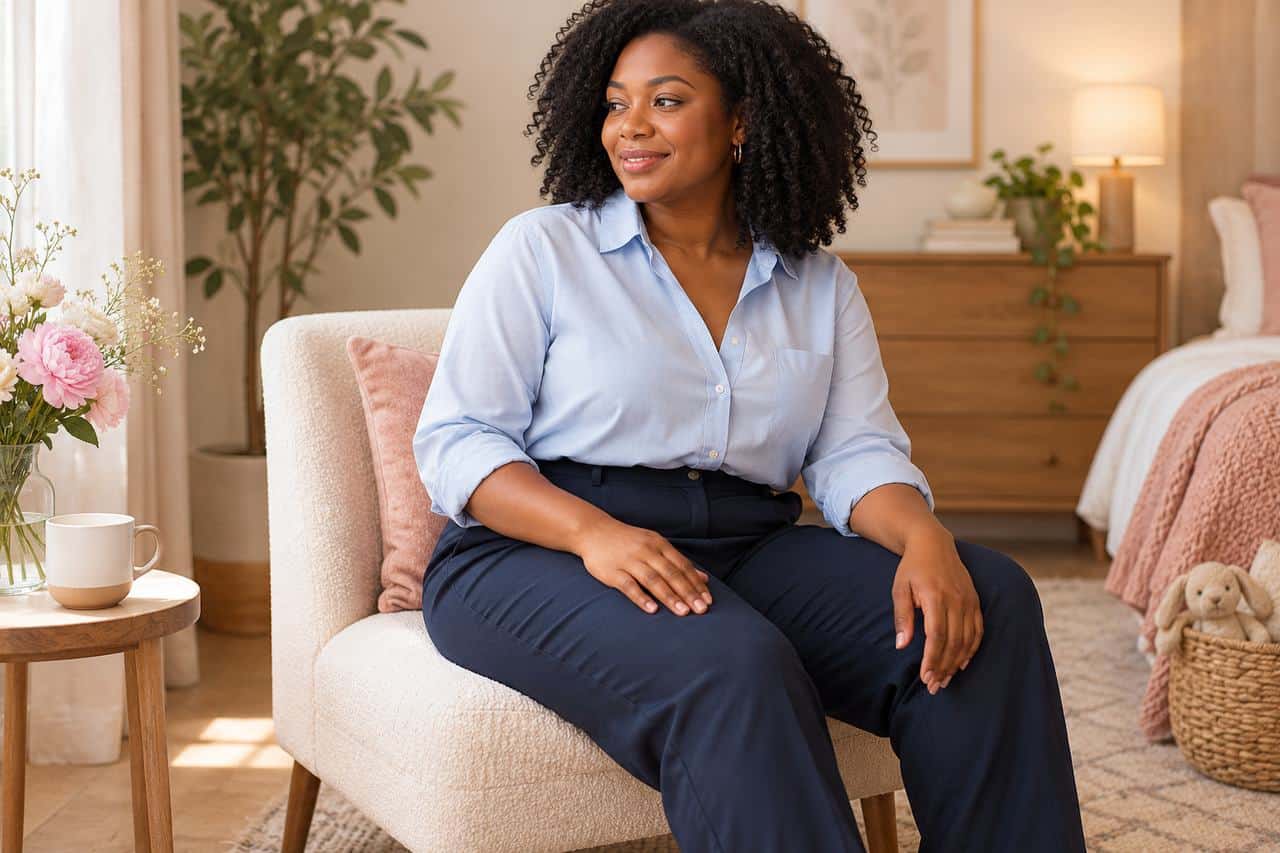
Wear the underwear and top you would normally pair with the bottom. Stand comfortably, then sit in an ordinary chair for a few minutes. Notice the front, sides and back of the waistband rather than checking only the part you can see.

Lean forward within your comfortable range, reach for something nearby and stand again. Try the clothing movements you use for feeding or pumping. Does lifting the top pull the waistband upwards? Does a tucked shirt create an extra bundle beneath it?
Finish by sitting again without immediately readjusting everything. If the garment needs constant management during a short, ordinary trial, it may not be the easy option you are looking for.
Keep the trial within any activity guidance you have received. There is no need to squat, stretch deeply or perform a demanding movement to prove that trousers fit.
Check the rest of the bottom
The band can feel wrong because another part of the garment is pulling on it. Look at room through the abdomen, hips, thighs and seat. Check whether a short rise or stiff fabric makes sitting feel different from standing.
A larger size might help, but it can also introduce more fabric somewhere else. Compare a different cut when one size fits the waist but another is needed through the hips. Separating the fit questions can save several rounds of buying the same unsuitable shape.
With a skirt, consider whether the fabric catches beneath you when you sit. With trousers, notice tension across the lap. With leggings, assess the actual pressure and movement rather than assuming stretch means the fit is comfortable.
Try three outfits with different waistband arrangements
A soft high-rise trouser and an untucked shirt
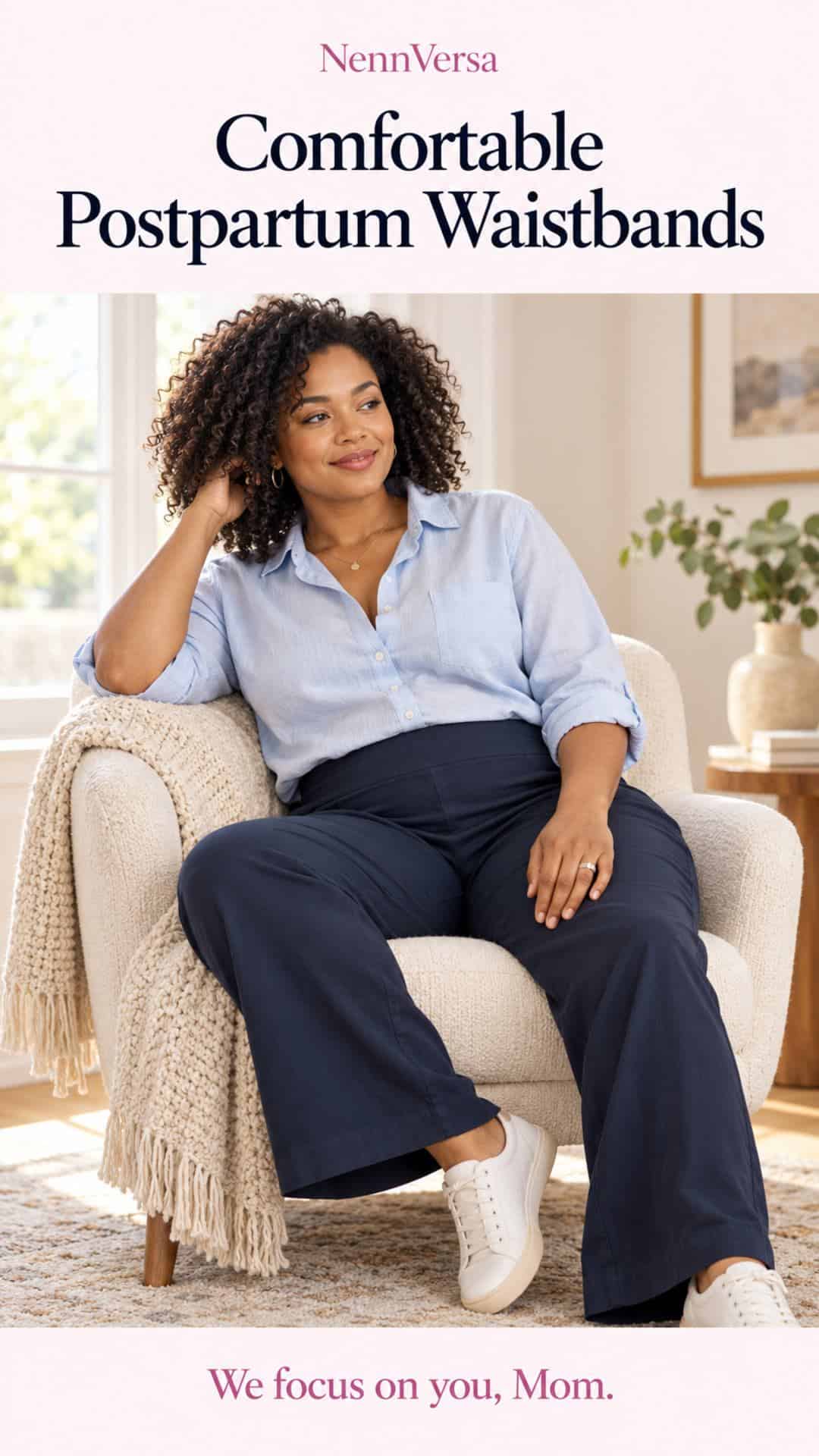
Pair navy pull-on trousers with a blue button-front shirt and cream sneakers. Leave the shirt untucked for the first trial so you can assess the waistband without extra fabric inside it. Check the shirt’s feeding access and the trousers’ back coverage while seated.
A mid-rise skirt and a usable Henley
Try an olive skirt with a burgundy Henley whose real placket opens as needed. Choose the skirt because its band lands comfortably for you. If you prefer a tuck, test a small, easily restored one; keep the top out if that feels simpler.
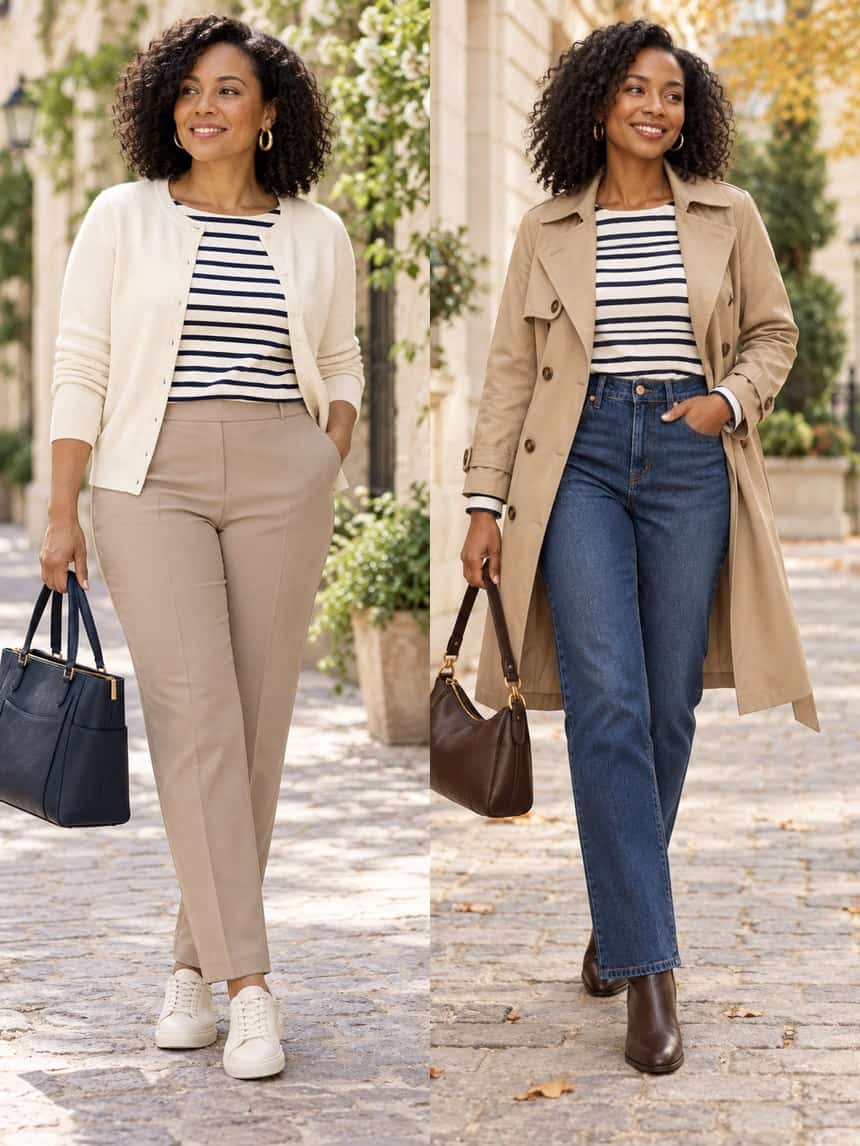
From the capsules
The Year Round Capsule
Two hundred nursing-friendly outfits from fifty-six pieces, fifty for every season, laid out and then worn. $29 once, yours to keep.
A fold-over bottom and a liftable tee
Try a cream tee with charcoal fold-over trousers. Compare the band unfolded and folded as the garment is designed to be worn. If you want abdominal coverage when lifting the tee, rehearse with an accessible underlayer. Keep only the combination that feels useful to you.
Make one useful shopping note
Write down the band you liked, where it sat, and what made it comfortable. “Soft band that stays in place when seated” is more informative than “postpartum trousers.” Add the size and garment measurements when they help you compare a future purchase.
Ask retailers whether a waistband has fixed elastic, a working drawstring, an adjustable section or a rigid front. Check how the rise is measured and compare it with a similar garment using the same method. Product photographs alone may not show a firm internal elastic strip.
Check return conditions before a home try-on, and follow the seller’s requirements for tags and condition. Avoid buying several duplicates until one pair has worked through the part of your day that usually reveals the problem.
Questions moms often ask
Should every postpartum mom wear high rise?
No. It is one option for coverage and shape. The right placement is the one that works with your current comfort, proportions and recovery guidance.
Does a rolling waistband always mean the size is wrong?
Not necessarily. Band construction, rise, fabric and the fit of the whole garment can contribute. Try to identify when it rolls before choosing the next size.
Can I keep wearing maternity bottoms?
Yes, if they are comfortable and useful for you. There is no wardrobe deadline. Check whether the panel still stays where you want it, and keep the pieces that serve your day.
The Nursing Mama Fashion Commandments
Twelve rules I wish someone had told me postpartum. Print them. Screenshot them. Live by them.
- Nursing bra always. Regular bras become instruments of pain the day letdown surprises you.
- Nursing pads on your body + a spare pair in your bag. Every single time you leave the house. No exceptions.
- Extra top in your bag — for YOU, not the baby. Because leaks, spit-up, and coffee-spills don’t care about your outfit plan.
- If it takes more than 5 minutes to figure out how to nurse or pump in it, it’s not the right outfit today. Feeding access is comfort. Comfort is not optional.
- Belt under the bust (empire) or below the belly with drape — never at the belly button. Your postpartum body deserves flattery, not compression.
- Comfortable waistband is non-negotiable. Elastic, wrap, or pull-on. Zippers are a Sunday-only luxury for now.
- Dark tones, prints, or textures — not thin light solids. Because letdown marks are real and you deserve clothes that don’t advertise them.
- Machine-washable everything. Dry-clean is not real-mama fashion. If it can’t survive a spit-up rinse, it’s not in rotation.
- Cross-body bag only. Hands stay free for the carrier, the toddler, the coffee, the door, the meltdown.
- Comfortable shoes always. You’re carrying a car seat and a diaper bag. This is not the season for a heel you can’t run in.
- Get dressed BEFORE the kids see you if you can. It changes the whole day — for them and for you.
- One accessory — earrings, a lip color, a scarf — counts as “put together.” That’s the whole game. You get to feel like yourself again.
Choose for the position you actually live in
You spend a considerable part of early motherhood sitting, reaching and getting up again. Let those ordinary positions influence the clothes you keep. A waistband does not need to look impressive on a product page to make your day easier.
Start with two bottoms you own, compare them while seated, and record the difference. For more practical ways to build outfits around your current body and feeding routine, explore NennVersa and The NennVersa Atelier.