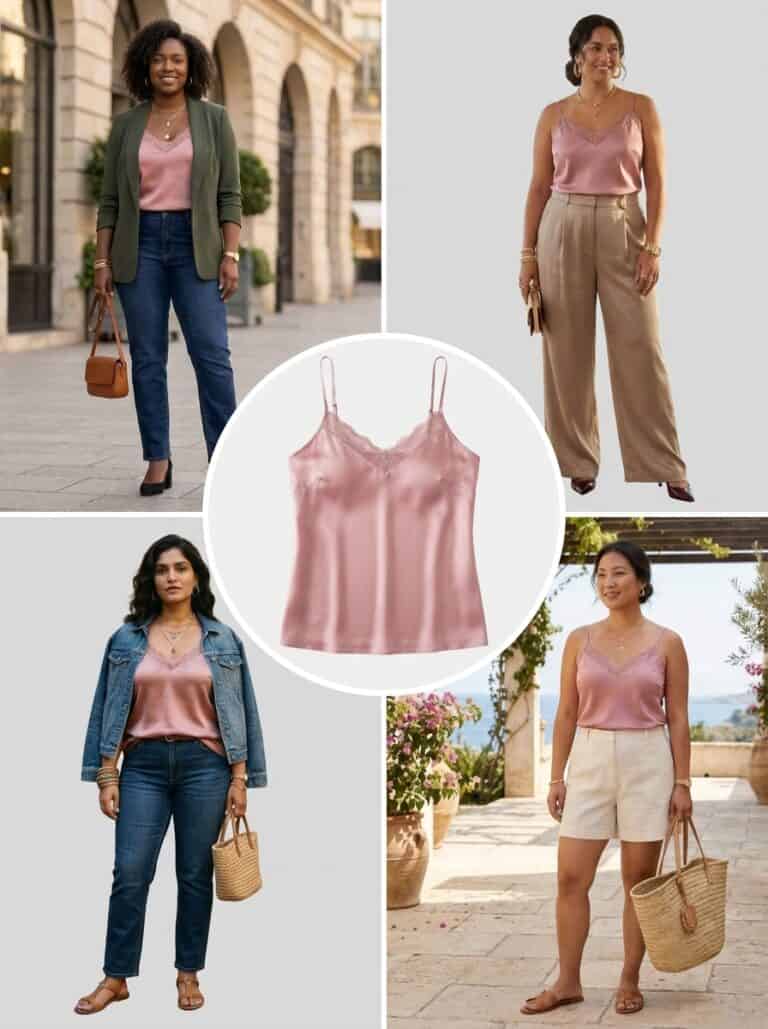
A limited clothing budget can make every purchase feel risky. You need access, comfort and something clean to wear, but you may not know which size or feeding setup will feel right for long. Buying the cheapest nursing bundle is not always the least expensive solution.
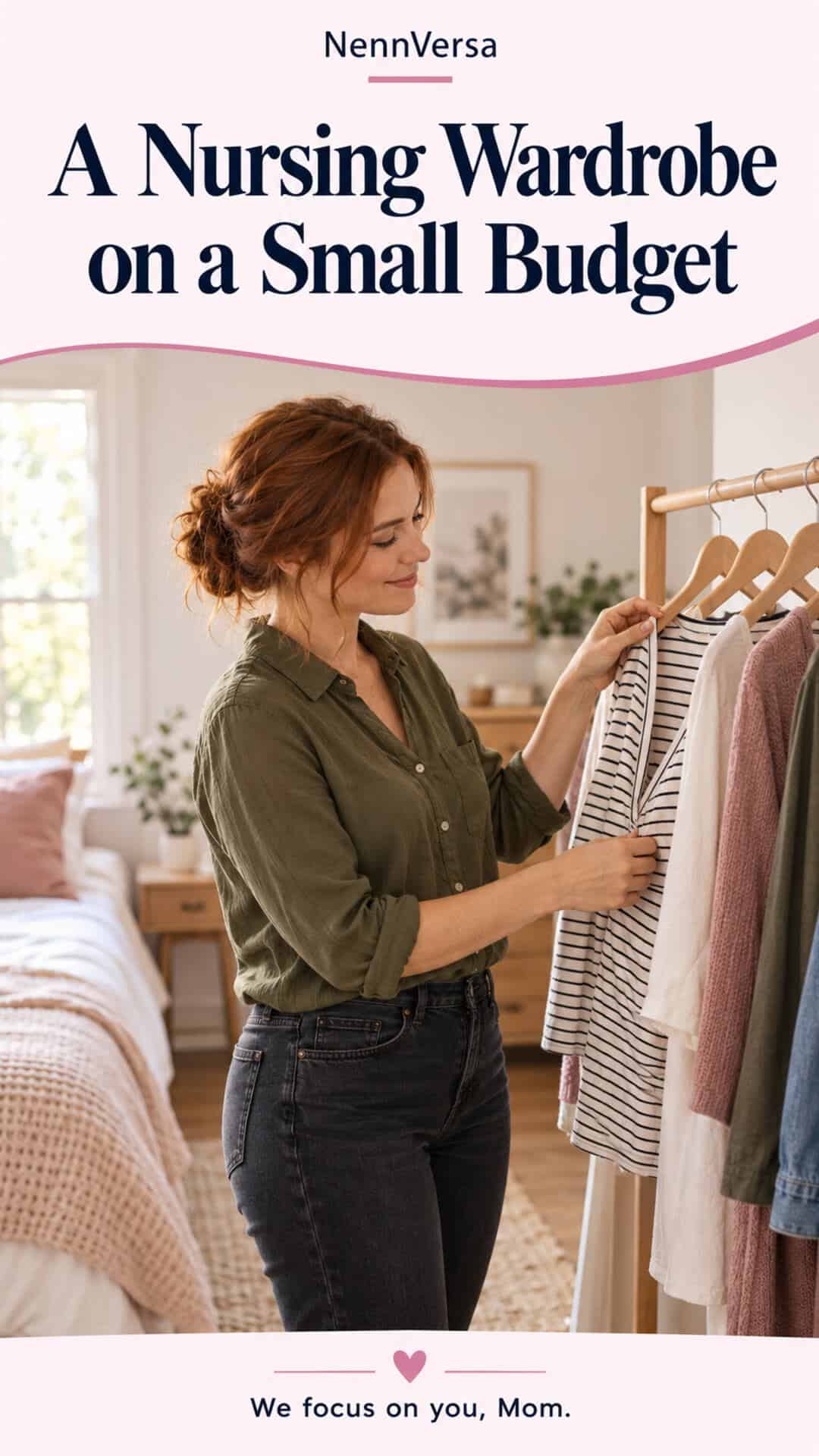
Start with the actual gap in your day. Perhaps you have enough tops but no comfortable bottoms. Perhaps one usable bra is holding up three otherwise good outfits. A budget works harder when it solves the real problem.
This approach begins with your wardrobe, includes borrowing and secondhand options, and leaves room to buy new when that is the practical choice. There is no prize for spending the least if the result leaves you uncomfortable.
Count complete usable outfits
Choose a handful of pieces and try them together with the underlayers you use. Check feeding access, seated comfort and whether you can restore the outfit easily.
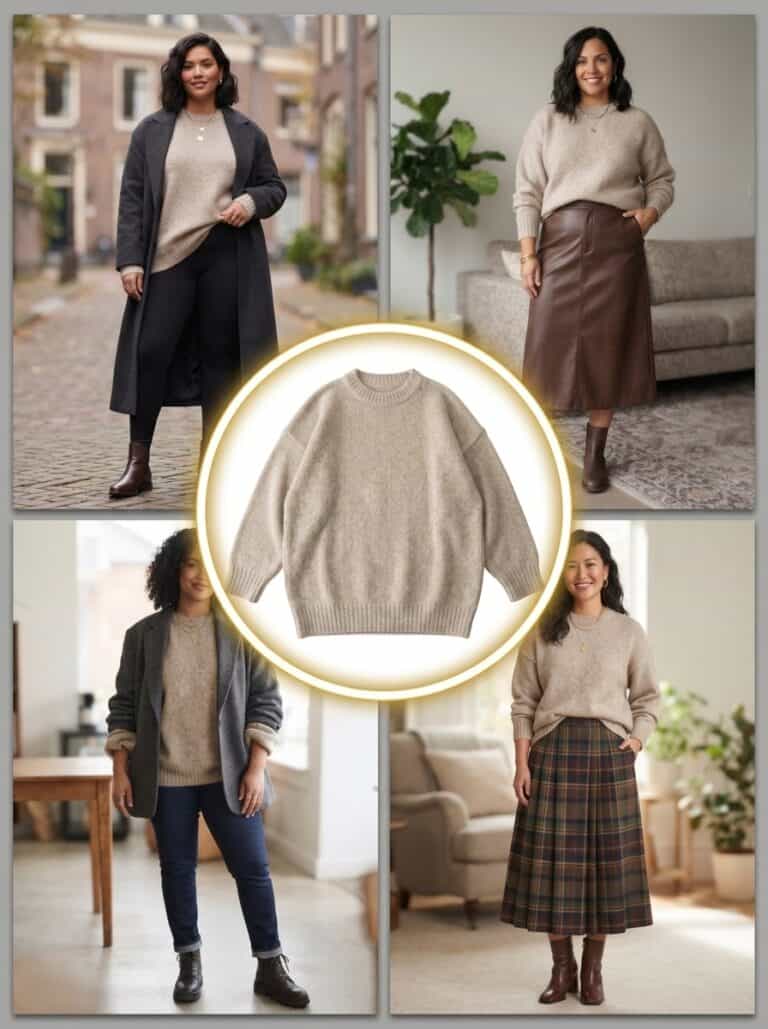
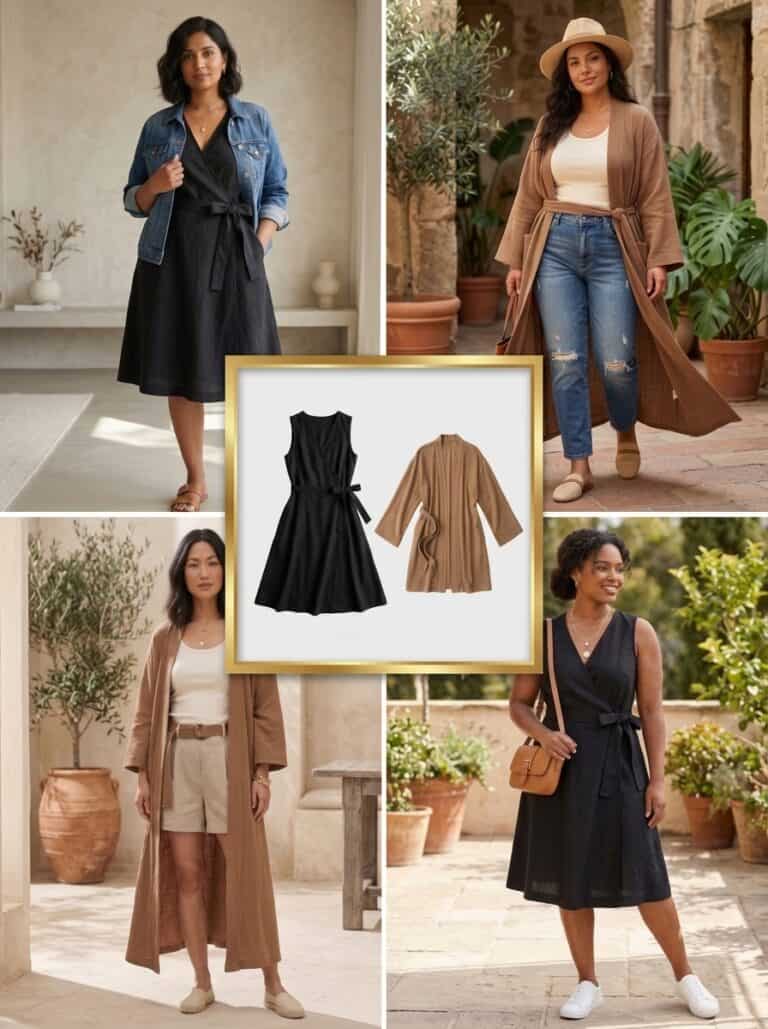
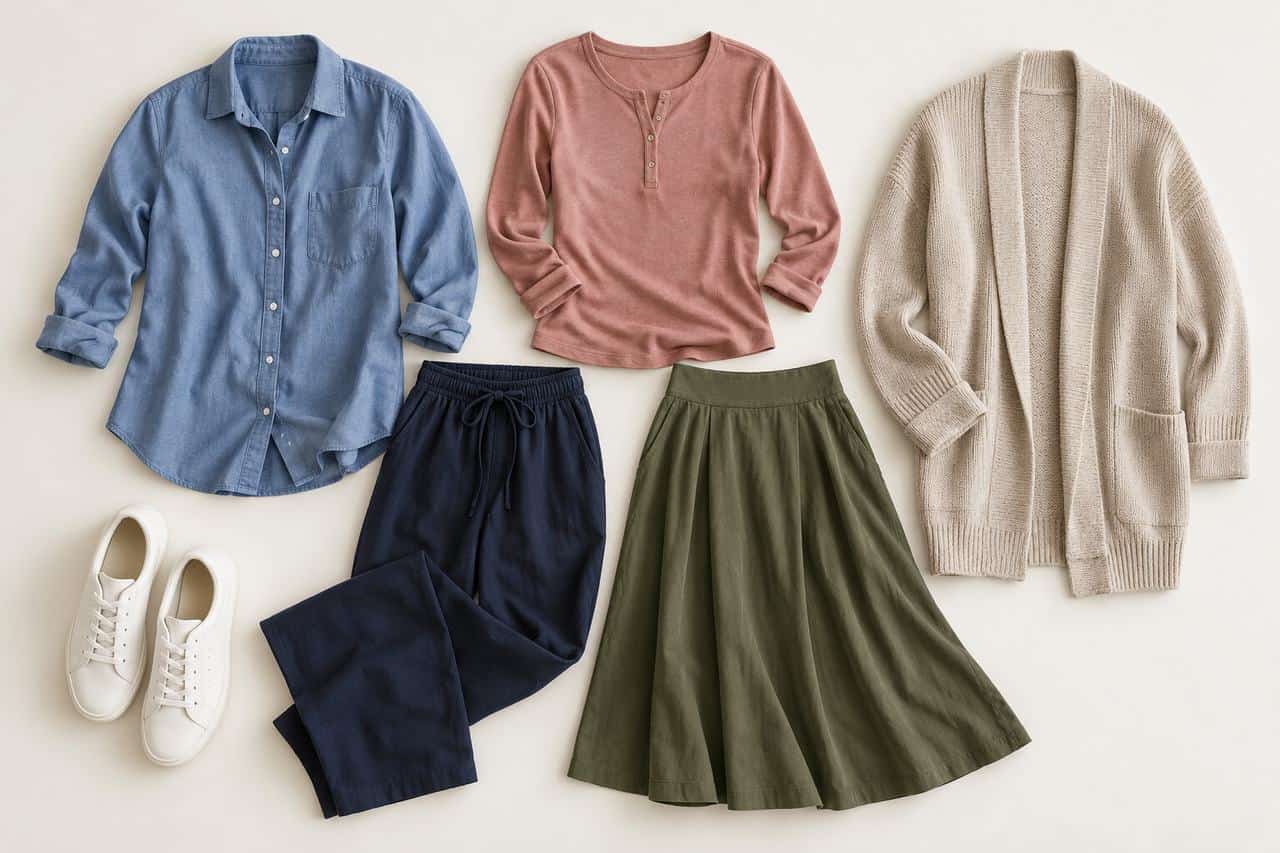
A button-front shirt you own may work. A stretchy top may lift from the hem if that suits your coverage preferences. An open cardigan can change the look of several combinations. But do not count a piece as usable just because you can technically get it on.
Write down the complete combinations. “Blue shirt + soft navy trousers + comfortable bra” is more useful than “three tops.” It reveals missing connections and stops you buying another item for a category that is already covered.
Name the gap before browsing
Try a short shopping brief: “I need one lightweight top with working front buttons that fits over this bra and can go in my usual wash.” Add your maximum total spend and any non-negotiable fit or care detail.
If you cannot name the job, put the item on a later list. This is especially useful for sale pieces, occasion wear with no occasion planned, and duplicates of a style you have not tried.
Separate urgent comfort needs from optional variety. You may need trousers that feel comfortable now; a fourth colour of a favourite shirt can wait. Both wants are valid, but they do not need the same place in the budget.
Use a reuse, borrow, secondhand, new sequence
| Route | Good question to ask | Watch for |
|---|---|---|
| Reuse | Can an existing piece solve this with a different combination? | Uncomfortable fit disguised as “making do.” |
| Borrow | Would a temporary loan cover a short need? | Unclear return timing or care expectations. |
| Secondhand | Can I verify the condition, measurements and opening? | Stretched elastic, faulty fastenings, missing details or no returns. |
| Buy new | Is this the best available way to solve the specific gap? | Buying several before testing one. |
This is a decision sequence, not a rule that every person must search four places. Limited time, local availability, sizing and access needs all affect the practical choice.
Borrow with clear expectations
A borrowed dress for an event or a few everyday tops can be useful. Agree which pieces are on loan, whether the owner expects them back by a particular date, and how to handle ordinary wear or accidental damage.
Check the care labels before accepting. If a garment requires cleaning you cannot reasonably manage, it may not be a helpful loan. Take a simple note of the items so the return does not become another memory task.
You can decline clothes that do not fit your body, climate or taste. Someone’s generosity does not require you to wear an uncomfortable item or store a large bag indefinitely.
Ask better secondhand questions
For online listings, ask for measurements relevant to the garment: bust width, length, waist construction or inseam. Request clear photographs of the opening, lining, fastenings and any wear. Compare measurements with a similar garment that fits you, accounting for fabric and how the seller measured.
Do the buttons function or are they decorative? Does the zip operate smoothly? Is the elastic stretched? Are there stains, loose seams or altered hems? A nursing label cannot answer those condition questions.
For close-fitting underlayers, condition and fit deserve particular attention; buying new may be preferable for you. Follow care labels before wearing a secondhand garment. This article’s borrowing advice is about clothing, not breast pumps or other personal feeding equipment, which have separate safety requirements.
Calculate the total cost
Add postage, cleaning, necessary repairs and alterations to the purchase price. If the outfit needs another underlayer, include that too. Compare the total with a ready-to-use alternative.
For example, a secondhand top priced at 8 units of your currency, with 5 for postage and 7 for a repair, costs 20 before you wear it. A comfortable new top at 18 may be the better practical buy. These are illustrative figures, not current market prices.
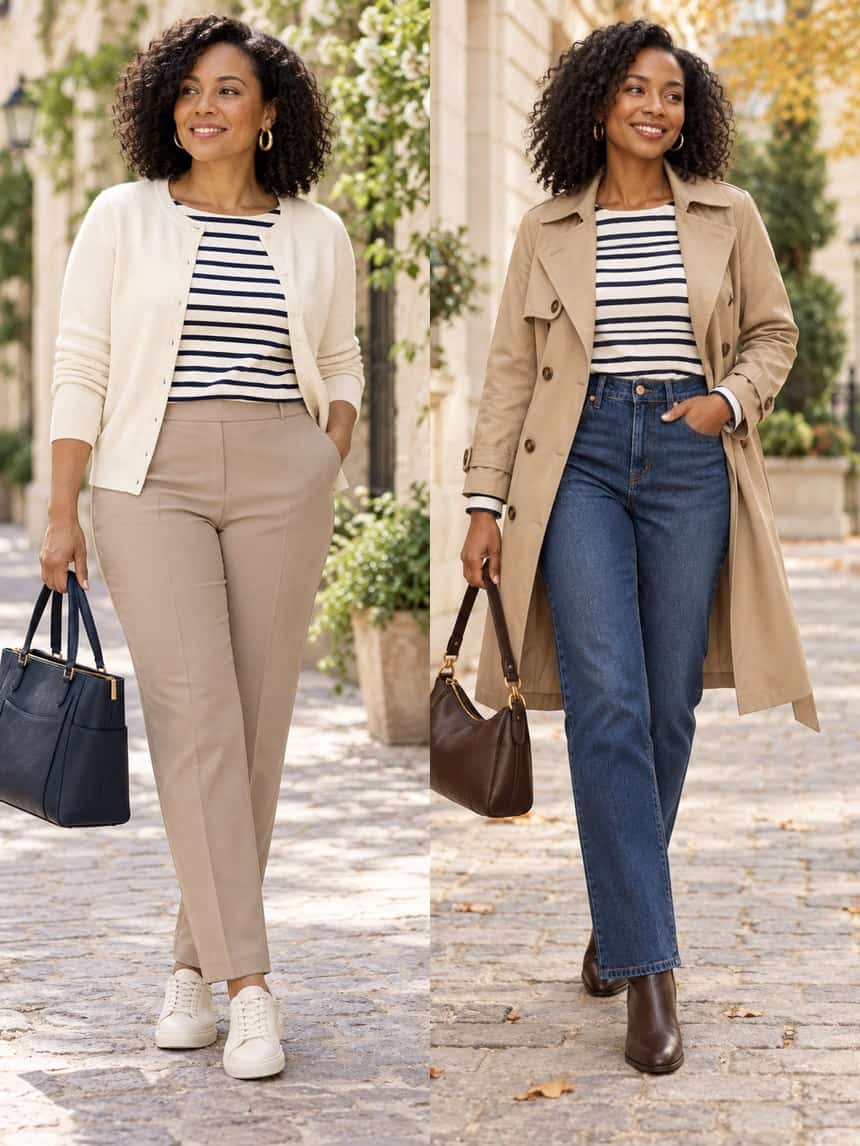
From the capsules
The Year Round Capsule
Two hundred nursing-friendly outfits from fifty-six pieces, fifty for every season, laid out and then worn. $29 once, yours to keep.
Cost per wear can help you think, but guessed future use is uncertain. Do not justify a purchase with a promise that you will wear it a hundred times if you do not yet know whether it fits.
Make a small wardrobe resilient
Choose pieces that work with more than one item you own. Two useful tops and two comfortable bottoms may create several combinations, but you do not need to force every item to match everything.
Allow for laundry. If drying takes two days, owning only one usable top creates a daily problem. A practical spare may be more valuable than an accessory, even when the accessory makes a prettier shopping basket.
After trying a successful garment in real life, a duplicate can be sensible. Check that the colour or updated version uses the same construction rather than assuming it will behave identically.
Common questions
Do I need dedicated nursing clothes?
Not necessarily. Ordinary clothes can provide practical access, while a few specialist pieces may solve particular needs. Test the full outfit rather than shopping by category alone.
Is buying for a short stage wasteful?
Comfort for a shorter period can still matter. Keep the purchase proportionate to your budget and consider a realistic plan for reuse, resale or passing it on afterward.
What if plus-size, petite or tall options are limited?
Prioritize measurements, fit and access over a rule to buy secondhand. A purchase that actually works can be a better use of a tight budget than several near-misses.
The Nursing Mama Fashion Commandments
Twelve rules I wish someone had told me postpartum. Print them. Screenshot them. Live by them.
- Nursing bra always. Regular bras become instruments of pain the day letdown surprises you.
- Nursing pads on your body + a spare pair in your bag. Every single time you leave the house. No exceptions.
- Extra top in your bag — for YOU, not the baby. Because leaks, spit-up, and coffee-spills don’t care about your outfit plan.
- If it takes more than 5 minutes to figure out how to nurse or pump in it, it’s not the right outfit today. Feeding access is comfort. Comfort is not optional.
- Belt under the bust (empire) or below the belly with drape — never at the belly button. Your postpartum body deserves flattery, not compression.
- Comfortable waistband is non-negotiable. Elastic, wrap, or pull-on. Zippers are a Sunday-only luxury for now.
- Dark tones, prints, or textures — not thin light solids. Because letdown marks are real and you deserve clothes that don’t advertise them.
- Machine-washable everything. Dry-clean is not real-mama fashion. If it can’t survive a spit-up rinse, it’s not in rotation.
- Cross-body bag only. Hands stay free for the carrier, the toddler, the coffee, the door, the meltdown.
- Comfortable shoes always. You’re carrying a car seat and a diaper bag. This is not the season for a heel you can’t run in.
- Get dressed BEFORE the kids see you if you can. It changes the whole day — for them and for you.
- One accessory — earrings, a lip color, a scarf — counts as “put together.” That’s the whole game. You get to feel like yourself again.
Give each purchase a purpose
My Wardrobe Decision Notebook helps you list the gap, compare total costs and choose your own next step. For ideas that make more of the pieces you already own, explore The NennVersa Atelier. A useful wardrobe can grow gradually, one solved problem at a time.