The going-home outfit can acquire a lot of expectations: the photograph, the first visitors, the idea that you should look like yourself again. Its most useful job is simpler. It needs to help you get dressed, sit and travel as comfortably as possible.
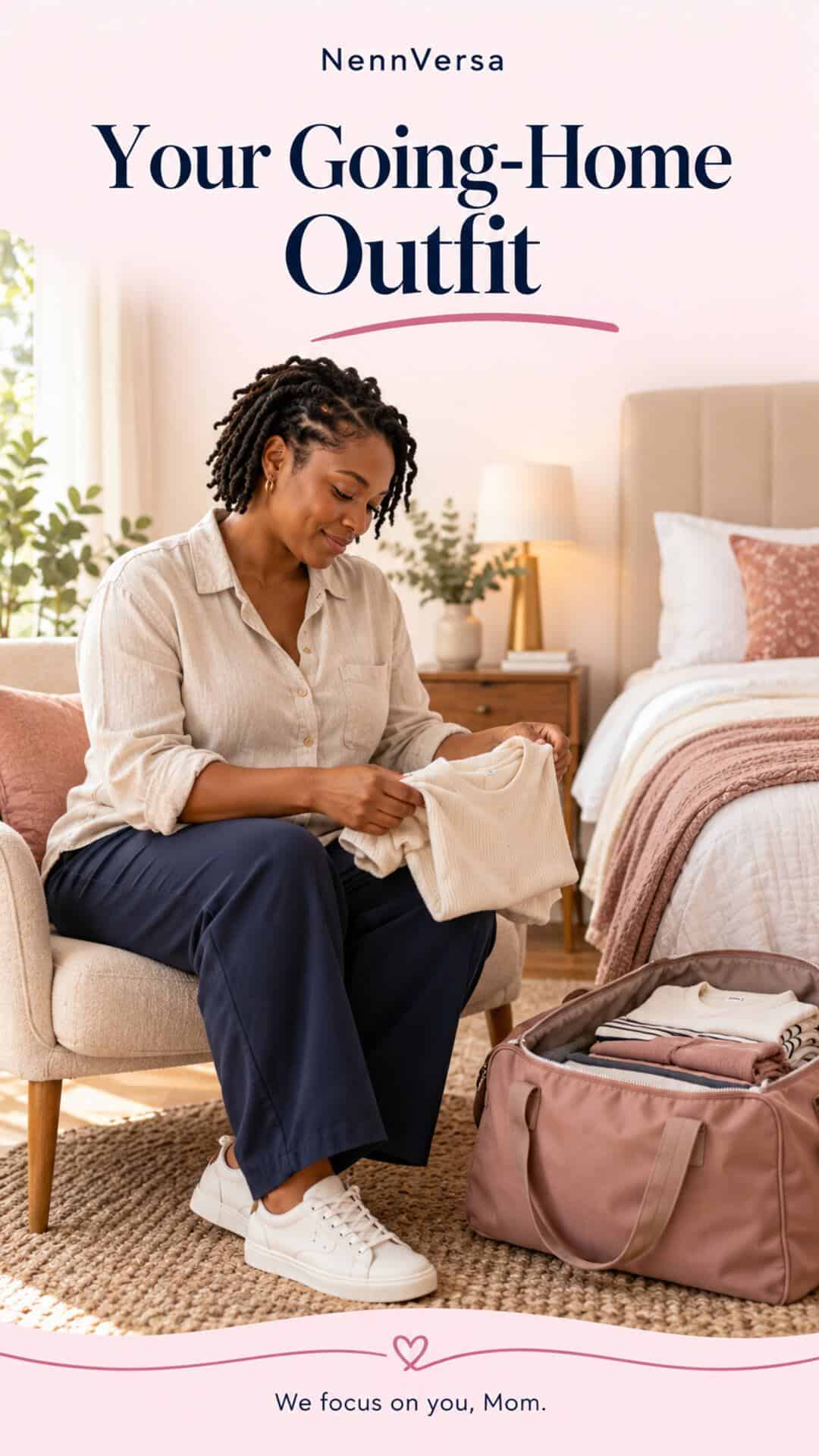
You cannot know exactly how you will feel after birth. Prepare flexible options, follow your own care team’s advice, and leave room to change the plan. A comfortable outfit you already own can be a very good choice.
This guide focuses on your clothes. Your maternity service’s packing list and your discharge instructions should guide medical supplies, recovery care and the rest of your hospital bag.
Choose for sitting and moving, not just a photograph
Consider the journey from getting dressed to reaching home: putting on underwear, managing any pads as instructed, sitting in a chair, walking the necessary distance and getting into your transport.
Look for clothes you can put on without awkward pulling or difficult fastenings. Check the waistband and seams while seated. If you expect to feed, make sure the opening works through the bra and any lining.
The NHS hospital-bag checklist includes comfortable clothing and front-opening or loose-fitting nightwear for breastfeeding. Your own hospital may have additional recommendations; use its current list rather than assuming every facility supplies the same things.
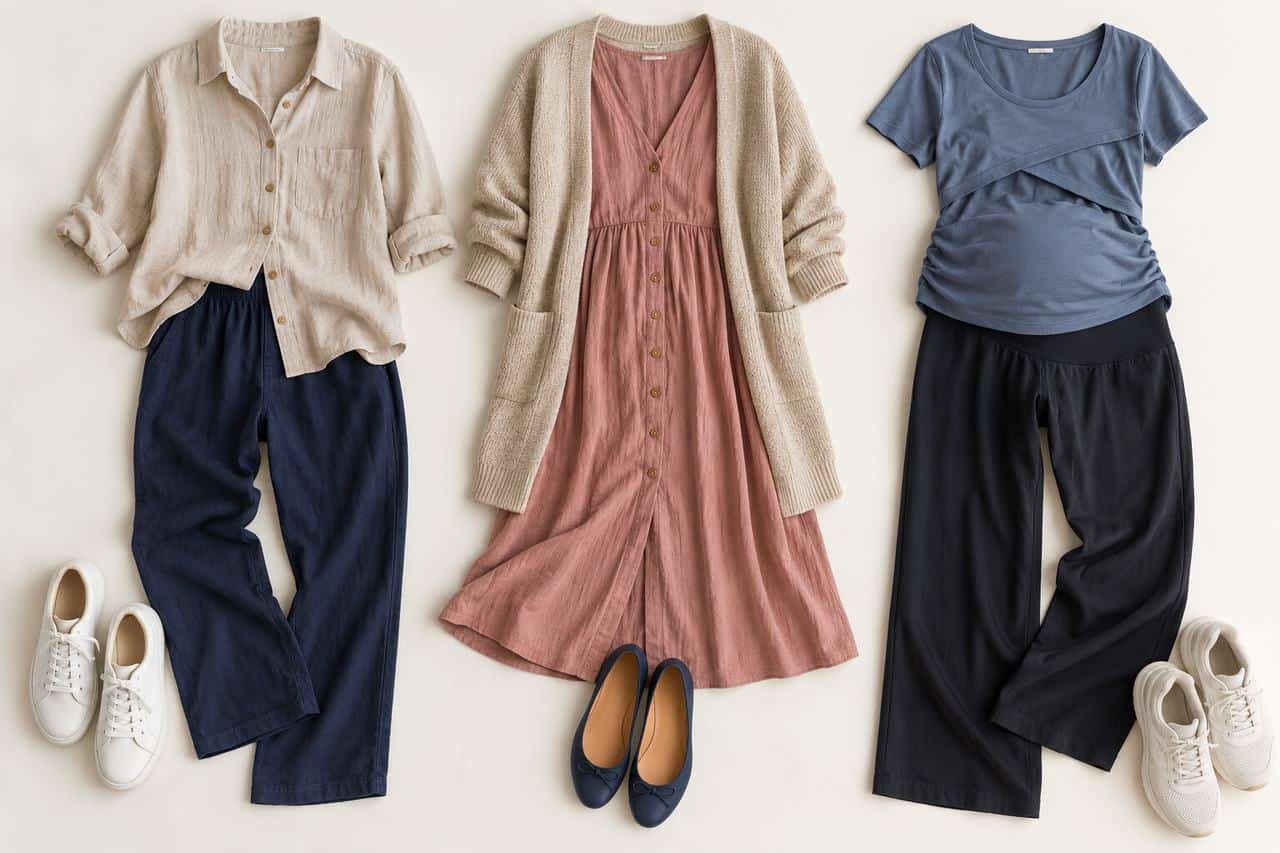
Start with one of three simple combinations
| Combination | Why you might choose it | Try-on question |
|---|---|---|
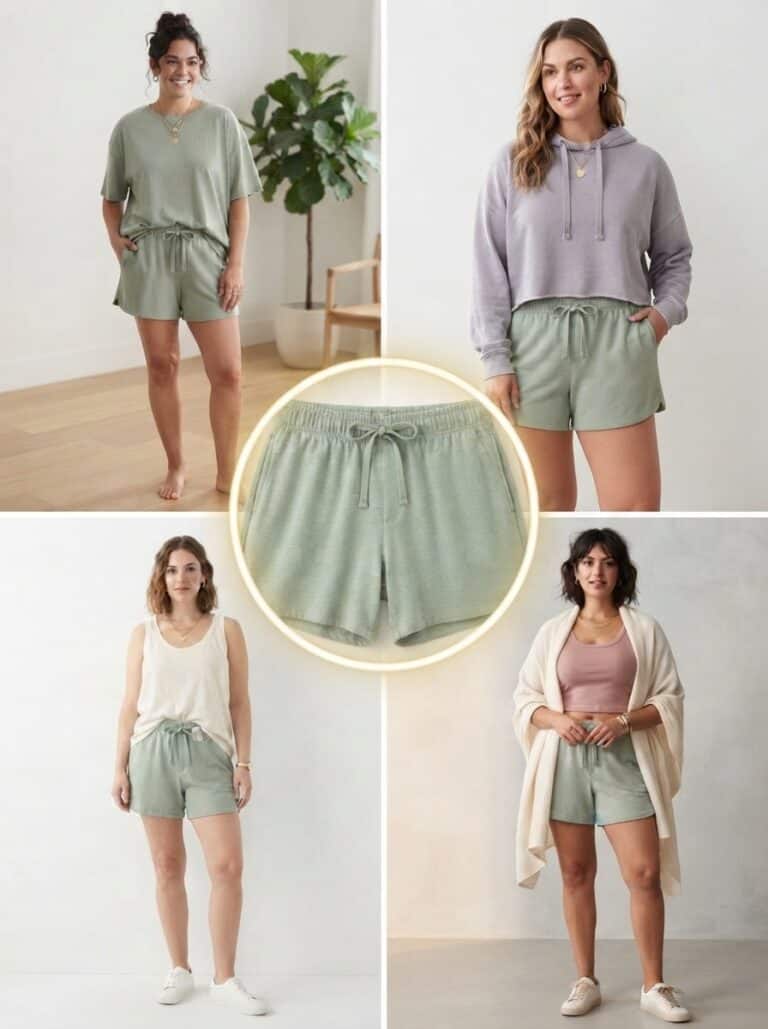
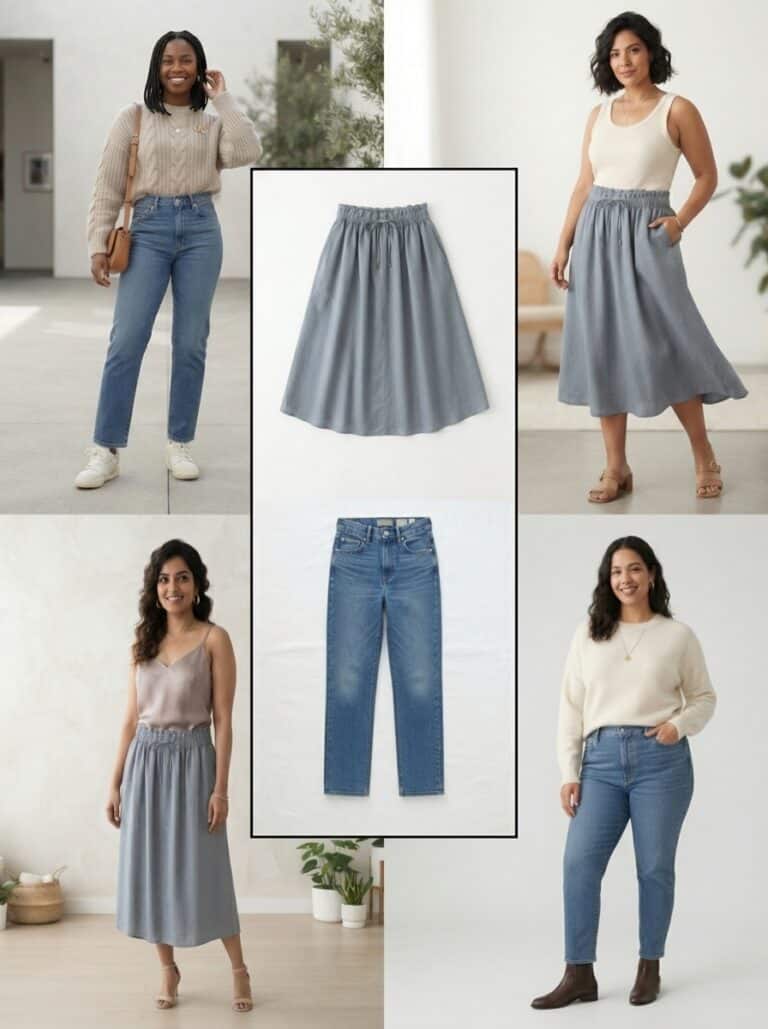
| Button-front shirt + soft trousers | Separate pieces allow an individual top or bottom to change. | Do the buttons open enough, and is the waistband comfortable sitting? |
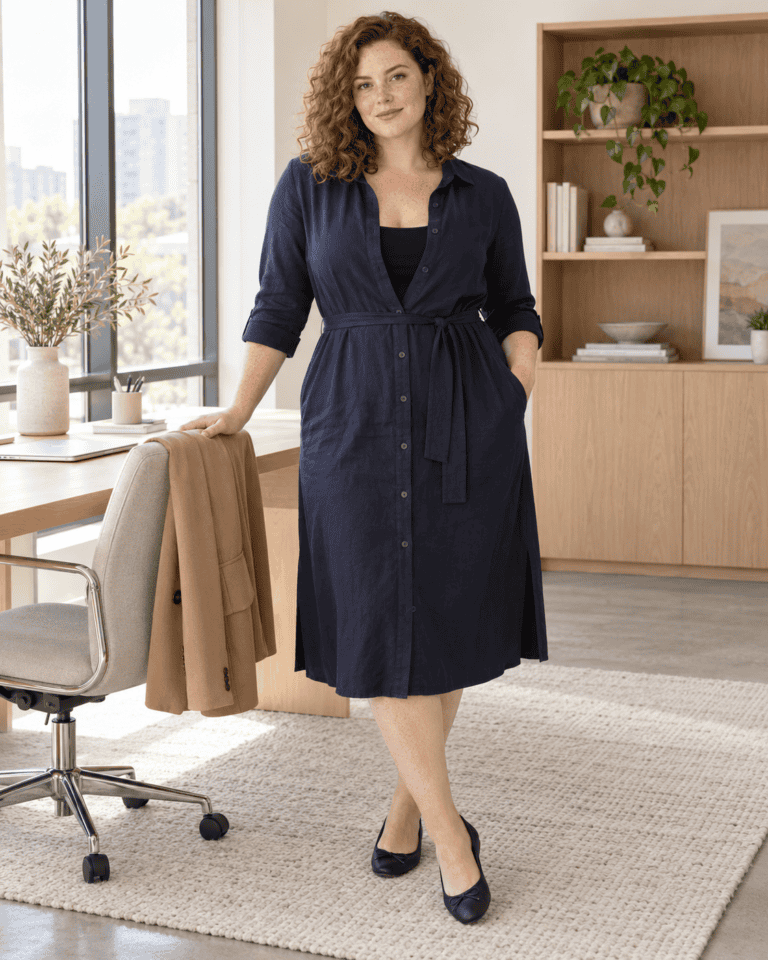
| Accessible loose dress + open layer | You may prefer fewer waist seams. | Does the opening work through the lining and underlayer? |
| Familiar maternity bottoms + nursing top | Existing pieces may already offer useful room and access. | Does the whole combination feel comfortable now? |
These are options, not a required shopping list. If you dislike dresses, you do not need one for recovery. If you love dresses, you do not need trousers to make the outfit look more finished.
Keep the fit forgiving
A pre-pregnancy size is not a sensible deadline for discharge day. Pack clothes that do not rely on your body changing to match the outfit. Maternity pieces can remain useful after birth.
A soft or adjustable waistband can be worth trying, but comfort depends on its position and construction. High-rise is not automatically best, and low-rise is not automatically wrong. If you have a wound or a sensitive area, follow your care advice and choose clothing that does not rub or press uncomfortably.
Ask your team about any prescribed support or compression. A fashion label saying “recovery” does not establish that a garment is suitable for your medical needs.
Choose underlayers as carefully as the outfit
Pack underwear that fits comfortably and works with the postpartum products your service recommends. Keep a practical spare accessible. Choose bras or underlayers based on comfort and your feeding plans, with room to reassess fit afterward.
If you plan to pump, check what the equipment requires. A nursing bra and a pumping bra may do different jobs. You do not need to purchase an unfamiliar setup solely for the journey home.
Make sure the top lets you reach the underlayer. A loose shirt over a fixed bodysuit can create more work than you expected. The whole outfit needs to function together.
Think about footwear and temperature
Choose stable, comfortable footwear that is easy for you to put on. Try it with the clothes and consider the route to your transport. If you need help with shoes or dressing, ask for it.

A removable layer lets you adjust between the building and outdoors. In a warm climate, a lightweight open shirt or cardigan may be more useful than a heavy coat; in cold weather, prepare appropriate warmth without making feeding access unnecessarily complicated.
Do not use clothing to explain away sudden swelling, breathlessness or other concerning symptoms. Tell your care team about changes that worry you before leaving.
Pack a backup that solves a different problem
A second outfit is most useful when it gives you another comfortable option. If your first choice has a waistband, the backup might be an accessible dress you already like. If a dress is your first choice, soft separates may offer flexibility.
You do not need to bring an entire wardrobe. Ask how long your service expects you to stay and what would happen if that changes. A support person may be able to bring additional clothes when needed.
Put the complete going-home combination together in the bag, including the underlayers. Tell your support person where it is. This avoids searching through several compartments when you are ready to dress.
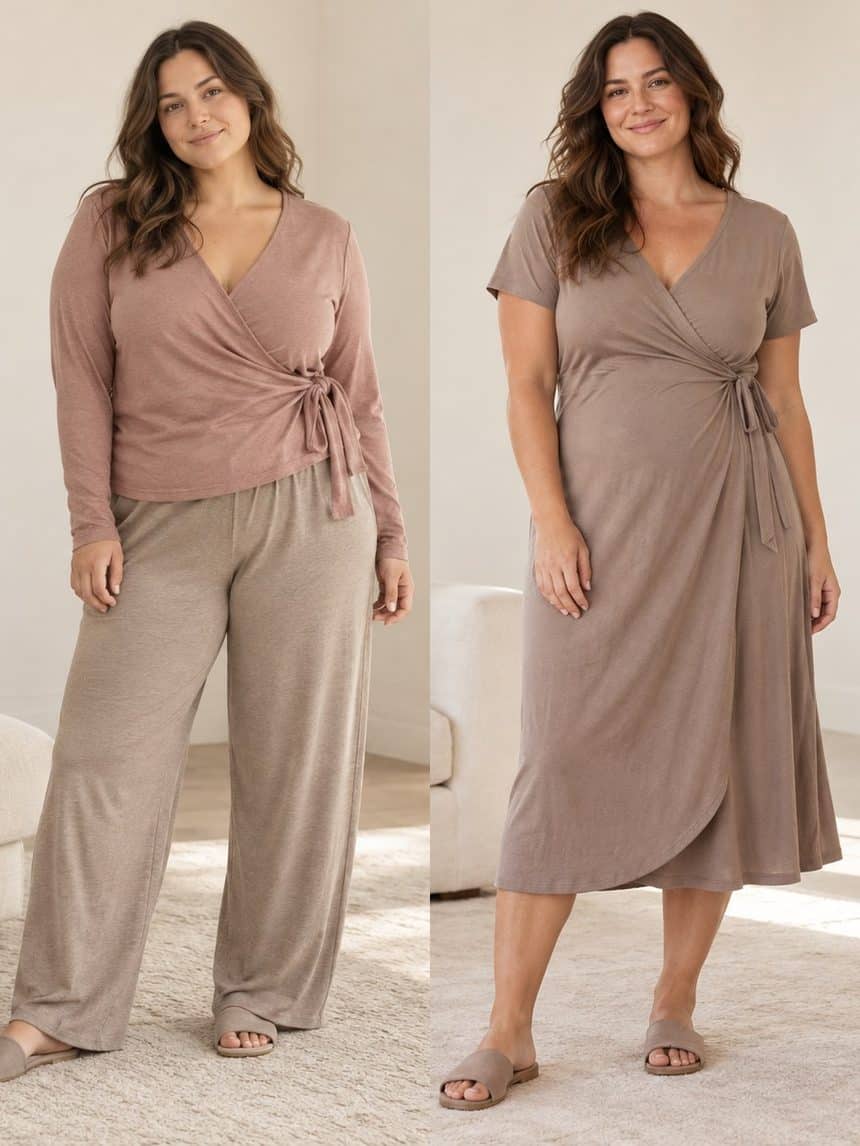
From the capsules
The Soft Landing Capsule
Twenty soft pieces, twenty-five outfits for the first weeks home, every one opening for a feed. $14.99 once, yours to keep.
Prepare the first few days at home
Make a small selection of clothes that can rotate through wearing, washing and drying. The number depends on your laundry access and how often you need to change. A rigid capsule count is less useful than knowing whether a clean top will be ready.
Keep one comfortable combination near the place you normally dress. Ask someone to return clean clothes to that spot. If you have stairs or limited mobility, arrange storage around the advice you have received and the movements you can comfortably manage.
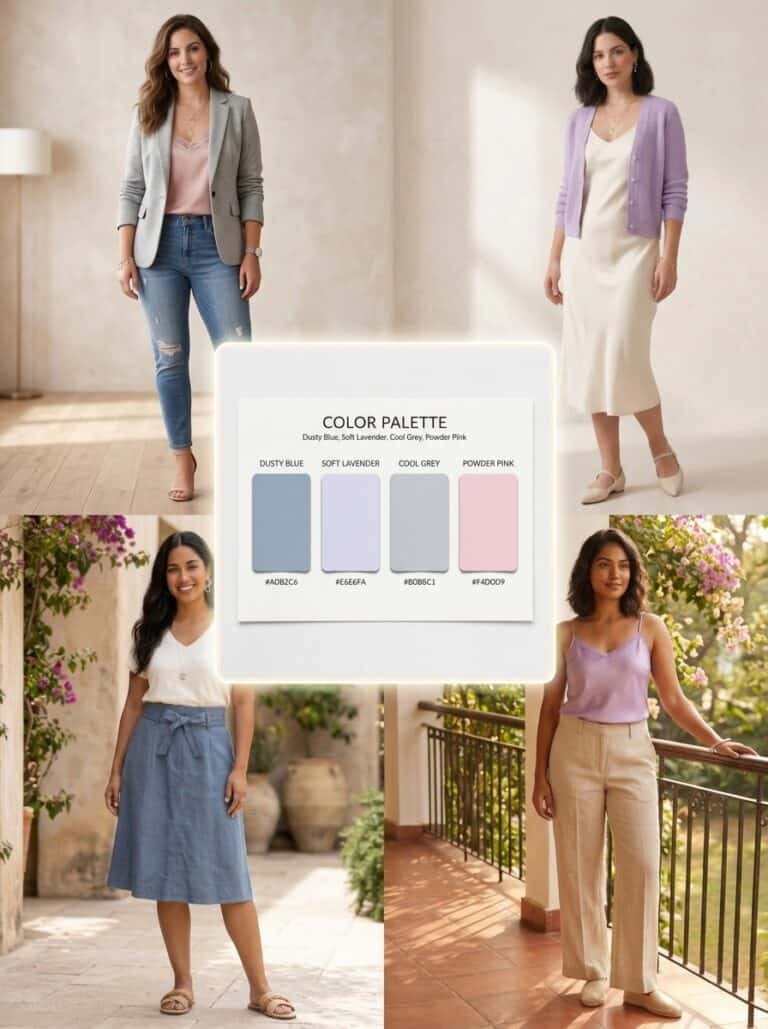
There is no requirement to dress for visitors or leave lounge clothes behind. You can add a favourite colour or layer when you want to, and stop at clean, comfortable basics when that is enough.
Keep recovery questions separate from outfit questions
If something hurts, tell your care team rather than repeatedly changing clothes to tolerate it. Ask what changes should prompt a call and whom to contact after discharge.
Seek immediate care for urgent symptoms such as chest pain, trouble breathing, fainting, severe headache or heavy bleeding. The CDC’s maternal warning signs provide a fuller list. An outfit plan never takes priority over getting help.
Common questions
Can I wear pajamas home?
Comfortable lounge clothes or pajamas can be practical if they suit your travel and weather needs. You do not owe anyone a particular kind of outfit.
Do I need specialist postpartum leggings?
Not automatically. Start with clothes that feel comfortable and meet any individual care instructions. Ask about medical support garments separately.
What if the planned outfit feels wrong after birth?
Use the backup or ask someone to bring another option. Changing the plan means the preparation is adapting to you.
The Nursing Mama Fashion Commandments
Twelve rules I wish someone had told me postpartum. Print them. Screenshot them. Live by them.
- Nursing bra always. Regular bras become instruments of pain the day letdown surprises you.
- Nursing pads on your body + a spare pair in your bag. Every single time you leave the house. No exceptions.
- Extra top in your bag — for YOU, not the baby. Because leaks, spit-up, and coffee-spills don’t care about your outfit plan.
- If it takes more than 5 minutes to figure out how to nurse or pump in it, it’s not the right outfit today. Feeding access is comfort. Comfort is not optional.
- Belt under the bust (empire) or below the belly with drape — never at the belly button. Your postpartum body deserves flattery, not compression.
- Comfortable waistband is non-negotiable. Elastic, wrap, or pull-on. Zippers are a Sunday-only luxury for now.
- Dark tones, prints, or textures — not thin light solids. Because letdown marks are real and you deserve clothes that don’t advertise them.
- Machine-washable everything. Dry-clean is not real-mama fashion. If it can’t survive a spit-up rinse, it’s not in rotation.
- Cross-body bag only. Hands stay free for the carrier, the toddler, the coffee, the door, the meltdown.
- Comfortable shoes always. You’re carrying a car seat and a diaper bag. This is not the season for a heel you can’t run in.
- Get dressed BEFORE the kids see you if you can. It changes the whole day — for them and for you.
- One accessory — earrings, a lip color, a scarf — counts as “put together.” That’s the whole game. You get to feel like yourself again.
Prepare one comfortable landing
Use My Gentle Daily Reset to arrange the first at-home combination and the help that makes it available. Save My Out-the-Door Outfit Plan for a later appointment or outing. Your clothes should make the next step easier, not add another expectation to the day.