A shirt can fit your shoulders and still pull across the bust. A wrap neckline can look secure while standing and feel different when you sit. A loose top can provide plenty of room yet make the feeding opening surprisingly difficult to manage.
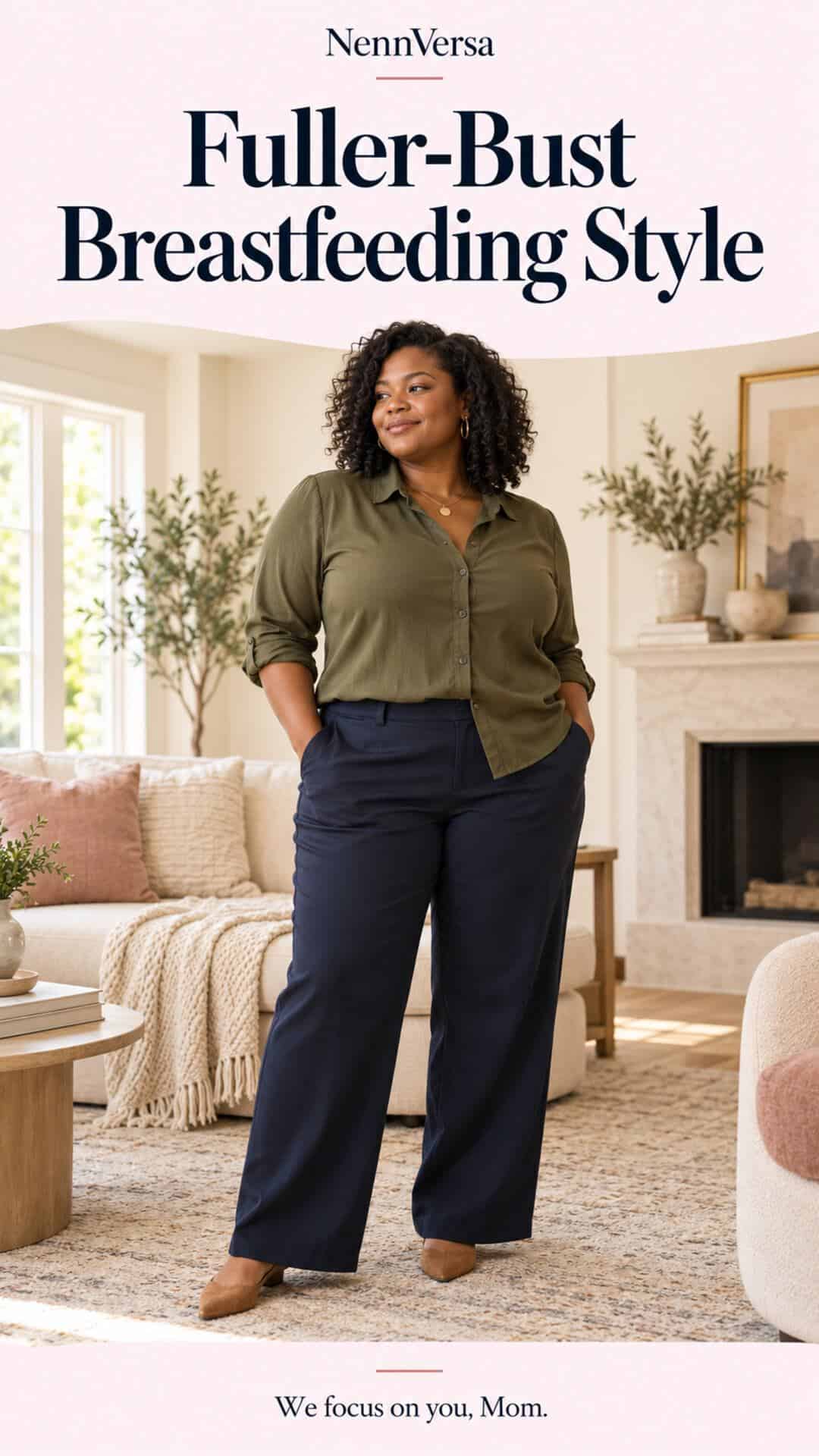
For a fuller bust, the useful question is how the whole outfit works: bra, opening, fabric, fit, and the coverage you prefer. You do not have to choose between feeling supported and wearing clothes you like.
“Fuller bust” is not one body shape or one clothing size. You may have a small or larger frame, narrow or broad shoulders, and many different waist and hip proportions. Start with the particular fit issue in front of you.
Check the bra before judging the top
Try a new top with the bra you plan to wear underneath it. Different cup shapes, seam placements, and levels of coverage can change how a garment sits and how its opening works.
If your bra is uncomfortable, treat that as its own problem rather than asking a loose shirt to compensate. The Australian Breastfeeding Association describes fuller-bust options including supportive bands, wider straps, fuller-coverage cups, and more structured cup construction. It also suggests seeking fitting help when finding a comfortable bra is difficult.
For pumping, check the bra with your actual equipment as well. Bra fit, garment fit, and pump fit are separate checks. A clothing size or cup-size label cannot confirm that the entire pumping arrangement is suitable.
Look for room in the right place
When a shirt pulls at the bust, sizing up is one option, but it is not always the most useful one. The larger size may fit across the front while becoming too long in the sleeve or too broad at the shoulder.
Compare cuts with different bust shaping, shoulder widths, armholes, and overall ease. A darted blouse may suit you better than a straight-cut shirt, or the reverse may be true. A softly draped garment may give the shape you enjoy without requiring stretch to do all the work.
When online shopping, ask whether a listed measurement describes the body the garment is intended to fit or the garment itself. Look for information about fabric stretch and construction. Photos on a different body can show design details, but they cannot predict your fit.
Choose an access route you can actually use
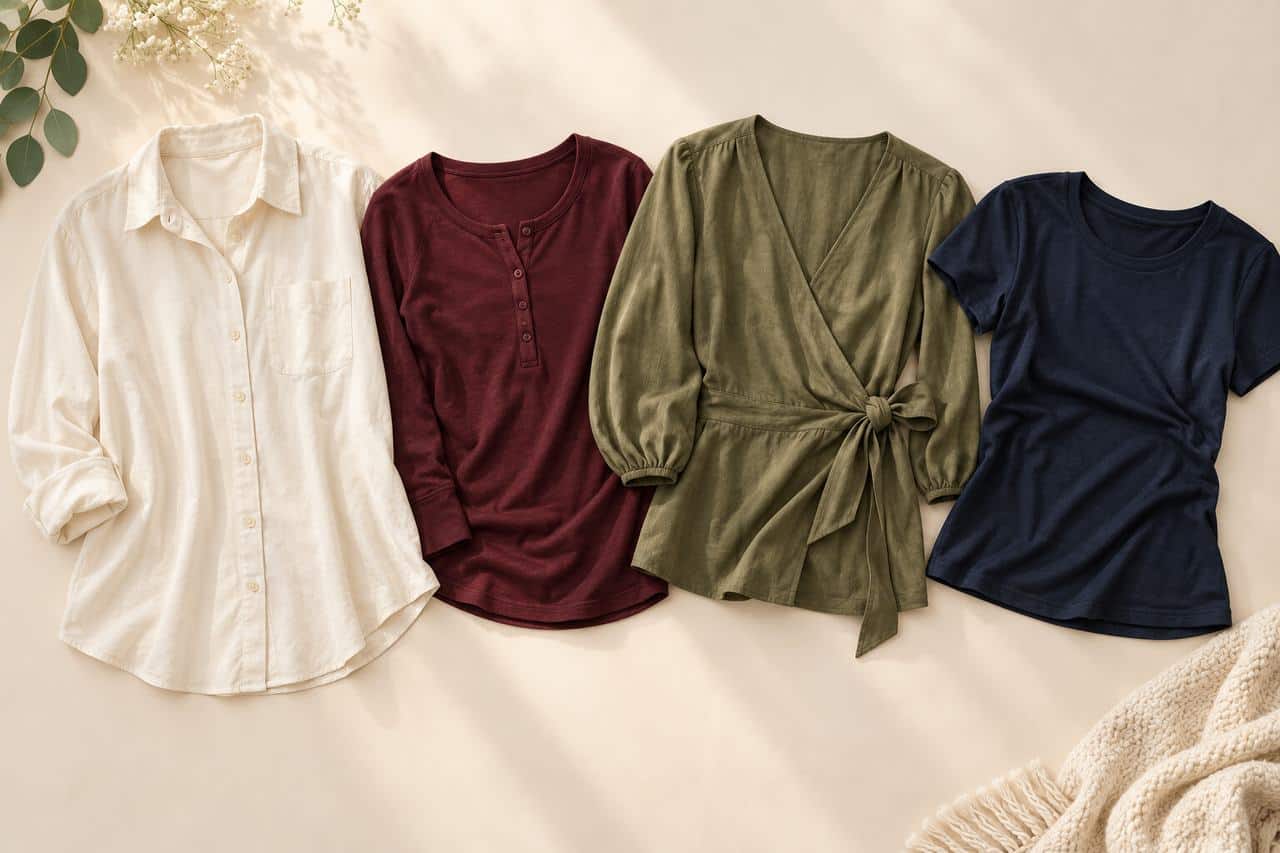
| Opening | Why it may appeal | What to test |
|---|---|---|
| Front buttons | You decide how much of the front to open. | Usable opening depth, button gaps when closed, and bra access |
| Henley placket | A simple opening in an everyday knit. | Whether the real placket is long enough; decorative buttons do not count |
| True wrap | An adjustable overlap in some designs. | Seated coverage, tie security, and whether the wrap is genuinely functional |
| Liftable top | Access from the hem without relying on a low neckline. | Fabric bulk and whether the top stays comfortably out of the way |
| Purpose-made opening | May offer a separate route through the garment. | Opening position and width on your body, including any lining |
Try the chosen route with the bra beneath it. An opening can be wide enough while still being awkwardly placed. The goal is a combination you can use without straining the fabric or continually adjusting several panels.
Make coverage a preference, not a rule
You may like a higher neckline, a lower one, extra torso coverage, or fewer layers. A fuller bust does not create an obligation to dress modestly, and breastfeeding does not create an obligation to wear low necklines.
If you prefer more coverage, explore a higher-neck top with a real feeding opening, a liftable top over an accessible camisole, or a shirt that opens where you need it. Check that the extra layer does not block the route to your bra.
If you prefer fewer layers, look for an outer garment that provides both the coverage and access you want. A single suitable shirt can be more practical than assembling several garments that solve competing problems.
Do the sitting-and-reaching test
Sit in the outfit before deciding it works. Notice whether the neckline changes position, the front buttons pull, or the armholes reveal more than you prefer. Reach comfortably and let your arms rest again. Check whether the top returns to a position you like without repeated correction.
Then practice opening and restoring the garment. If you use a wrap tie, check the knot and overlap after sitting. If you use a side opening, notice whether you can reach it easily. If you pump, include the equipment according to its instructions rather than relying on a nursing-only access trial.

A photo taken standing still cannot answer these questions. Your seated trial provides information about the actual experience of wearing the outfit.
Try four combinations with different silhouettes
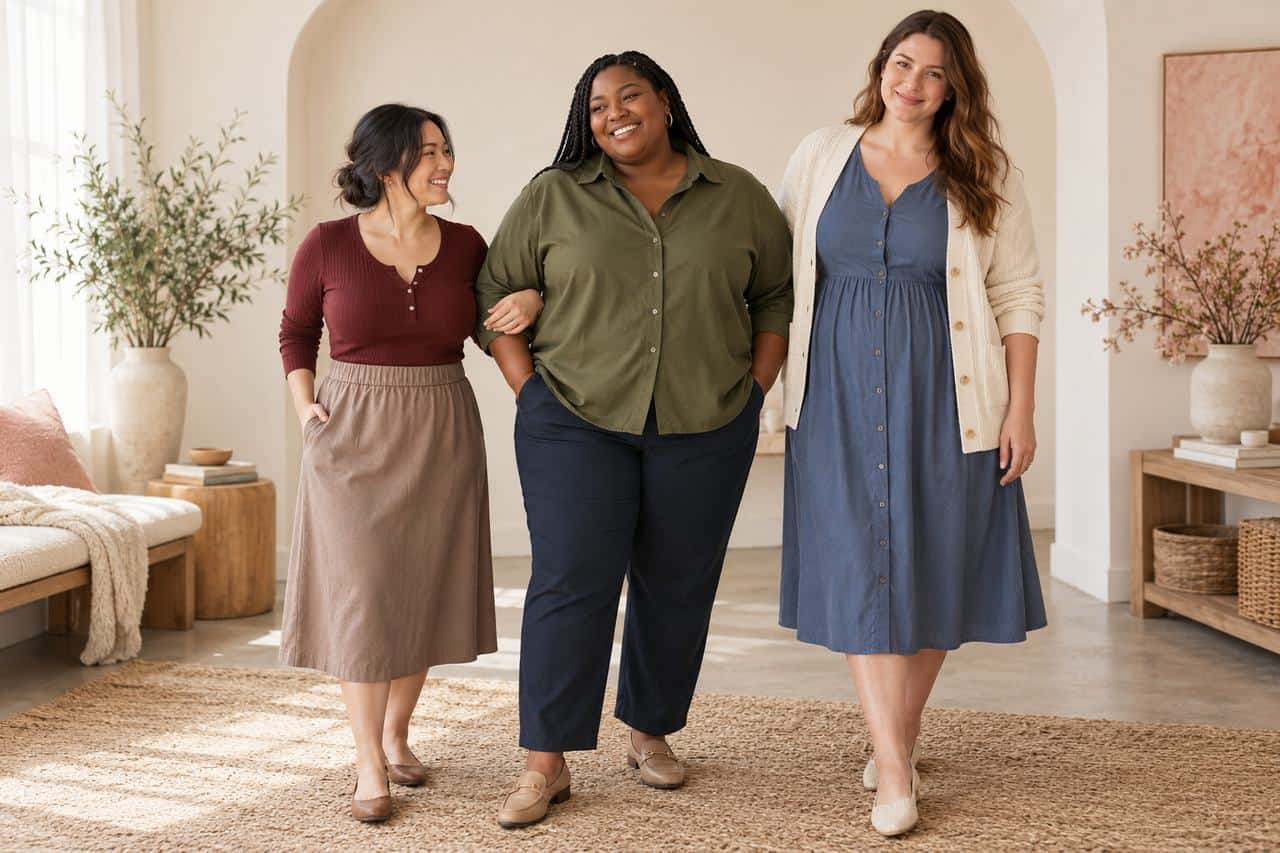
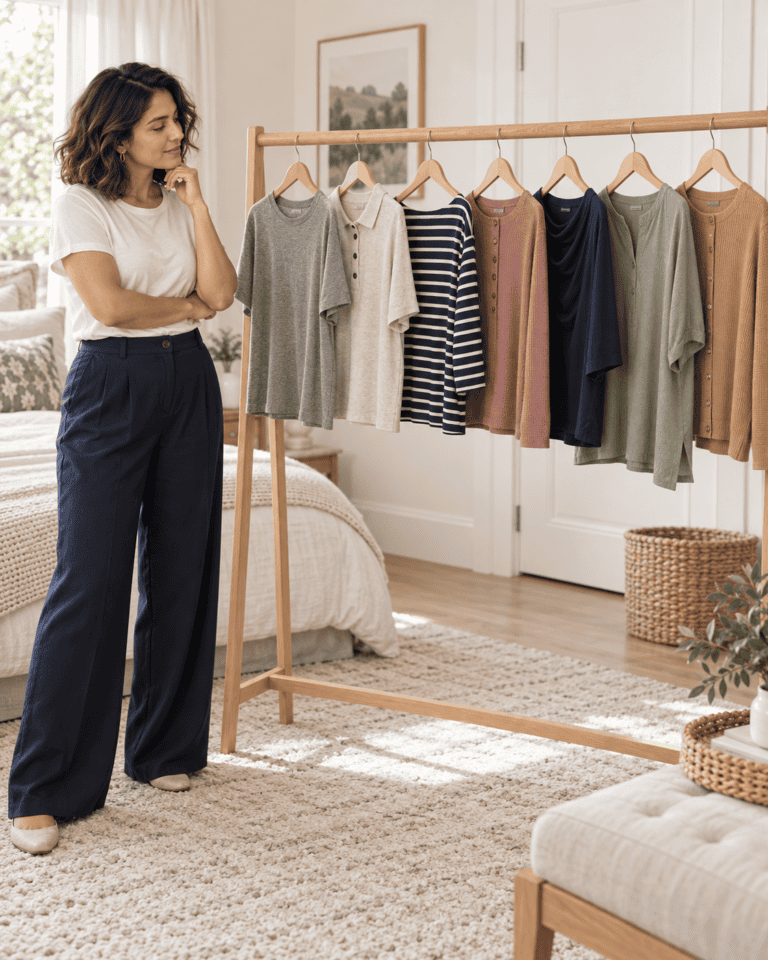
A softly shaped shirt and straight-leg trousers: choose room across the bust and an opening you can use. Wear the shirt untucked if that feels easier. An open cardigan is optional, not required to make the outfit complete.
A usable Henley and a pull-on skirt: compare placket depth and how the knit sits when closed. The skirt gives another bottom option if you prefer it to trousers; check its waistband while seated.
A feeding-access dress and familiar flats: look at the real opening placement, not just the dress size. If a waist seam crosses your bust or sits somewhere uncomfortable, another bodice length or cut may help more than changing the overall size.
A liftable top and comfortable trousers: choose an underlayer only if it supports your coverage preference and access needs. Check how much fabric gathers above the bust when the top is lifted.
Choose colors and proportions because you enjoy them. You do not need a darker top, a particular neckline, or a prescribed silhouette to make your body acceptable.
Decide whether an alteration is worthwhile
A small alteration can make a garment more useful when the main fit is already comfortable. Shortening sleeves or a hem may be straightforward, while changing bust shaping or creating feeding access can be more involved.
Ask a skilled alterations professional what is possible before buying an item that depends on a major change. Explain that you need usable feeding access and show how the current garment opens. A closure added to stop a neckline moving should not make the necessary opening unusable.
A new fastening also cannot create fabric that is missing. If the whole front is under tension, holding one gap closed may leave the garment uncomfortable elsewhere. Look at the fit problem before choosing a repair.
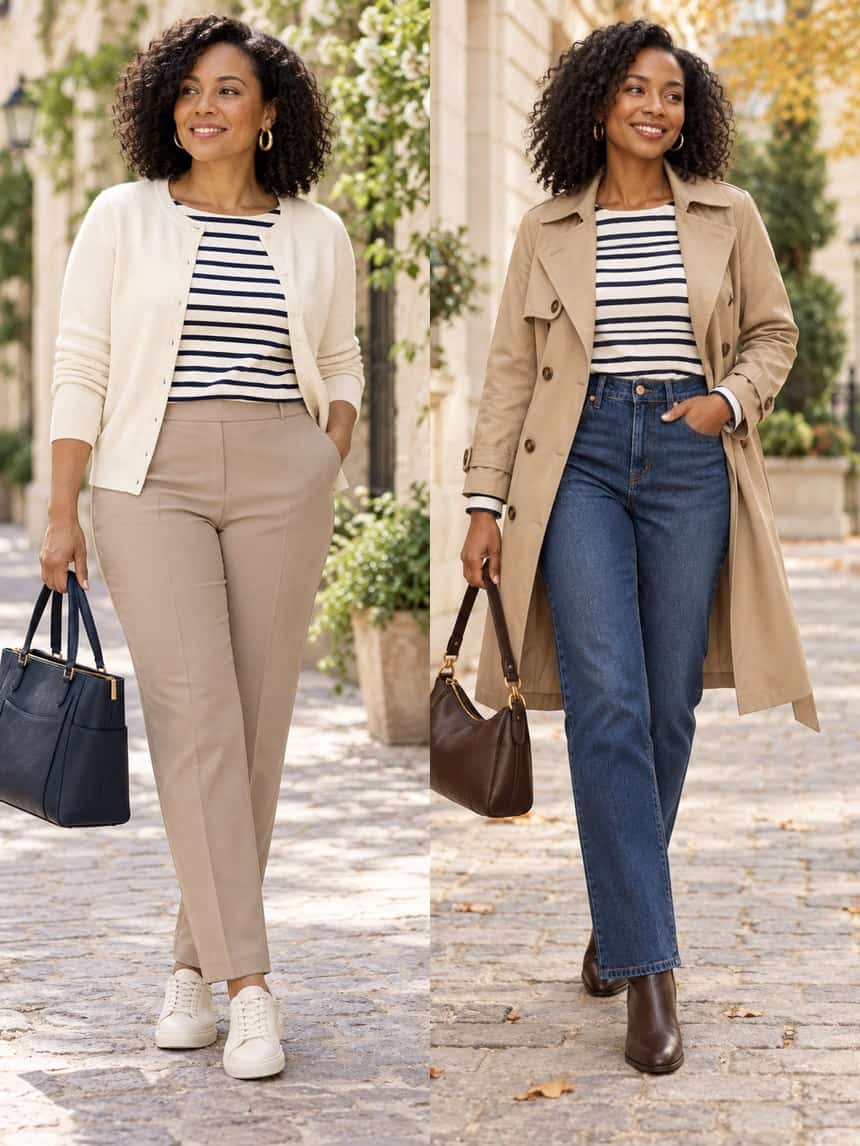
From the capsules
The Year Round Capsule
Two hundred nursing-friendly outfits from fifty-six pieces, fifty for every season, laid out and then worn. $29 once, yours to keep.
Shop with a short set of questions
Before ordering, identify what you need to know: bust room, shoulder fit, opening construction, lining, fabric behavior, and care. Check the return conditions so you can assess fit appropriately.
When comparing listings, pay attention to photographs of the garment open or inside out. An attractive front photo may conceal a fixed lining or a shallow access panel. Ask for clarification when the important detail is missing.
If a style works, note the cut and measurements you liked. That information is more transferable than a general instruction to “buy oversized.” You can look for the same useful feature in different brands and price ranges.
Keep one reliable combination ready
Once you find a comfortable outfit, write down the complete combination, including the bra. Put any required camisole or removable layer with the pieces it supports. This avoids the morning discovery that the top works only with an underlayer currently in the wash.
Keep a compatible spare if leaks or other clothing changes are part of your routine. Check that the spare works with the same bra and bottoms. A backup is more useful when it preserves the fit decisions you have already made.
Common questions
Are wrap tops always good for a fuller bust?
No design is automatic. Test the actual overlap, fastening, bra compatibility, and seated fit. A fixed wrap-look front may not offer feeding access at all.
Do I need to wear a camisole under every nursing outfit?
No. Use one if it gives you coverage or comfort you want and works with your access route. It is an option, not a requirement.
What if larger shirts fit my bust but overwhelm my shoulders?
Compare another cut or a garment with different bust shaping. A feasible sleeve or hem alteration may help, but do not assume the largest size is the only solution.
The Nursing Mama Fashion Commandments
Twelve rules I wish someone had told me postpartum. Print them. Screenshot them. Live by them.
- Nursing bra always. Regular bras become instruments of pain the day letdown surprises you.
- Nursing pads on your body + a spare pair in your bag. Every single time you leave the house. No exceptions.
- Extra top in your bag — for YOU, not the baby. Because leaks, spit-up, and coffee-spills don’t care about your outfit plan.
- If it takes more than 5 minutes to figure out how to nurse or pump in it, it’s not the right outfit today. Feeding access is comfort. Comfort is not optional.
- Belt under the bust (empire) or below the belly with drape — never at the belly button. Your postpartum body deserves flattery, not compression.
- Comfortable waistband is non-negotiable. Elastic, wrap, or pull-on. Zippers are a Sunday-only luxury for now.
- Dark tones, prints, or textures — not thin light solids. Because letdown marks are real and you deserve clothes that don’t advertise them.
- Machine-washable everything. Dry-clean is not real-mama fashion. If it can’t survive a spit-up rinse, it’s not in rotation.
- Cross-body bag only. Hands stay free for the carrier, the toddler, the coffee, the door, the meltdown.
- Comfortable shoes always. You’re carrying a car seat and a diaper bag. This is not the season for a heel you can’t run in.
- Get dressed BEFORE the kids see you if you can. It changes the whole day — for them and for you.
- One accessory — earrings, a lip color, a scarf — counts as “put together.” That’s the whole game. You get to feel like yourself again.
Find the detail that makes the difference
Choose one outfit and identify its specific difficulty: bust room, opening position, neckline movement, or underlayer compatibility. Change one element and repeat the seated test.
Use My Nursing Outfit Remix to record a possible access route and your checks. For help building a wardrobe around your own fit and style preferences, explore The NennVersa Atelier.
You deserve an outfit that makes space for your body and for the practical work of feeding your baby.