
You finally have a chance to wash, but getting from the bathroom to clean clothes feels like another project. The comfortable bra is in the wash. The trousers are downstairs. The top on the chair looks fine until you remember that you cannot feed in it.
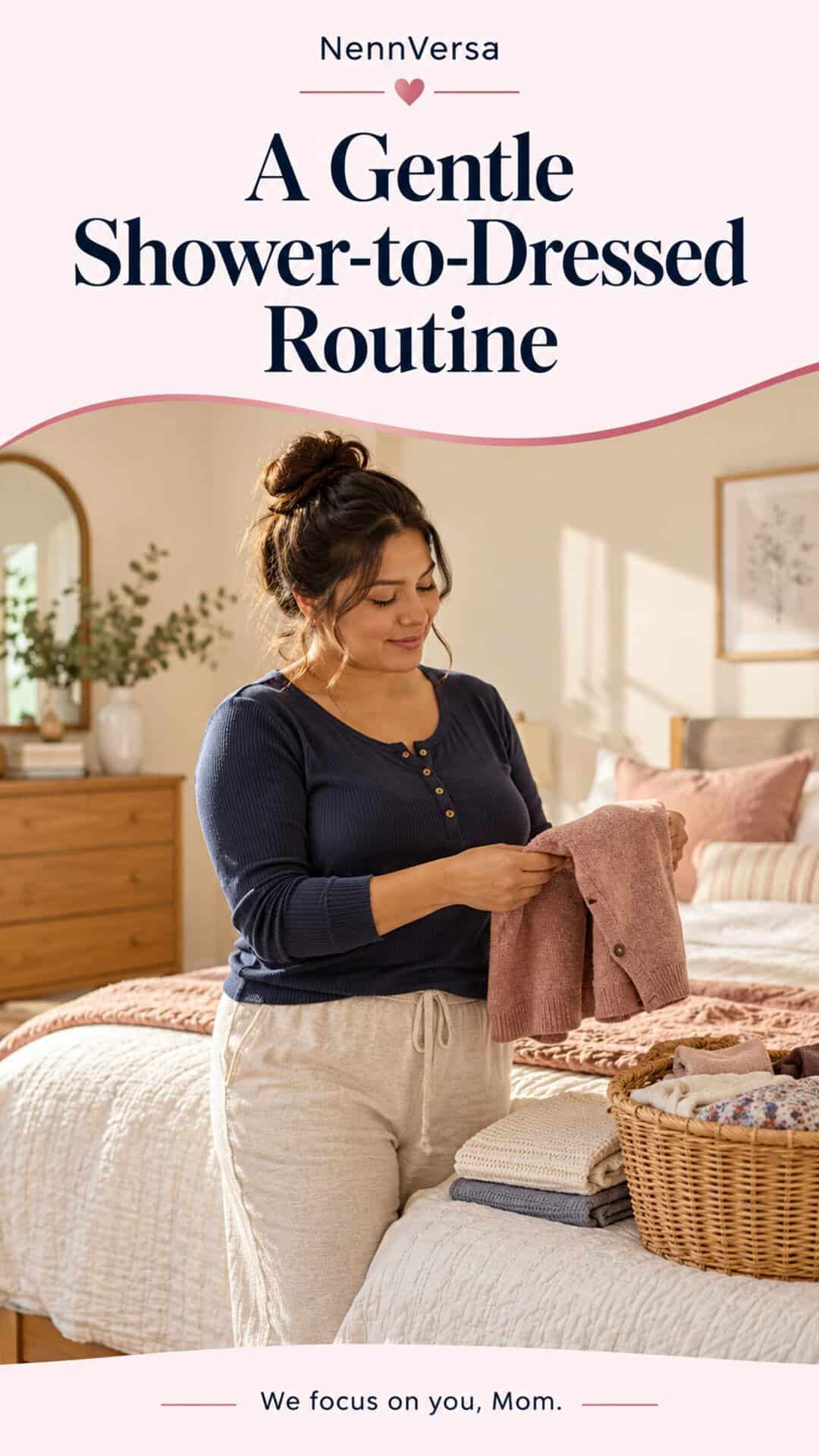

A useful postpartum routine reduces those small obstacles. It does not require a full shower, styled hair and a coordinated outfit every morning. Its purpose is to help you feel more comfortable with the energy, time and support available today.
Follow your own discharge and recovery advice for washing, wound care and activity. This is an organization routine, not a replacement for those instructions.
Choose the version you can manage today
Instead of one routine that feels impossible whenever you are tired, prepare three versions. You can switch between them without making up for the shorter version later.
| Today’s version | What it might include | Where to stop |
|---|---|---|
| Small refresh | The personal care you can comfortably manage, plus a clean underlayer or top. | When the immediate discomfort is reduced. |
| Wash and change | Your usual washing routine, recovery care as instructed, and one complete outfit. | Once you are comfortably dressed. |
| A little extra | The same basics, plus hair, skincare or an outfit detail you enjoy. | Before the extras use energy you need elsewhere. |
These are choices, not levels to progress through. A clean top can be enough on Tuesday even if you washed your hair on Monday. Getting dressed is available as a form of care; it is not a test of how well you are recovering.
Prepare the landing place before the bathroom
Put a complete clothing combination within reach: comfortable underwear, the bra or underlayer you want, a top, bottoms or a dress, and any layer or footwear you need. Include the parts that make the outfit usable for feeding or pumping.
A top without its compatible bra is an unfinished decision. So is a dress whose opening works only with a camisole you cannot find. Set out the complete combination once, then repeat it when it works.
Use a chair, drawer section or small basket you already own. You do not need a matching organization set. Keep the floor and route clear, especially if bending or moving is uncomfortable. Ask for help placing items where you can reach them.
Make a clear handover if someone can help
“Can you watch the baby?” can mean different things to different people. A more useful request names the whole task and lets you step away from managing it.
“Could you take responsibility for the baby while I wash and get dressed? The supplies are here. Please handle the nappy change too, and come for me if you genuinely need me.”
Agree on the plan around your baby’s needs and the caregiver’s abilities. You do not need to finish at speed to prove the break was reasonable. If another child is home, make their care part of the arrangement rather than assuming you will supervise from the bathroom.
If you are alone, choose a smaller routine and use an appropriate safe place for your baby. Do not rush through care that feels unsafe because an imagined schedule says you should be finished.
Give your clothes one easy job
For an at-home morning, the outfit’s job may be simply to feel clean, allow feeding access and remain comfortable while seated. You can save more involved combinations for another day.
- Soft trousers and a button-front shirt: check that the buttons open far enough and that the waistband feels comfortable sitting down.
- A nursing top and familiar leggings: choose the actual pair that feels good today; the label does not decide comfort.
- An accessible dress: check the lining and bra underneath, not just the neckline.
- A fresh lounge set: completely valid if resting is what the day involves.
If your usual clothes feel wrong, change the garment rather than arguing with your body. A different waistband or softer fabric is a practical adjustment. It does not need to become a judgment about size.
Choose one optional detail that feels like you
Some days you may want moisturizer, a quick hair adjustment, a favourite colour or a cardigan that changes how the outfit feels. Choose the detail because you enjoy it, not because you owe anyone a polished version of yourself.
Keep that choice separate from the essentials. If you only have enough energy to change a milk-damp shirt, you can finish there. If you want five quiet minutes for your hair, ask for them without describing them as frivolous.
At NennVersa, feeling put together is an invitation to care for yourself. It is never evidence that someone is coping well, and an unwashed hairstyle is never evidence that someone is not trying.
Close the routine with one small reset
Put used clothing in its laundry place and identify the next clean top. If that is more than you can manage, hand the task to someone else. The routine works better when tomorrow’s clothes do not depend on you completing every household job today.
A specific request might be: “Please wash these tops according to their labels, dry them, and put one full outfit in this basket.” Asking for the finished task avoids a clean load waiting elsewhere while you search for something to wear.
If washing and drying take several days in your home, your clothing buffer should reflect that. Repeating a reliable outfit is useful; owning too few usable pieces can create extra work.
Know when low energy deserves a care conversation
Tell your care professional if exhaustion, pain, low mood or anxiety is making everyday care difficult. You do not need to decide whether it is “normal enough” before mentioning it. NHS guidance on postnatal depression includes difficulty coping, persistent low mood and loss of enjoyment among reasons to seek support.
Sudden overwhelming weakness, fainting or other concerning physical symptoms need prompt assessment; use the CDC’s urgent maternal warning signs for guidance on seeking immediate care. A routine cannot treat an underlying health problem.
Common questions
Does getting dressed mean getting out of lounge clothes?
No. Comfortable, clean lounge clothes may be the most useful choice. What matters is whether the outfit serves you today.
Should I make a strict morning timetable?
Only if you find it helpful. A sequence (prepare clothes, arrange care, wash, dress) often survives interruptions better than a fixed time.
What if I start and need to stop?
Stop at a comfortable point. Return when you can, ask for help, or choose the smaller version. An interrupted routine still counts as care.
Make tomorrow’s first decision easier
Use My Gentle Daily Reset to choose your routine, name the help you need and set out one outfit. For more ways to turn familiar pieces into comfortable everyday combinations, explore The NennVersa Atelier. Begin with the version that gives something back to you.


