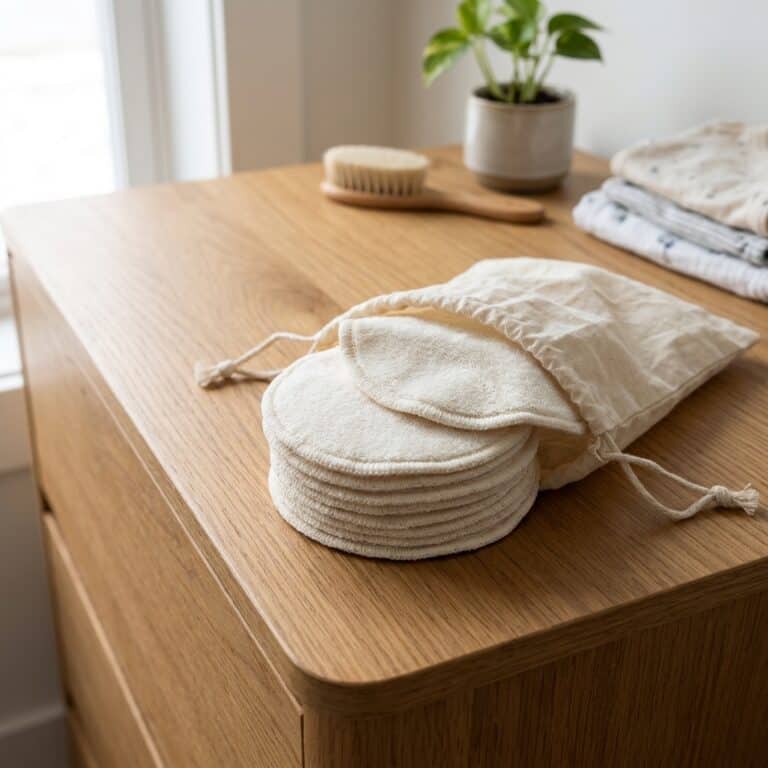
A practical guide to creating a comfortable feeding corner at
your bedside, beside the sofa, or wherever you actually spend your
day.

You sit down to feed your baby, find a position that works, and
finally feel settled. Then you notice your water on the kitchen counter.
Your phone is nearly out of battery. The clean burp cloths are
upstairs.
Nothing about that moment requires a beautifully styled nursery. What
would help is having the things you need within reach.
A breastfeeding station gives those everyday items a home. It might
be a basket beside your usual seat, part of a bedside drawer, or a small
shelf that also holds the book you have been reading one page at a
time.
At NennVersa, we want that space to include your needs as well as
your baby’s. A drink, something to eat, a comfortable layer, and a way
to ask for help all deserve consideration.
You can build a useful setup with belongings you already own. Start
small, notice what you reach for, and let the station change with your
routine.
Start where you actually
feed
Before choosing a caddy or rearranging furniture, pay attention to
your next few feeds. Where do you naturally settle? Which supplies do
you ask someone to bring? What ends up balanced awkwardly beside
you?
If you spend most mornings in the living room, a fully stocked
nursery corner may not help much. If you prefer different places during
the day and at night, you may need a small setup in each rather than one
elaborate station.
Choose the location first. Then work out the storage.
Sit down without your baby and test the space. Can you reach the
surface beside you without twisting? Is there room to set down your
drink securely? Can you stand up without stepping around a basket? Does
the chair or seat feel comfortable for your body?

A table that looks close when you are standing may be surprisingly
difficult to reach once your arms are occupied. Move the surface or
reduce what sits on it before buying another organizer.
Decide what belongs within
reach
Think in terms of what you use during a feed, what you may want
afterward, and what can stay elsewhere. This keeps the station from
turning into a storage area for every baby product in the house.
Something to drink and
something to eat
Keep a drink you enjoy nearby. Choose a bottle or cup that you can
open comfortably and set down securely. A closed lid can reduce spills,
but hot drinks should stay away from your baby and out of the feeding
area.
If you often feel hungry while feeding, add a small selection of
snacks that suit your preferences and any dietary needs. Individually
portioned crackers, a piece of fruit, or another easy option may be
enough. Store perishable food appropriately rather than leaving it in
the caddy.
You do not need a special collection of products marketed to
breastfeeding moms to make this corner useful. Start with food and
drinks you already like.
A few feeding essentials
Your list might include a clean burp cloth, spare breast pads if you
use them, and any feeding accessories that are part of your routine.
Keep personal care products in their original packaging and use them as
directed.
An optional nursing cover can have a place if it helps you feel
comfortable. There is no need to add one simply because a checklist
mentions it.
Avoid creating a station around products you have never needed. A
basket full of unfamiliar accessories can make it harder to find the two
things you reach for every day.
A place for your personal
items
A small tray can hold your phone, lip balm, glasses, or hair tie. Put
it beside the feeding supplies so your belongings remain easy to
find.
If you use a charger, position the cord so it does not cross the
walking route or hang within a child’s reach. Keep all cords away from
the crib or bassinet. A charging cable should reach its intended surface
without creating a loop beside your baby.
You may also want a book, an audio option, or a notebook. Feeding
time does not need to become productive time; these are choices for your
comfort, not another set of things to accomplish.
Clothing that helps
you stay comfortable
A light cardigan, soft button-front shirt, or spare nursing tank can
be useful nearby. Choose a layer you can move out of the way easily,
with sleeves that do not fall into everything you touch.
This is also a good place to keep one clean replacement top for
yourself. If milk or spit-up lands on your clothes, you should not have
to search through a laundry basket while already feeling
uncomfortable.
Your clothing needs may change with the temperature, your feeding
method, and the time of day. The station should support those choices
rather than lock you into one “nursing uniform.”
Give each group a simple
home
A shallow basket or tray is often easier to use than a deep
container. When everything is visible from above, you can see what is
running low and another person can help restock it.
Try this basic arrangement:
| Area | What goes there | What to check |
|---|---|---|
| Stable surface | Closed drink, phone, glasses | Reachable without leaning across your baby |
| Small clean-supplies basket | Burp cloths, breast pads, personal accessories | Easy to see and refill |
| Drawer or nearby shelf | Spare adult top, additional supplies | Accessible but out of the way |
| Separate laundry container | Used cloths and clothing | Clearly distinct from clean items |
Do not stack supplies so high that removing one pulls the rest out.
Leave some empty space. The goal is to find things quickly, including
when someone else is looking for them.
If you like labels, use plain descriptions such as “clean cloths” and
“Mom’s spare top.” The labels should help the household, not create a
complicated system only you understand.
Three setups for different
homes
A small bedside setup
Use part of a drawer for spare pads, a cloth, and personal items.
Keep the bedside surface clear enough for a drink and the light you use
to see comfortably.
Place extra clothing on a nearby shelf rather than trying to fit
everything on the nightstand. Keep supplies, charging cords, and adult
bedding out of your baby’s sleep space.
For nighttime feeding, think about tiredness as well as convenience.
NIH guidance advises avoiding couches and armchairs if you might fall
asleep while feeding. If you bring your baby into bed to feed, clear
pillows, blankets, and other items from the feeding area. Return your
baby to their own infant sleep space after feeding. If you fall asleep
while feeding in bed, move your baby back as soon as you wake. [1]
Babies should sleep on their backs on a firm, flat, approved infant
sleep surface, without pillows, blankets, or other soft items. Feeding
cushions and the supplies in your station do not belong in that space.
[2]
A living-room setup
Keep a small basket beside the place you use for awake daytime feeds.
A stable side table can hold your drink while a lower shelf holds spare
clothing.
If several people share the room, choose a setup that is easy to tidy
without hiding everything. A basket with a removable lid may look neat,
but repeatedly opening it one-handed could be inconvenient. Try the
motion before deciding it works.
Keep the path clear for standing up and moving around. Your station
should not block a doorway or turn the space beside your seat into an
obstacle course.
The same tiredness precautions apply here. A comfortable feeding seat
is not a safe place to fall asleep holding your baby. [1]
A portable setup for a small
home
If you move between rooms, try one lightweight caddy with only the
essentials you actually need. Keep bulky reserve supplies elsewhere.
Test its filled weight and handles before relying on it. Move the
caddy before settling with your baby, or ask someone to bring it. You do
not need to carry your baby and an awkward organizer at the same
time.
Alternatively, duplicate a few inexpensive essentials, such as clean
cloths, in two locations. Compare that small duplication with the effort
of moving a full caddy throughout the day.
Adapting
the space for pumping or combination feeding
If you also pump, give the pump a stable place and check where its
power supply needs to go. Keep the equipment away from drinks and from
the edge of a table.
Create separate homes for clean equipment and items awaiting
cleaning. A closed container can protect clean, fully dry parts; a
different container can identify used equipment that needs
attention.
CDC recommends cleaning milk-contact pump parts after each use,
allowing them to air-dry thoroughly, and storing clean parts protected.
Follow your pump’s instructions for cleaning and sanitizing. A storage
container does not perform those steps for you. [3]
Make your milk-storage plan before you start. The station can hold
the things you need to label and transport milk, but milk should not
simply remain beside the chair because the basket is convenient. Consult
current storage guidance for your circumstances. [4]
For formula or expressed-milk bottle feeds, keep the supplies your
routine requires in suitable clean storage. Follow the relevant
preparation and storage instructions; different milk types do not share
one universal set of rules.
You do not need a separate decorative station for every feeding
method. Clear separation and a workable routine matter more than
matching containers.
Make it easier for
another person to help
An organized station becomes more useful when someone besides you
knows how to maintain it.
Choose a few specific tasks to share. One person could refill your
water before leaving for work. Another could check the supply of clean
cloths when putting laundry away. A partner could bring your snack and
spare top while you settle with the baby.
“Can you restock the station?” is easier to act on when the household
knows what stocked looks like. A small list inside a drawer or a photo
of the arrangement can help.
Keep the list realistic. If you normally need two cloths nearby, you
do not have to refill a basket with ten every evening. A station that
requires extensive upkeep may create more work than it removes.
If you have older children, keep a separate, age-appropriate activity
option nearby where you can supervise them. Do not mix their toys with
feeding equipment or personal products.
What is worth buying,
and what can wait?
Use the setup for a few days before shopping. Notice the exact
friction: a bottle that tips over, a deep basket that hides supplies, or
a table that is too far away.
Then look for a product that solves that particular problem.
| Possible purchase | Features to compare | Something you may already own |
|---|---|---|
| Small storage caddy | Useful dimensions, cleanable surfaces, manageable weight | A shallow basket or drawer tray |
| Bedside organizer | Secure attachment and reachable pockets | Part of a bedside drawer |
| Water bottle | A comfortable opening and a reliable closure | Your current bottle with a suitable lid |
| Dimmable light | Stable placement and enough light for the task | An existing lamp moved to a better spot |
| Washable clothing pouch | Space for an adult top and easy laundering | A clean fabric pouch |
Avoid choosing furniture or electrical accessories solely because
they photograph well. Check dimensions, instructions, and how the item
will fit into your actual room.
A reset that fits into the
day
Whenever you have a workable moment, remove used cloths and clothing,
put away food, and handle feeding equipment according to its care
instructions. Then check the drink, clean supplies, and spare top.
The quick tidy can be small. Equipment cleaning and drying still take
the time they need.
Once in a while, remove everything and clean the storage surface
according to its care requirements. Ask whether the station still
reflects your routine. An item that was useful in the first weeks may no
longer earn a permanent spot.
If a day gets away from you, start again with the next feed. A basket
that needs refilling is a household task, not a measure of how well you
are doing as a mom.
Questions moms often have
Do I need a special nursing
chair?
You need somewhere that works for your body and your feeding
situation. A new chair is not automatically necessary. Test the support,
height, reach to supplies, and space around the seat before deciding
what would help. If positioning or feeding is painful, seek
individualized support rather than expecting furniture alone to fix
it.
Should all my supplies
be in the nursery?
Only if that is where you use them. You can keep reserve supplies in
one place and a small daily selection near your usual feeding
locations.
Is a rolling cart better
than a basket?
It depends on space, reach, and what you need to store. A cart can
hold more, but it also takes floor space and needs safe placement. A
basket may be sufficient for a few everyday items. Try your current
storage first.
What if I do not
have anyone to restock it?
Reduce the number of items you maintain and keep reserves nearby.
Refill a couple of essentials when you are already passing the storage
area. The system should fit the support you have, rather than assume
someone else is always available.
Give your comfort a
permanent place
Start with one feeding location and the three things you most often
wish were closer. Give them reliable homes. Then add a clean top or
another small comfort that makes the space feel more supportive.
Your feeding station can be ordinary and still make a difference to
your day. It only needs to work for you.
You matter too, Mama.
Sources
- NIH Safe to Sleep, Breastfeeding
and Safe Sleep. - CDC, Providing
Care for Babies to Sleep Safely. - CDC, How
to Clean and Sanitize Breast Pumps. - CDC, Breast
Milk Storage and Preparation.
Guidance checked October 31, 2026.