You reach for a shirt and realise you no longer need to ask how it opens. That might feel freeing, strange, emotional, or simply practical. Meanwhile, the clothes in your drawer still belong to several different seasons of your life.
There may be nursing bras you like, tops you are tired of, and a dress you have been saving for a time when feeding access would not matter. You do not have to decide what happens to all of them in one afternoon.
Begin with what fits comfortably now, then reassess what each piece does for your current life. Finishing breastfeeding or pumping does not create a deadline for a new body, a new size, or a completely new wardrobe.
Let the clothing decision follow your actual transition
Some people gradually reduce feeds or pumping; others have a different experience or need individual medical guidance. Your clothes can adapt without setting the pace.
This article is about wardrobe decisions, not how to stop milk production or change your baby’s feeding. If you need support with stopping breastfeeding, the NHS guide to stopping breastfeeding recommends getting help from a health visitor or breastfeeding specialist when the process is difficult.
While you still need access, keep enough suitable clothes readily available. You do not have to pack them away to mark a milestone. If you continue to use breast pads, keep compatible underlayers in the rotation until you no longer need them.
Try your bras before making a replacement list
Put on the bras you actually wear and check their current fit. Does the band sit comfortably? Are the cups comfortable, without persistent digging or awkward gaps? Do the straps stay where you want them without needing constant adjustment?
A nursing bra can remain an ordinary bra if it fits and you enjoy wearing it. Clips do not give it an expiry date. Equally, you are allowed to want a different shape, fabric, or style after wearing the same few bras for a long time.
If your fit is changing, buy for present comfort and keep the first purchase small enough to assess. A fitter may help you compare options. Do not buy a tighter bra to force a change in your body or use clothing as a method of stopping milk production.
Sort by usefulness rather than by life stage

Instead of making a single “nursing clothes” pile, try five practical groups. Each item can move between groups as your needs become clearer.
| Group | What belongs there | Next action |
|---|---|---|
| Wear now | Comfortable pieces you like and can use in your current days. | Put them where you get dressed. |
| Restyle | Useful clothes that feel repetitive or tied to an old outfit. | Try one new combination before deciding. |
| Assess for alteration | Pieces with a specific fit issue a tailor may be able to address. | Ask about feasibility and cost. |
| Store thoughtfully | Items you have a reason to keep but do not need in the daily space. | Clean, dry, label, and choose an appropriate storage place. |
| Release | Items you no longer want or cannot usefully repair. | Check suitable resale, donation, or textile-recycling options. |
The category is about the item’s role, not your success at motherhood or at dressing. A top can have been useful and still be something you are ready to stop wearing.
Keep nursing pieces that still suit your style
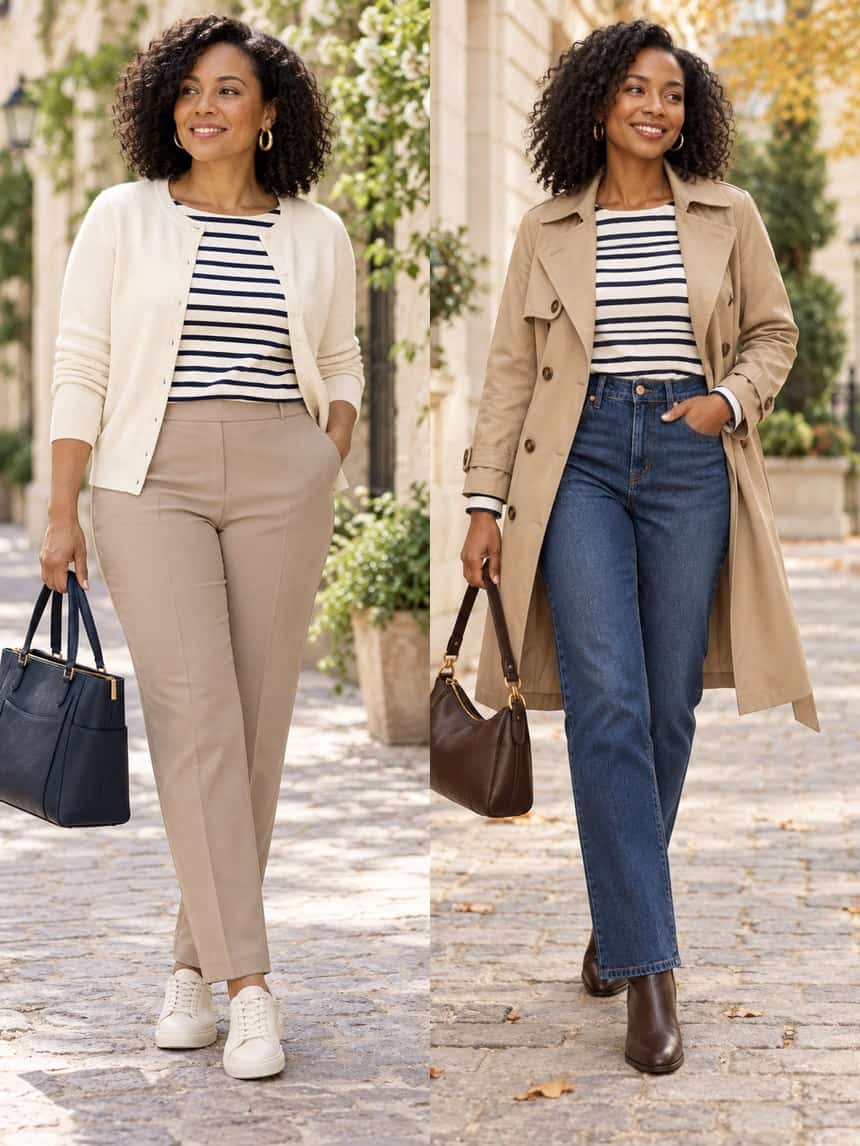
Button-front shirts, wrap tops, cardigans, and comfortable dresses often have plenty of life beyond feeding access. You may continue wearing them in exactly the same way.
If a piece feels too closely connected to one routine, try a different context. Wear the familiar blue shirt with a skirt rather than joggers. Pair the cardigan with a dress instead of a nursing tank. Change the shoes before deciding the whole garment has become unwearable.
Designed nursing openings can also be unobtrusive enough that you simply keep using the garment. Check that fastenings lie comfortably and panels sit the way you want. There is no requirement to remove every functional detail.
Bring back one piece you have missed
Perhaps you have wanted to wear a high-neck dress, a back-fastening blouse, or a top you found inconvenient for feeding. Choose one and try it on without making the experiment a test of whether you are “back.”
Look at its fit now. Check the shoulders, bust, middle, and seated comfort. If the size or proportions no longer work, that is information about the garment. You can try a different size, ask about an alteration, or decide that you no longer like it.
You may discover that the clothes you imagined returning to do not suit your current routine. That is allowed. The point is to recover choice, not to restore an exact previous wardrobe.

Build three outfits for the life you have now

An ordinary-day outfit
Choose a comfortable bottom, a top you enjoy, and shoes that suit your activities. A navy trouser with a burgundy knit can be enough. Check that the knit feels comfortable against your skin and works with the bra you now prefer.
Keep familiar pieces if they are doing their job. Your everyday outfit does not need to become more formal just because feeding access is less relevant.
An outfit for being seen
Think of a real occasion: lunch with a friend, a work meeting, a school event, or a family photograph. Choose clothes that feel appropriate to that setting and recognisable to you.
You might wear a dress you have missed, or simply add earrings and a jacket to your ordinary outfit. The occasion does not have to justify an entire new purchase.
An outfit with one new choice
Try a colour, neckline, shoe, or silhouette you have been curious about. Keep the rest familiar so you can tell whether you enjoy that one change.
For example, wear a brighter top with your usual trousers, or a skirt with the shirt you already trust. A small experiment can reveal more about your preferences than buying several unfamiliar pieces at once.
Assess alterations after checking the whole garment
A neckline, sleeve, or hem adjustment may refresh a piece, but first check whether you like its overall fit and fabric. Altering one detail will not necessarily make a garment you dislike feel right.
Removing a nursing panel or changing a zip may affect the structure and finish. Ask a tailor to inspect the piece rather than cutting away the part you no longer need. Get a clear price and decide whether the result would earn a place in your actual rotation.
From the capsules
The Year Round Capsule
Two hundred nursing-friendly outfits from fifty-six pieces, fifty for every season, laid out and then worn. $29 once, yours to keep.
For a frequently worn shirt, a straightforward adjustment might be worthwhile. For an uncomfortable top you have never enjoyed, permission to let it go may be more useful.
Make room for the feelings without forcing a clear-out
Some clothes hold memories. You might feel attached to a particular top, relieved to stop wearing a bra, or unsure what you want to keep. You do not need a strong emotion for the transition to matter, and you do not need to rush an emotional decision.
Set aside a small memory box if that would help. Keep one meaningful piece without keeping every item in your daily drawer. If you are uncertain, label a temporary storage box with what is inside and choose a future time to reconsider it.
Storage is a choice with a purpose, not a punishment for clothes that no longer fit. Keep the everyday space focused on what helps you get dressed now.
Replace a specific gap, not an entire chapter
Write a short sentence before buying: “I need a comfortable bra for these tops,” or “I need one trouser that works for my current workdays.” That is more actionable than “I need to look like myself again.”
Try the purchase with several existing pieces. Check how it washes and whether you reach for it before ordering multiples. If nothing specific is missing, you can pause shopping while continuing to make outfits.
Your current size deserves comfortable clothing. You do not need to wait for a particular measurement or treat every purchase as a permanent prediction about your body.
Common questions
How long should I wait before buying new bras?
There is no wardrobe deadline that suits everyone. If your bras are uncomfortable, seek a better present fit rather than enduring them. If fit is still changing, start with a practical small selection and reassess as needed.
Should I get rid of all my nursing clothes?
No. Keep pieces you like, store those you have a reason to keep, and release what you no longer want. Feeding access can remain a useful feature even when it is no longer necessary.
What if I still prefer my postpartum clothes?
Then keep wearing them. Comfortable waistbands, accessible shirts, and soft layers are not limited to a particular stage. Choose them because they work for you, rather than feeling obliged to graduate out of them.
The Nursing Mama Fashion Commandments
Twelve rules I wish someone had told me postpartum. Print them. Screenshot them. Live by them.
- Nursing bra always. Regular bras become instruments of pain the day letdown surprises you.
- Nursing pads on your body + a spare pair in your bag. Every single time you leave the house. No exceptions.
- Extra top in your bag — for YOU, not the baby. Because leaks, spit-up, and coffee-spills don’t care about your outfit plan.
- If it takes more than 5 minutes to figure out how to nurse or pump in it, it’s not the right outfit today. Feeding access is comfort. Comfort is not optional.
- Belt under the bust (empire) or below the belly with drape — never at the belly button. Your postpartum body deserves flattery, not compression.
- Comfortable waistband is non-negotiable. Elastic, wrap, or pull-on. Zippers are a Sunday-only luxury for now.
- Dark tones, prints, or textures — not thin light solids. Because letdown marks are real and you deserve clothes that don’t advertise them.
- Machine-washable everything. Dry-clean is not real-mama fashion. If it can’t survive a spit-up rinse, it’s not in rotation.
- Cross-body bag only. Hands stay free for the carrier, the toddler, the coffee, the door, the meltdown.
- Comfortable shoes always. You’re carrying a car seat and a diaper bag. This is not the season for a heel you can’t run in.
- Get dressed BEFORE the kids see you if you can. It changes the whole day — for them and for you.
- One accessory — earrings, a lip color, a scarf — counts as “put together.” That’s the whole game. You get to feel like yourself again.
Make room for your next choices
Pick one outfit to keep, one piece to try differently, and one practical gap to assess. That is enough progress for a first edit.
If you want support reconnecting those choices into a wardrobe you enjoy, explore The NennVersa Atelier. You can honour the clothes that helped you through feeding and still choose what comes next.