Preparing for a baby can make every possible future inconvenience feel like something you should buy for now. Soon the basket contains nursing tops, special pajamas, several bras, recovery leggings, occasion clothes, and a wardrobe for a body you have not met yet.
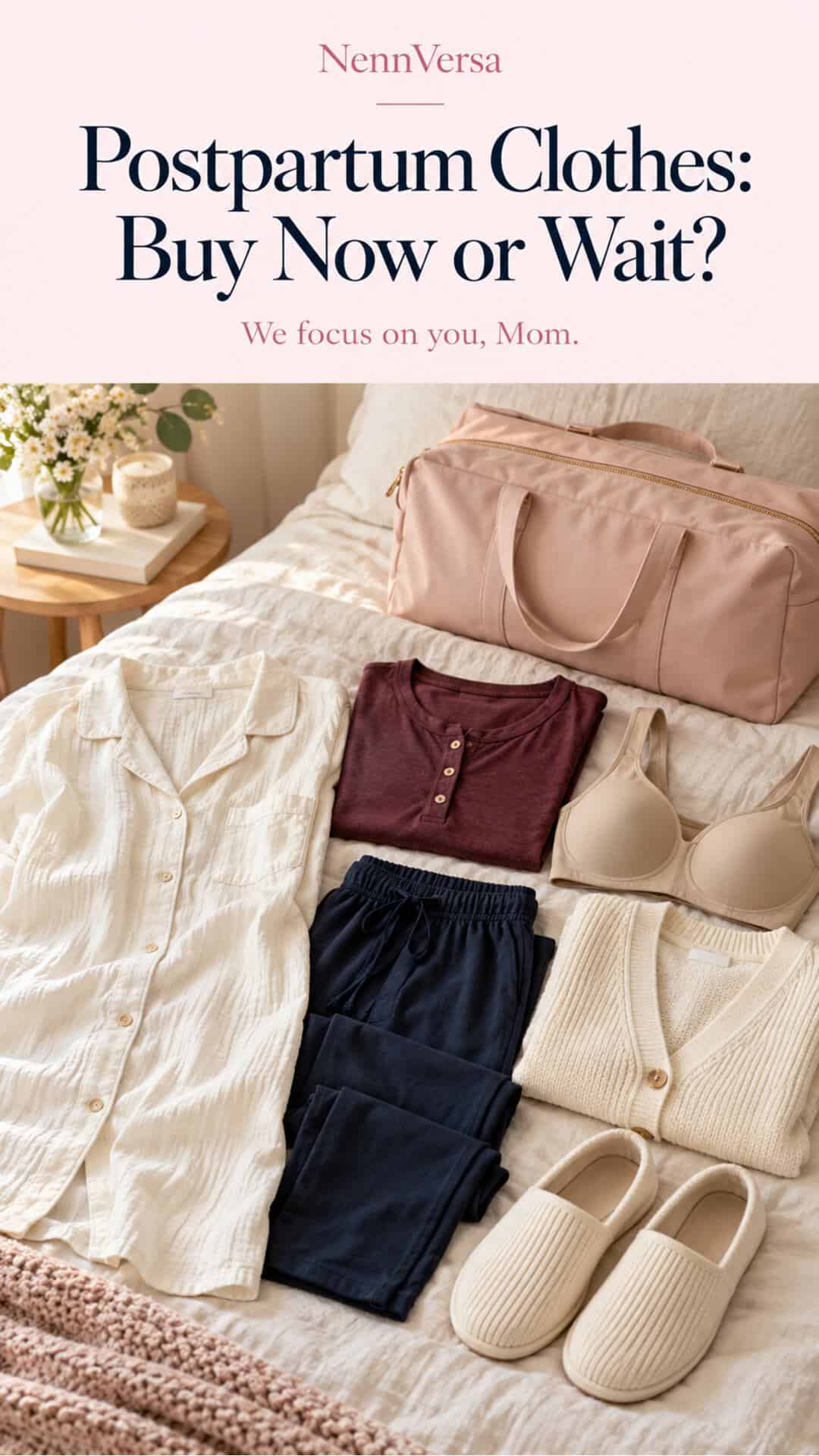
You can prepare thoughtfully without predicting every size, feeding preference, and daily routine. A small, comfortable starting selection gives you something to wear immediately while leaving room to learn what you actually need.
The useful question is: what would make the first days easier, and which decisions will be clearer later?
Start by checking what you already own
Look for clothes that feel comfortable now and have practical openings or flexible construction. An open cardigan, a functioning button-front shirt, an accessible nightdress, or soft maternity trousers may already solve part of the problem.
Do not assume every maternity garment will also work for feeding. Room for a bump and access to a breast or pump are different features. Check the opening, lining, underlayer, and how easily the item can be put on and taken off.
Make a short list of usable pieces before browsing. Include shoes and layers. You may discover that your starting wardrobe needs one missing connection rather than a full replacement.
Think in immediate jobs
Your first clothes need to support a few ordinary tasks: resting, changing, feeding if relevant, moving comfortably, and getting home or to an appointment. They do not need to prove that you have returned to a particular size or style.
Imperial College Healthcare’s maternity packing guidance includes loose, comfortable clothing, front-opening or loose-fitting options for breastfeeding, supportive bras, and a comfortable outfit for going home. Your own maternity service’s list should guide the specifics for your stay.
Use that practical approach at home too. Choose clothes for the next situation you will actually encounter, not a hypothetical calendar full of outings.
A buy-now, check-first, or wait guide
| Decision | What belongs here | Reason |
|---|---|---|
| Prepare now | A small set of comfortable clothes for your stay, going home, and early days | You need accessible, usable options immediately. |
| Check what you own | Open layers, soft bottoms, loose shirts, suitable nightwear, familiar shoes | Existing pieces may already do the job. |
| Buy cautiously | Bras and other close-fitting underlayers | Fit and preferences may change; avoid committing to an untested large rotation. |
| Wait when practical | A full work capsule, event outfits, multiple copies of an unfamiliar nursing top | The relevant size, routine, or access needs may be clearer later. |
| Discuss individually | Garments marketed for medical recovery or prescribed compression | Product marketing is not a substitute for individualized care advice. |
“Wait” means leave a decision open when you can. It does not mean deny yourself clothes that feel comfortable today.
Prepare a small starting wardrobe
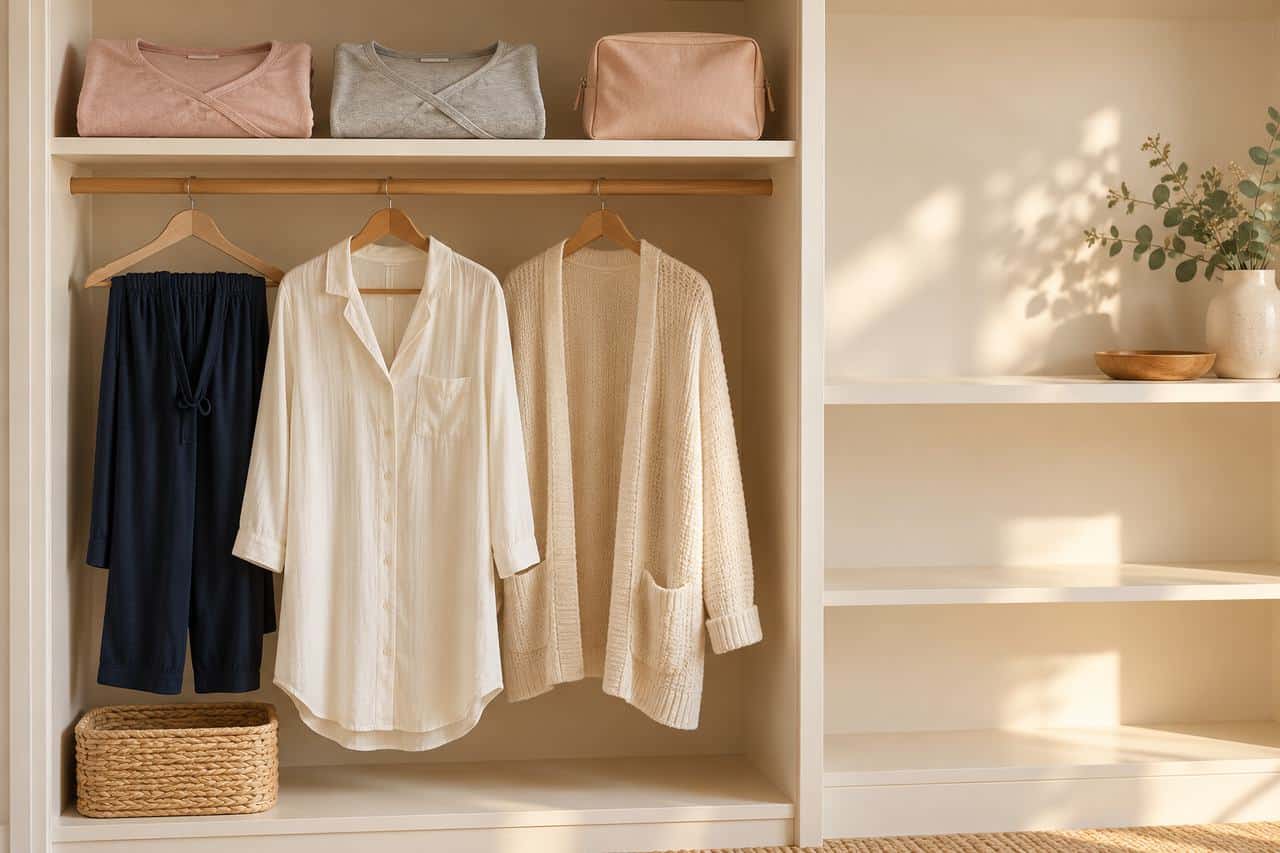
Build complete combinations from your existing pieces and any carefully chosen additions. Think about one outfit to wear, a practical change, and how clothes will get washed and dried. The number of items depends on your situation; a universal capsule count is not necessary.
A starting selection might draw from comfortable tops with usable access, bottoms that feel good seated, a suitable dress or nightdress if you prefer one, an open layer, and underlayers you can use. Choose the categories that fit your life rather than purchasing one of everything.
If you live somewhere warm, several thick layers may add little value. If your home is cool, a familiar open cardigan may be useful. If dresses are easier for you, your starting wardrobe can reflect that instead of following a trousers-based checklist.
Be cautious about stocking up on bras
Breast fit and comfort can change around birth and as feeding develops. The Breastfeeding Network suggests limiting pre-birth nursing-bra purchases because fit may change afterward.
Choose a small starting selection using the individual brand’s guidance, with room in your budget to reassess. Check the purchase and return terms before trying, washing, or using intimate apparel. Do not assume an item remains returnable after use.
If you plan to pump, confirm what the chosen pump requires before buying a pumping bra. You may decide on a different setup later, and the word “pumping” does not mean every bra works with every device.
Test access rather than collecting labels
Before adding several nursing tops, try the opening on one. Does it move in a way that makes sense to you? Does the lining open too? Can you reach the bra beneath it? Is the fabric comfortable against your skin?
You cannot predict every detail before your baby arrives, but you can notice obvious construction problems. A shallow decorative placket or fixed inner panel will not become more accessible because the garment is marketed for mothers.
It is reasonable to postpone buying duplicates until you have used the style in your own routine. Keep a note of a retailer or garment you may want to revisit, rather than buying every possible option in advance.
Make the going-home outfit forgiving
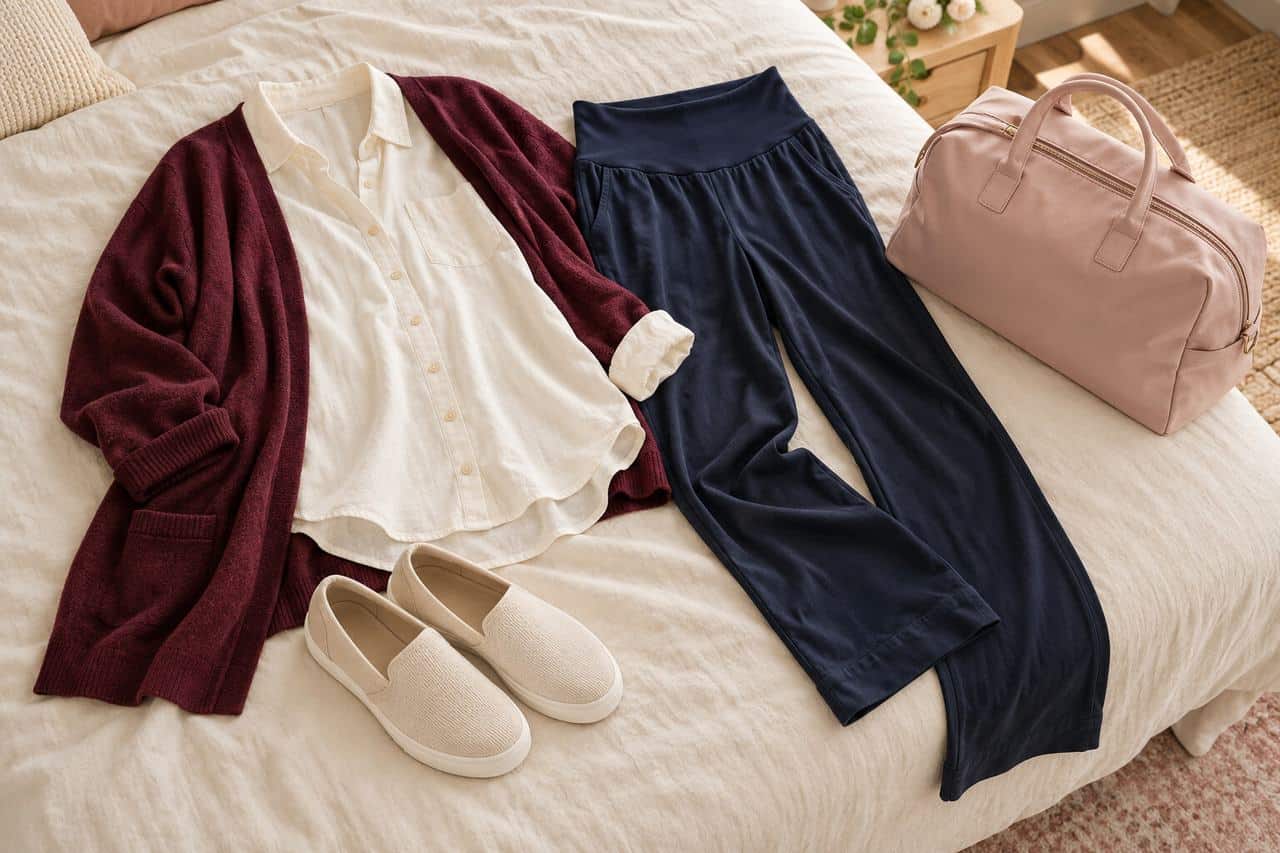
Choose something comfortable for sitting and traveling, with practical access if you expect to feed. Reuse maternity clothes if they suit you. Avoid making the outfit depend on fitting into a pre-pregnancy item by a specific date.
Try the shoes with the clothes. Consider ease of putting them on and the route from the hospital or birth setting. Your own care instructions and comfort take priority over a planned photograph.
If your birth or recovery needs differ from what you expected, adapt the outfit. A backup clothing option is useful precisely because preparation cannot predict every circumstance.
Spend on repeated needs before occasional ones
A comfortable everyday combination can earn its place quickly. An outfit for an event months away may be easier to choose when the date is closer and you know your feeding setup and preferences.
The same applies to returning to work. You can research your dress code and possible access options before birth without ordering an entire work wardrobe. Save ideas and measurements, then buy for the actual need when practical.
From the capsules
The Year Round Capsule
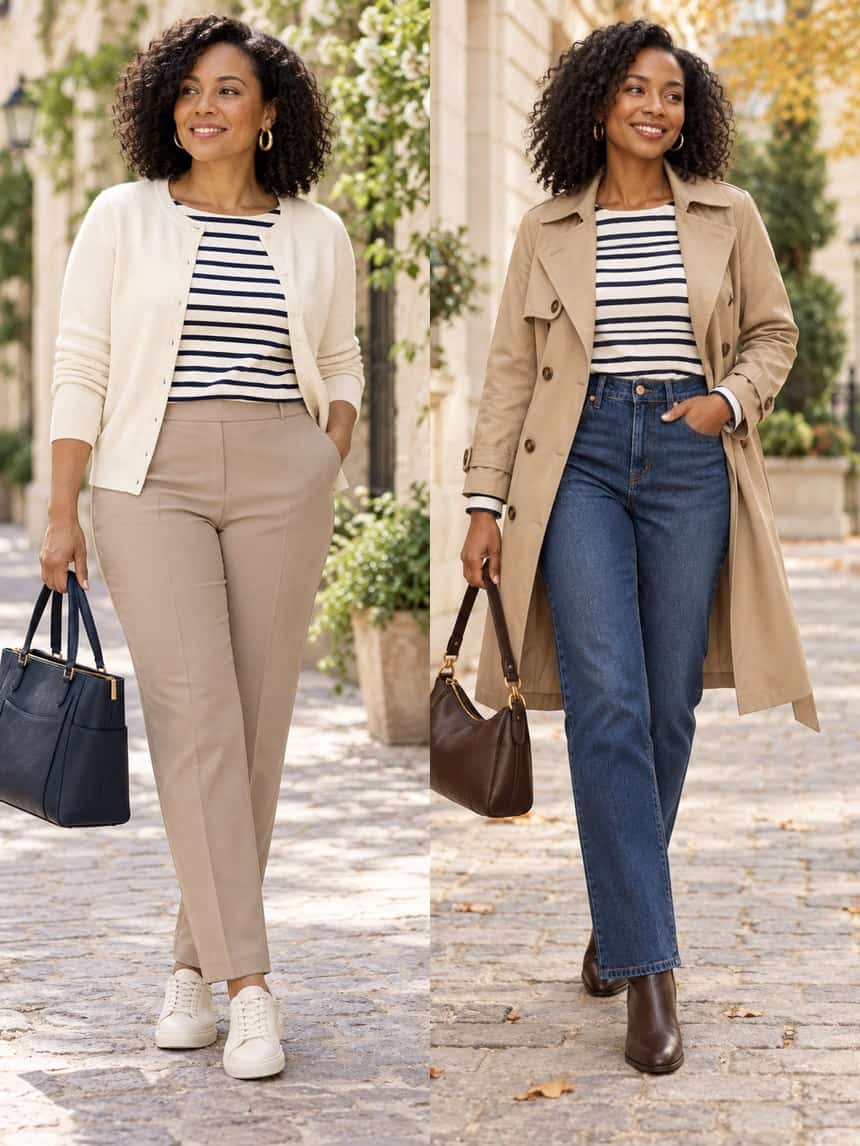
Two hundred nursing-friendly outfits from fifty-six pieces, fifty for every season, laid out and then worn. $29 once, yours to keep.
If buying in advance is necessary because of limited local availability or shipping time, choose based on the best information you have and understand the exchange conditions. Preparation should reflect your circumstances, not an inflexible rule to buy nothing early.
Plan who will help with clothing care
A small wardrobe works better when the clothes can return to use. Before birth, identify the laundry routine, the care labels that need attention, and where clean clothes will be put away.
Ask a support person for a specific task if help is available: wash and return the feeding tops, refill the underwear drawer, or put a complete outfit within reach. A stack of new garments is not the same thing as a workable care routine.
If you expect limited help or slower drying, allow for that in the starting selection. You can make a practical buffer without buying a large wardrobe in an uncertain size.
Keep a later list
Create a note with three headings: item I might need, problem it would solve, and when I will decide. For example: “Work trousers; need an outfit for office days; reassess before returning.”
This gives the decision somewhere to live without turning it into an immediate purchase. You can also add “not needed” later. A good preparation list should be allowed to get shorter as you learn what works.
Common questions
Should I buy all nursing clothes before birth?
No complete specialist wardrobe is required to prepare. Start with practical access options and comfortable clothes, then decide what additional features help in your own routine.
What if I do not breastfeed or my feeding plan changes?
Your comfort still matters. Clothes with ordinary useful features (soft fabric, easy fastenings, practical care) may remain wearable. Reassess any specialist purchase around your actual needs.
Is it wasteful to buy clothes that might fit for a short time?
A piece can be useful during a shorter season of life. Keep purchases proportionate to your budget and needs, and consider borrowing or secondhand options where appropriate. Comfort now is a legitimate need.
The Nursing Mama Fashion Commandments
Twelve rules I wish someone had told me postpartum. Print them. Screenshot them. Live by them.
- Nursing bra always. Regular bras become instruments of pain the day letdown surprises you.
- Nursing pads on your body + a spare pair in your bag. Every single time you leave the house. No exceptions.
- Extra top in your bag — for YOU, not the baby. Because leaks, spit-up, and coffee-spills don’t care about your outfit plan.
- If it takes more than 5 minutes to figure out how to nurse or pump in it, it’s not the right outfit today. Feeding access is comfort. Comfort is not optional.
- Belt under the bust (empire) or below the belly with drape — never at the belly button. Your postpartum body deserves flattery, not compression.
- Comfortable waistband is non-negotiable. Elastic, wrap, or pull-on. Zippers are a Sunday-only luxury for now.
- Dark tones, prints, or textures — not thin light solids. Because letdown marks are real and you deserve clothes that don’t advertise them.
- Machine-washable everything. Dry-clean is not real-mama fashion. If it can’t survive a spit-up rinse, it’s not in rotation.
- Cross-body bag only. Hands stay free for the carrier, the toddler, the coffee, the door, the meltdown.
- Comfortable shoes always. You’re carrying a car seat and a diaper bag. This is not the season for a heel you can’t run in.
- Get dressed BEFORE the kids see you if you can. It changes the whole day — for them and for you.
- One accessory — earrings, a lip color, a scarf — counts as “put together.” That’s the whole game. You get to feel like yourself again.
Prepare enough to begin
Choose a going-home outfit and a small set of early-day combinations. Check their underlayers, access, and care. Put the uncertain purchases on your later list.
Once you are ready to review what works, The NennVersa Atelier offers a next step when you want to develop those basics into more personal, wearable combinations.
You can be prepared without having your entire postpartum wardrobe figured out.