At bedtime, an awkward button can seem like a small detail. In the middle of the night, when you are tired, feeding, and trying to change a damp top without searching the room, that same detail can become the thing you wish you had solved earlier.
Good night-feed clothing keeps the practical steps simple. It offers access you can manage, feels comfortable against your skin, and has a clean replacement within reach. It does not need to be expensive, matching, or marketed as maternity sleepwear.
Choose the opening first, then check comfort, temperature, and your backup. Your sleepwear can make a necessary task easier without becoming another standard you have to live up to.
Start with the sleepwear you already reach for
Think about your most comfortable top or nightdress. Is it the soft fabric, the lack of a waistband, the room through the shoulders, or the fact that it never needs adjusting? Keep that information when looking for a feeding-friendly option.
Do the same with what bothers you. If you dislike feeling fabric bunch under your arms, a lift-up top may not be your favorite. If small buttons frustrate you, look for another access method. If you get warm, adding a tank under every top may create a new problem.
There is no best opening for every mother. A useful choice is one that works with your body, feeding setup, and preferences when you are tired.
Compare four practical sleepwear options
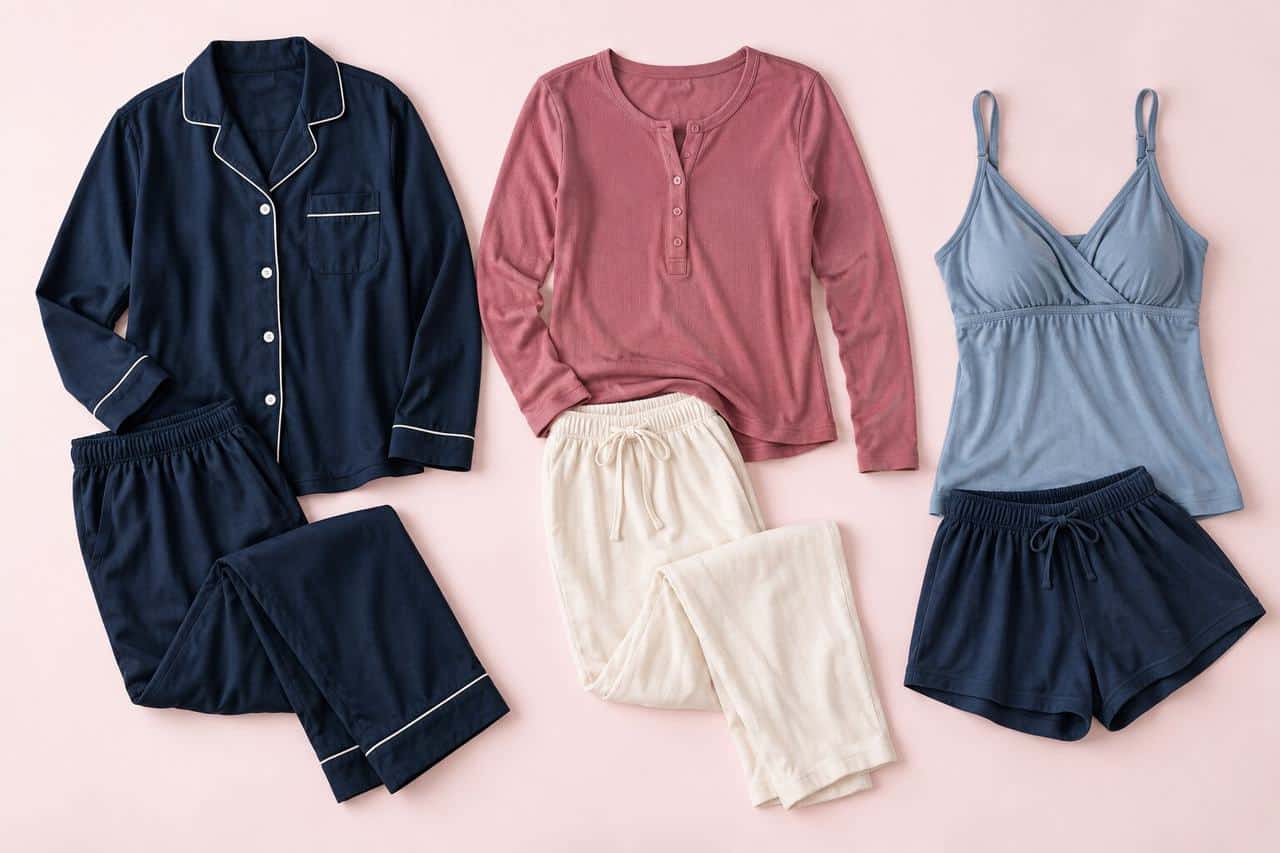
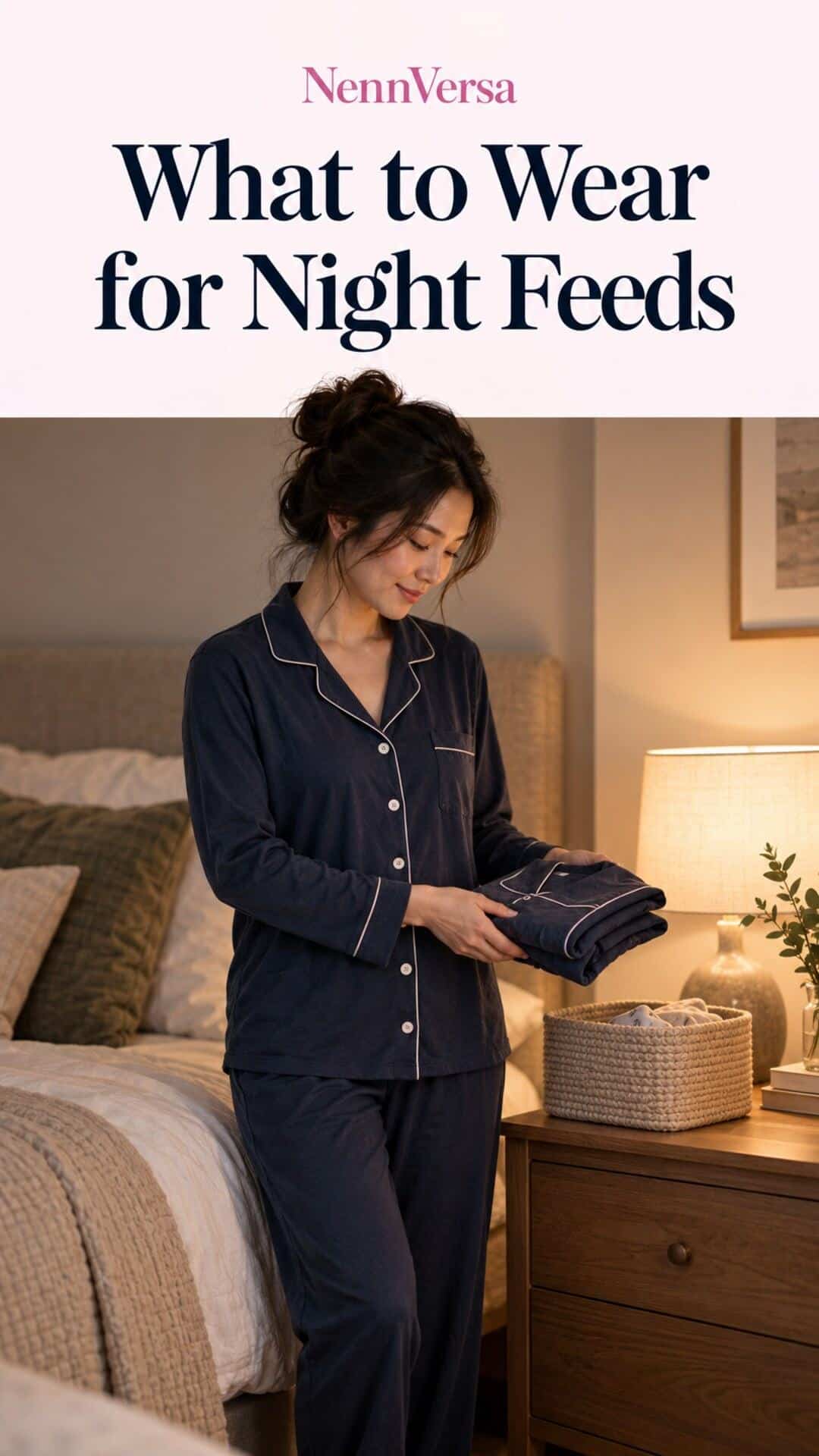
Button-front pajamas
A real button-front shirt can open while keeping your back and shoulders covered. Look for enough room across the bust and buttons you can operate comfortably. Check that the front edges do not scratch or press when you lie down.
Try the pants while seated and lying in your usual comfortable position. A soft waistband is only useful if it feels good where it sits. Choose shorts, trousers, or a nightshirt according to your preference and the room.
A Henley top and separate bottoms
A Henley can feel like an ordinary sleep tee while offering front access. Its usefulness depends on how far the placket opens. Three decorative buttons near the collar may not be enough.
Try the top with your actual bra or tank. If you have to stretch the neckline hard or pull the whole top out of place, use another option. Do not assume the knit will become comfortable after repeatedly forcing it.
A crossover or clip-down sleep camisole
A purpose-made camisole can be convenient if you prefer less fabric. Check how the crossover moves or the clip releases, and whether the fabric and straps stay comfortable afterward.
Built-in shelf support varies. It may feel helpful to one person and restrictive or insufficient to another. Try the camisole while seated and lying down before deciding whether it works for you.
A nightdress with a usable opening
A button-front or genuine lift-access nightdress can suit you if you dislike waistbands. Check the length for getting out of bed and moving around, and make sure the fabric gives you the access you need without excessive bunching.
A plain high-neck nightdress with no opening may require lifting much more fabric than you want. The word “nightdress” tells you very little about feeding access; construction matters.
Try your setup before lights-out
Put on the sleepwear with any bra, pads, or underlayer you plan to use. Sit down and open the garment. Check that you can reach what you need without twisting uncomfortably, stretching the neckline, or holding a large bundle of fabric.
If you pump at night, test the clothing with your actual arrangement and follow the equipment’s instructions. A top that works for direct nursing may not allow the same access for simultaneous pumping.
Close the garment again. Notice whether clips, seams, and buttons sit comfortably afterward. The best test includes returning to rest, not just opening the top once in a mirror.
Keep this a practice check before the baby needs you. You do not need to hold a baby while testing unfamiliar fasteners or rearranging multiple layers.
Choose support according to comfort
You do not need to buy a sleep bra simply because a shopping list includes one. If you prefer support or need a way to hold breast pads, try a soft option that fits comfortably and works with your sleepwear.
Check for digging straps, seams pressing into skin, or a band that feels restrictive. The NHS advises avoiding tight clothing and bras that put pressure on the breasts. NHS guidance on restrictive clothing.
Do not use tighter clothing to force pads or pump components to stay in place. Reconsider the fit or product instead. If you have pain, persistent irritation, or feeding concerns, seek support from your clinician or a qualified lactation professional.
Make leaks easier to manage
If you use breast pads, choose ones that fit comfortably with your bra or camisole and follow their instructions. Replace damp or soiled pads promptly rather than trying to make one set last the whole night.

Leak-resistant clothing may help contain moisture, but it does not remove the need to check and change damp fabric. A darker top may make a mark less noticeable; it does not make wet clothing dry.
If pads slide, check how they sit in the garment before adding more layers. A different pad shape or a better-fitting bra may be more useful than a tight band. For reusable products, allow for washing and complete drying when planning your supply.
Put a small clothing backup beside your own sleep space
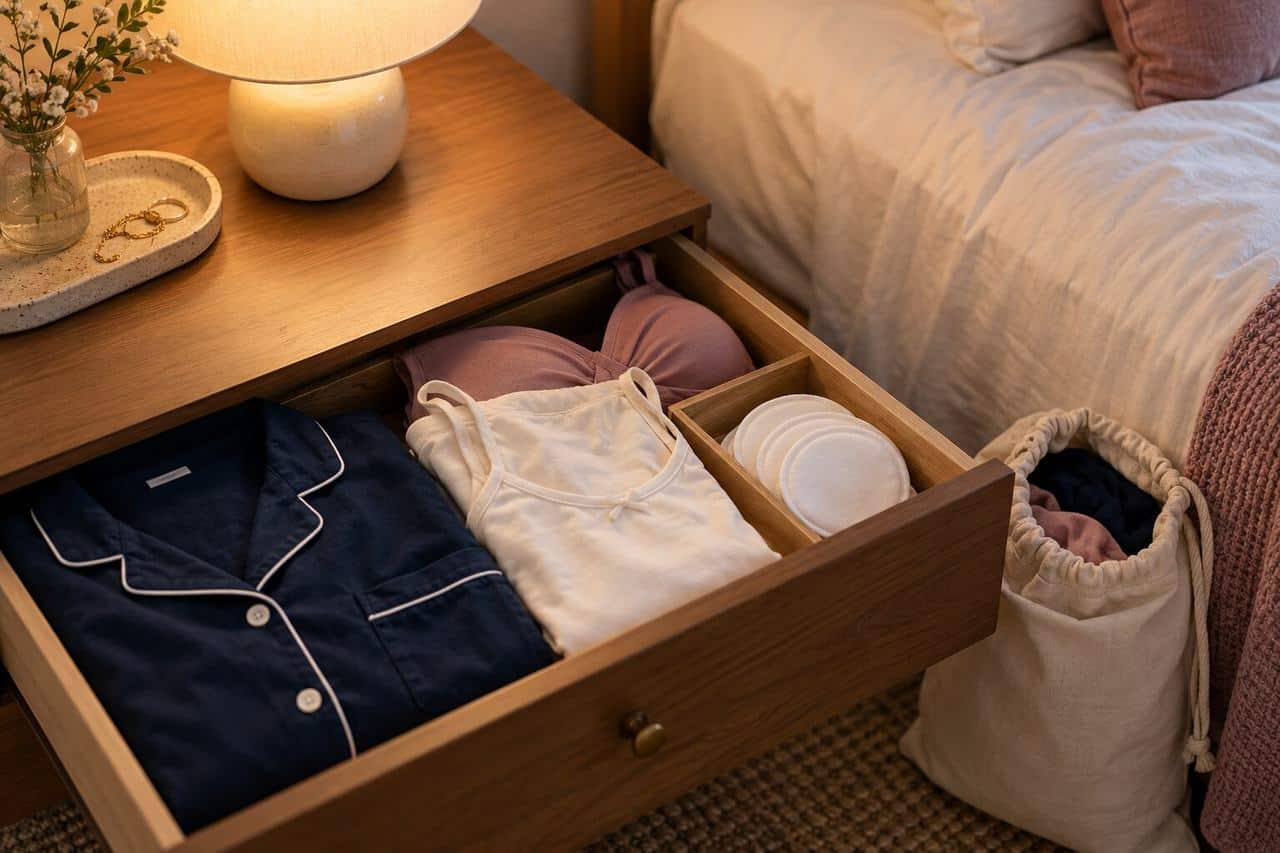
A drawer, shelf, or basket can hold a clean top, a spare bra or camisole if you use one, and replacement pads. Add a pair of bottoms only if you regularly need them. Choose items you already know are comfortable.
Keep a separate place for used clothing so it does not get mixed with the clean supply. A transport pouch can be helpful for moving damp clothes, but empty it promptly as part of your morning routine rather than leaving wet items sealed inside.
Keep the clothing kit, cords, bags, and loose items outside the baby’s sleep area. Your bedside backup is for your clothes; it does not belong in a crib or bassinet.
If another adult is helping overnight, show them the exact drawer. “The navy spare top in the left drawer” is easier to act on than “some clean pajamas somewhere.”
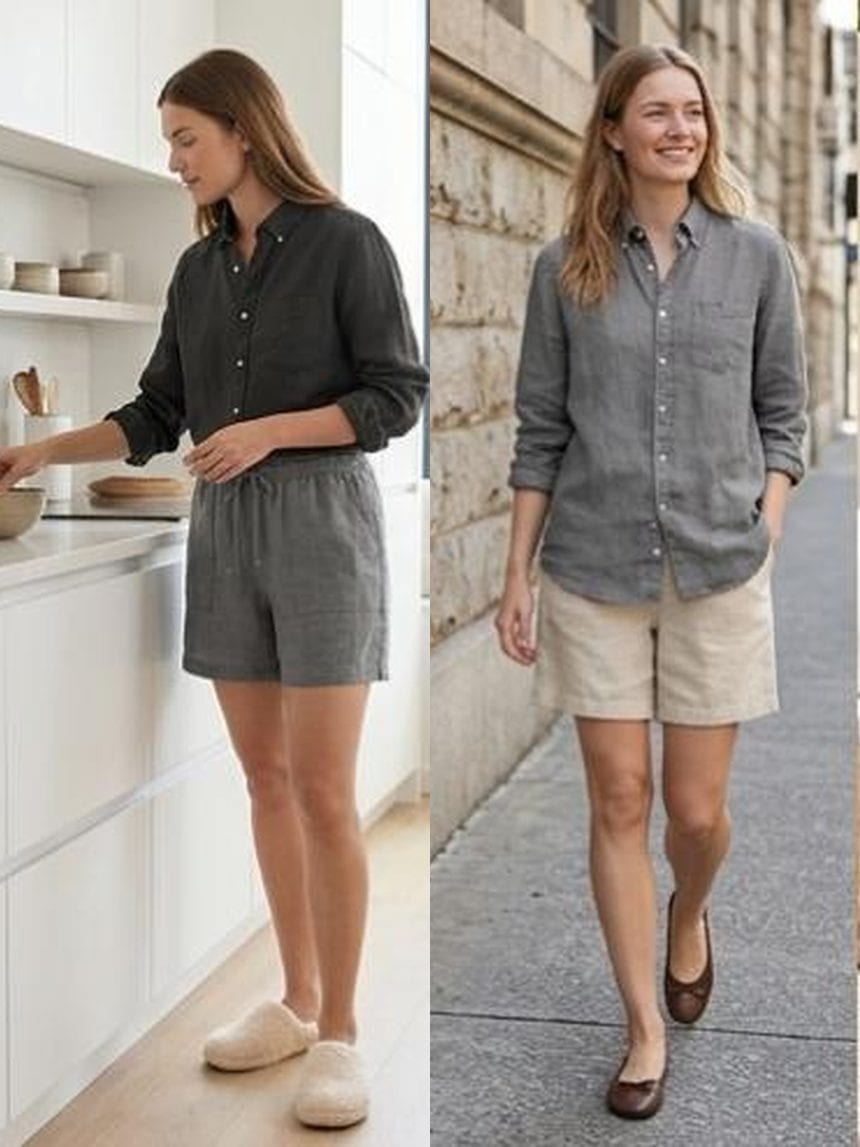
From the capsules
The Work From Home Lounge Capsule
Thirty outfits for the kitchen-table office: soft below, ready for the camera above. $14.99 once, yours to keep.
Adjust warmth without adding unnecessary bulk
Choose fabrics and layers according to how they feel on you. Cotton, modal, and blends can vary in thickness and construction, so read the fabric composition and care label rather than relying only on a fabric name.
If your shoulders get cold during feeding, front-opening sleeves may be more comfortable than lifting an entire top. If you feel too warm, try a lighter single accessible layer instead of a tank, tee, and cardigan together.
Keep hems and sleeves manageable. Loose fabric should stay clear of your baby’s face during feeding. Your comfort matters, and so does being able to see and respond to your baby without fabric getting in the way.
Comfortable clothing belongs alongside a safe sleep plan
Choose a separate infant sleep surface that is firm, flat, and level, with only a fitted sheet, and place your baby on their back for sleep. Keep loose bedding and other soft items out of that space. NIH Safe to Sleep guidance.
If there is a chance you may fall asleep while feeding, avoid couches and armchairs. NIH guidance explains the particularly high risk on these surfaces. After feeding, return your baby to their own sleep space; if you fall asleep with your baby in your bed, move them to their separate sleep space as soon as you wake. Read the full guidance when planning nighttime feeds. Breastfeeding and safe sleep.
A clothing change should not become a reason to juggle your baby while searching or undressing. Place your baby safely in their own sleep space or ask another adult to help while you change.
What is worth buying, if anything?
Start with the problem. If access is difficult, look for a genuinely usable opening. If the only comfortable top is always drying, a second similar top may help more than a new style. If your spare clothes are hard to find, use a drawer divider or basket you already own.
Useful categories to compare include button-front sleepwear, accessible camisoles, comfortable sleep bras if you want them, and washable breast pads. Check fit, construction, care directions, and returns. Matching pajamas are optional; working access is the practical priority.
Your questions, answered
Do I need special nursing pajamas?
No. Ordinary sleepwear can work if it offers comfortable access and fits your needs. Purpose-made options are useful when their construction solves a problem your current clothes do not.
How many spare sets should I keep?
Start with the changes you typically need and your laundry turnaround. You may only need a spare top nearby. Increase the supply if your real experience shows a gap.
Will better pajamas make night feeds easier?
They can remove a few clothing frustrations. They cannot promise more sleep, fewer feeds, or relief from feeding pain. Keep the goal small: accessible clothes, a comfortable fit, and a dry replacement when you need it.
The Nursing Mama Fashion Commandments
Twelve rules I wish someone had told me postpartum. Print them. Screenshot them. Live by them.
- Nursing bra always. Regular bras become instruments of pain the day letdown surprises you.
- Nursing pads on your body + a spare pair in your bag. Every single time you leave the house. No exceptions.
- Extra top in your bag — for YOU, not the baby. Because leaks, spit-up, and coffee-spills don’t care about your outfit plan.
- If it takes more than 5 minutes to figure out how to nurse or pump in it, it’s not the right outfit today. Feeding access is comfort. Comfort is not optional.
- Belt under the bust (empire) or below the belly with drape — never at the belly button. Your postpartum body deserves flattery, not compression.
- Comfortable waistband is non-negotiable. Elastic, wrap, or pull-on. Zippers are a Sunday-only luxury for now.
- Dark tones, prints, or textures — not thin light solids. Because letdown marks are real and you deserve clothes that don’t advertise them.
- Machine-washable everything. Dry-clean is not real-mama fashion. If it can’t survive a spit-up rinse, it’s not in rotation.
- Cross-body bag only. Hands stay free for the carrier, the toddler, the coffee, the door, the meltdown.
- Comfortable shoes always. You’re carrying a car seat and a diaper bag. This is not the season for a heel you can’t run in.
- Get dressed BEFORE the kids see you if you can. It changes the whole day — for them and for you.
- One accessory — earrings, a lip color, a scarf — counts as “put together.” That’s the whole game. You get to feel like yourself again.
Prepare one small kindness for tonight
Test the opening on your sleep top, put a clean replacement where you can reach it, and tell anyone helping where it is. Those few steps can save you from searching in the middle of the night.
For more practical ways to dress for feeding and feel like yourself throughout the day, explore The NennVersa Atelier. Your comfort belongs in the nighttime routine too.