The work bag is packed, but your badge is in yesterday’s coat. The pump charger is beside the sofa. Your lunch is ready in the fridge, which means it is also the item most likely to be forgotten. Returning to work after having a baby can involve an entire morning’s worth of remembering before you have even left home.
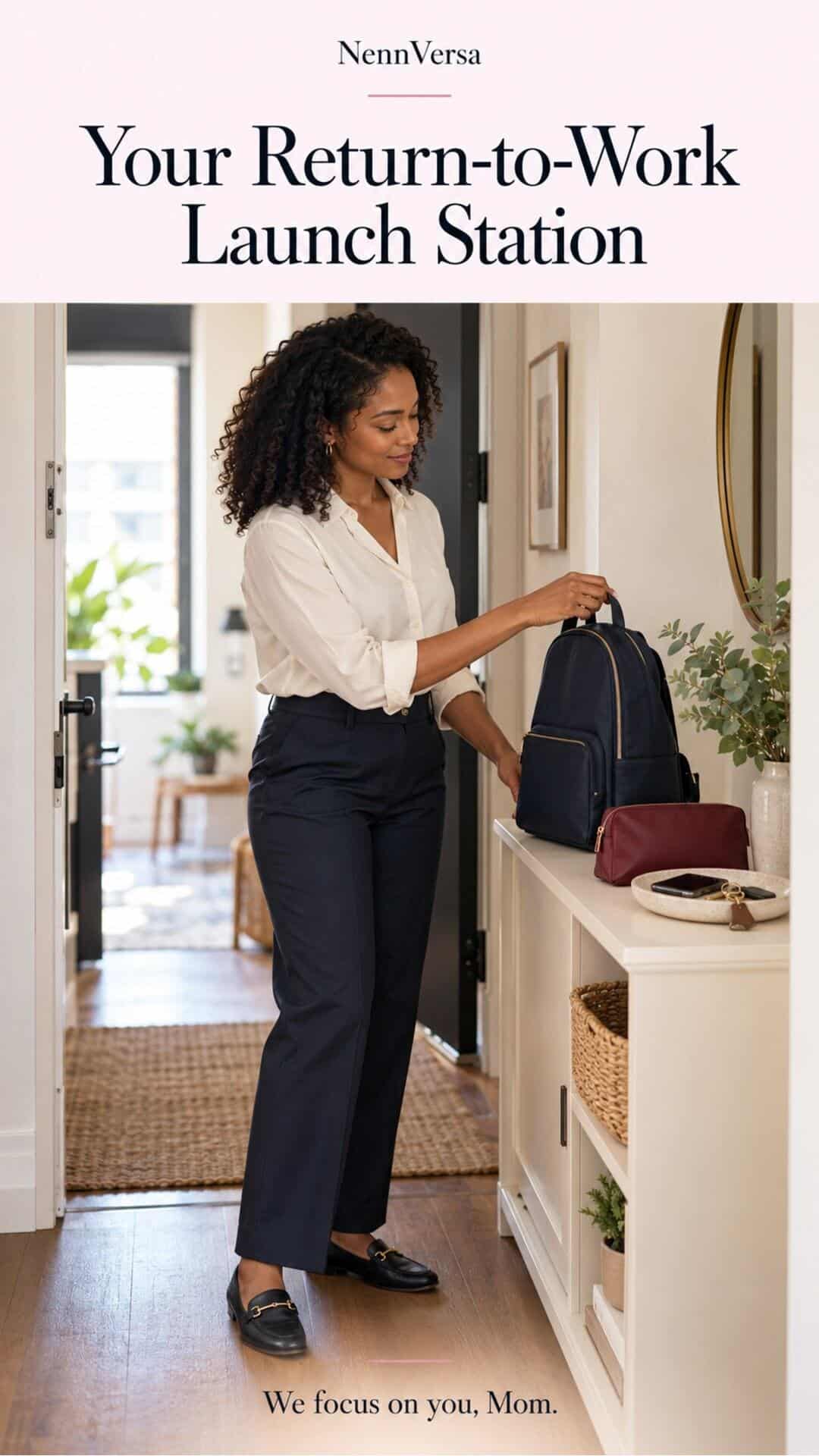

A return-to-work launch station gives those reminders somewhere to live. It is a small, repeatable place for the things leaving with you, plus a clear reminder for the things that must stay elsewhere until departure. You do not need a hallway makeover. One shelf, one bag space, and a short list can do the job.
The aim is to make your departure easier to manage, including on a day when feeding takes longer, a clean blouse disappears into the laundry, or the person doing childcare drop-off changes.
Start with your route, not a shopping list
Think through one actual workday from bedroom to workplace. Where do you dress? Where does your pump finish drying? Who takes the baby to childcare? Do you travel by car, walk to a train, or move between several work sites? The right station reflects those movements.
If you leave through the kitchen, a beautiful organizer at the front door may never be used. If another adult does drop-off, the childcare bag needs its own clear destination. If your workspace changes daily, items that other people leave in a desk may need to travel with you.
Write three short lists: what always leaves with you, what changes by day, and what gets added immediately before leaving. Keep the first list small. A work badge belongs there; a presentation adapter may belong on Tuesday’s list rather than in every day’s bag.
Create three places: ready, last-minute, and returning
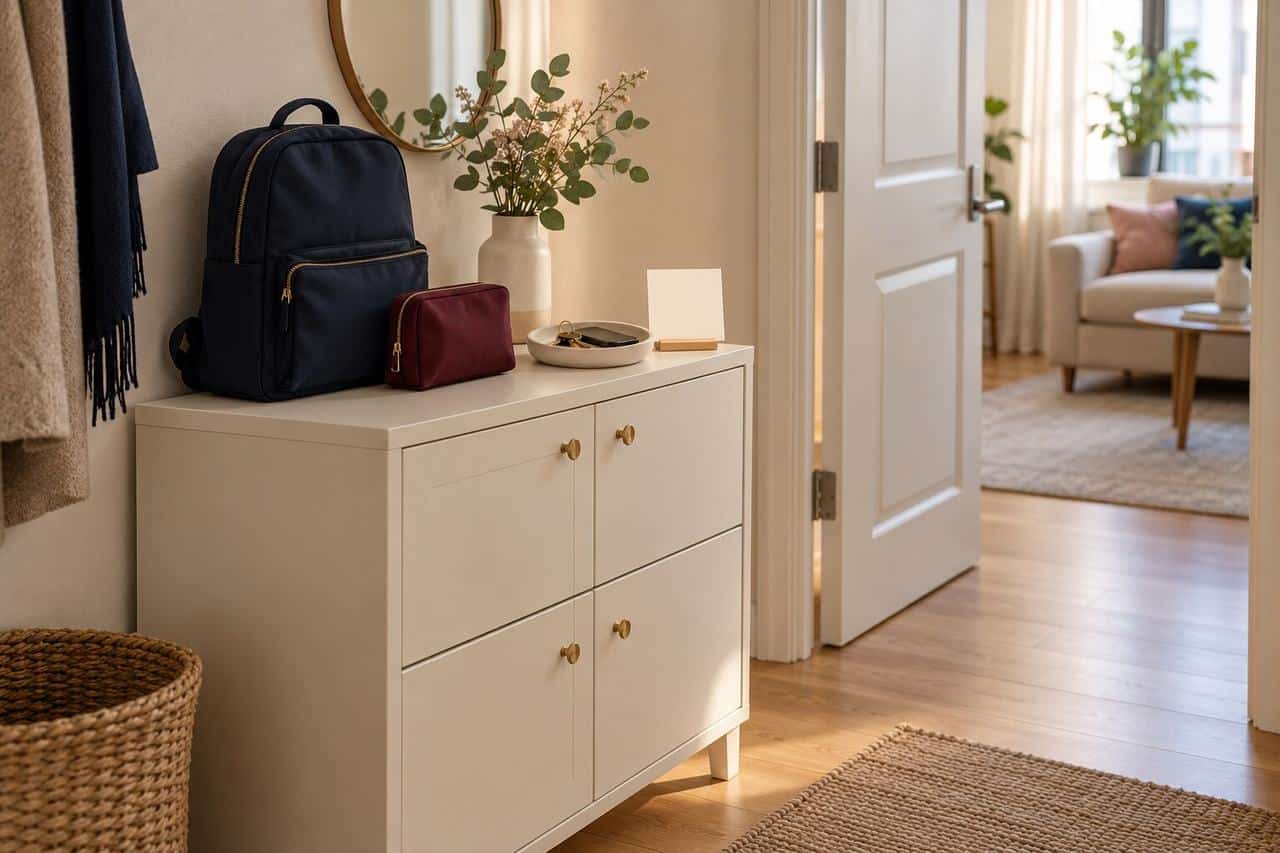
The ready place
This holds your packed work bag and any dry, room-temperature items you can prepare ahead. Add your keys or badge to a familiar dish or the same secure pocket. Use an existing shelf or cabinet before buying something new.
A bag is ready when the necessary contents are inside, not when it looks tidy from the outside. Give the bag a quick contents check after packing rather than adding a decorative label that says “ready” to an unfinished task.
The last-minute reminder
Some items belong in the refrigerator, freezer, or their charging location until departure. Put a short reminder beside the bag: “Lunch, cooler, phone.” The reminder travels to the station; the items stay where they need to be.
For expressed milk, use a storage and transport plan that suits your circumstances. The CDC’s milk-storage guidance allows transport in an insulated cooler with frozen ice packs for up to 24 hours. An ordinary work bag is not a substitute for that cooler, and a parked car is not a refrigerator. Follow your baby’s care team’s instructions if they have given you a different plan.
The returning place
Your station also needs a route for items coming home. It can be as simple as a clear patch of counter where you open the bag before putting it away. Milk goes to its appropriate storage; used clothing goes to laundry; used feeding equipment goes to the cleaning routine.
This prevents yesterday’s packed-looking bag from masquerading as tomorrow’s prepared bag. The return is where the next departure begins.
Make a personal list that fits on one small card
A useful departure card has categories you can scan, not a paragraph of tiny instructions. Try the following starting point, then remove anything that does not apply.
- Work: badge, keys, phone, required technology, and any day-specific documents.
- Pumping, if relevant: your pump setup, suitable clean and dry parts, collection containers, power plan, and storage plan.
- You: food, water, necessary personal items, and a useful clothing backup.
- Last-minute: the refrigerated, frozen, or charging items that are still elsewhere.
Keep the detailed pump packing list with the pump kit if you need one. Your front-door card can say “Check pump kit” instead of trying to name every valve and connector. A small card should help you notice a missing category without pretending all equipment is interchangeable.
Put appointments or unusual tasks on a separate removable note. When the special day ends, remove the note. Otherwise a temporary instruction becomes part of the background and stops being useful.
Give clean pump equipment a protected home
A hallway station should hold a prepared kit, not become a drying rack. The CDC recommends cleaning pump parts after use, allowing them to air-dry thoroughly, and storing them in a clean, protected place. Follow the pump manufacturer’s directions for your equipment.
Keep your clean kit separate from shoes, loose keys, used clothes, and used equipment. A dedicated container or appropriate bag can make that distinction visible. If equipment is still drying, the departure reminder should say so; do not seal damp parts away just to make the station look finished.
Work backward from your expected day to decide how you will handle equipment after pumping. Confirm where cleaning and drying can happen, what supplies you need, and whether additional compatible clean parts would help. That decision depends on your actual arrangements, not on how many compartments a bag has.
Include your outfit without putting your closet by the door
Keep tomorrow’s clothes where you dress, with the bra or underlayer they need. At the station, include only the items that genuinely support departure: shoes, a suitable outer layer, and a clothing backup if you carry one.
Try the outfit with your pumping setup before a workday. A top that looks accessible on a hanger may require removing a jacket, untucking a long shirt, or changing bras. Knowing the sequence gives you a better basis for choosing clothes and planning your workday.
For a backup, think compatibility. A navy shirt that works with your usual trousers may be more useful than an entire outfit you dislike. If you have a secure locker, keeping an appropriate spare there can reduce what you carry. Check its fit and condition periodically rather than leaving it untouched for months.
Agree who finishes each part
A shared station works when another adult can complete a task without waiting for you to narrate it. “Pack the work bag” is often too broad. “Put the charged power bank into the front pocket after checking its charge” has a visible finish.
Divide complete jobs in a way that fits your household. One person might own food preparation and the refrigerator reminder. Another might own the equipment cleaning routine. The pumping parent still decides what feels comfortable and works for their body; that does not mean they must manage every surrounding task.
When a task cannot be finished, make the missing item visible. “Lunch still needs packing” is more useful than silently leaving an empty lunch bag in the ready area. A clear exception saves the next person from having to inspect everything.
Try a practice departure before the first workday
Pack your usual items, put on your chosen shoes and bag, and walk the actual route out of the house. Notice whether you need to set everything down to find the key, whether the bag is uncomfortable, and whether you can see the last-minute reminder while leaving.
You do not have to stage a perfect morning with your baby. Test the parts you can control. Carry the packed bag for a short period at home, check that the cooler fits where you planned, and make sure the bag closes without force.
If your commute involves stairs, a long walk, or several transfers, reducing the load may be more helpful than adding organizers. Ask which items can stay securely at work, which can be packed only when needed, and which duplicate something already available.
Use a short homecoming reset
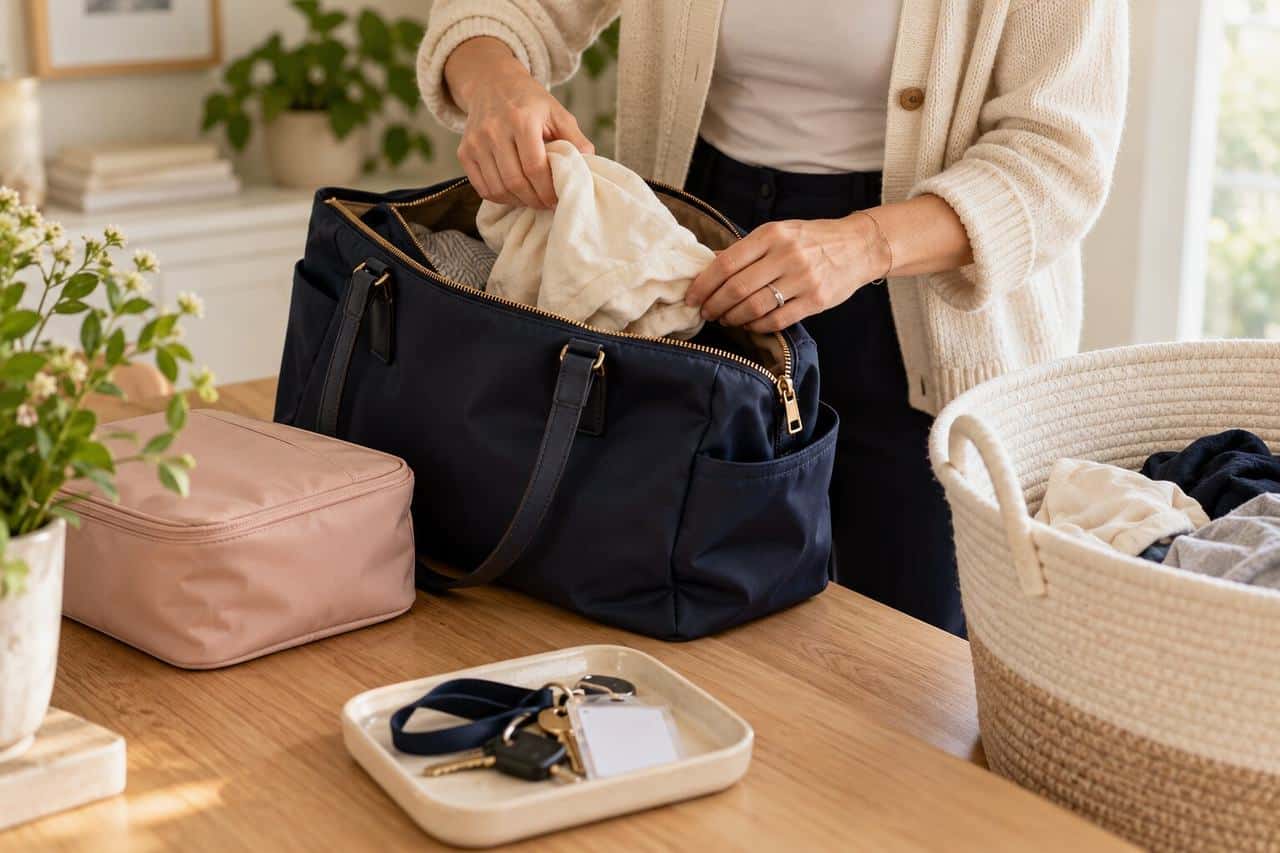
Start with the items that need prompt attention, such as milk, food, and used equipment. Then remove used clothing and rubbish. Finally, place the empty or partly prepared bag in its home and note what still needs doing.
For example, Monday’s return might end with the badge back in its pocket, the spare shirt heading to laundry, and a note saying “replace shirt.” The note stays until a clean replacement is actually packed. It should not disappear merely because someone started the wash.
If evenings are difficult, divide the reset into essentials now and packing later. A station can hold an honest “not ready yet” bag. What matters is that the state is clear to the next person using it.
What is worth buying?
Buy for a specific problem you have observed. A shallow tray may help with disappearing keys. A suitable cooler may be necessary for your transport plan. A lightweight pouch may separate your clothing backup from the rest of the bag.
Check dimensions, cleaning instructions, actual capacity, and the weight of the empty item. An organizer that fills the only free shelf or adds too much weight has made a new problem. Try a temporary arrangement with what you own for a few departures first.
Your questions, answered
What if I have no entryway?
Use a cabinet shelf, a bedroom basket, or a clear section of a kitchen cupboard along your route. The station is a location you can reliably use, not a particular piece of furniture.
Does everything need to be packed the night before?
No. Prepare what is appropriate, then make a short final-additions list. The system should respect storage and charging needs instead of forcing every object into one place.
What if my workdays change?
Keep a core kit and add a small day-specific list. A home-working day, a clinic shift, and an office meeting may require different equipment. Review the next day’s actual route rather than packing for every possibility.
Make tomorrow’s departure easier to see
Choose one place for your bag today. Put a short last-minute card beside it and decide where the bag will be emptied when you return. You can refine the arrangement after using it.
Your return to work deserves preparation that includes you: your clothes, your food, your comfort, and your time. For more support choosing practical postpartum outfits and building routines around your wardrobe, explore The NennVersa Atelier.