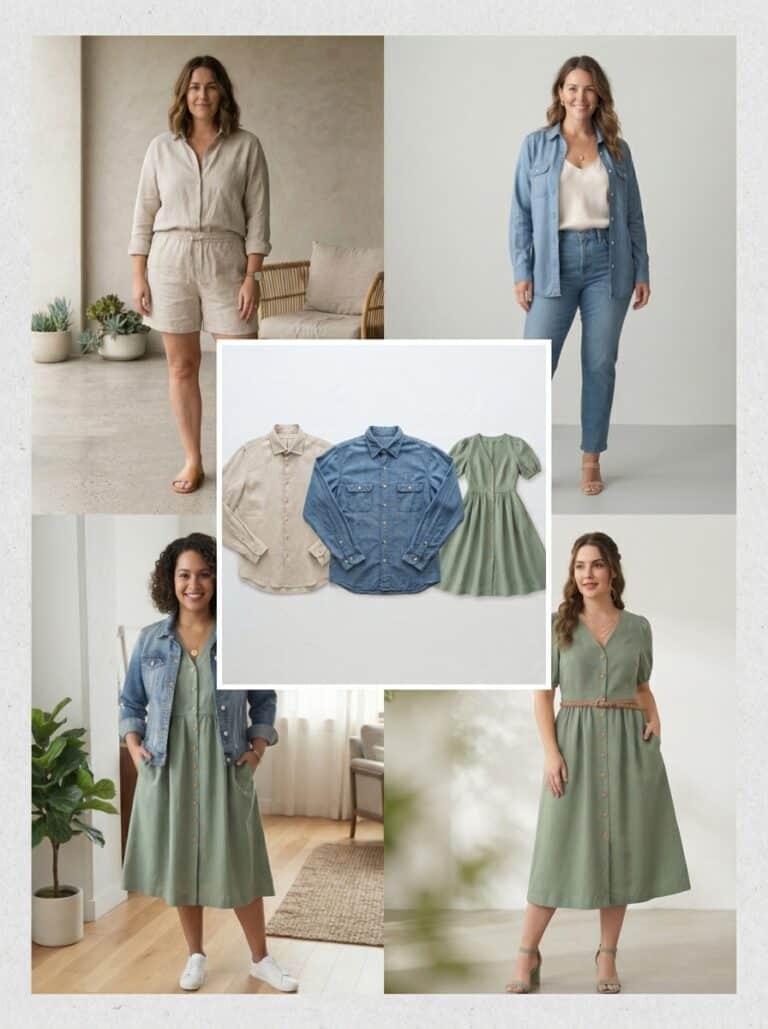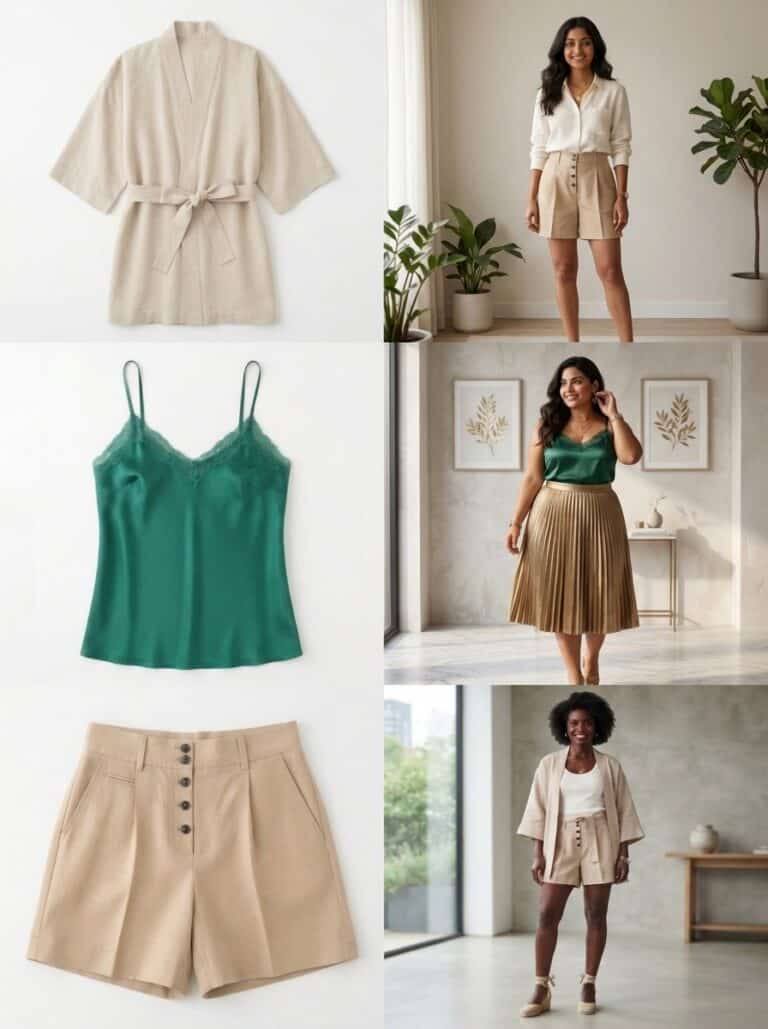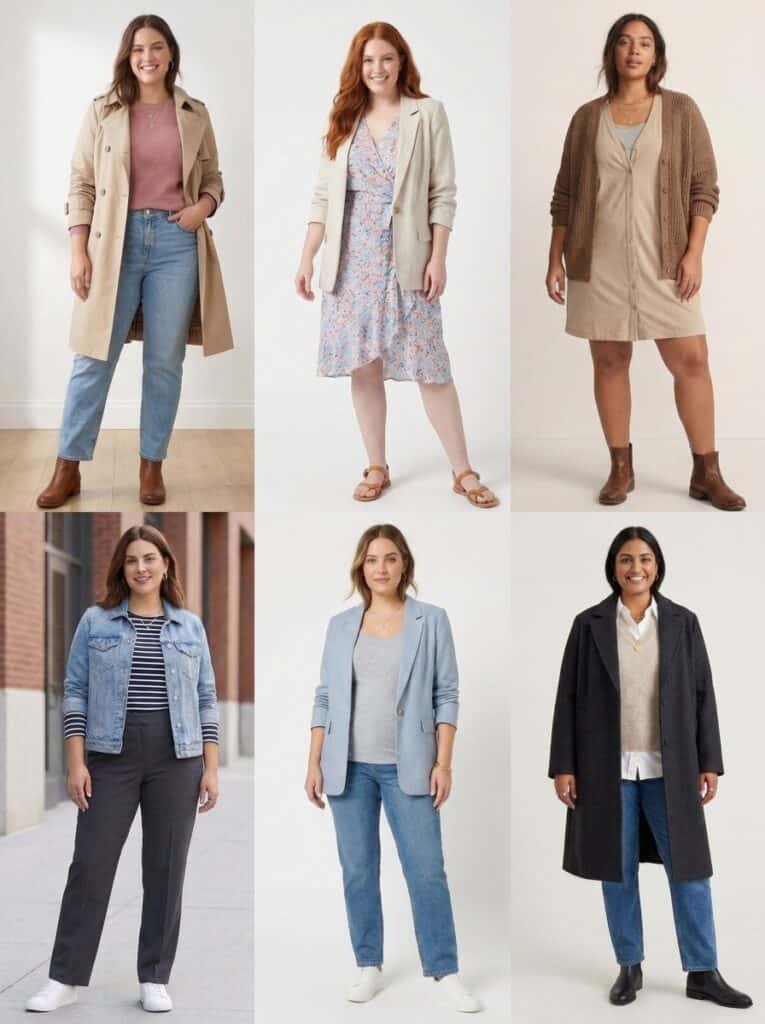
Winter to spring transition postpartum is its own dressing problem. The mornings are still cold. The afternoons are warmer than you expected. The nursing access has to stay intact through layer adjustments. And the body that’s healing is running a different temperature than it used to. This post is fifteen layered looks for those weeks where the season can’t decide, with every outfit built to add and remove layers without disrupting the feeding base underneath.
1. The Classic Transition Layer
The outfit: Nursing tank , fine-knit longline cardigan , straight-leg jeans , ankle boots , lightweight scarf at the neck
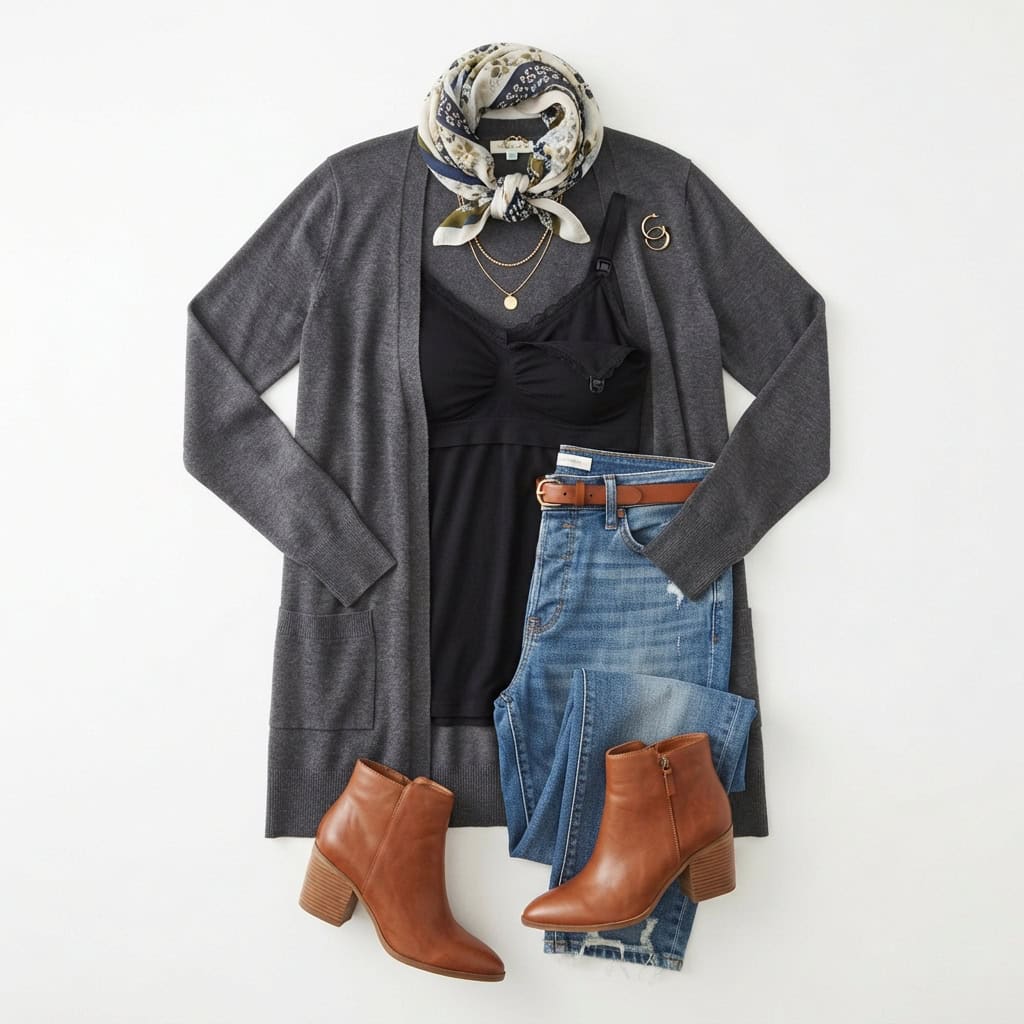
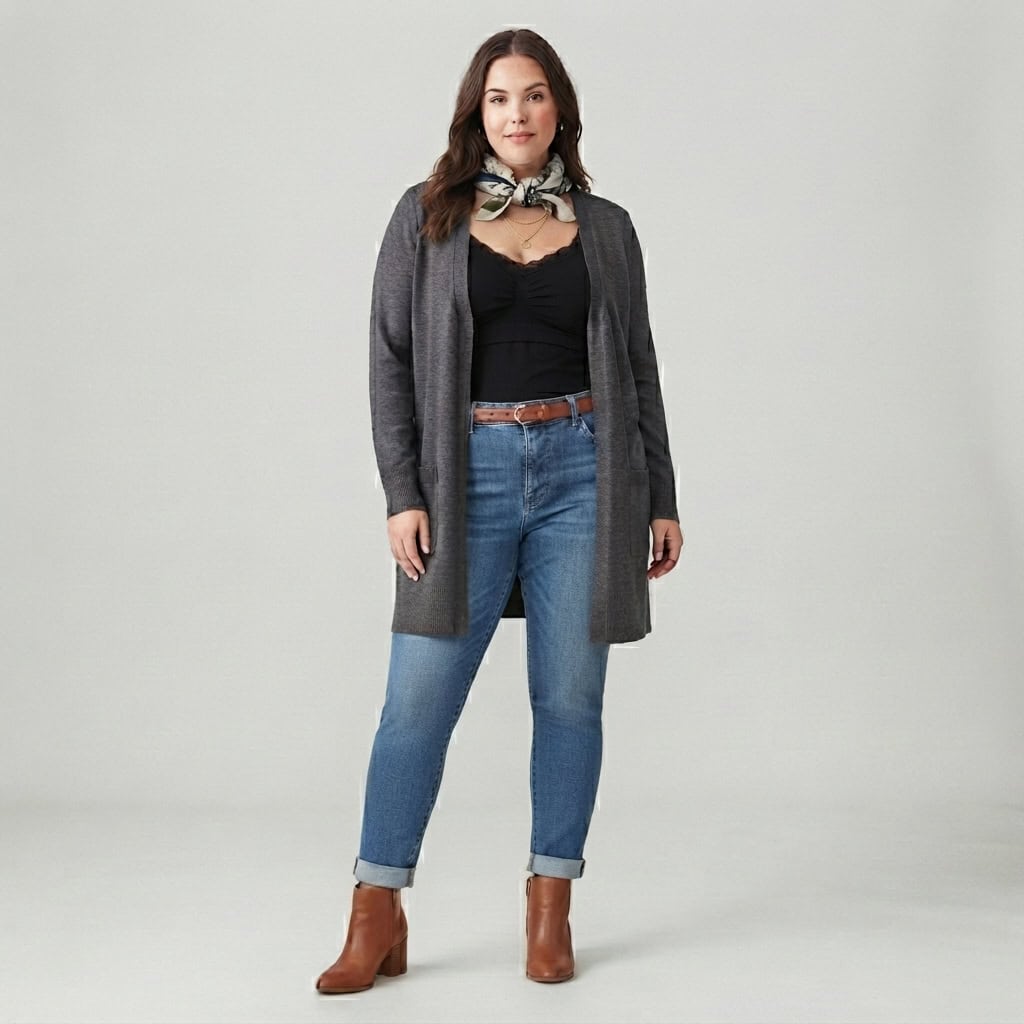
How it works: The nursing tank provides the base and the feeding access. The longline cardigan provides the season’s primary warmth layer, worn open for indoor ease and wrapped or belted for outdoor chill. The scarf manages the neck and chest in the cold morning and removes easily as the day warms. The straight-leg jeans and ankle boots are the transition season’s most dependable lower half.
For nursing: Tank accessed from neckline or hem; cardigan falls open to either side.
For pumping: Tank accesses directly beneath the cardigan; scarf drapes forward during a session for coverage.
The transition moment: Remove the scarf first as the morning warms. Unbutton the cardigan next. By afternoon, the cardigan can come off entirely, leaving the nursing tank and jeans as a complete spring-leaning outfit.
2. The Shirt Dress Layered System
The outfit: Fitted long-sleeve tee beneath , shirt dress over, buttons open at the top , ankle boots , light trench coat for going outside
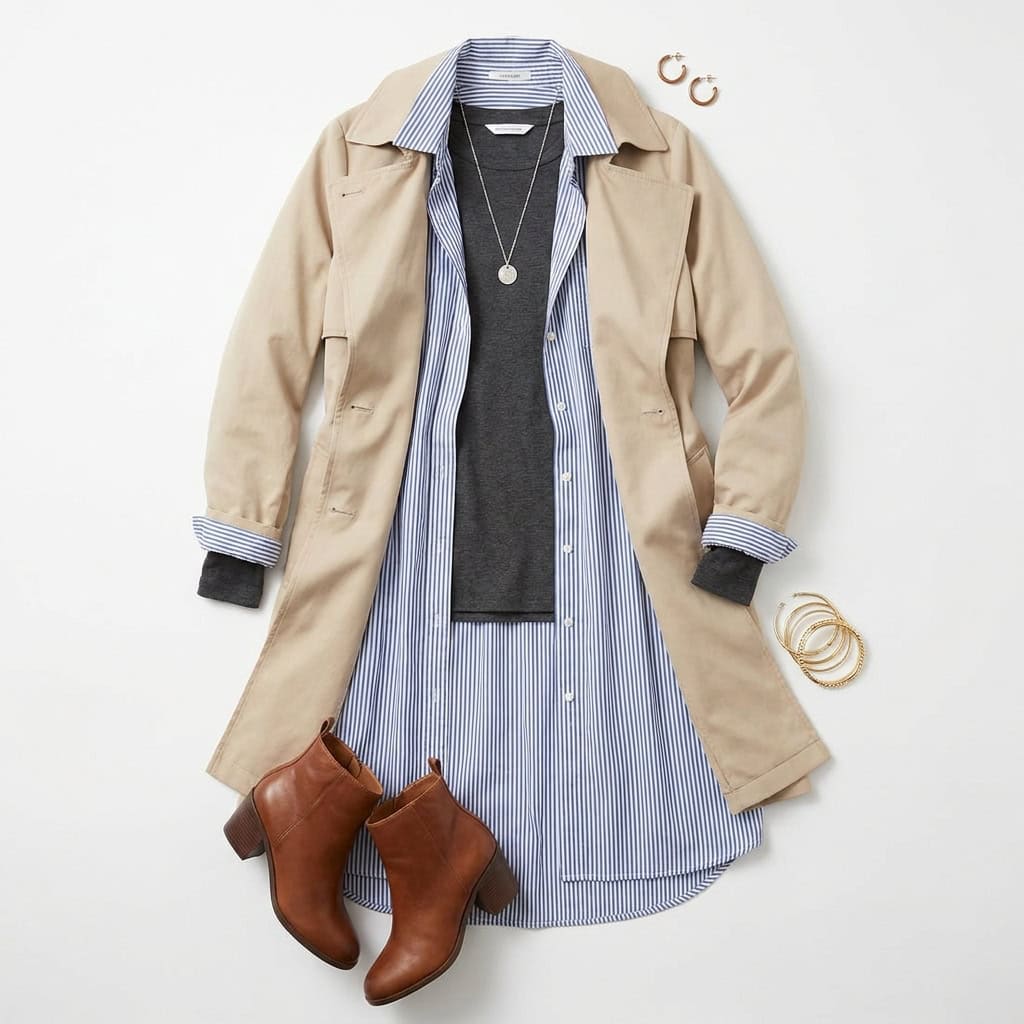

How it works: The long-sleeve tee provides the warmth layer closest to the skin and the nursing access from the hem. The shirt dress sits over it, worn with the top buttons undone over the tee’s visible neckline. The trench coat is the transition season’s defining outer layer , light enough for spring, structured enough for the last cold days.
For nursing: Lift the long-sleeve tee from the hem; the shirt dress frames and covers during the feed.
For pumping: Long-sleeve tee lifts; shirt dress provides coverage on all sides.
The transition moment: The trench coat comes off in warmer weather, leaving the shirt dress and tee as a layered spring combination. On the warmest days, the long-sleeve tee is replaced by a nursing tank and the shirt dress is worn alone.
3. The Wrap Top With Warmth
The outfit: Wrap top in a medium-weight jersey , wide-leg trousers in a warm ponte , ankle boots , oversized blazer or soft wool coat
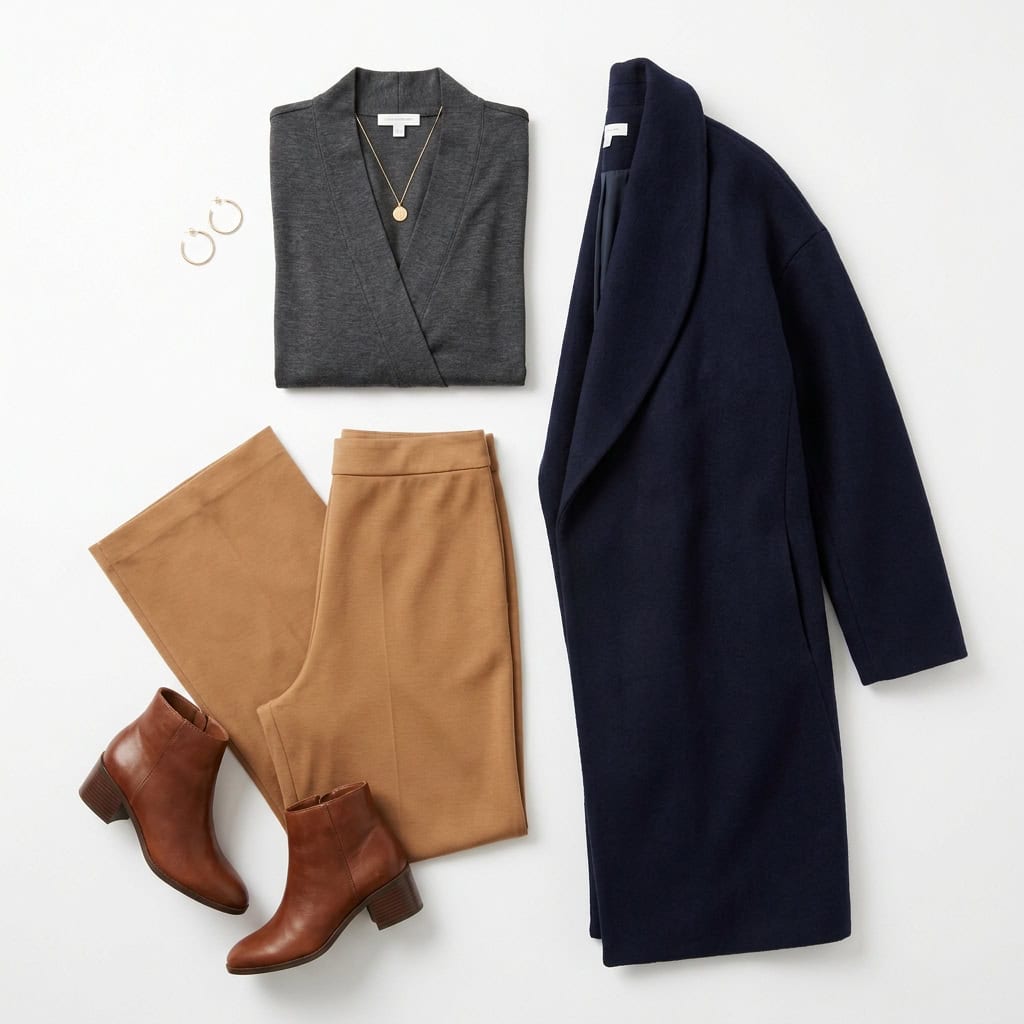

How it works: The wrap top’s front opening makes it one of the most nursing-friendly pieces for the transition season, when additional layers are present but access still needs to be swift. The wide-leg trousers in ponte bridge the gap between winter’s heavier fabrics and spring’s lighter ones. The blazer or soft coat manages the outdoor temperature.
For nursing: Wrap top opens from the front tie; the blazer or coat opens over it.
For pumping: Wrap top opens fully at the front for clip-in access; the blazer provides a privacy layer if needed.
The transition moment: As the season warms, the blazer becomes a cardigan. The ponte trousers become a linen version. The wrap top stays , it has no season.
4. The Knit Dress With Layers
The outfit: Knit midi dress in a fine or medium rib , opaque tights , ankle boots , denim jacket or lightweight leather jacket , long cardigan for indoor warmth
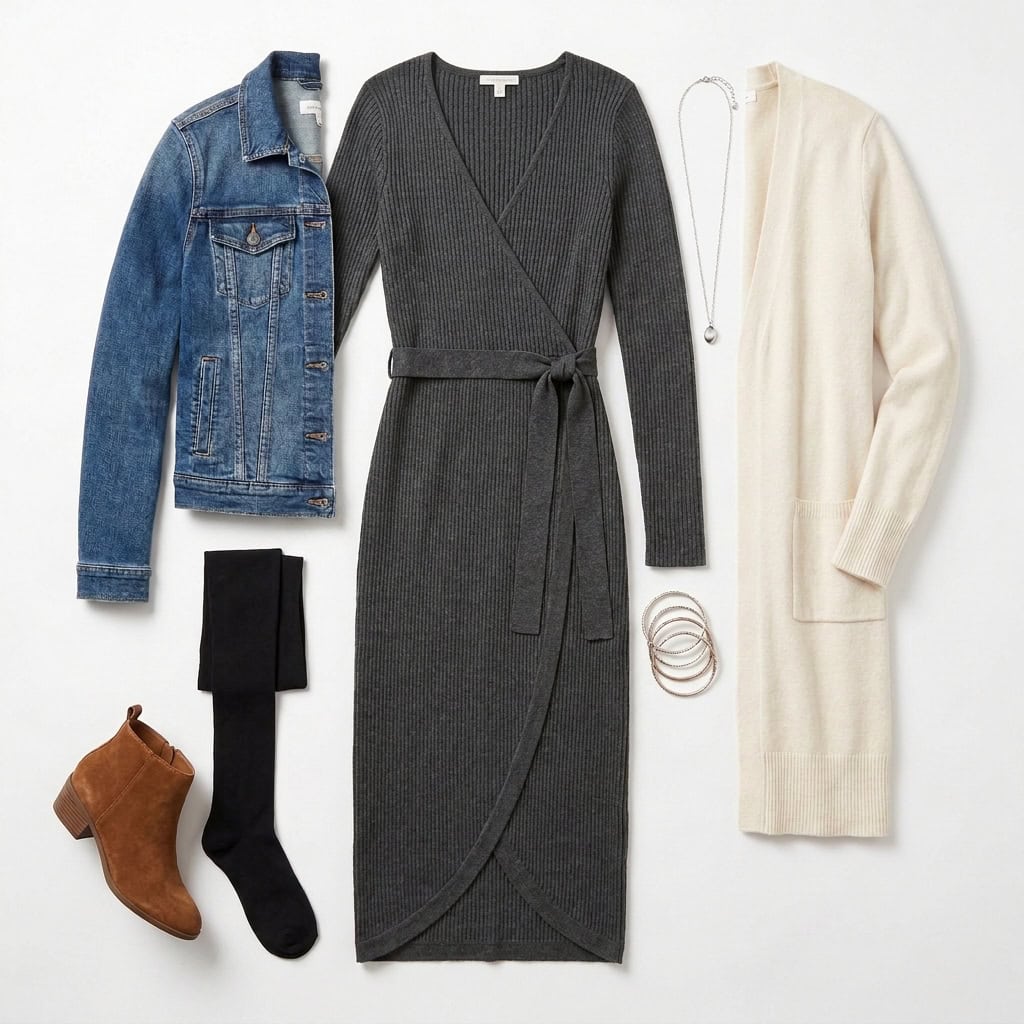

How it works: The knit dress is the transition season’s most generous one-piece option , it provides warmth from the fabric, ease from the stretch, and nursing access from the hem or neckline depending on the style. The denim or leather jacket provides the outdoor layer; the cardigan manages the temperature of indoor spaces that are still being heated.
For nursing: Lift the knit dress from the hem for clean, easy access.
For pumping: Hem lifts entirely clear of any pump setup; tights can be pulled down slightly at the waist.
The transition moment: The opaque tights become sheer tights, then bare legs. The jacket stays. The cardigan is retired as indoor spaces warm up.
5. The Button-Down and Knitwear Combination
The outfit: Button-down shirt, fully buttoned , fine-knit sweater vest over the top , straight-leg jeans , loafers or ankle boots , wool coat for outdoors
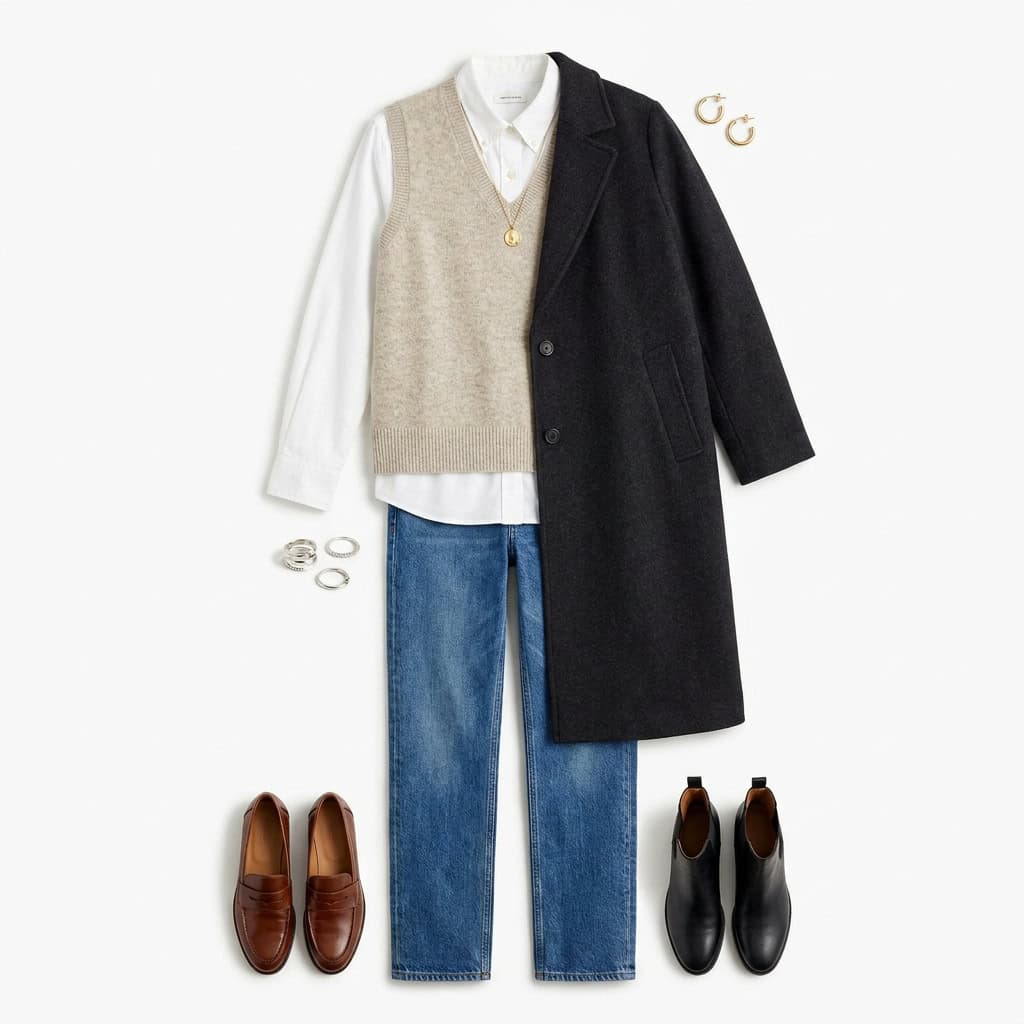
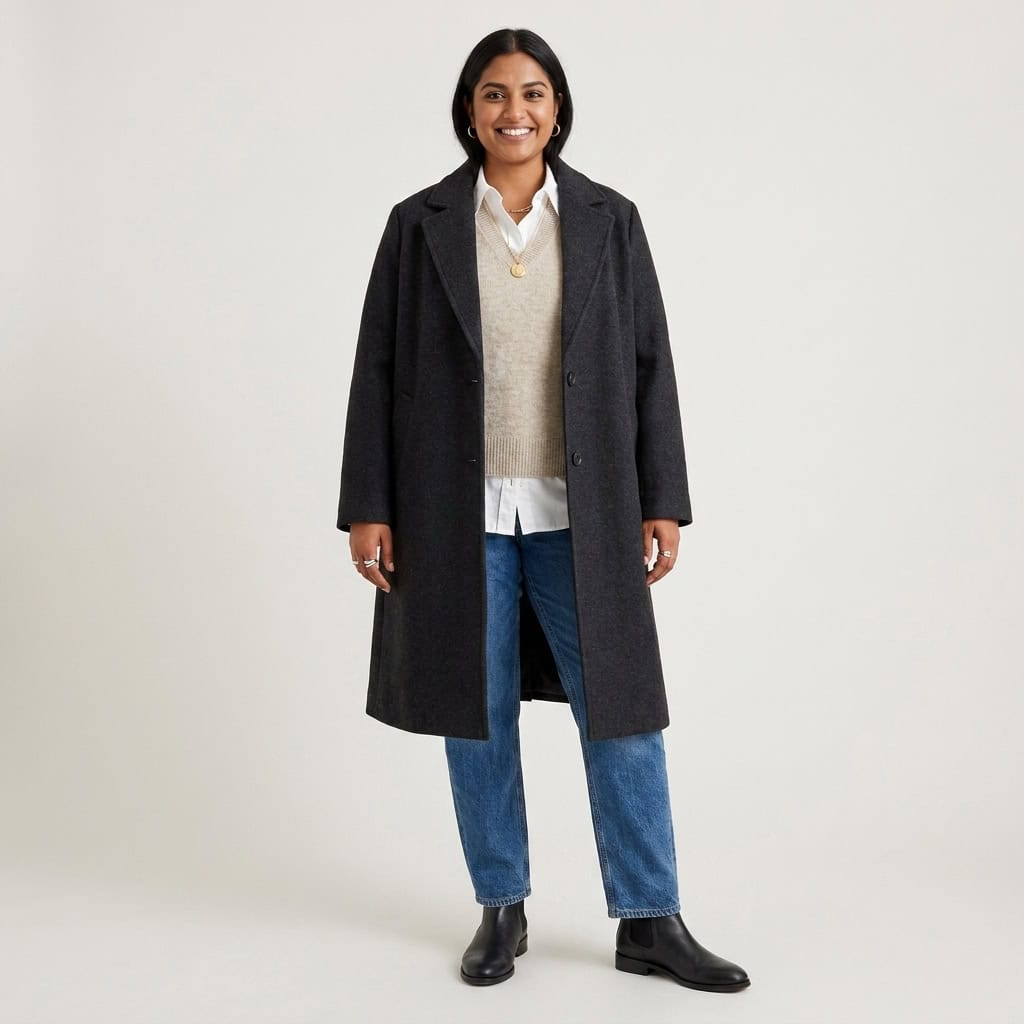
How it works: A button-down shirt with a sweater vest layered over it gives you the shirt collar and cuffs visible at the neck and wrist, and the vest’s warmth at the torso. The button-down provides nursing access from beneath the vest , open the vest, unbutton the shirt from the top. The wool coat manages outdoor temperatures that are still cold enough to demand it.
For nursing: Open the vest; unbutton the shirt from the top or lift from the hem.
For pumping: Same access; the vest provides coverage during a session.
The transition moment: The wool coat gives way to a trench. The sweater vest becomes optional and then decorative. The button-down alone becomes a spring outfit.
6. The Turtleneck Transition
The outfit: Fitted ribbed turtleneck , A-line or pleated midi skirt in a floral or spring print , ankle boots transitioning to low heels , denim jacket



How it works: This outfit begins firmly in winter , the turtleneck, the ankle boots, the denim jacket against the cold , and introduces spring through the midi skirt’s print and silhouette. The turtleneck provides warmth and lifts from the hem for nursing access. The floral or light print signals the season that is coming even as the layers manage the season that is still here.
For nursing: Turtleneck lifts from the hem; the midi skirt stays in place.
For pumping: Turtleneck hem access; the denim jacket provides privacy coverage.
The transition moment: The denim jacket is removed on the warmer days. The ankle boots become ballet flats or loafers. The turtleneck eventually becomes a fine-knit short-sleeve or a cami, and the skirt arrives fully in spring.
7. The Soft Trouser and Fresh Top Formula
The outfit: Light-coloured or pastel nursing-friendly top , soft, wide-leg trousers in a spring tone , white trainers , oversized cardigan in a warm neutral , silk scarf at the neck
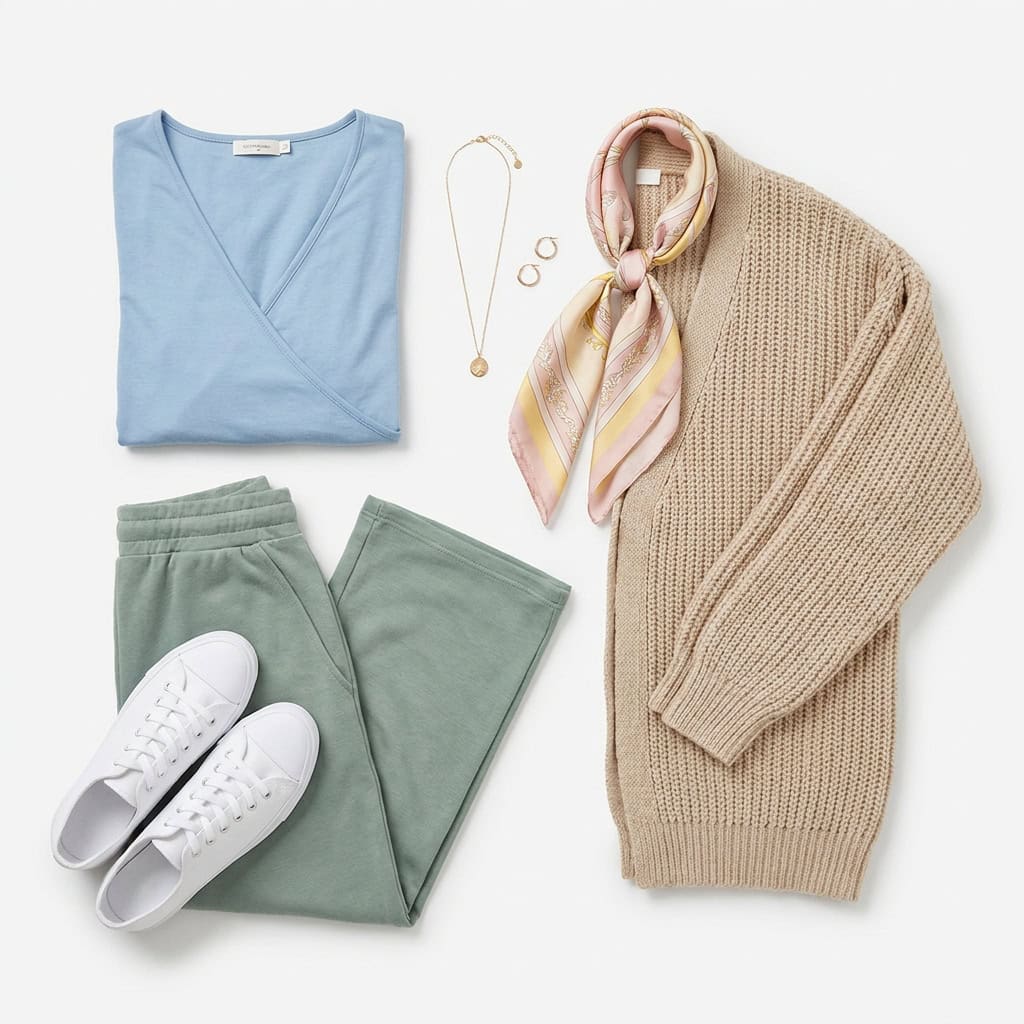

How it works: This outfit introduces spring’s colour palette while keeping winter’s layering. A pastel or light-coloured nursing top in a soft fabric , a jersey wrap, a scooped cami, a loose blouse , brings the freshness. The wide-leg trousers in a spring tone (pale sage, soft blush, warm white) continue it. The oversized cardigan and silk scarf manage the cold without contradicting the spring-leaning base.
For nursing: Top accesses directly; cardigan falls open.
For pumping: Top and cardigan both open; scarf provides a natural drape of coverage.
The transition moment: The cardigan becomes unnecessary first. The silk scarf becomes an accessory rather than a warmth tool. The outfit is spring by the time both are gone.
8. The Longline Blazer System
The outfit: Nursing tank , longline blazer in a spring-appropriate fabric (linen, a light tweed, a pastel wool blend) , straight-leg jeans , white trainers or ankle boots , light knit underneath on cold mornings
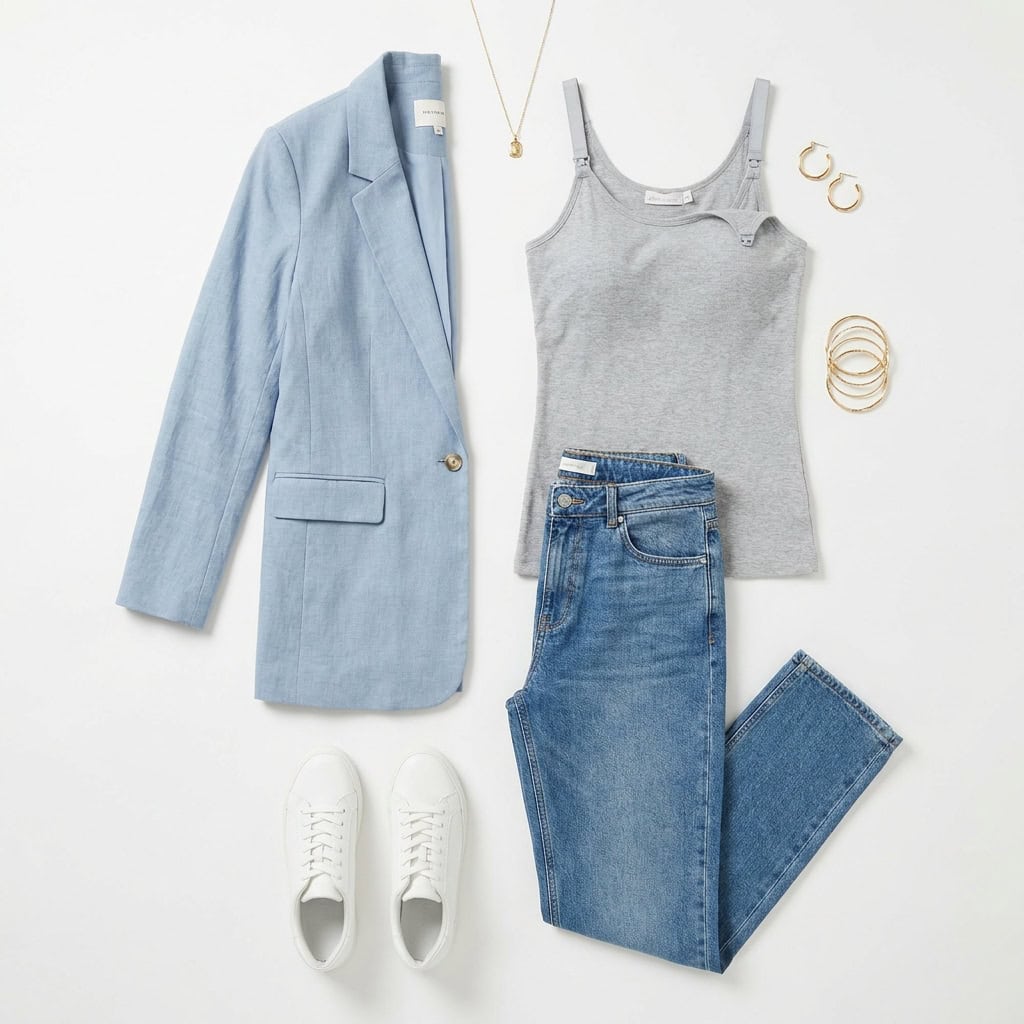

How it works: A spring-fabric blazer worn over a nursing tank and jeans is the transition outfit that commits most decisively to the incoming season while keeping the practical warmth of a structured outer layer. The linen or light tweed blazer reads as spring; the knit beneath the tank manages the cold mornings. The white trainers or ankle boots are the footwear decision that shifts the whole outfit between seasons.
For nursing: Tank accesses directly; blazer opens.
For pumping: Tank and blazer both open; the longline length provides full coverage during a session.
The transition moment: The knit beneath the tank disappears. The ankle boots become trainers or loafers. The blazer is now a spring blazer in every sense.
Free · one photo · two minutes
Want Anah to look at what you are wearing today?
Anah is the stylist inside the NennVersa Atelier, and she will read one outfit for you at no cost. Upload a photo of what you have on and she sends back:
- how the top opens for a feed, and what to swap if it does not
- your colours, read off the clothes you are actually wearing
- three ways that exact outfit could evolve
- one of them rendered on your own photo, plus a palette card and a 7-outfit capsule
Free, once, no card. Your photo is used for that look only.
9. The Midi Skirt Bridge
The outfit: Long-sleeve tee or fine-knit top , satin or floral midi skirt , opaque tights becoming sheer , ankle boots becoming mules , light trench coat
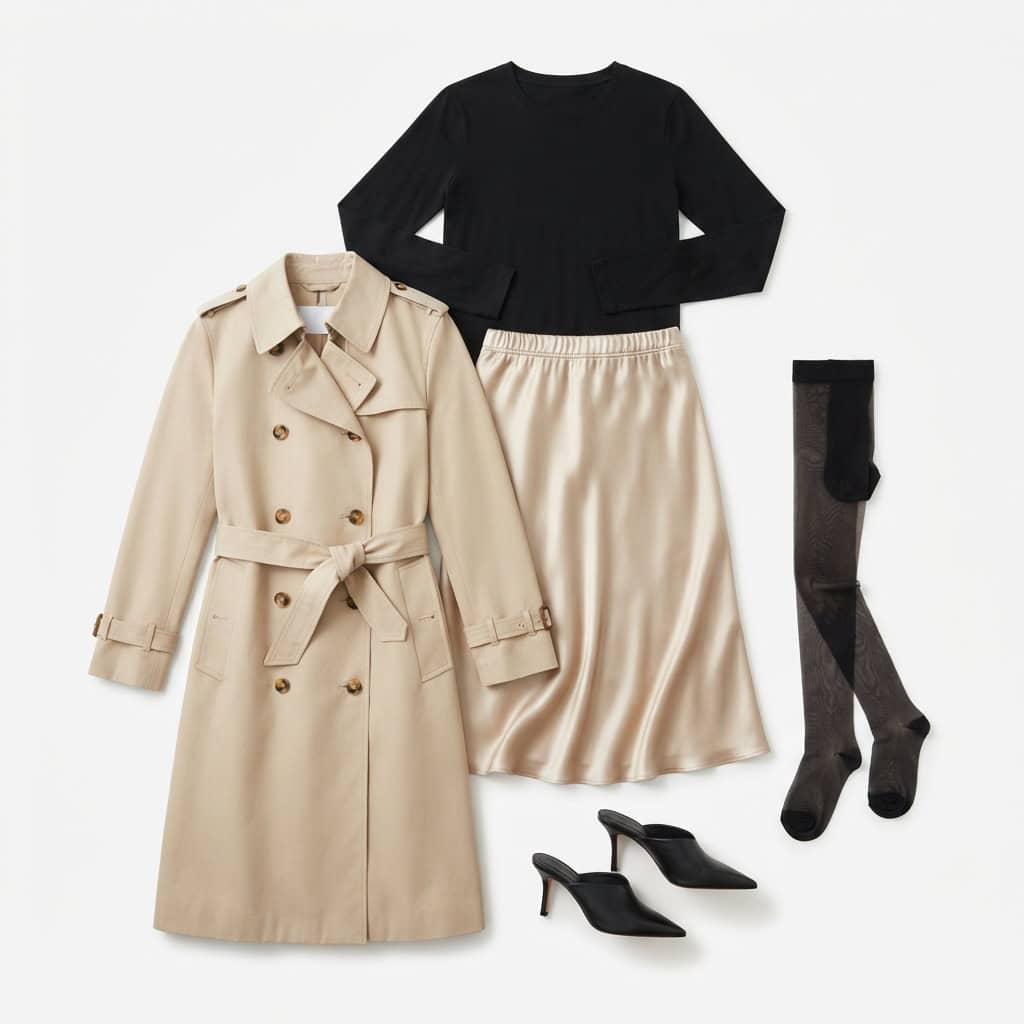
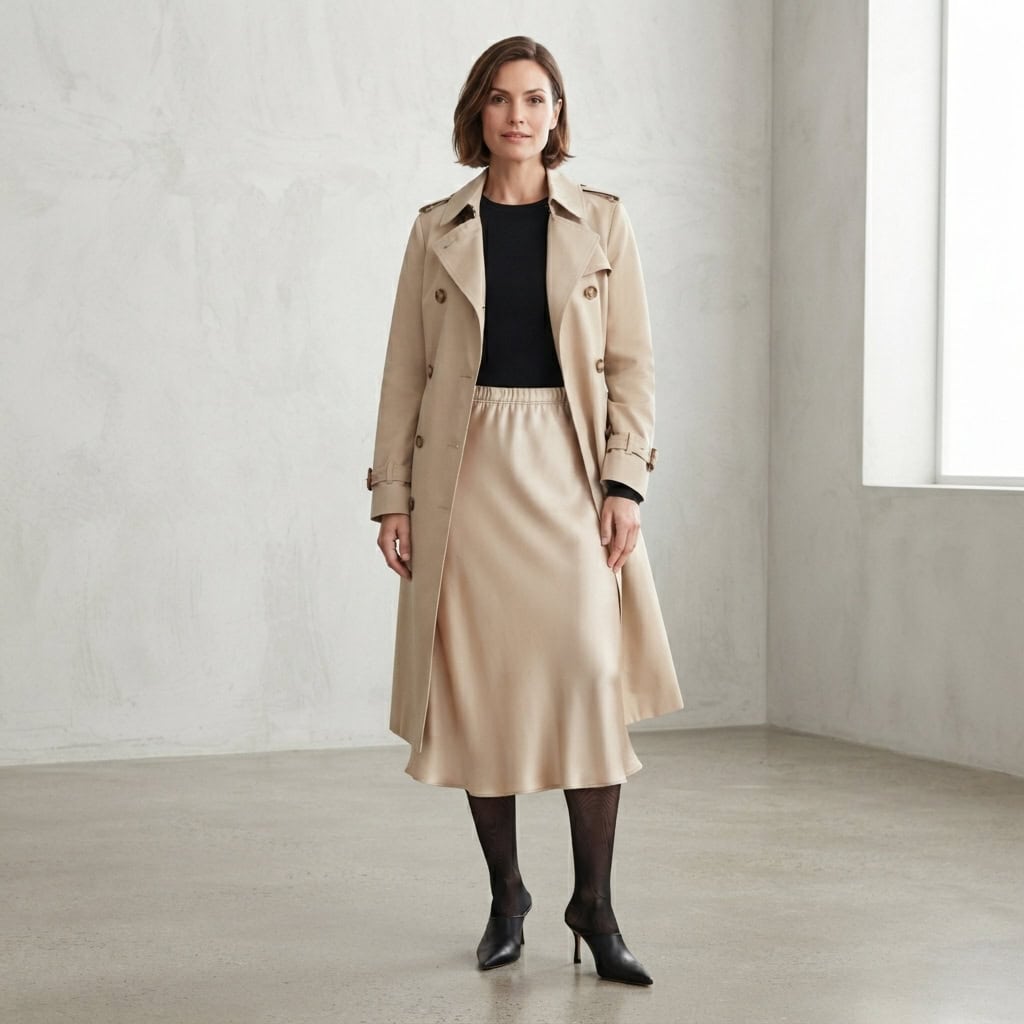
How it works: A floral or satin midi skirt is one of the most effective transition-season styling tools because it introduces spring’s colour and movement while working alongside winter’s remaining warmth layers. The tights manage the cold; the trench coat manages the outdoors; the top provides nursing access from the hem.
For nursing: Top lifts from the hem; the skirt stays in place; tights adjust at the waist as needed.
For pumping: Same access; the trench coat provides coverage if needed.
The transition moment: Opaque tights become sheer, then bare legs. The trench coat becomes a light jacket or nothing at all. The midi skirt is now fully in spring.
10. The Cosy-Fresh Knit Formula
The outfit: Nursing-friendly camisole , fine-knit crew-neck sweater in a spring colour (soft yellow, lavender, pale mint) , wide-leg linen-blend trousers , loafers , light scarf or neck warmer for cold mornings
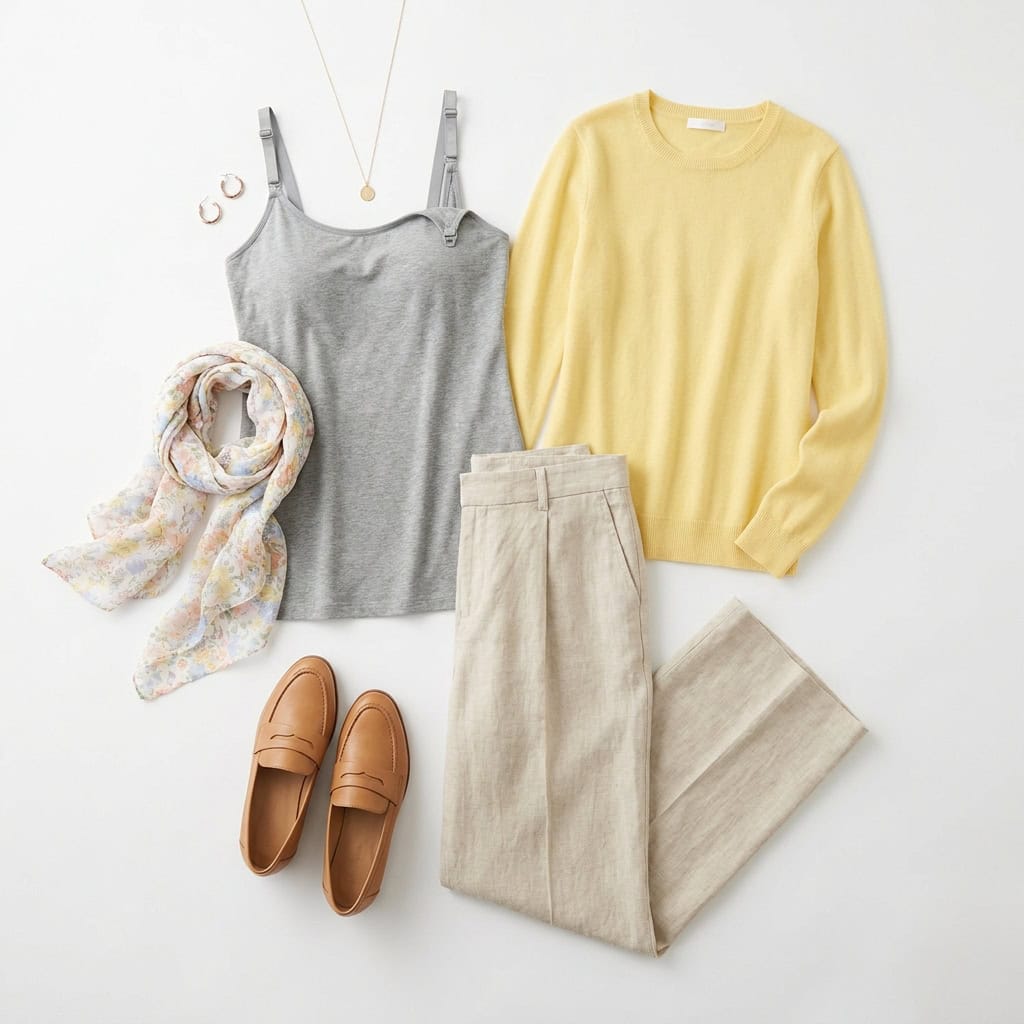
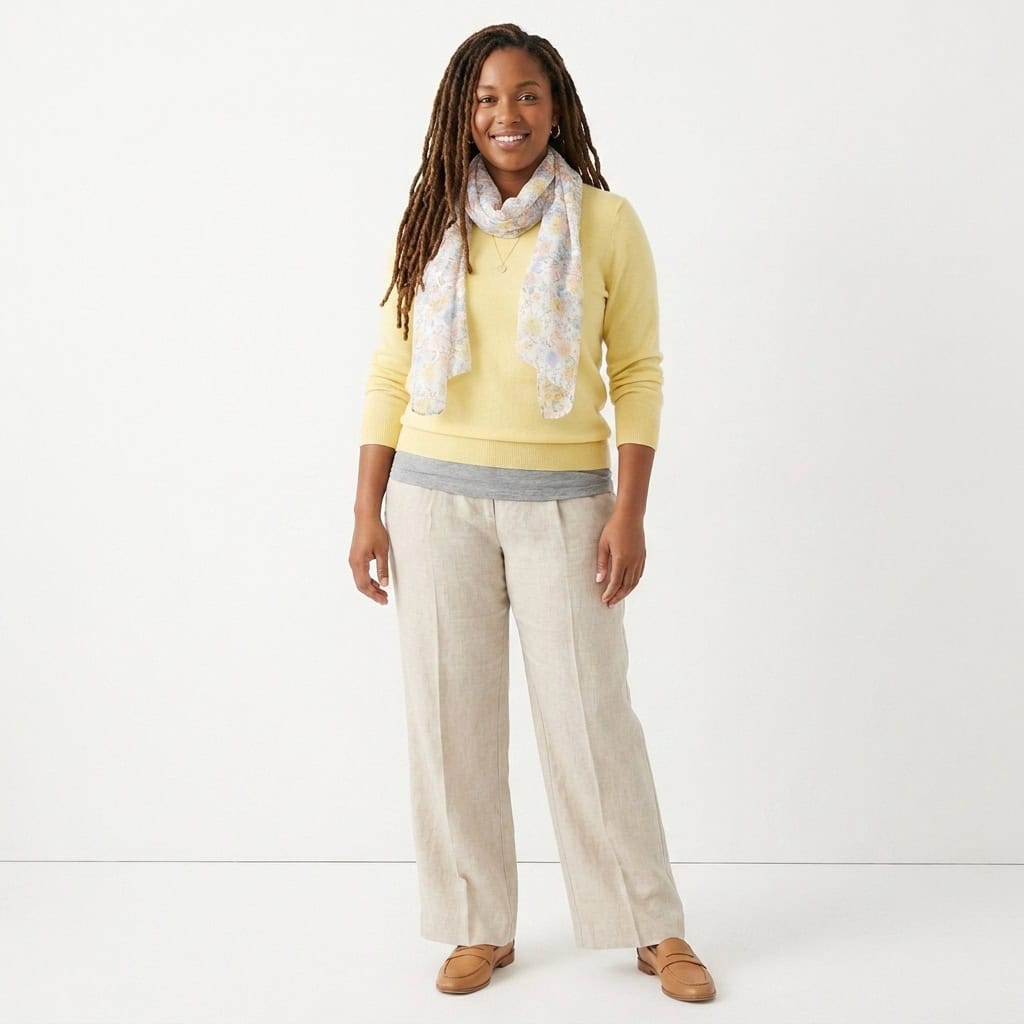
How it works: A fine-knit sweater in a spring colour is the outfit’s central transition object , it provides warmth while visually insisting that the season has changed. The linen-blend trousers echo the incoming season’s fabric preferences. The camisole beneath provides the nursing access; the sweater lifts from the hem as the back-up route.
For nursing: Camisole accessed from neckline or hem; sweater lifts from the hem.
For pumping: Camisole provides clip-in access beneath the sweater; fine knit lifts easily.
The transition moment: The neck warmer disappears first. The sweater becomes optional on warm afternoons. The linen trousers feel entirely right in spring.
11. The Breton Layer
The outfit: Nursing tank , long-sleeve Breton-stripe top over , tailored wide-leg trousers , white trainers , denim jacket or light trench
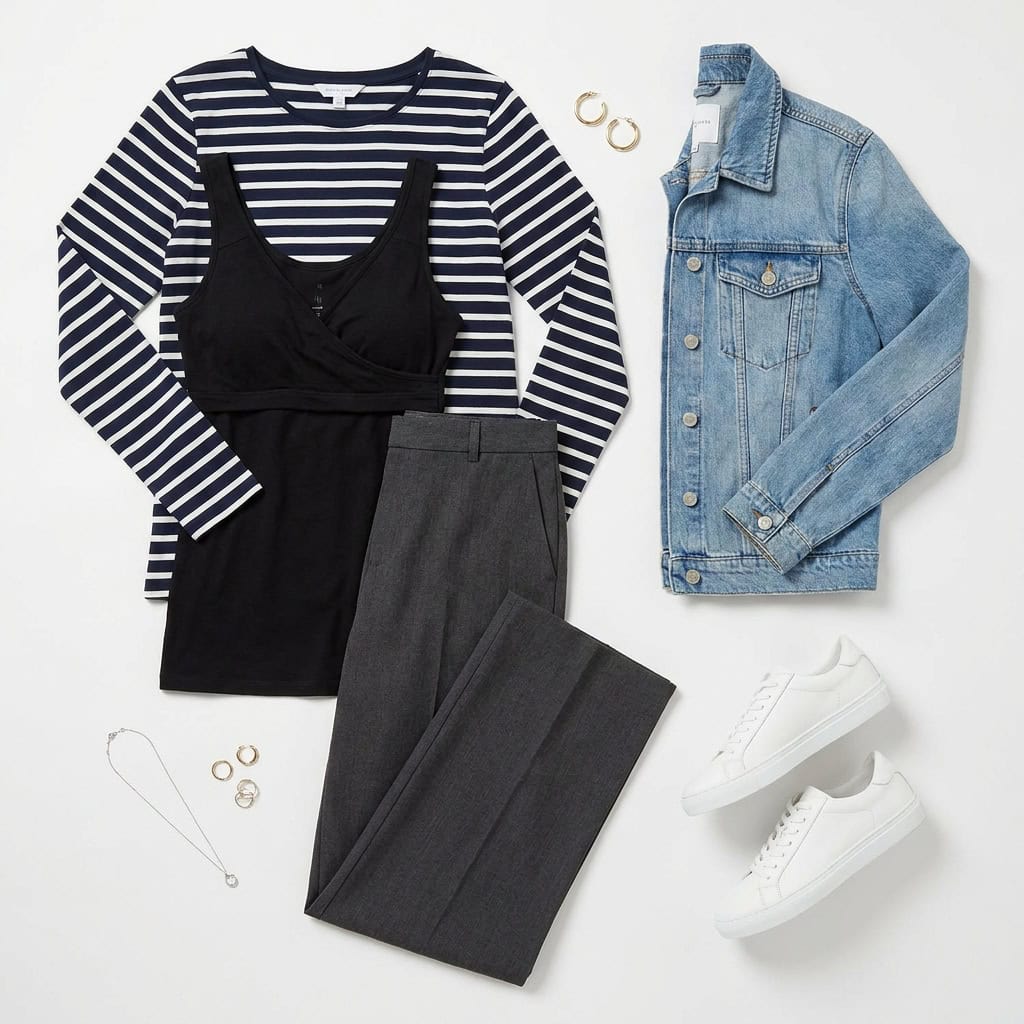

How it works: The Breton stripe has been in this series since summer, reliably present across seasons , because it is genuinely a year-round piece that simply requires different layering companions. In the transition season, the long-sleeve Breton over a nursing tank, with tailored trousers and a light outer layer, strikes exactly the right balance between the cosy and the fresh. The Breton is the transition outfit’s whole visual identity.
For nursing: Tank accessed from neckline or hem beneath the Breton, which lifts from the hem as a second route.
For pumping: Tank accessed directly; the Breton provides coverage while lifted.
The transition moment: The denim jacket gives way to no jacket at all. The white trainers stay for spring. The Breton continues, unchanged, into the new season.
12. The Dress-Over-Trousers Trick
The outfit: Slip dress or linen shirt dress , worn over wide-leg trousers or straight-leg jeans , ankle boots , oversized knit or cardigan over everything , nursing tank visible at the neckline of the dress
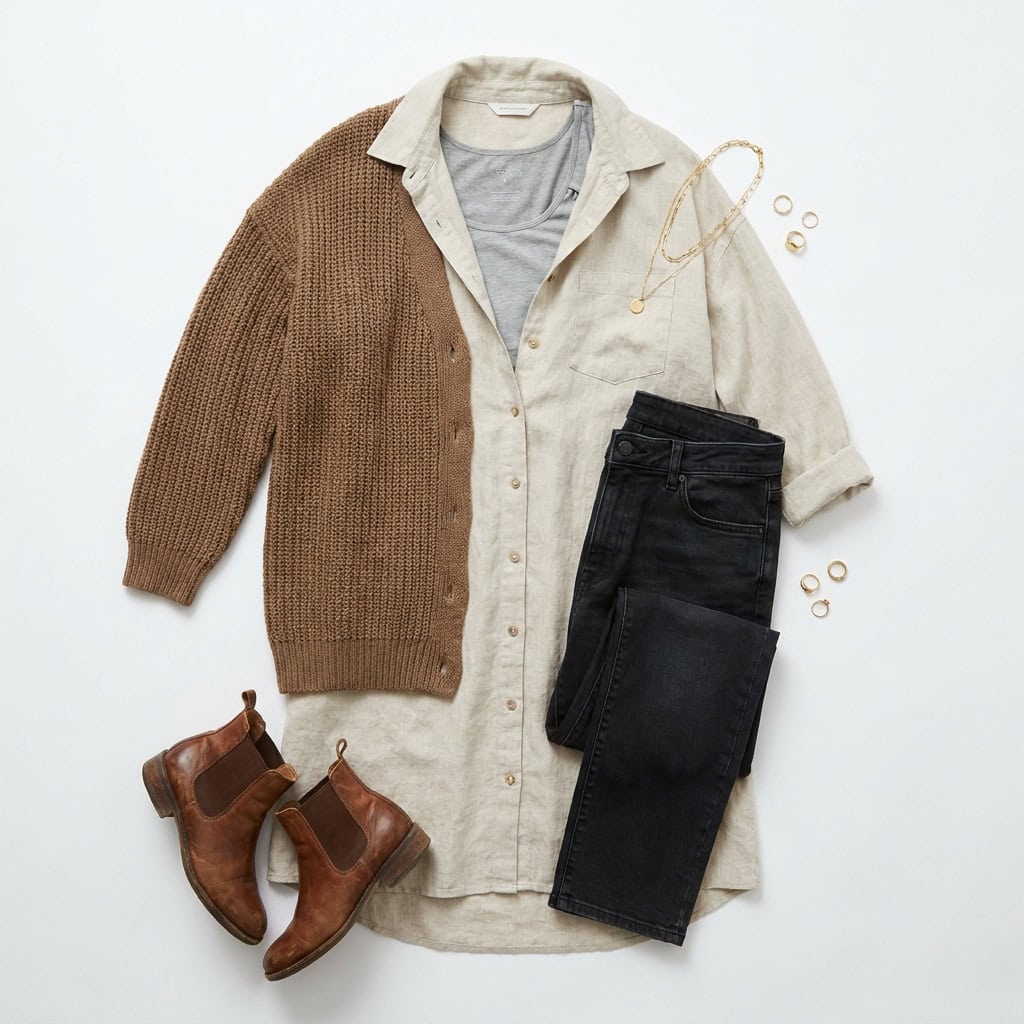
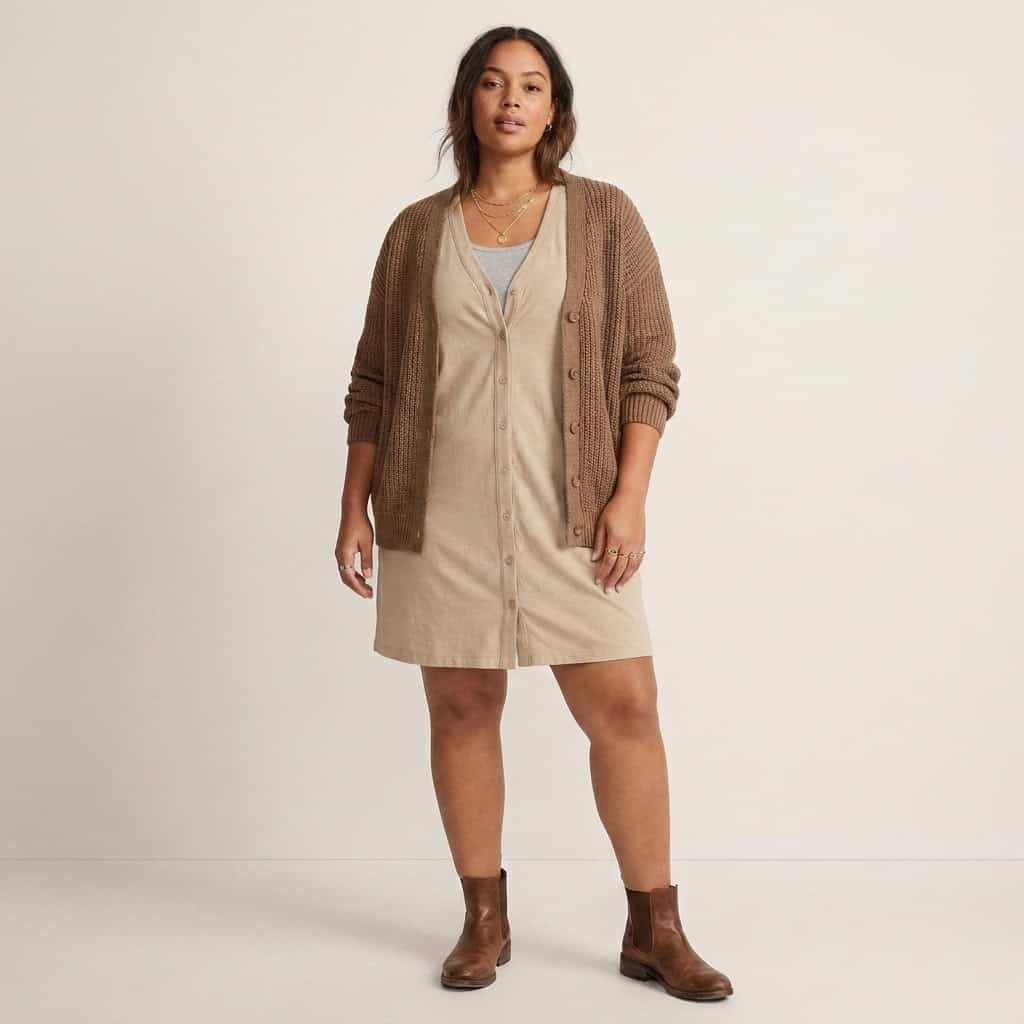
How it works: Wearing a dress over trousers is the transition season’s most useful styling trick for managing temperature uncertainty: the dress provides the spring silhouette and the nursing access; the trousers beneath add warmth. The nursing tank visible at the neckline confirms the practical base layer while contributing a deliberate layering aesthetic. The oversized knit manages the cold outdoors.
For nursing: Tank accessed from neckline; dress is lifted or moved aside as needed.
For pumping: Tank provides direct access; dress and trousers stay entirely in place.
The transition moment: The trousers beneath the dress disappear first. The oversized knit becomes a light cardigan. The dress alone, with the nursing tank, is now a spring outfit.
13. The Colour-as-Transition Tool
The outfit: Nursing-friendly top in a spring colour , any warm autumn or winter bottom half , ankle boots , light cardigan in a neutral , simple jewellery in gold
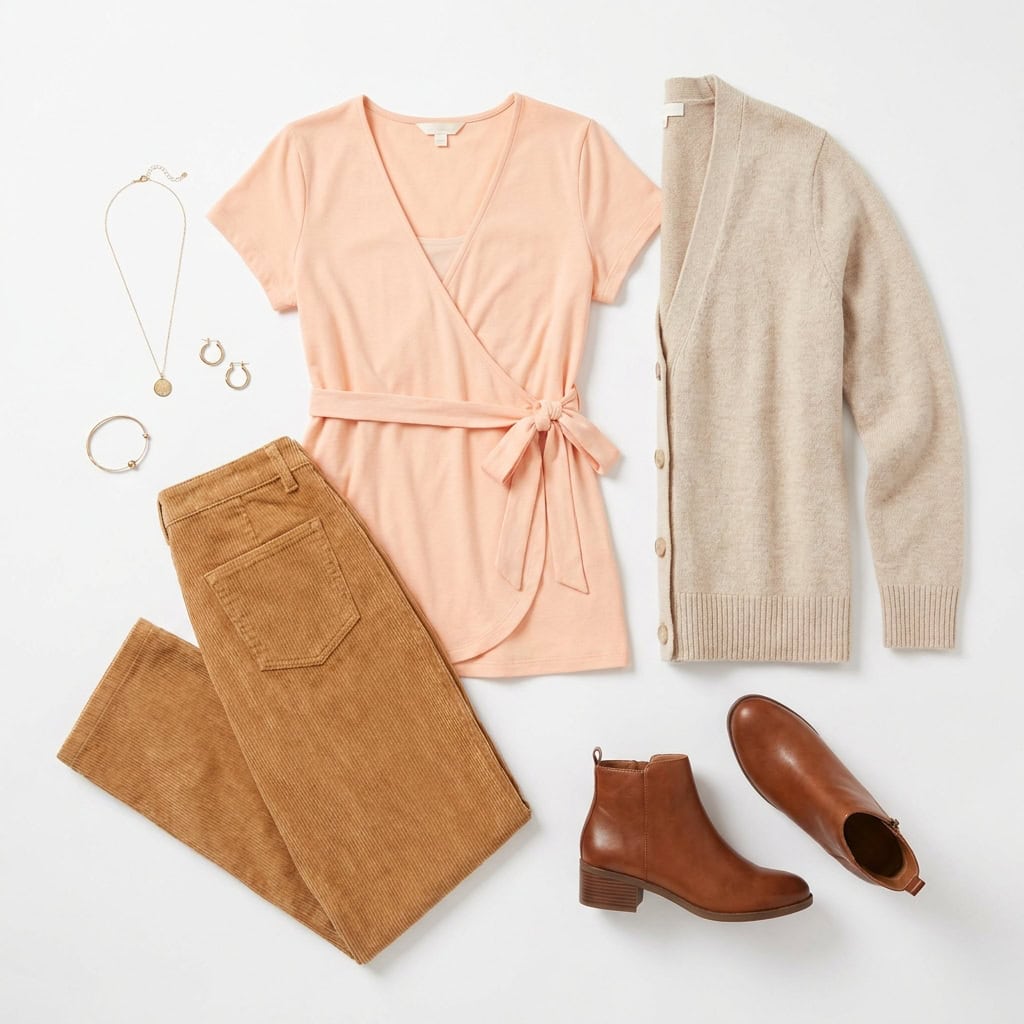
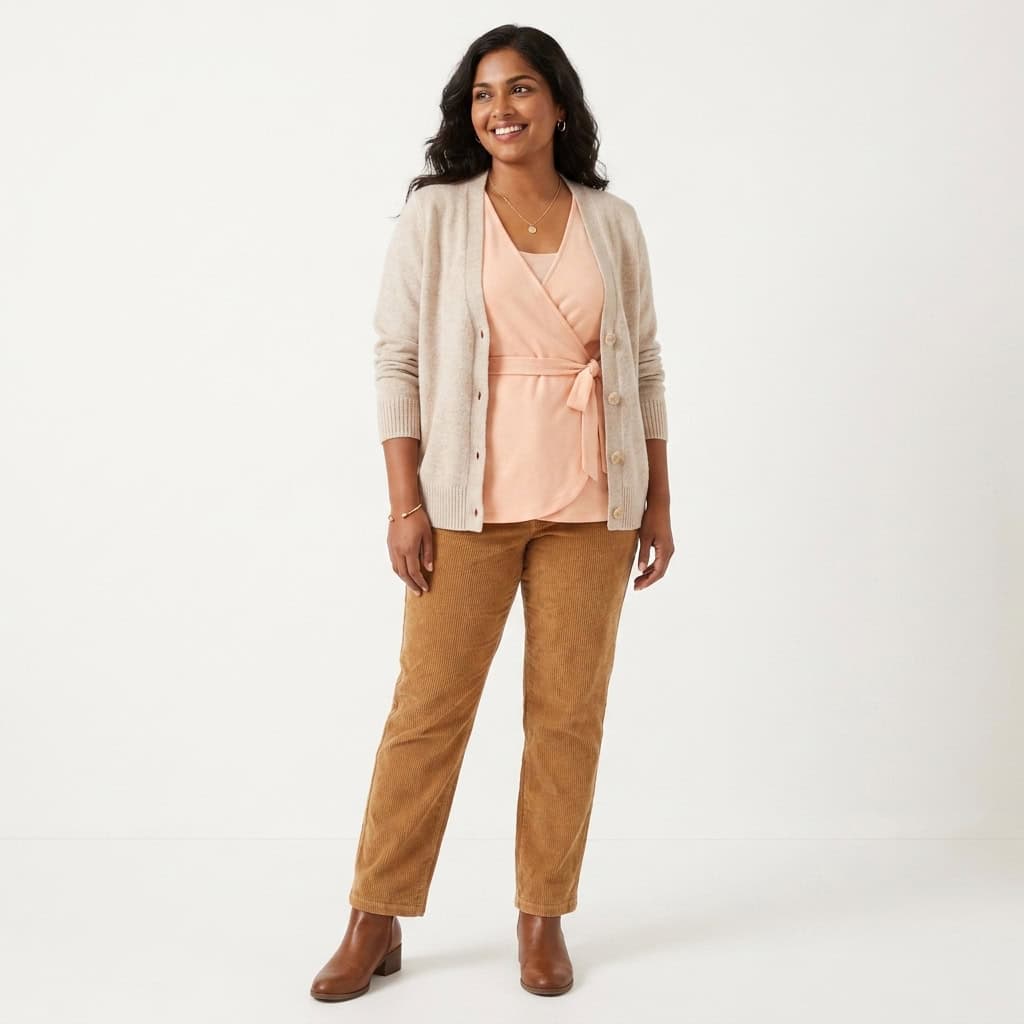
How it works: Sometimes the transition is made not through fabric weight or silhouette but through colour alone. A top in a spring tone , soft coral, pale sky blue, a warm botanical green, a delicate lavender , worn over winter’s familiar jeans or trousers signals the changing season without requiring any change to the temperature-management layers. The gold jewellery carries the light of the coming season. The rest of the outfit manages the cold as it still stands.
For nursing: Top accesses from neckline or hem depending on the style; cardigan falls open.
For pumping: Top and cardigan both open for access; the spring colour is entirely undisturbed.
The transition moment: This outfit needs no transition moment. The colour does it continuously, every time it is worn, moving the wardrobe toward spring one soft-toned morning at a time.
14. The Trench Coat Outfit
The outfit: Nursing tank , fine-knit sweater in any spring-leaning colour , straight-leg jeans or wide-leg trousers , ankle boots or loafers , classic trench coat
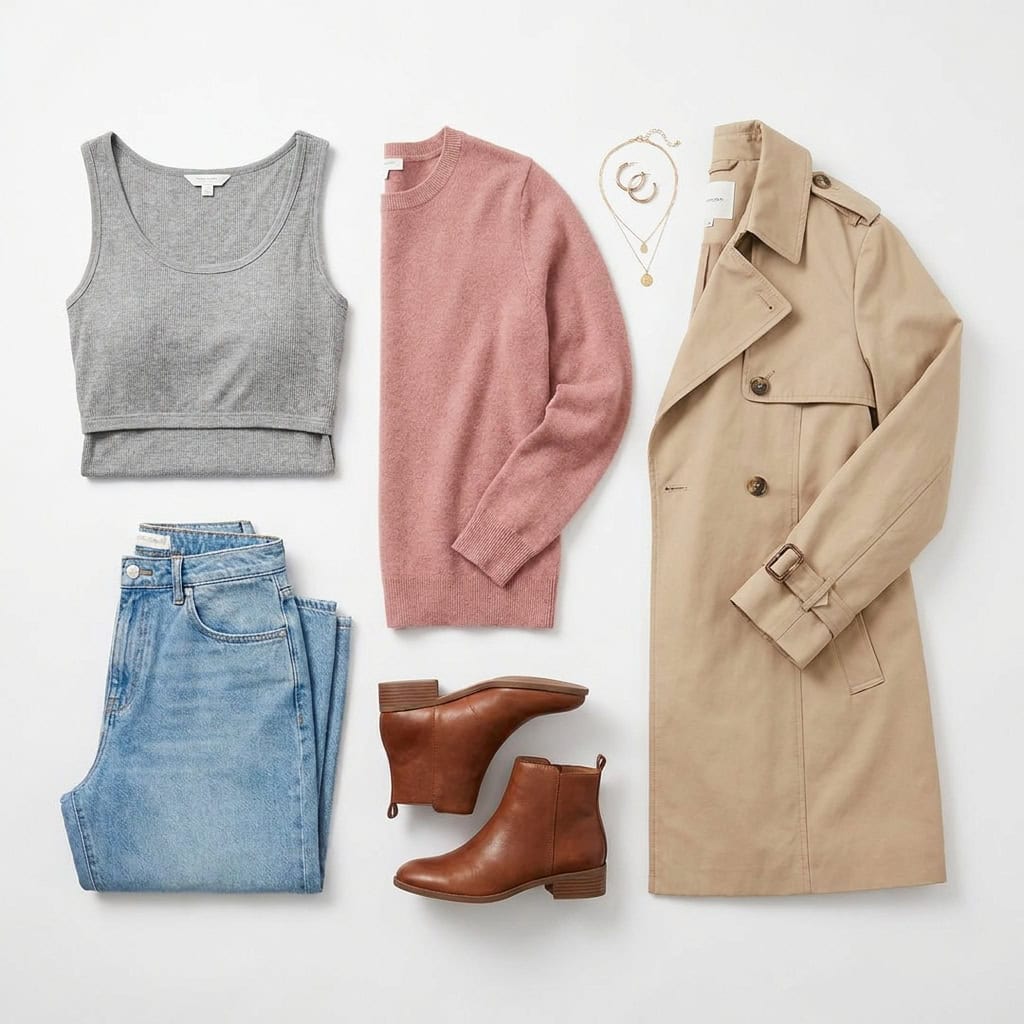

How it works: The trench coat is the transition season’s single most important outer layer, and it deserves its own outfit because it does something no other coat does: it belongs entirely to the in-between. Too light for deep winter, too structured for high summer , but in the months where neither applies, the trench coat is exactly right. It elevates whatever is beneath it. It extends wearability across every temperature the transition produces. It has been performing this function for over a century and has no intention of stopping.
For nursing: Tank and sweater both lift from the hem; trench coat opens.
For pumping: Tank accesses beneath sweater; trench coat opens and falls to either side for coverage.
The transition moment: The trench coat is the transition moment. It is the coat you put on when the wool coat has finally become too much, and it stays until a jacket is enough. Wear it for as long as the season allows.
15. The Full Spring Preview
The outfit: Floral or light-print wrap dress , nursing tank beneath , light denim jacket or linen blazer , white trainers or strappy flat sandals if the day allows , no tights, bare legs on the warmest days
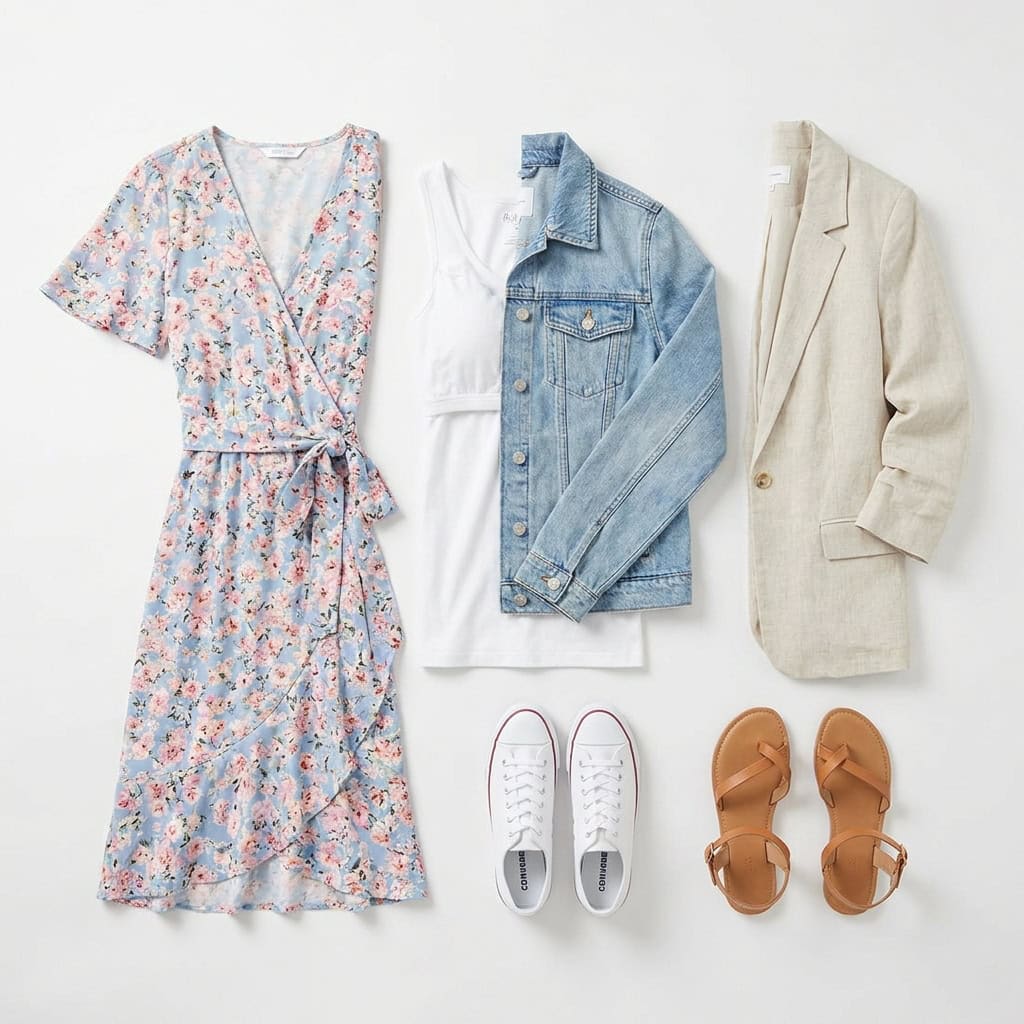
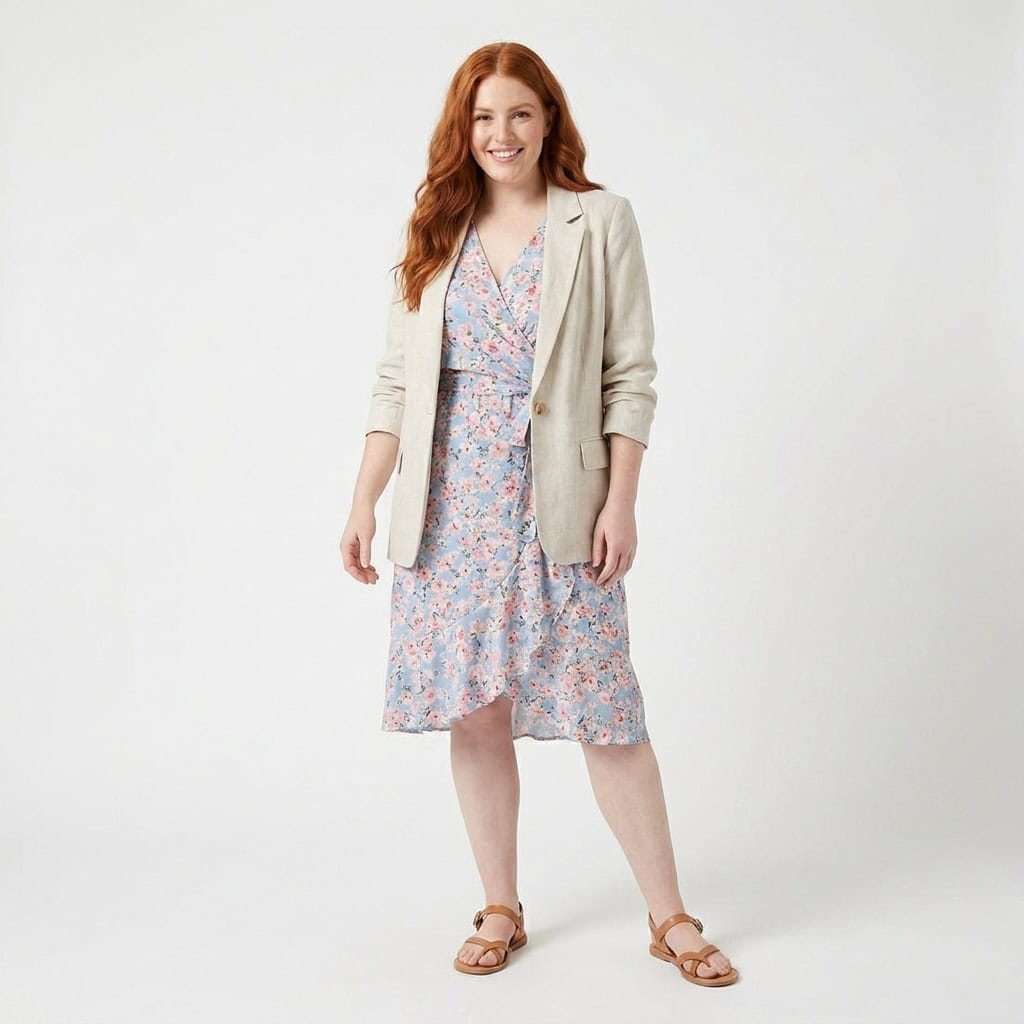
How it works: This is the outfit that commits to spring before spring has fully arrived , the one that wears the floral dress and the bare legs and the flat sandals on the first afternoon warm enough to justify it, even knowing the coat might be back tomorrow. The nursing tank beneath provides the base and the pumping access; the wrap dress provides the spring; the denim jacket or linen blazer provides the necessary caveat that it is not quite there yet.
For nursing: Tank from neckline or hem; wrap dress opens from the front.
For pumping: Tank and wrap dress front opening provide two independent access routes.
The transition moment: This outfit is the transition moment. It is the day the wardrobe looks outside rather than inward, chooses hope over meteorological caution, and says: we are going toward spring now. The boots are still by the door in case. But today, on this particular afternoon, the flat sandals are enough.
The Nursing Mama Fashion Commandments
Twelve rules I wish someone had told me postpartum. Print them. Screenshot them. Live by them.
- Nursing bra always. Regular bras become instruments of pain the day letdown surprises you.
- Nursing pads on your body + a spare pair in your bag. Every single time you leave the house. No exceptions.
- Extra top in your bag — for YOU, not the baby. Because leaks, spit-up, and coffee-spills don’t care about your outfit plan.
- If it takes more than 5 minutes to figure out how to nurse or pump in it, it’s not the right outfit today. Feeding access is comfort. Comfort is not optional.
- Belt under the bust (empire) or below the belly with drape — never at the belly button. Your postpartum body deserves flattery, not compression.
- Comfortable waistband is non-negotiable. Elastic, wrap, or pull-on. Zippers are a Sunday-only luxury for now.
- Dark tones, prints, or textures — not thin light solids. Because letdown marks are real and you deserve clothes that don’t advertise them.
- Machine-washable everything. Dry-clean is not real-mama fashion. If it can’t survive a spit-up rinse, it’s not in rotation.
- Cross-body bag only. Hands stay free for the carrier, the toddler, the coffee, the door, the meltdown.
- Comfortable shoes always. You’re carrying a car seat and a diaper bag. This is not the season for a heel you can’t run in.
- Get dressed BEFORE the kids see you if you can. It changes the whole day — for them and for you.
- One accessory — earrings, a lip color, a scarf — counts as “put together.” That’s the whole game. You get to feel like yourself again.
Dressing the In-Between
The transition season is a fitting echo of postpartum itself. Both are in-between seasons. Both ask you to dress for the day in front of you instead of the one you’re hoping for. Both reward layers that adjust easily and a wardrobe that doesn’t demand decisions you don’t have the energy to make.
Three layering pieces handle most of these weeks: a transitional jacket (denim or light trench), a soft cardigan you can wear open or buttoned, and a scarf that doubles as warmth and coverage. With those plus your existing winter and early-spring pieces, you have the whole season.
If you want a postpartum transition capsule with feeding-friendly layering pieces already styled together for these in-between weeks, that’s exactly what the NennVersa Atelier is built for. Less guessing in the morning, more wearing.
Spring is coming. You’ve been layering toward it all along.
Keep reading
A few more posts to lean on when getting dressed feels heavy:
- Top 6 Must-Have Breastfeeding-Friendly Transitional Pieces for Any Weather
- The Absolute Best Breastfeeding-Friendly Spring Clothes for Chic Moms
- The Top Best Winter Capsule Wardrobe Essentials For Postpartum Moms
- Seasonal Wardrobe Swaps: Transitioning Your Closet for Breastfeeding

You deserve to be looked after too
You have spent every day since the birth taking care of someone else.
Getting dressed is the one thing you do for yourself before the day takes you. It is not vanity. The way you dress is how you tell yourself you are still here, still you, still worth ten minutes. Anah is the stylist who knows your body has just done the hardest thing a body can do, and meets it with reverence.
Inside the Atelier she remembers you. She keeps every look, learns your closet piece by piece, and dresses you for wherever you are going, on your own photo, thirty looks a month. With the 30-Day Postpartum Style Reset, hundreds of outfits sorted for feeding and shape, and a community of mamas with no algorithm.
It is $19 a month. Less than one takeaway coffee a week, to feel like yourself again every morning.