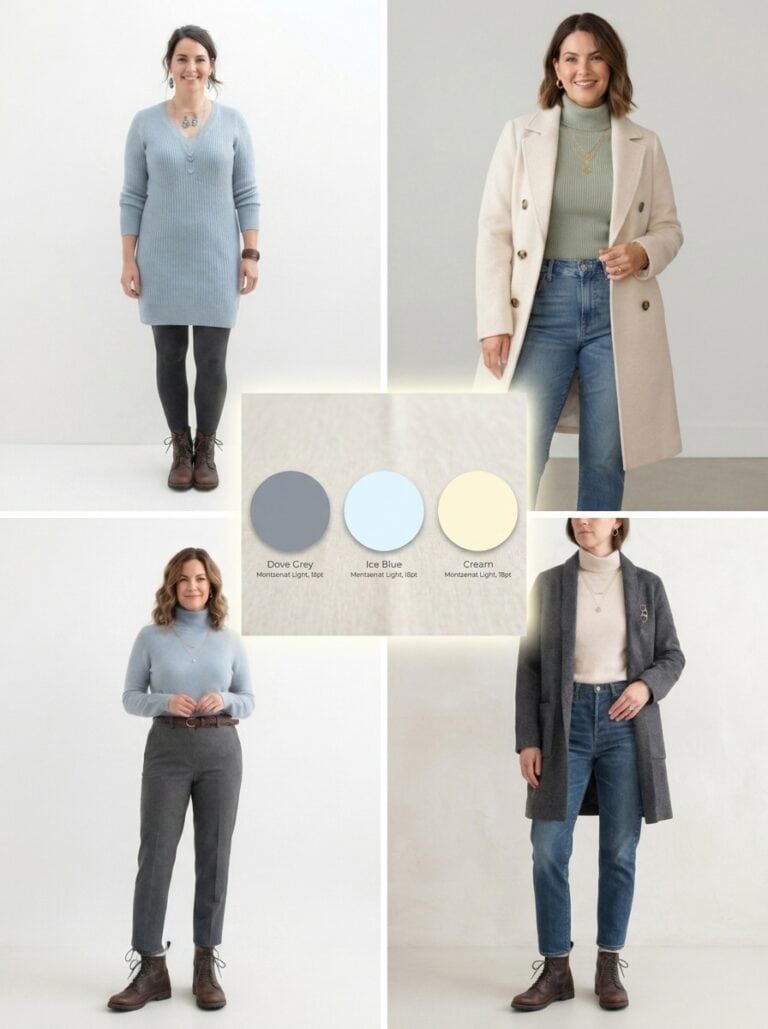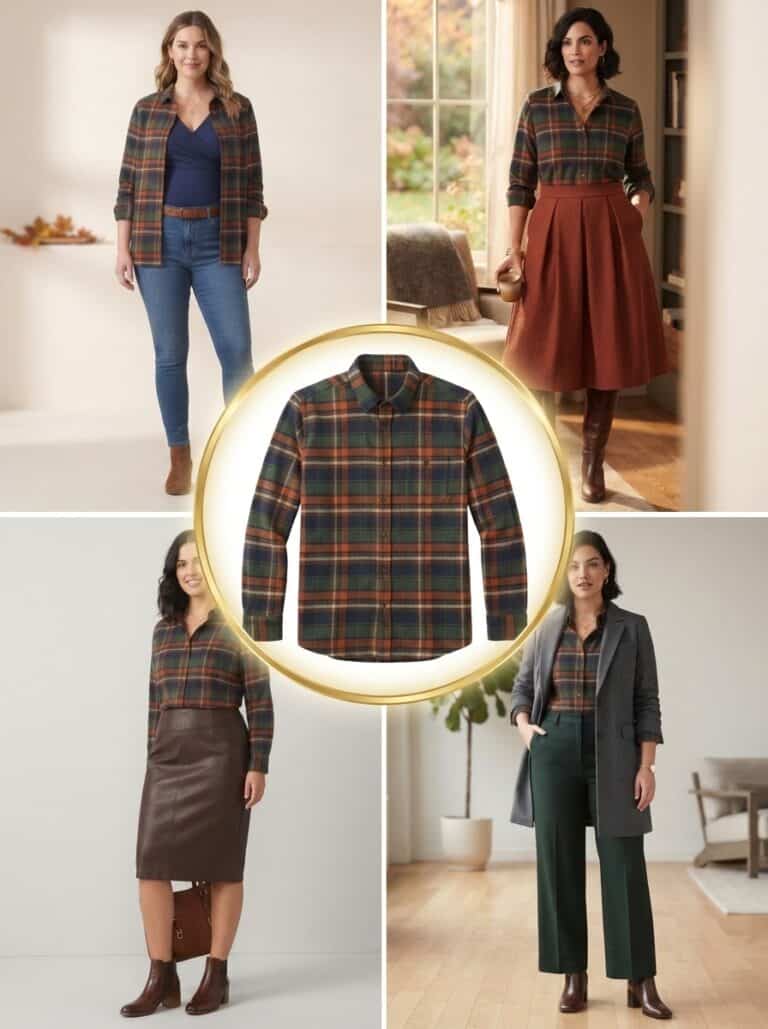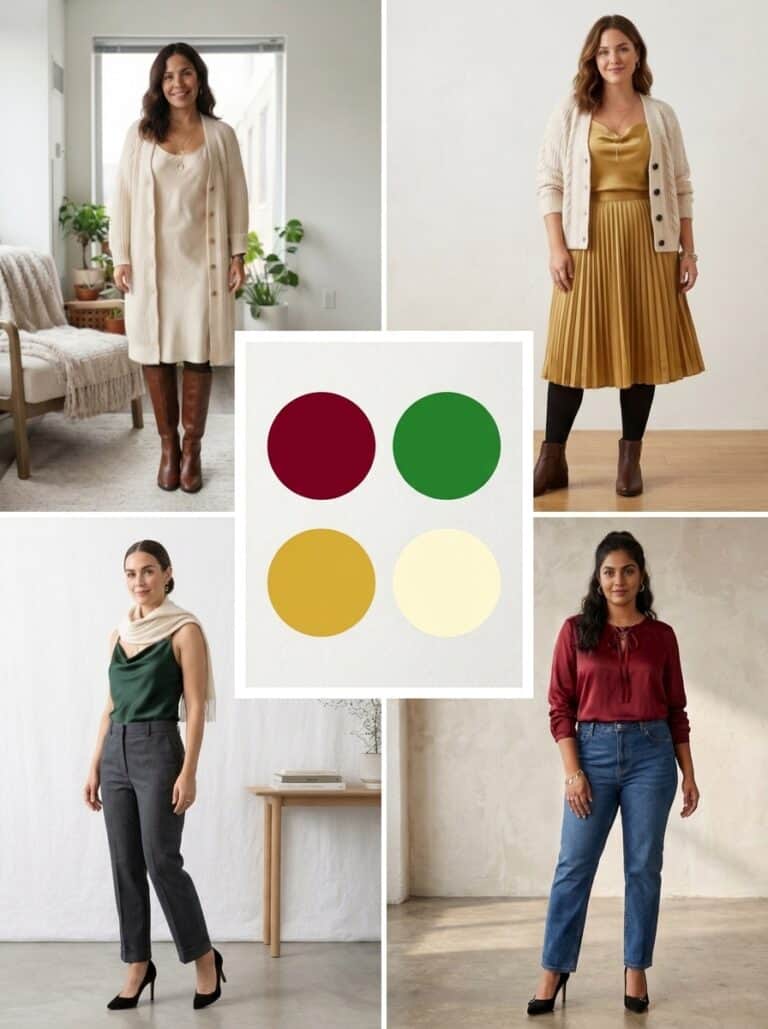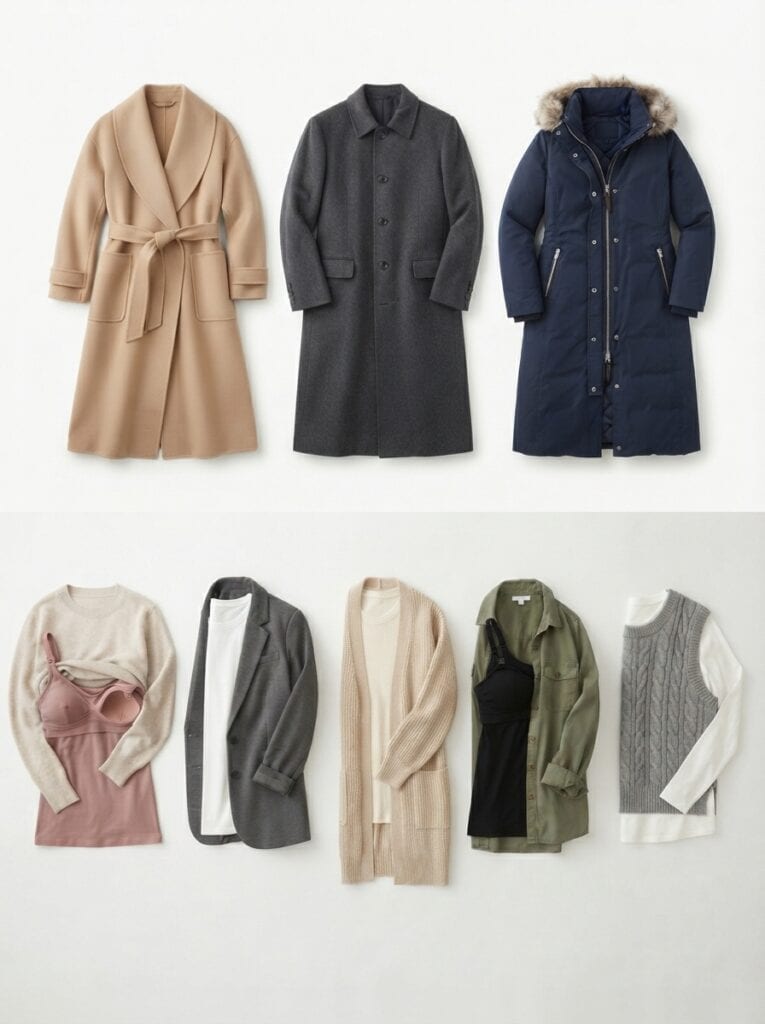
Winter layering postpartum is a logistics problem before it is a style problem. The base layer has to be the nursing layer. Everything above it has to open without disturbing it. The outer layer has to come off in one motion when you sit down in the car or on the couch to feed. And the whole stack has to be warm enough to actually live in. This post is ten layering principles, learned the hard way over two postpartum winters, that make the difference between warm and dressed and warm and exposed.
1. Build From the Foundation Up , And Make the Foundation Count

Every layered winter outfit begins with the base layer, and the base layer for a nursing or pumping mother is doing more work than it does for anyone else. It needs to be warm enough to carry the outfit on the mild days when only one or two layers are needed. It needs to be accessible , liftable from the hem, pullable at the neckline, or clippable at the cup , without rearranging everything above it. And it needs to be soft enough against postpartum skin to wear all day without irritation.
The best winter base layers for nursing and pumping are: a fitted ribbed long-sleeve tee in a medium-weight cotton or bamboo blend; a nursing-specific thermal top with easy access clips; a fitted turtleneck that lifts cleanly from the hem; or the reliable nursing tank, layered in a thicker version than the summer one.
The principle: choose the base layer as carefully as you choose the outer one. It is the layer you are in closest contact with all day. It should be the most comfortable thing you own, not the thing you put on because nothing else was clean.
2. The Two-Layer Rule for Indoor Spaces

Most heated indoor spaces , offices, cafés, supermarkets, nurseries, the homes of friends with better boilers than yours , require exactly two layers: a base layer and one additional piece. Not three, not four. Two. The mistake of winter over-layering is adding more than the indoor temperature requires, then spending the day removing layers in public with increasing desperation.
For nursing and pumping mothers, the two-layer indoor outfit has a specific advantage: with only two layers to manage, the access route is simple and fast. Base layer accessed from beneath the second layer, which opens or lifts cleanly. One movement, not three.
The two-layer winter indoor outfit: nursing tank or long-sleeve tee as the base, plus one of , a fine-knit sweater, an open blazer, a longline cardigan, a shirt worn open as a second layer, a knit vest over a long-sleeve. Two pieces. Warm enough inside. Accessible throughout.
The outer coat manages the outside. When you come in, the coat goes off, and the two-layer indoor outfit takes over. Simple. Warm enough. Done.
3. Choose Layers That Open Independently
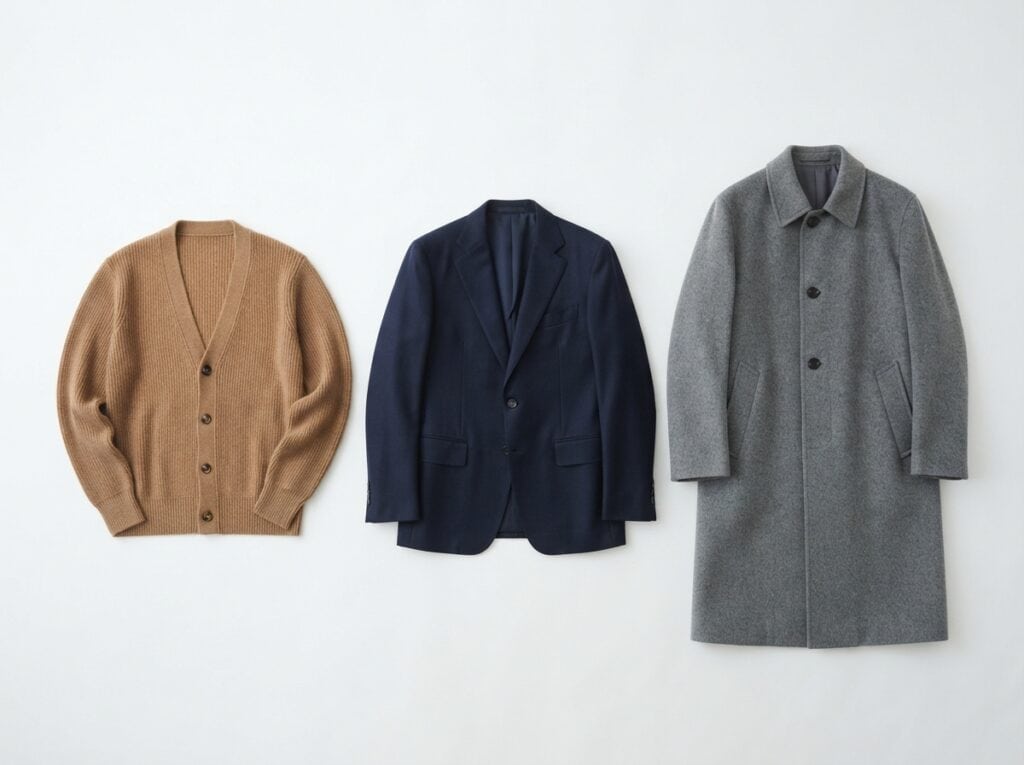
The most important technical principle in winter nursing and pumping layering: every layer you add should be able to open or be removed without disturbing the layers beneath it. A button-front cardigan that opens without pulling a tucked shirt free. A blazer that stays on the shoulders while the shirt beneath is accessed. A coat that opens while the entire indoor outfit remains intact underneath.
The layers that break this rule , that pull or untuck or shift everything else when they are opened , are the layers that make winter feeding complicated. A too-tight knit that has to come off entirely. A base layer that untucks from the trousers when the outer layer is removed. A zip that catches on the collar of the shirt beneath.
The test for any winter layer: open or remove it in front of a mirror without touching anything else. If the layers beneath it stay exactly where they were, the layer passes. If they shift, untuck, or bunch, the layer needs rethinking or the outfit needs restructuring.
Independent opening is the single most useful technical quality in a winter nursing or pumping wardrobe.
4. Use Length to Create Coverage

In winter, the layer lengths you choose determine how much coverage exists during a feed or a pump session. A longline cardigan that falls to the knee provides a natural privacy layer on each side of the nursing mother regardless of what the base layer is doing at the front. A long coat that opens while remaining on the shoulders frames the whole feed within its fabric. An oversized blazer that falls to the hip provides more lateral coverage than a cropped version, regardless of what is happening beneath it.
The winter layering principle: go longer with the outer layers rather than shorter. A longline cardigan over a nursing tank creates a more covered, warmer, and more nursing-practical combination than a cropped cardigan over the same tank. The length is doing multiple jobs simultaneously , warmth, coverage, silhouette, access framing , and none of them require special nursing-specific design.
This is the length principle in practice: when choosing between two versions of the same layer, choose the longer one. In winter, longer is almost always better.
5. Master the Art of the Base-Layer Reveal
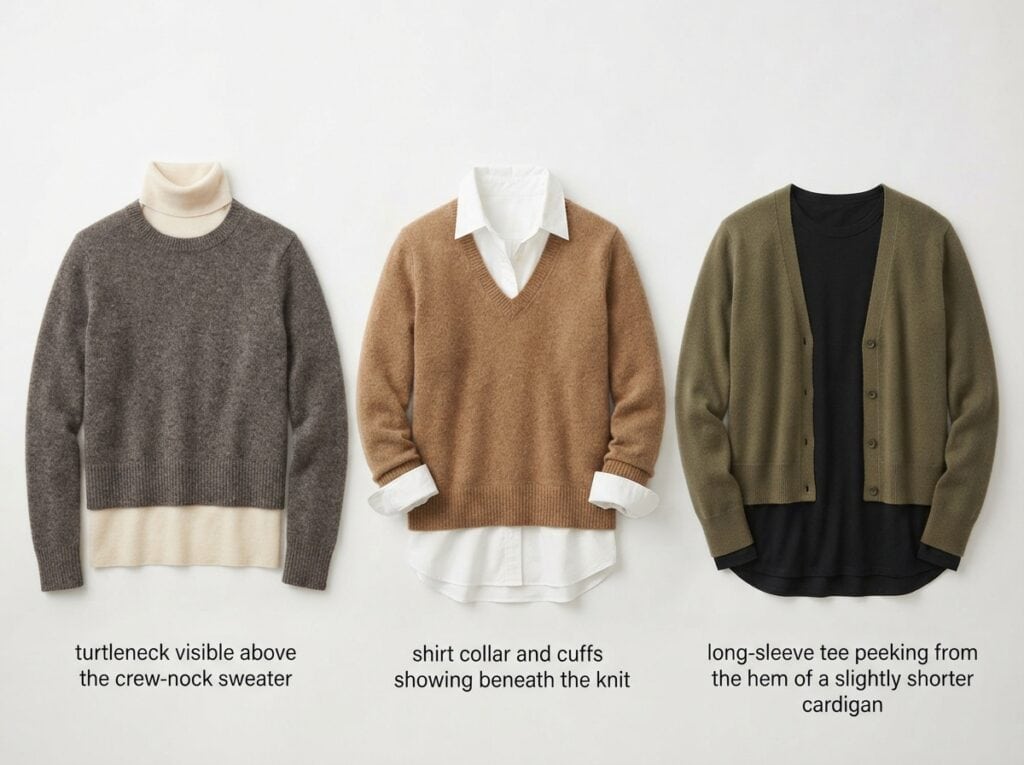
Winter layering is most stylish when the base layer is visible in a considered way , at the neckline, at the cuffs, at the hem , rather than entirely hidden beneath everything above it. The turtleneck visible above the crew-neck sweater. The shirt collar and cuffs showing beneath the knit. The long-sleeve tee peeking from the hem of a slightly shorter cardigan. These reveals are not accidents , they are the detail that makes a layered outfit look intentional rather than simply warm.
For nursing and pumping mothers, the base-layer reveal has an additional significance: it signals, at a glance, that a nursing-accessible layer is present beneath the outer one. The visible turtleneck says there is a layer beneath that knit; the visible shirt cuffs say the shirt is accessible if needed. The reveal is the styling detail and the access indicator simultaneously.
Practise visible reveals: roll the sleeves of the inner layer below the outer layer’s cuff. Choose a turtleneck in a complementary colour to the sweater over it. Let the hem of the longer base layer show below the shorter outer one. Each reveal costs nothing and adds the detail that makes the whole outfit look assembled rather than assembled in a hurry.
6. Thermal Intelligence , When to Add, When to Remove

The winter-layered wardrobe’s most important skill is not which layers to choose but when to add and remove them. A layer added at the wrong moment , the heavy knit put on for the school run that stays on through an overheated café and a long supermarket shop , creates the winter equivalent of a warm, overdressed, increasingly frustrated afternoon.
The thermal intelligence principle: layers should be removed in reverse order of how much they cost to rearrange. The coat comes off first , it is the outermost, the most removing, the piece that was never meant for indoor wear. The blazer or cardigan comes off next if the indoor space is warm. The sweater stays on unless the room is genuinely too warm to bear it. The base layer almost never comes off , it is there all day, doing its work quietly.
For nursing and pumping mothers: the layer most likely to be removed during a feed is the outer one , the coat, the blazer, the cardigan. These are the layers that should be the easiest to remove and the fastest to put back on. If the outer layer requires effort to remove, it will become a source of friction at exactly the moment when friction is most unwelcome.

Free · one photo · two minutes
Want Anah to look at what you are wearing today?
Anah is the stylist inside the NennVersa Atelier, and she will read one outfit for you at no cost. Upload a photo of what you have on and she sends back:
- how the top opens for a feed, and what to swap if it does not
- your colours, read off the clothes you are actually wearing
- three ways that exact outfit could evolve
- one of them rendered on your own photo, plus a palette card and a 7-outfit capsule
Free, once, no card. Your photo is used for that look only.
7. The Coat as the Final Layer , And the Most Important One
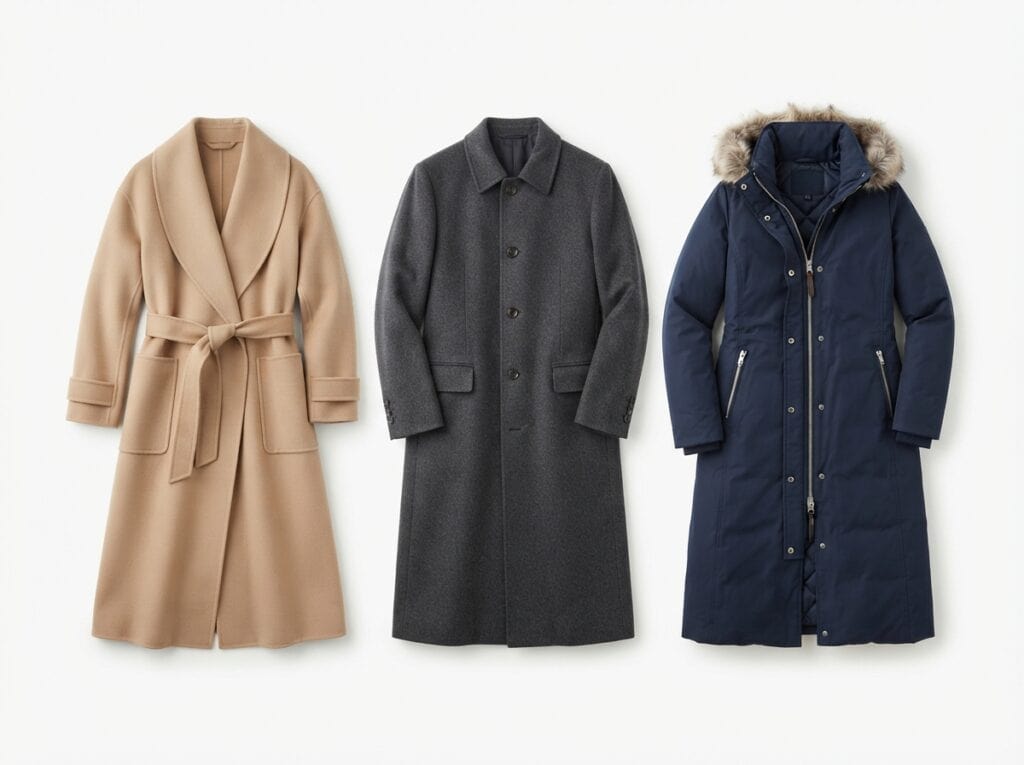
The winter coat is the layer that most people spend the most money on and think about the least when it comes to nursing and pumping. But the coat is, in the daily experience of a breastfeeding mother in winter, one of the most significant practical clothing decisions she makes. She puts it on and takes it off multiple times a day. She may need to nurse while it is on during a particularly cold outdoor moment. She carries the baby in it, against her body, which means the coat needs to accommodate that width.
The ideal nursing and pumping winter coat: a wrap style or a button/zip-front style that opens completely to the waist without restriction; a longline length that provides warmth to the thighs; a fit that accommodates the body beneath it without pulling; a fabric that manages the cold properly rather than the one that looked best on a hanger.
Additional considerations: a coat with a large interior pocket is a genuine practical advantage for carrying pump parts or nursing covers between feeds. A coat with a front zip rather than only buttons is faster to open and close in cold conditions. A coat cut slightly wider through the body than the wearer’s exact measurements allows for the thermal layers beneath it without restricting movement.
The coat is not an accessory. In winter, it is the wardrobe’s most important practical piece. Choose it accordingly.
8. Texture and Warmth , How to Layer Fabrics Intelligently

Not all fabrics layer equally. Some create warmth through insulation (wool, cashmere, fleece); some through wind resistance (woven cotton, canvas, leather); some through moisture management (merino wool, bamboo). The most effective winter layering combines these different warmth mechanisms rather than simply stacking multiples of the same one.
The winter fabric layering sequence: start with a moisture-managing base layer (merino wool or bamboo-blend jersey) that keeps the skin dry and warm without adding bulk. Add a mid-layer that provides insulation (a fine-knit wool or cashmere cardigan, a quilted vest, a chunky-knit sweater). Add an outer layer that provides wind and water resistance (a woven wool coat, a leather jacket, a structured canvas trench).
For nursing and pumping mothers, one additional fabric consideration: softness at the base layer is not a luxury. It is a practical requirement. The base layer is in contact with postpartum skin, with the nursing bra, with the areas of the body that may be tender or sensitive during early lactation. A scratchy thermal or a poorly finished seam at the base layer is a source of low-level discomfort that compounds across a long day. Choose the softest possible fabric for the layer closest to the body.
9. The Accessories That Do Layering Work
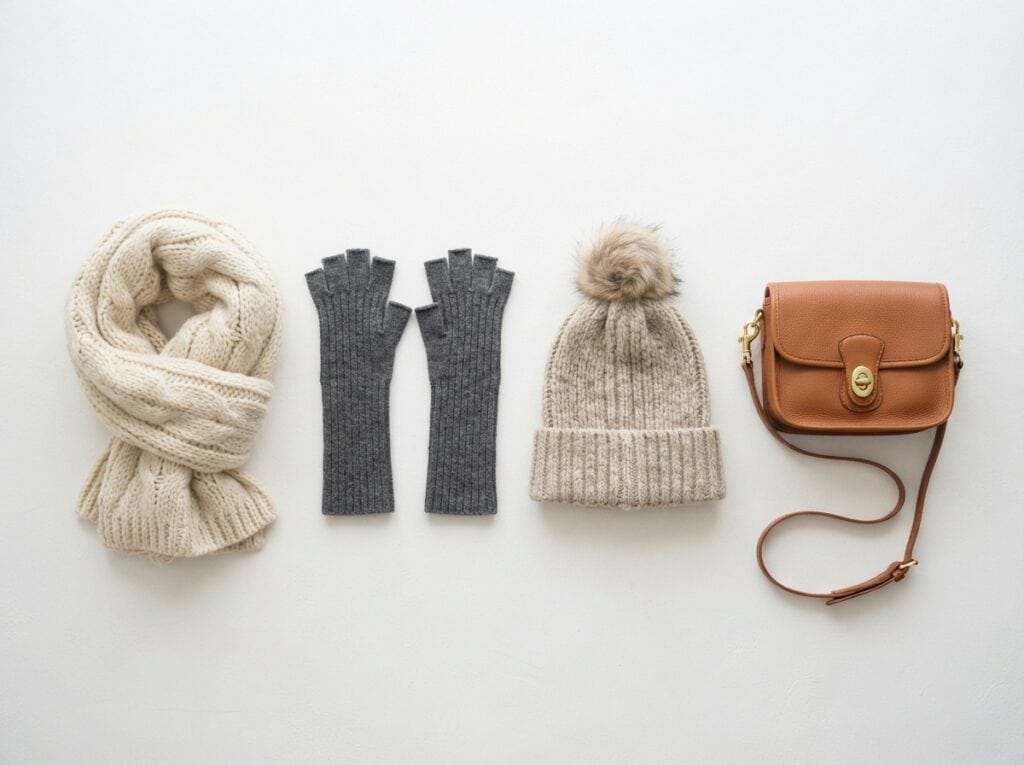
In winter, accessories are not finishing touches , they are functional layers that manage the specific cold points that clothing often misses: the neck, the wrists, the hands, the head. In the context of a nursing and pumping wardrobe, they have an additional function: they can provide warmth and coverage at the points where the layering system opens for access, compensating for the momentary gap that feeding creates in the thermal logic of the outfit.
The most useful winter accessories for nursing and pumping mothers:
Scarves: The largest practical advantage. A generous wool or cashmere scarf provides neck and chest warmth that most coats alone cannot manage, doubles as a coverage layer during feeds, and is removed and replaced in seconds. Choose a scarf big enough to drape fully across the front during a feed rather than a narrow style that only addresses the neck.
Wrist warmers or long gloves: The wrist is the layering gap , where the coat sleeve ends and the glove begins , that lets cold air through. Long gloves or wrist warmers that reach above the coat cuff close this gap. They are removed easily before a feed without requiring any other layer adjustment.
A warm hat: Heat loss from the head is significant in cold weather, and a hat that comes on and off easily , a beanie, a fitted wool cap, a beret , adds meaningful warmth to any winter outfit without interfering with any nursing or pumping consideration.
A nursing-accessible belt bag or crossbody: Not strictly a warmth accessory, but a winter practical one. A belt bag or small crossbody worn beneath the open coat keeps pump parts, nursing pads, and other feed-related items accessible without requiring a full bag search at the relevant moment.
10. Dressing With Intention in the Coldest Season
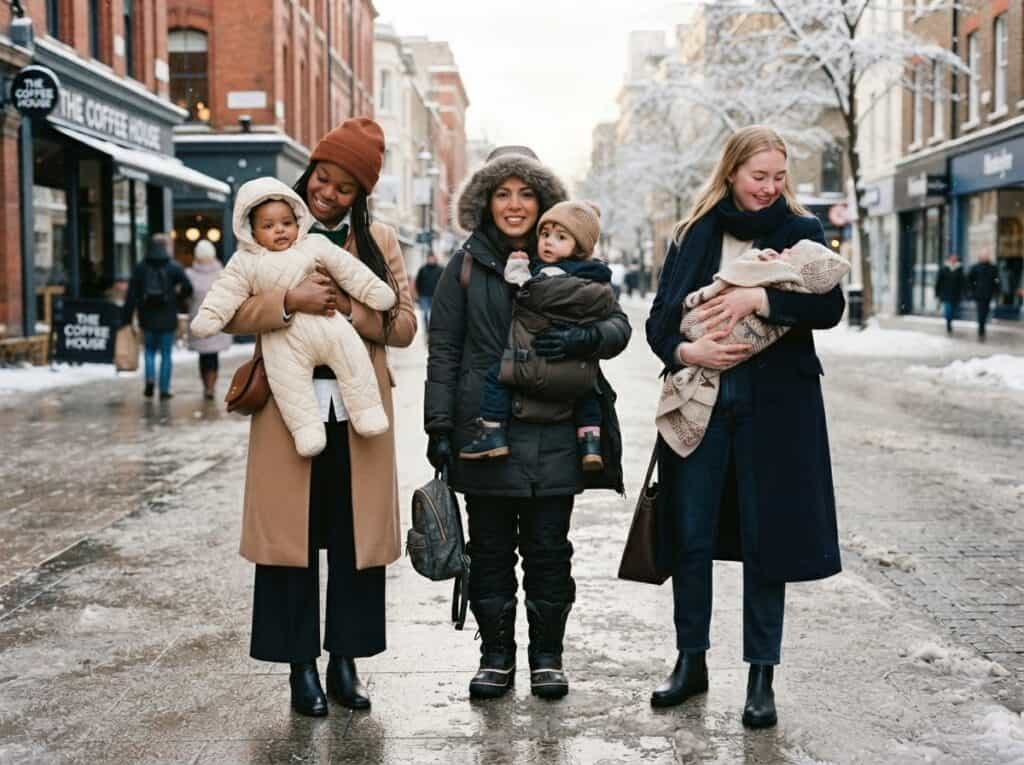
The tenth principle is less practical and more philosophical, but it belongs here nonetheless because it is the one that determines whether the other nine get used.
Winter postpartum dressing is hard. Not impossibly hard, but genuinely, daily hard in the particular way that any task is hard when it is done in a state of sleep deprivation and physical recovery and the ongoing adjustment to a life that is new in almost every way. The cold, the layers, the nursing access, the pump logistics, the body that is still figuring itself out , none of these things make the simple act of getting dressed easier, and the cumulative weight of them across a winter can make it feel not worth the effort.
The intention principle says: it is worth the effort. Not because appearance matters more than warmth or comfort or feeding your baby , it does not , but because the small act of dressing with intention does something that purely functional dressing does not. It says, to yourself and to no one else: I am still here. I am still the person who makes choices about how to show up in the world. The choices are different now, they are constrained by warmth requirements and nursing access and a body that is still arriving at itself, but they are still choices. Still mine.
The layered winter outfit, built on the nine principles above and worn with the intention of this tenth one, is not just warm clothing against the cold. It is the small, daily, accumulated evidence that you are still present in your own life , layered and warm and dressed for the day, whatever the day turns out to be.
That is enough. In winter especially, that is more than enough.
Quick Reference: The Winter Nursing and Pumping Layering System
Base layer: Soft, accessible, warm against the skin. Nursing tank, ribbed long-sleeve, fitted turtleneck, or nursing thermal.
Mid-layer: Adds warmth independently, opens without disturbing base. Fine-knit cardigan, sweater vest, blazer, open button-down shirt, structured knit.
Outer layer: Manages the outdoor temperature. Longline wool coat, trench coat, puffer jacket, or leather jacket. Should open fully and independently.
Accessories: Scarf (coverage + warmth), wrist warmers (gap management), hat (heat retention), practical bag (access logistics).
The test for every layer: Does it open or remove without disturbing the layers beneath it? If yes, it belongs in the winter layering system. If no, it needs rethinking.
The access principle: The base layer does the nursing and pumping work. The mid-layer and outer layer open around it. Choose every layer above the base with this sequence in mind.
The warmth principle: Add layers in the morning for the cold. Remove them in sequence as the day warms. Start with the outermost. Stop when you are comfortable.
The style principle: Let the reveals do the work. Visible collars, cuffs, and hems turn functional layering into considered dressing. Choose layers in colours and textures that sit well together , not matching, but coordinated in the way that makes the outfit look assembled rather than accumulated.
Winter is long. Layer intelligently. Feed your baby with ease. Be warm. Be present. Be here.
The Nursing Mama Fashion Commandments
Twelve rules I wish someone had told me postpartum. Print them. Screenshot them. Live by them.
- Nursing bra always. Regular bras become instruments of pain the day letdown surprises you.
- Nursing pads on your body + a spare pair in your bag. Every single time you leave the house. No exceptions.
- Extra top in your bag — for YOU, not the baby. Because leaks, spit-up, and coffee-spills don’t care about your outfit plan.
- If it takes more than 5 minutes to figure out how to nurse or pump in it, it’s not the right outfit today. Feeding access is comfort. Comfort is not optional.
- Belt under the bust (empire) or below the belly with drape — never at the belly button. Your postpartum body deserves flattery, not compression.
- Comfortable waistband is non-negotiable. Elastic, wrap, or pull-on. Zippers are a Sunday-only luxury for now.
- Dark tones, prints, or textures — not thin light solids. Because letdown marks are real and you deserve clothes that don’t advertise them.
- Machine-washable everything. Dry-clean is not real-mama fashion. If it can’t survive a spit-up rinse, it’s not in rotation.
- Cross-body bag only. Hands stay free for the carrier, the toddler, the coffee, the door, the meltdown.
- Comfortable shoes always. You’re carrying a car seat and a diaper bag. This is not the season for a heel you can’t run in.
- Get dressed BEFORE the kids see you if you can. It changes the whole day — for them and for you.
- One accessory — earrings, a lip color, a scarf — counts as “put together.” That’s the whole game. You get to feel like yourself again.
Winter Is Long. The System Holds.
A postpartum winter wardrobe does not need to be big. It needs to be coordinated. Three base layers, two mid-layers, one coat, and the right accessories will dress you for an entire season once you have the system above worked out for your body and your climate.
If you want a postpartum winter capsule already styled together, with nursing-friendly base layers, mid-layers that open cleanly, and a coat-and-accessories shortlist, that’s exactly what the NennVersa Atelier is built for. Less guessing in the cold, more wearing.
You’re allowed to be warm. You’re allowed to feed your baby with ease. You’re allowed to feel like yourself in winter postpartum.
Keep reading
A few more posts to lean on when getting dressed feels heavy:
- The Top Best Winter Capsule Wardrobe Essentials For Postpartum Moms
- Mastering Chic & Cozy breastfeeding friendly Work Outfits For Winter
- Best dresses to wear for Winter wedding when breastfeeding
- Winter Ready: 10 Stylish Work-Ready Outfits for Breastfeeding Professionals

You deserve to be looked after too
You have spent every day since the birth taking care of someone else.
Getting dressed is the one thing you do for yourself before the day takes you. It is not vanity. The way you dress is how you tell yourself you are still here, still you, still worth ten minutes. Anah is the stylist who knows your body has just done the hardest thing a body can do, and meets it with reverence.
Inside the Atelier she remembers you. She keeps every look, learns your closet piece by piece, and dresses you for wherever you are going, on your own photo, thirty looks a month. With the 30-Day Postpartum Style Reset, hundreds of outfits sorted for feeding and shape, and a community of mamas with no algorithm.
It is $19 a month. Less than one takeaway coffee a week, to feel like yourself again every morning.