An appointment, a grocery stop, and school pickup can ask a surprising amount of one outfit. You may sit for a long wait, feed your baby, walk through a car park, bend for a dropped toy, and move between hot weather and strong air-conditioning.
You need clothes that work through those ordinary movements. Looking put together can be part of that comfort, but it should not require a waistband you dread or a top you cannot open when needed.
Build the outfit around four decisions: a comfortable base, practical feeding access if relevant, shoes for the route, and one finish you enjoy. Prepare a few combinations and let the day choose between them.
Dress for the route, including the waiting
Start with what the outing actually involves. Will you walk, use stairs, sit in the car, or wait in a cold room? Will you need to feed or pump while away? Are you going to your own appointment or accompanying your baby?
These details matter more than whether an outfit belongs to an “errands” category. A short drive with a long seated appointment calls for different attention than a school run on foot in warm weather.
Choose the part most likely to bother you and solve it first. If your shoes usually hurt, begin there. If you keep tugging at a waistband in waiting rooms, choose a more comfortable bottom before thinking about accessories.
Use a comfortable base you have already tested
Try soft straight-leg trousers, relaxed joggers, a pull-on skirt, or leggings you like. A dress may work if its opening, length, and fit suit the day. None of these is required, and none is automatically comfortable just because it has an elastic waist.
Sit down before choosing. Check where the waistband rests, whether it folds or presses, and whether the garment stays comfortable when you stand again. If you are recovering from surgery or have specific care instructions, choose clothing accordingly rather than pushing through pressure or pain.
Look at hem length with the shoes you will wear. Trousers that skim the floor in one pair may drag in another. A practical outfit should let you move without constantly holding fabric out of the way.
Try five outfit formulas for ordinary outings
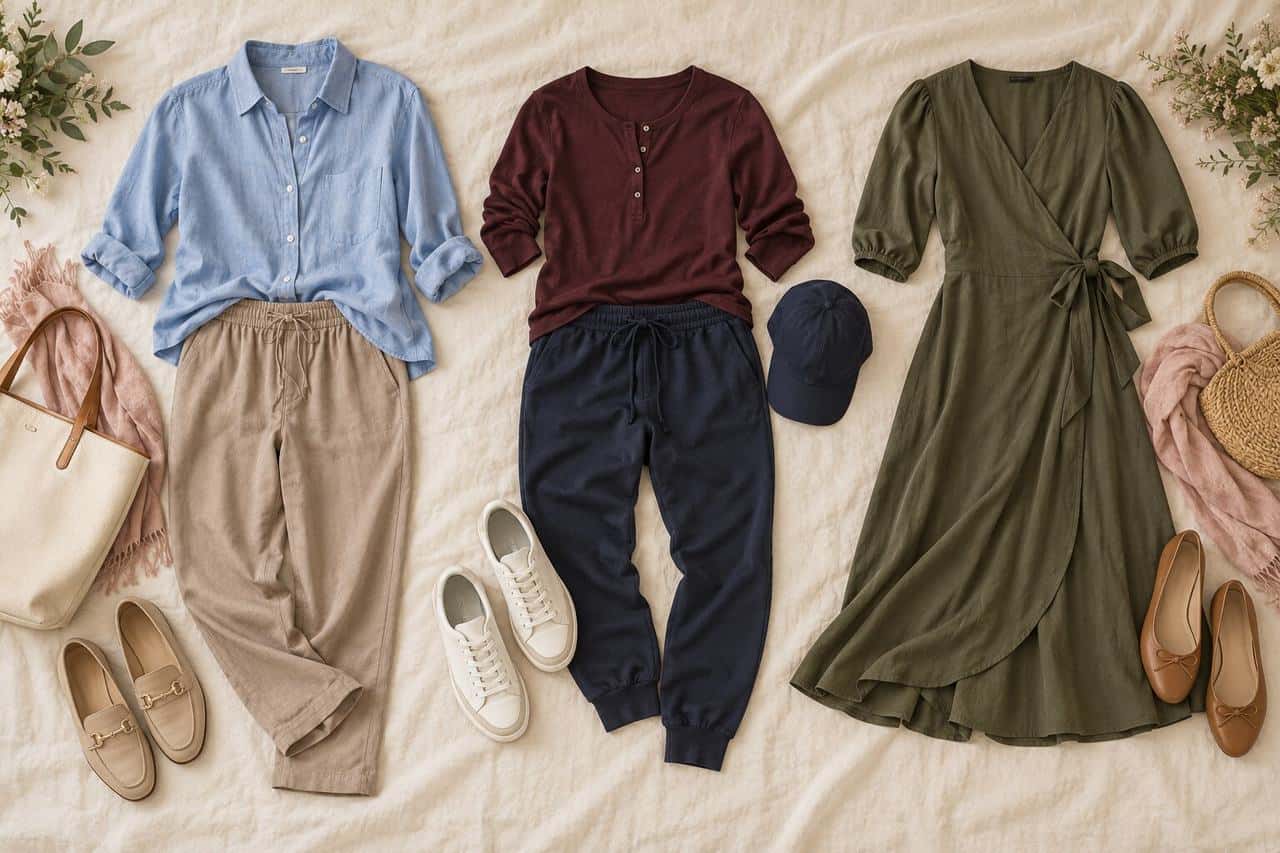
The appointment formula: button-front shirt + soft trousers + flats
A blue shirt with functioning buttons, taupe pull-on trousers, and comfortable loafers creates a simple combination for a waiting room and the trip there. Wear the shirt loose if tucking makes access or seated comfort harder.
Bring a light layer if the destination is often cold. For your own medical appointment, check any clothing instructions from the clinic in advance. Feeding access and examination access are different needs, and the clinic can explain what is useful for your visit.
The walking school-run formula: Henley + joggers + sneakers
A burgundy Henley with navy joggers and familiar sneakers can feel easy to repeat. Check that the placket is deep enough for your feeding needs and that the joggers stay comfortable through sitting and walking.
If you prefer a more structured look, swap joggers for soft straight trousers. Keep the shoes that work for the route. A polished outfit is not worth uncomfortable feet before the day has properly started.
The errands formula: accessible tank + open shirt + easy bottoms
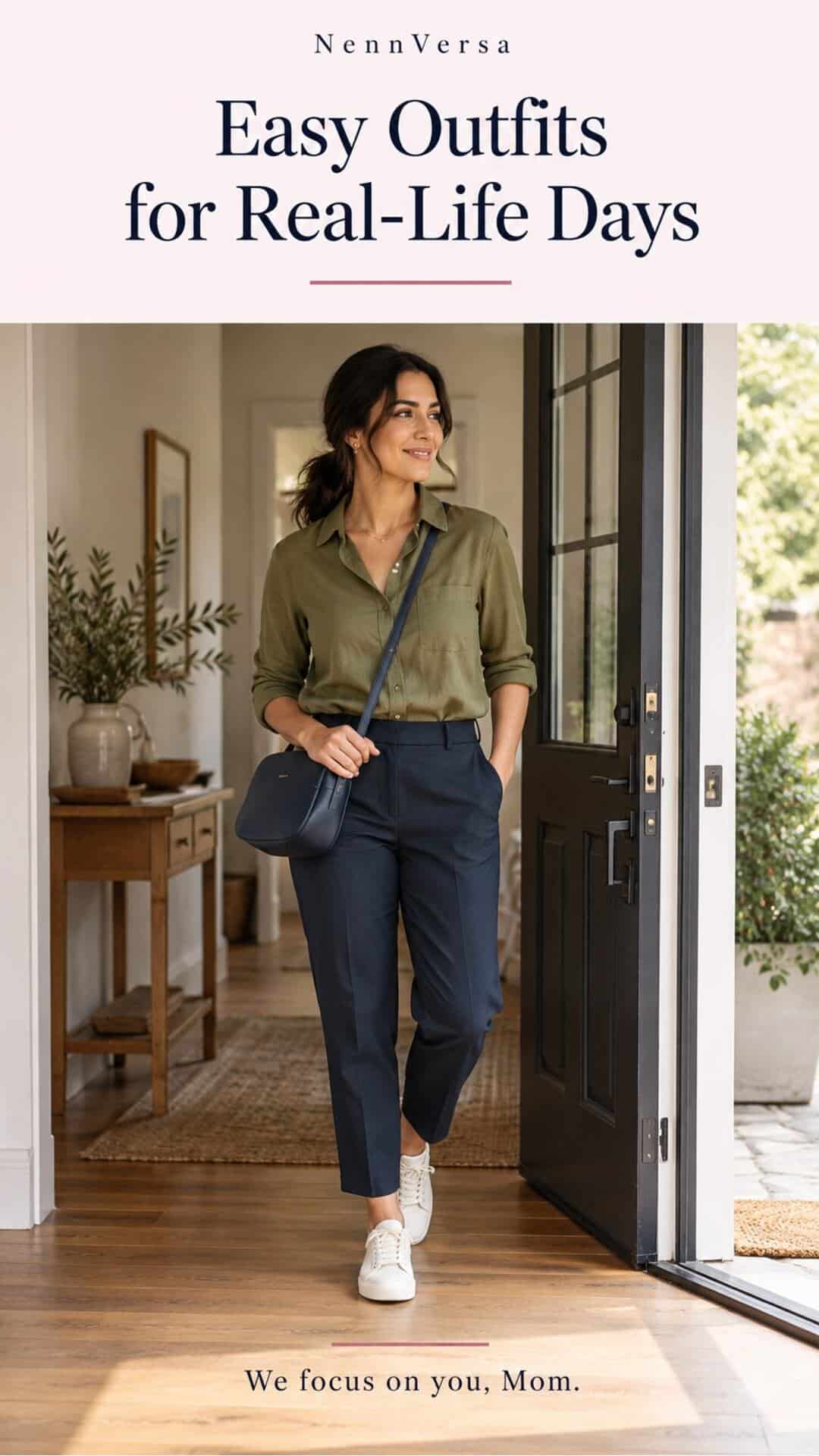
An ivory accessible camisole, an open olive shirt, and navy trousers offer flexibility when temperatures change. The shirt can come off or close as you prefer, while the base layer supplies the access.
Test the camisole with your bra rather than assuming the two openings will work together. If layering feels warm or fiddly, use a single accessible top instead. The formula is a starting point you can simplify.
The one-piece formula: practical front-opening dress + flat shoes
A button-front dress or a true wrap dress can reduce the number of pieces you need to choose. Check that the opening functions, the lining does not block it, and the skirt remains comfortable while seated.
A dress can be lovely for an outing where you prefer less pressure at the waist. It may be less convenient for a particular examination, for some pumping arrangements, or if its closure requires more adjustment than you want. Choose by the task rather than by the promise that one piece is always easier.
The very low-energy formula: repeat the outfit you already know
Use a clean equivalent of a successful combination. Keep the same trousers and shoes if they are suitable to wear, and change the top. There is no need to invent a fresh outfit for every pickup or appointment.
If even that feels like a lot, choose the most comfortable clean option available. Getting dressed is a way to support yourself, not a measure of how well you are handling postpartum life.
Do the waiting-room test at home

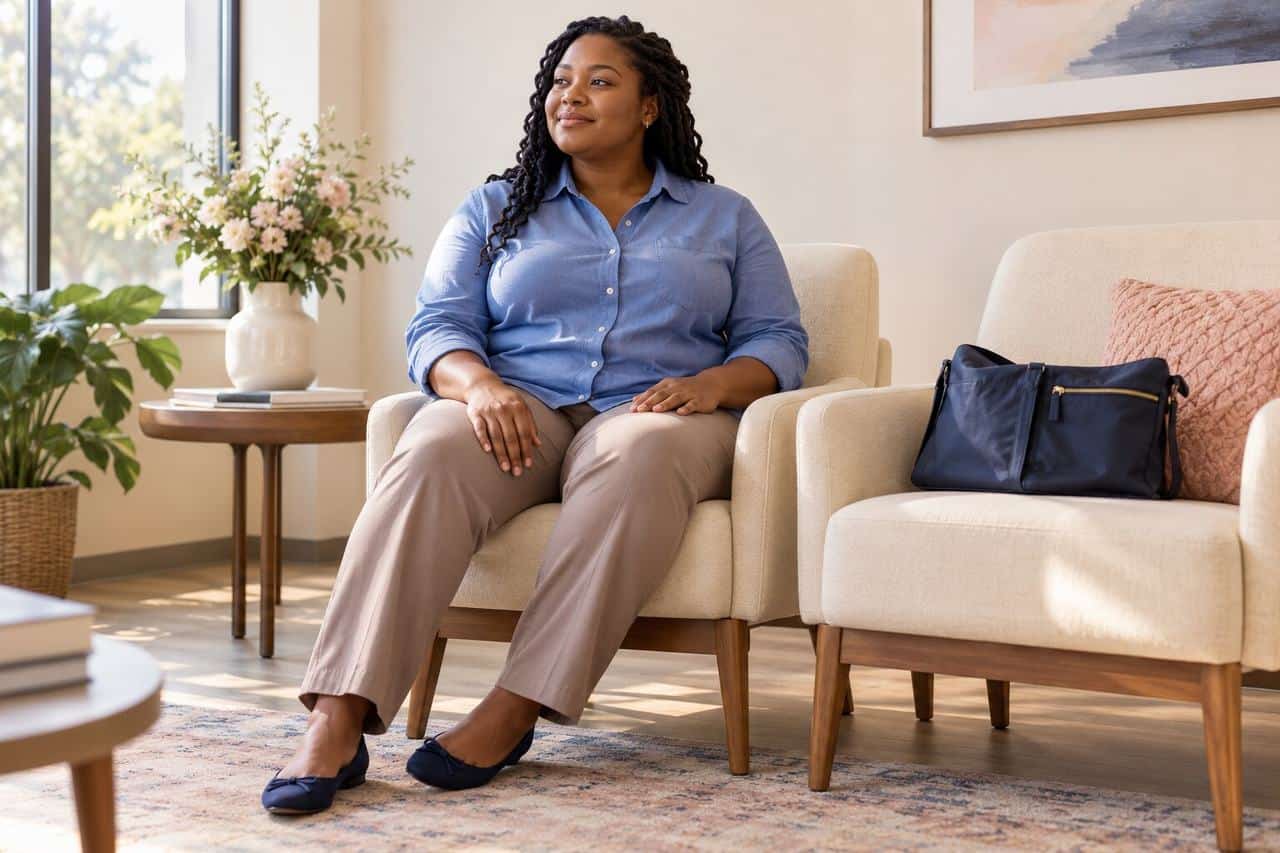
Wear the whole outfit and sit in an ordinary chair. Check the waistband, neckline, shoulders, and fabric behind your knees. Reach for something nearby and stand up again as comfortably as your recovery allows.
Notice whether you immediately need to retuck, pull down a hem, or adjust a strap. One occasional adjustment is ordinary; constant rearranging is useful feedback. Change the piece causing the problem rather than assuming you need to be more patient with it.
If you expect to nurse, test the clothing opening while seated with the exact bra or tank. The NHS notes that loose liftable tops and layered stretchy tops can be useful options. Choose the arrangement that feels manageable for you.
Make feeding or pumping access a separate check
A front opening needs enough usable room. A liftable top should move without tightening through the shoulders. A wrap should open and close in a way you are happy to manage. A V-neck alone does not tell you whether the garment will work.
For pumping, test with your equipment and the bra you use with it. Consider whether you need access on both sides and where removed outer layers will go. Follow equipment instructions rather than choosing a tighter top simply to hold something in place.
If you use a carrier during the outing, consider how you will remove your baby and adjust your clothes when needed. Follow the carrier instructions; the NHS advises taking a baby out of a sling or carrier before feeding.
Adapt for heat, cool rooms, and changing weather
In warm weather, reduce unnecessary layers and choose fabrics and fits that feel comfortable to you. A single useful front-opening top may be easier than several garments assembled for coverage you do not actually want.
For cooler destinations, carry a manageable layer that fits into your bag or stays comfortably on your body. Choose a cardigan or shirt you can remove without dismantling the entire outfit.
When rain or wind is likely, consider the outer layer and shoes first. Check whether the coat lets you move comfortably and whether the hem of your trousers will stay clear of the ground. Use the actual forecast and route when making the final choice.
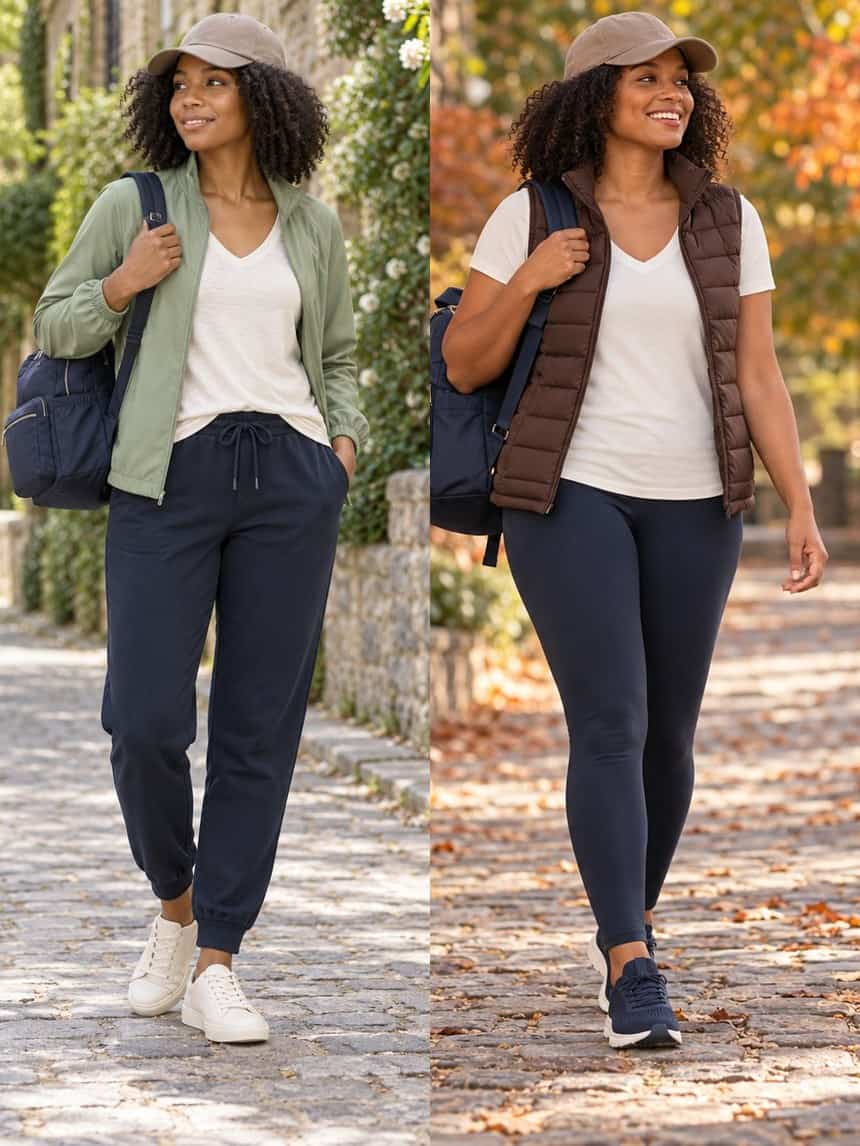
From the capsules
The Everyday Motion Capsule
One hundred athleisure outfits for the walk, the school run and the park, every one opening for a feed. $27 once, yours to keep.
Choose one finish that feels personal
A favorite color, a tidy shoe-and-bag combination, or a simple hair clip can make familiar clothes feel more like an outfit. You do not need to add makeup, jewelry, a belt, and a styled coat to count as dressed.
If you like a calm palette, try navy, ivory, and olive with a burgundy accent. If brighter colors feel more like you, put that color in the top you see when you look in the mirror. Your postpartum wardrobe is allowed to include pleasure as well as function.
Skip accessories that get in your way or need constant attention around small hands. The best finish is one you can enjoy without managing it through the whole outing.
Keep the bag from undoing the outfit
Try the packed bag with the clothes. Notice whether straps catch on buttons, pull at the neckline, or make an otherwise comfortable shoulder feel restricted. A bag can change how an outfit behaves once you leave the mirror.
Pack a replacement for the clothing problem you are most likely to encounter, rather than a full collection of possibilities. A suitable spare top and separate used-clothing pouch may be enough for one outing; another day may require more.
Keep your own essentials reachable. You should not have to empty the baby’s supplies to find your appointment information, keys, or wallet. The outing includes your needs too.
Prepare two alternatives instead of a perfect week
Set aside one comfortable trouser outfit and one alternative you genuinely like. Include the underlayers and shoes. Take a photo of each if that makes them easier to remember.
Use the alternatives to absorb an ordinary change: warmer weather, a top in the wash, a different destination. They do not have to be completely separate wardrobes. One familiar bottom may work with both tops.
After an outing, keep one note about what worked. “Good for long sitting” or “shirt opening awkward with this tank” gives you useful information for the next trip. Keep the observation specific and kind.
Your questions, answered
Can I wear leggings to an appointment?
Yes, if they feel comfortable and suit the appointment’s requirements. Check any clinic instructions for your own visit. You do not owe a waiting room a particular level of formality.
What if I want to feel dressed up?
Choose a familiar practical outfit in colors and proportions you enjoy, then add one finish. A favorite dress or coordinated shirt and trousers can feel special without sacrificing access or comfort.
Do I need different outfits for every errand?
No. Find a few combinations that cover your usual movements and repeat them. Change only what the weather, destination, or your comfort requires.
The Nursing Mama Fashion Commandments
Twelve rules I wish someone had told me postpartum. Print them. Screenshot them. Live by them.
- Nursing bra always. Regular bras become instruments of pain the day letdown surprises you.
- Nursing pads on your body + a spare pair in your bag. Every single time you leave the house. No exceptions.
- Extra top in your bag — for YOU, not the baby. Because leaks, spit-up, and coffee-spills don’t care about your outfit plan.
- If it takes more than 5 minutes to figure out how to nurse or pump in it, it’s not the right outfit today. Feeding access is comfort. Comfort is not optional.
- Belt under the bust (empire) or below the belly with drape — never at the belly button. Your postpartum body deserves flattery, not compression.
- Comfortable waistband is non-negotiable. Elastic, wrap, or pull-on. Zippers are a Sunday-only luxury for now.
- Dark tones, prints, or textures — not thin light solids. Because letdown marks are real and you deserve clothes that don’t advertise them.
- Machine-washable everything. Dry-clean is not real-mama fashion. If it can’t survive a spit-up rinse, it’s not in rotation.
- Cross-body bag only. Hands stay free for the carrier, the toddler, the coffee, the door, the meltdown.
- Comfortable shoes always. You’re carrying a car seat and a diaper bag. This is not the season for a heel you can’t run in.
- Get dressed BEFORE the kids see you if you can. It changes the whole day — for them and for you.
- One accessory — earrings, a lip color, a scarf — counts as “put together.” That’s the whole game. You get to feel like yourself again.
Make the next outing easier on your body
Choose the comfortable base first, test your access, and put the right shoes beside it. Let one favorite detail finish the outfit if you want it.
You deserve to feel considered in the middle of the ordinary day. For more outfit formulas and wardrobe support built around postpartum life, explore The NennVersa Atelier.