A secondhand shirt can become the piece you reach for three mornings a week. It can also become another bargain that sits in a bag because the buttons pull, the opening is awkward, or the fabric needs more care than you expected.
The difference is rarely whether the label says “nursing.” It is whether the actual garment still does its job and fits the way you want to dress now. Shopping secondhand gives you another route to useful clothing, but it works best with a small plan and a willingness to pass.
This guide covers clothes. Breast pumps and their accessories need separate, manufacturer-specific safety decisions; a good experience buying a used dress is not a reason to apply the same checklist to feeding equipment.
Choose the gap before choosing the bargain
Start with one shortage you notice repeatedly. Perhaps your clean work tops run out before laundry day, your favourite skirt has no feeding-friendly partner, or you need one dress for family gatherings.
Write down the piece and the outfit it must join. “A washable blue or ivory opening shirt for navy trousers” is easier to shop for than “some postpartum clothes.” Include sleeve preference, approximate length, and the type of opening you can comfortably manage.
A focused list also helps when someone offers you a large bundle. You can appreciate the offer without accepting a whole wardrobe of pieces that do not suit your routine. Ask whether you can choose individual items, or identify a responsible destination for anything you cannot use before bringing it home.
Search beyond the maternity rail
Ordinary button-front shirts, true wrap tops, liftable separate tees, open cardigans, and suitable front-opening dresses may all be worth inspecting. Maternity shaping is useful if you enjoy the fit, but it is not a prerequisite for postpartum clothing.
When searching online, combine the garment type with the information you care about: “button-front midi dress,” “cotton shirt long sleeve,” or the exact style name of a top you already own. Treat these as ways to find candidates, not proof that a listing will work for feeding.
Photographs of the actual item matter. A stock photograph shows how a garment was presented when new; it cannot show the condition of this particular shirt, whether a button was replaced, or whether a previous alteration changed the length.
Inspect the parts that do the work
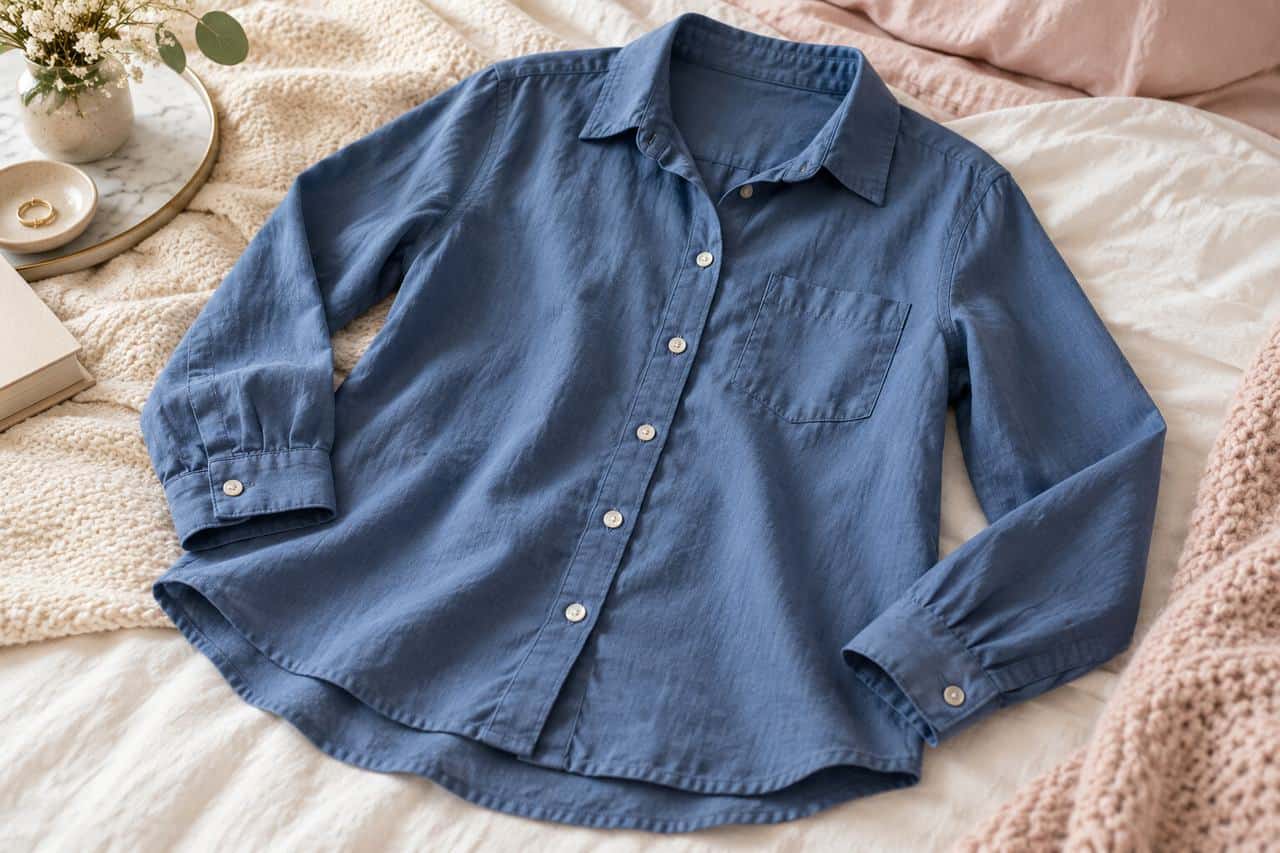
Look beyond overall colour and shape. The parts that move repeatedly deserve the closest attention.
- Buttons and buttonholes: Check for missing buttons, loose stitching, stretching, or tears around the holes.
- Zips and other closures: Ask whether they move smoothly and close securely. Inspect the surrounding fabric as well.
- Stretch areas: Look for rippling, thinning, or elastic that does not recover after gentle movement.
- Underarms, cuffs, neckline, and hems: Check for wear, repairs, persistent staining, or fabric distortion.
- Inner layers: Confirm that the access route still works through the lining or modesty panel.
A loose button on an otherwise suitable shirt is a different decision from fabric tearing around several closures. A repair is only “small” if you can arrange it, know what it will cost, and still want the garment afterwards.
Do not rely on “excellent condition” as a complete description. Ask for close photographs of the specific area that matters. If the opening is the reason you are buying the piece, it is reasonable to ask to see it open.
Ask whether the garment has changed since it was new
The size on the label is useful background, but the current measurements are more useful. A used garment may have been shortened, taken in, stretched, or affected by previous care. Ask the seller about alterations and request measurements using a clear method.
Compare a flat chest width with a flat chest width from a similar top you own. For trousers, ask about rise as well as inseam. For a dress, check finished length and the position of the waist seam. Avoid converting one measurement into a confident fit prediction for every other part of the garment.
If you can try it on, wear or bring the underlayer you intend to use. Sit down and reach. A standing mirror view tells you little about an opening that pulls tight when you settle into a chair.
Use a short seller message
“I’m interested in this shirt. Do all the front buttons open, and is there any fixed layer underneath? Has it been altered? Could you send the flat chest width, front length, care-label photo, and a close photo of the buttonholes? Please also confirm any stains, repairs, or noticeable odour.”


You can make this shorter for a low-cost local item, but keep the questions that decide whether you can use it. A clear answer is more valuable than another attractive photograph.
For purchases through a resale platform, review that listing’s condition description, buyer protections, and return terms before paying. The FTC’s online-shopping guidance supports checking seller information and keeping order records. Do not assume that buying from an individual gives you the same return options as buying from a retailer.
Calculate the price of making it wearable
The useful total is the purchase price plus delivery, necessary cleaning, and any confirmed repair or alteration. Add the effort of obtaining those services to your decision, even if you do not assign your time a number.
For example, a low-priced shirt that needs a specialist repair may cost more to make wearable than a slightly dearer shirt in good condition. Neither choice is automatically wrong. The question is which one meets your wardrobe gap with an amount of work you can manage.
A simple personal rule helps: do not buy a project garment unless you already know who will complete the project. “I could fix it someday” is different from “the tailor has confirmed this repair and I have budgeted for it.”
Bring it into your wardrobe deliberately
After deciding to keep the item, follow its actual care label before wearing it. If the label is missing or unreadable, seek reliable care guidance for that garment rather than guessing from appearance. Do not promise yourself that a stain or smell will disappear if you have no evidence that the item can be treated successfully.
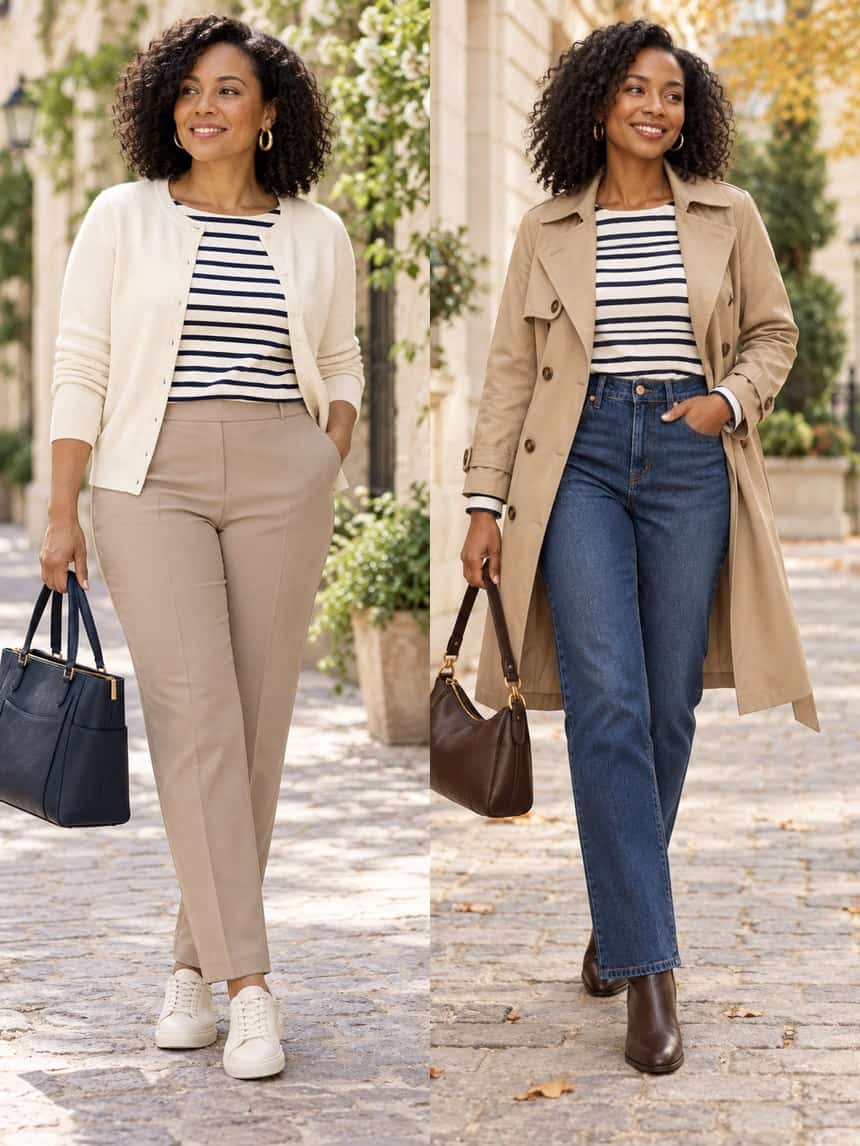
From the capsules
The Year Round Capsule
Two hundred nursing-friendly outfits from fifty-six pieces, fifty for every season, laid out and then worn. $29 once, yours to keep.
Keep any seller-agreed return conditions in mind before washing or changing the garment. If an issue appears on arrival, document it and contact the seller or platform promptly instead of beginning an alteration that may complicate the situation.
Once the piece is ready, give it a place beside the clothing it works with. An outfit photo can help you remember the combination, especially if it is a different style from what you usually wear.
Turn a small find into a real outfit
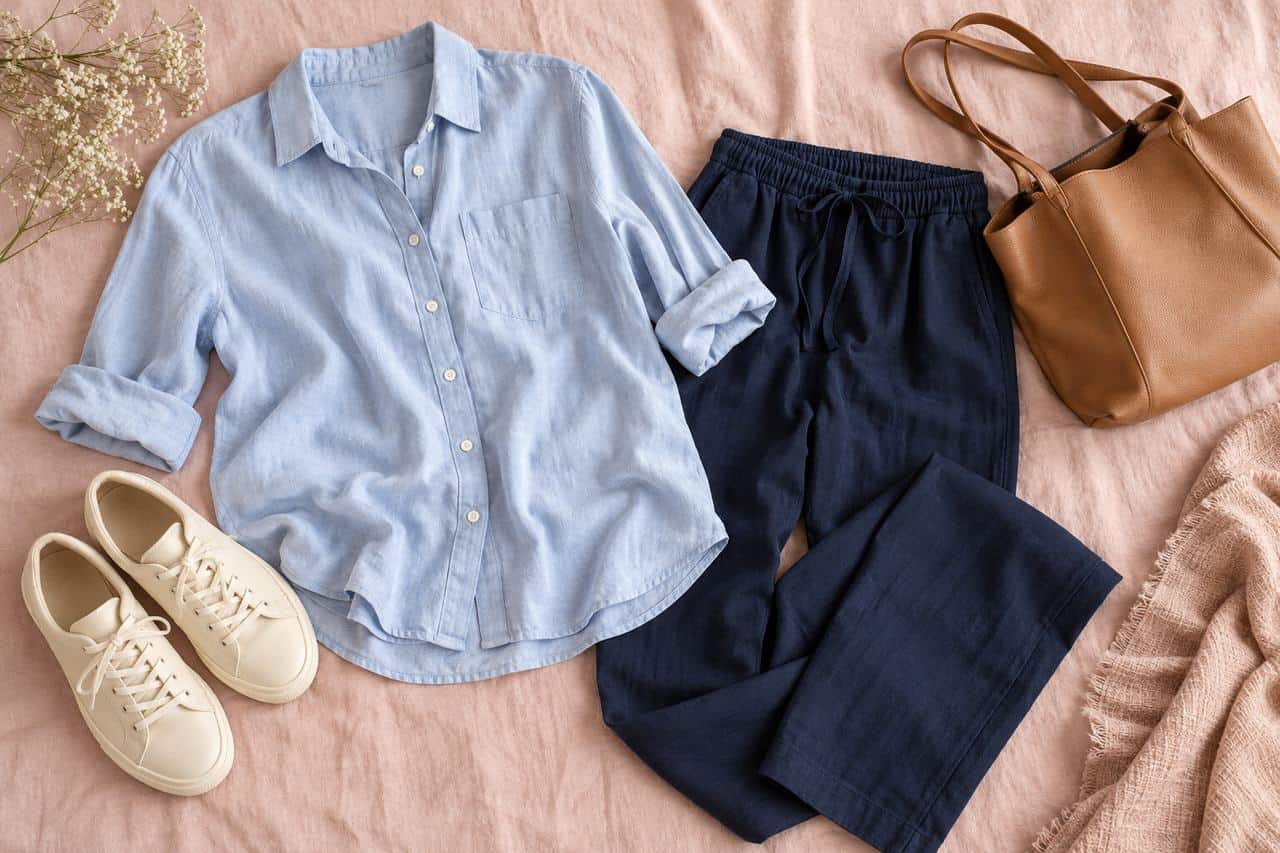
The useful shirt: Pair a blue button-front shirt with navy pull-on trousers and your familiar sneakers. Check the shirt with your usual underlayer before deciding how far to tuck it.
The easy layer: Put a secondhand open cardigan over a top whose access already works. The cardigan adds a colour or texture you enjoy without being responsible for solving the whole outfit.
The occasion dress: Try a true wrap or front-opening dress with shoes you already own. Check any fixed inner panel and the seated neckline before assuming it is ready for a long event.
These examples are starting points. A different colour, hem, or silhouette may feel more like you. The goal is a complete wearable combination, not a secondhand version of someone else’s capsule.
Questions moms often ask
Are used nursing bras always a bad idea?
Assess the actual item’s condition, support, fit, fastening function, and care instructions, alongside your comfort with buying it used. If you cannot verify those details, buying a different item may be the more useful choice. A low price does not restore worn elastic.
Should I buy a whole nursing-clothes bundle?
Count the pieces you would choose individually. Base your decision on those useful items and the total cost, rather than the advertised number of garments.
What should I skip?
Skip pieces with an unverified opening, unsuitable fit, unexplained damage, care you cannot manage, or repairs you have no practical plan to complete.
The Nursing Mama Fashion Commandments
Twelve rules I wish someone had told me postpartum. Print them. Screenshot them. Live by them.
- Nursing bra always. Regular bras become instruments of pain the day letdown surprises you.
- Nursing pads on your body + a spare pair in your bag. Every single time you leave the house. No exceptions.
- Extra top in your bag — for YOU, not the baby. Because leaks, spit-up, and coffee-spills don’t care about your outfit plan.
- If it takes more than 5 minutes to figure out how to nurse or pump in it, it’s not the right outfit today. Feeding access is comfort. Comfort is not optional.
- Belt under the bust (empire) or below the belly with drape — never at the belly button. Your postpartum body deserves flattery, not compression.
- Comfortable waistband is non-negotiable. Elastic, wrap, or pull-on. Zippers are a Sunday-only luxury for now.
- Dark tones, prints, or textures — not thin light solids. Because letdown marks are real and you deserve clothes that don’t advertise them.
- Machine-washable everything. Dry-clean is not real-mama fashion. If it can’t survive a spit-up rinse, it’s not in rotation.
- Cross-body bag only. Hands stay free for the carrier, the toddler, the coffee, the door, the meltdown.
- Comfortable shoes always. You’re carrying a car seat and a diaper bag. This is not the season for a heel you can’t run in.
- Get dressed BEFORE the kids see you if you can. It changes the whole day — for them and for you.
- One accessory — earrings, a lip color, a scarf — counts as “put together.” That’s the whole game. You get to feel like yourself again.
Let usefulness be the bargain
A good secondhand find earns its place by making an ordinary day easier. You can buy less, choose carefully, and still enjoy the pleasure of finding something beautiful.
Explore NennVersa and The NennVersa Atelier for more ways to turn practical pieces into outfits that feel like you. We focus on you, Mom.