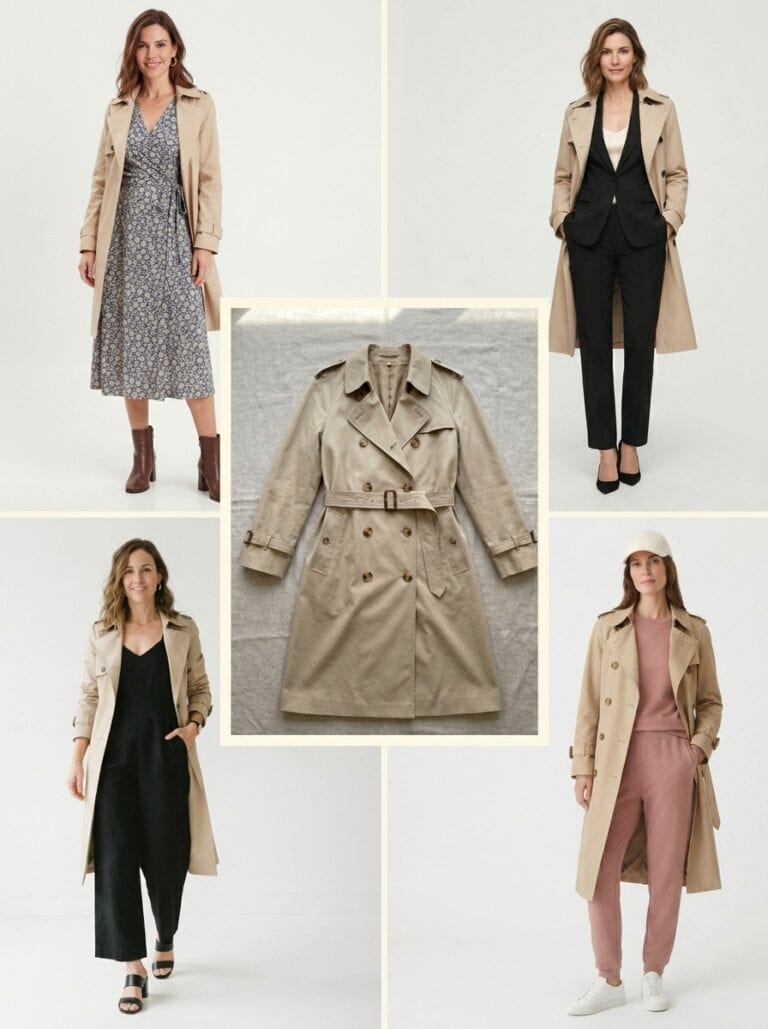
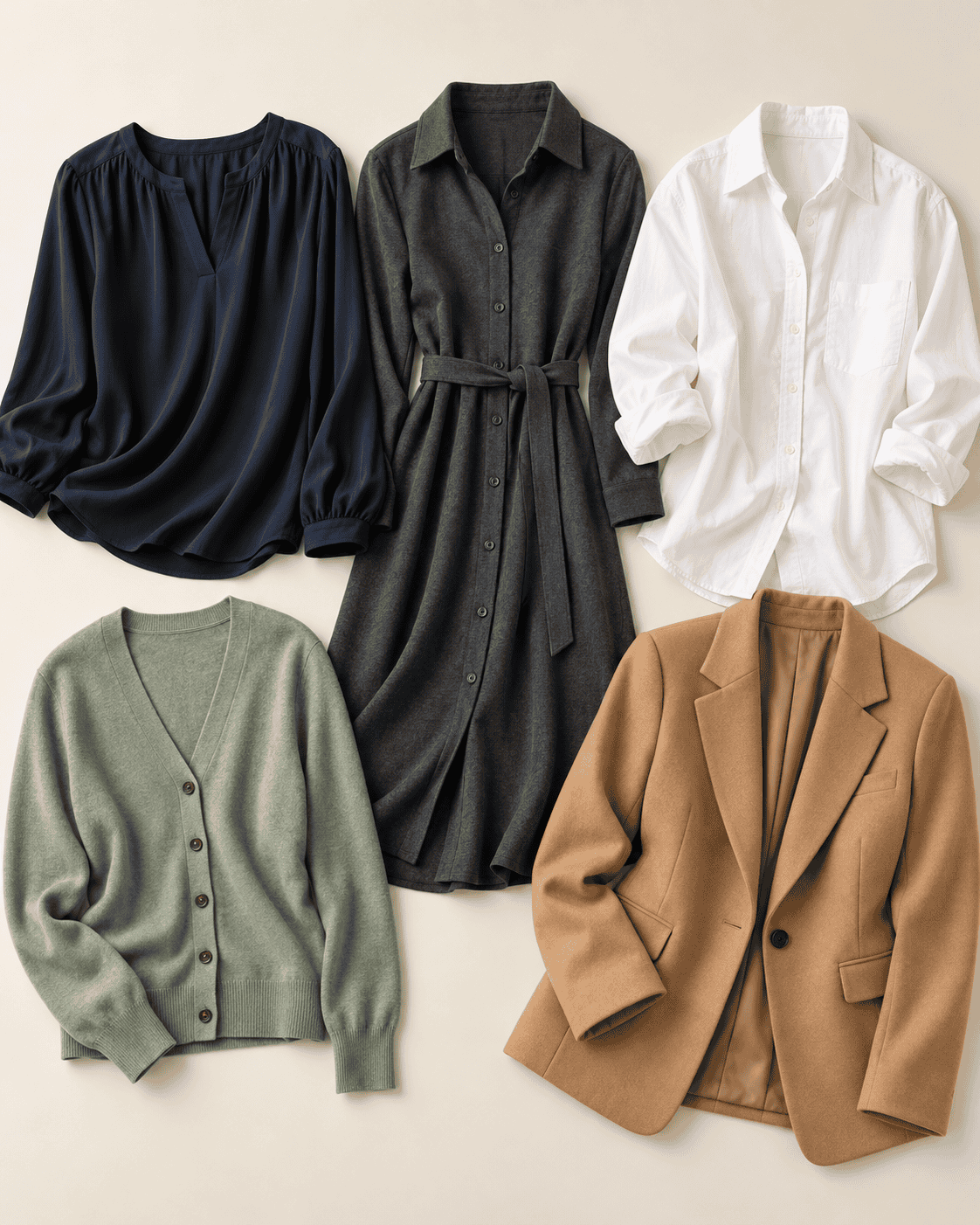
When you exclusively pump, getting dressed involves more than asking whether a top opens. You may need room to position equipment, a bra that works with your setup, somewhere for fabric to rest, and a way to return to the rest of your day afterward.
You also deserve to wear clothes you like. Your wardrobe does not have to revolve entirely around equipment, even when pumping is an important part of your routine.
Build your outfit around the pump you actually use and the places where you expect to use it. Then practise the complete sequence: access, setup, pumping, removal, and getting dressed again. A garment that works at the beginning needs to work at the end, too.
Start with your equipment, not a clothing label
“Pumping-friendly” can describe very different things. A loose shirt may provide access for traditional external flanges and bottles. A wearable setup may need space inside a suitable bra. A collection-cup system connected to an external motor may also require a workable route for tubing.
Write down your exact pump and collection setup before shopping for clothing or bras. Check the manufacturer’s instructions for compatible accessories and use. The FDA recommends reading the complete pump manual before first use; clothing advice cannot replace those instructions.
If you use different equipment at home and away, you may need two outfit combinations. That does not automatically mean two separate wardrobes. A functioning shirt and comfortable trousers may work with both setups once the underlayer is right.
Identify the clothing job for each part of your day
| Situation | What the outfit needs to do | A useful check |
|---|---|---|
| Home with external flanges and bottles | Open sufficiently and keep fabric out of the setup. | Can the shirt or lifted top stay clear without constant adjustment? |
| A planned break away from home | Allow setup and removal in the space available. | Where will your bag, outer layer, and clean equipment go? |
| A wearable or in-bra collection setup | Work with the instructed bra fit and leave appropriate garment room. | Does the outer layer pull, press, or make removal awkward? |
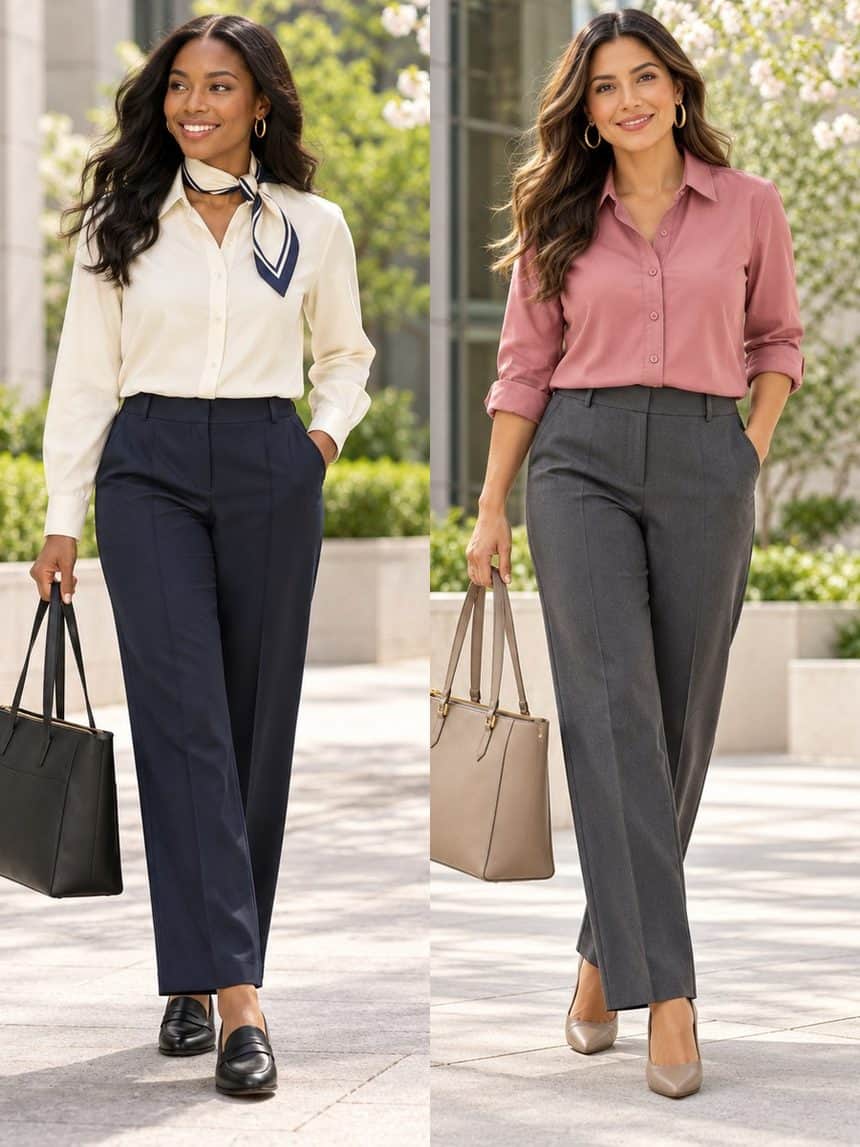
| Work or another structured setting | Meet clothing requirements and restore easily after a break. | Can you return to the complete outfit without a difficult tuck or fastening? |
These are outfit-planning questions, not a schedule for expressing milk. Plan clothing around the pumping routine appropriate for you, including any guidance from your care team. Do not postpone a needed session to preserve an inconvenient outfit.
Check the underlayer before judging the top
A nursing bra and a pumping bra do different jobs, although some designs combine them. Choose an underlayer for your actual equipment rather than assuming that a nursing clip makes any bra suitable for holding a pump.
Try the bra with the pump as directed, then add the top. Check whether you can access fastenings, position the equipment, and remove it without twisting fabric around a flange, bottle, or tube. Avoid adding improvised holes or fastenings to a bra as a shortcut to compatibility.
Do not tighten clothing to force a setup to stay in position. If something does not feel right, revisit the equipment instructions and get appropriate fitting help. According to the FDA’s guidance on pump injuries, pumping should not cause pain, nipple injury, or bleeding. Those symptoms deserve professional advice, not a different fashion trick.
Try three outfits for different kinds of days
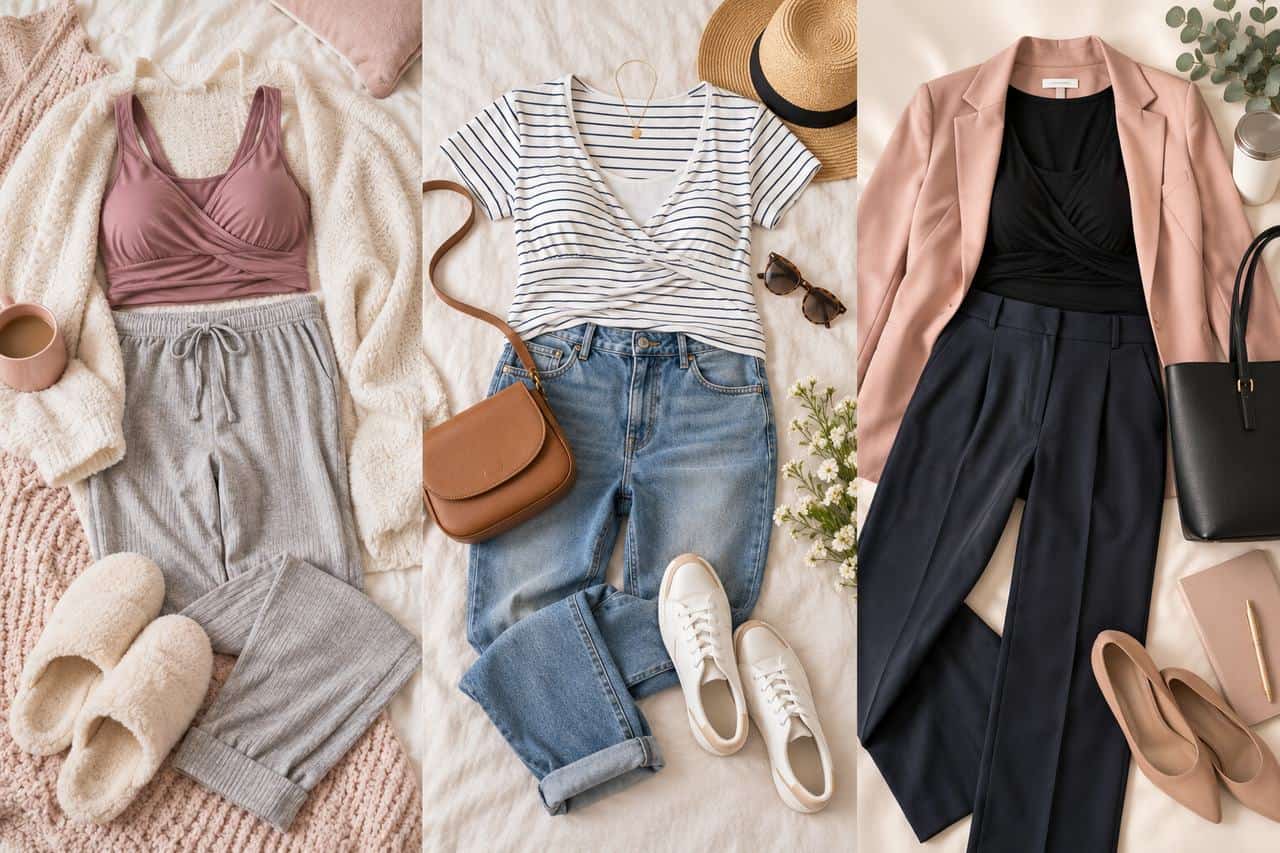
A comfortable home outfit
Start with a soft front-opening shirt or a tee you can lift comfortably, an appropriate bra, and pull-on trousers. Choose the top by how it behaves when open. A large, heavy sweatshirt may look comfortable but create an awkward bundle above the equipment.
An open cardigan can be useful when you want warmth between sessions. It is optional, and it should not become another piece you have to balance around the setup. A burgundy Henley with a sufficiently deep opening and navy joggers might suit you better than an oversized lounge set.
An outfit for an outing with a planned pumping break
Try a functioning button-front shirt, comfortable trousers, and shoes you can manage easily. Include your usual bag in the trial so you know what needs to come off and where it will go.
For example, a blue shirt, olive trousers, and cream sneakers can be a complete outfit. If you prefer a dress, check the entire opening and lining rather than relying on the buttons visible in the product photograph.

An outfit for work or an appointment
Try a blouse with usable front access and a separate skirt or trousers. A jacket can add the finish you want, provided you can remove or move it easily in the pumping space.
If your job requires a uniform, check permitted options with your workplace. Do not alter protective clothing or assume a portable pump is appropriate during every task. Plan for the actual break arrangement and the instructions for your equipment.
Rehearse removal as carefully as setup
Many outfit trials stop once the equipment is in place. Continue through the clothing movements involved in finishing. Can you reach the bra opening again? Does the outer top catch? Do you have somewhere appropriate to set items while restoring your clothes?
Use the manufacturer’s directions for removing and handling your pump. A clothing rehearsal can be done with clean, unpowered equipment when appropriate to its instructions; it does not require an extra pumping session just to test a blouse.
Once dressed again, sit, stand, and look at the fastenings. A slightly rumpled shirt is not a failed outfit. What matters is whether you can restore comfortable coverage without assistance you will not have available.
Decide how much visibility matters to you
You may prefer a relaxed shirt that makes a wearable setup less noticeable. You may be comfortable with its shape showing. Both are reasonable clothing preferences.
Patterns, drape, and extra garment room can change the appearance, but no fabric guarantees that a pump will be invisible or silent. Do not compromise the instructed fit to achieve a particular silhouette. If discretion matters for a setting, consider the available space and break arrangements as well as the top.
A photo taken while standing is also a limited test. Check your clothes while seated, because the fabric can pull differently across your chest and waist.
From the capsules
The Back to Work Capsule
Two hundred workday outfits, every top opening for the eleven o'clock pump. $27 once, yours to keep.
Give your spare outfit one clear purpose
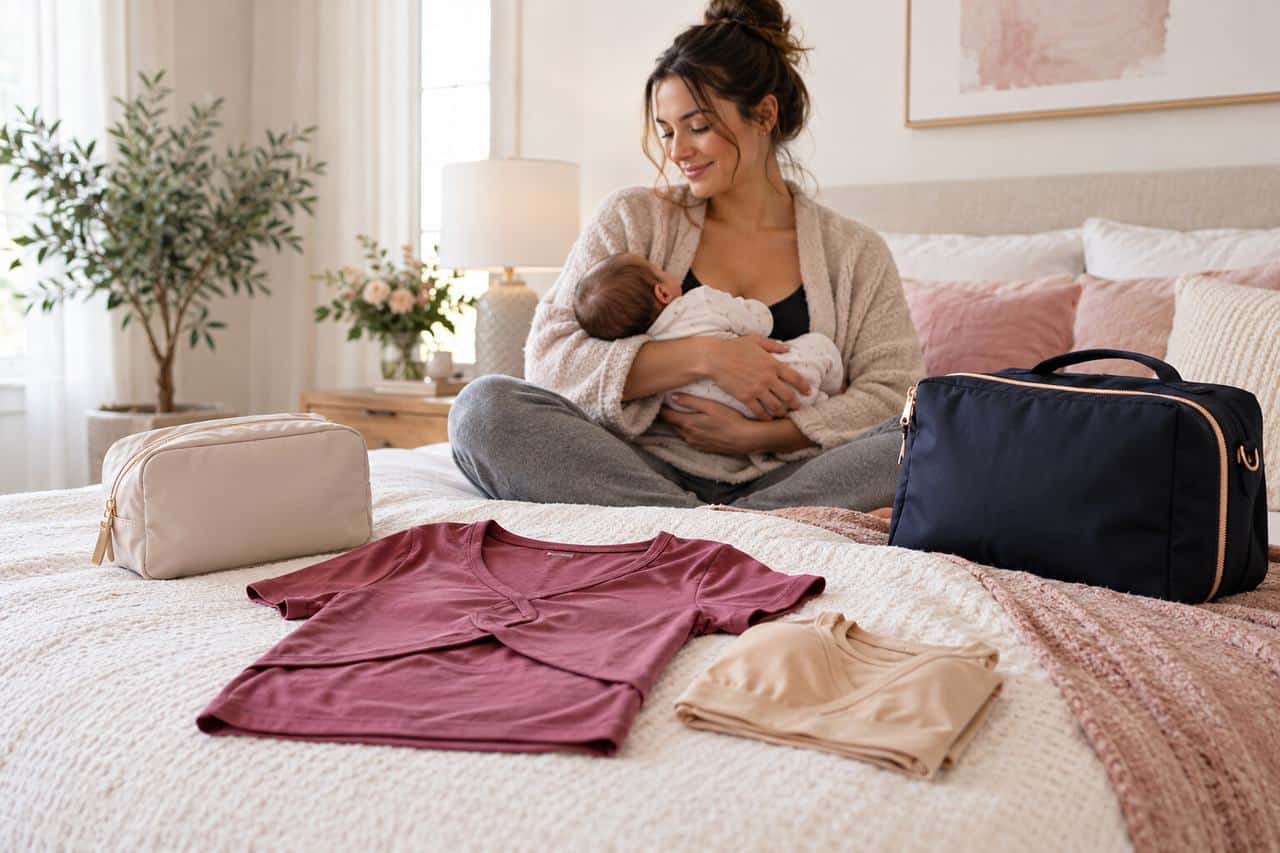
Choose a spare top that works with the same bra and bottom you are already wearing. A second beautiful blouse is not useful if its opening fails with your equipment. Fold the spare into a separate clothing pouch and replace it after you use it.
You may also want a compatible spare underlayer, depending on your own experience of leaks and changes. Decide from what happens in your day rather than copying somebody else’s bag list.
Keep clothing storage separate from pump-part care. The CDC’s pump-hygiene guidance calls for cleaning milk-contact parts after each use and allowing cleaned parts to dry thoroughly before storage. A spare-clothes pouch is not a cleaning method or a substitute for an appropriate equipment-care plan.
Reduce decisions between sessions
When a combination works, record the details that made it work: the exact bra, the shirt, how much you open, and whether you leave it untucked. A quick private outfit photo may be enough.
Make one home combination and one away-from-home combination easy to reach. Put clean pieces together or save them as a note. This is a small convenience you can prepare without organizing every hour of your life.
If another person wants to help, give them a specific clothing task: wash the tops according to their labels, return the dry bras to a particular drawer, or replenish the spare pouch. Practical support can remove a recurring job from your day.
Common questions
Do I need a whole wardrobe of pumping tops?
No. Start by testing existing separates. Buy only for a repeated problem your current clothes cannot solve, such as an opening that is too short or a work requirement that limits your options.
Can I wear a dress?
Yes, if its actual access works with your setup and preferred setting. Check lining, waist seams, and whether you can restore the dress afterward. A back zip alone rarely tells you enough about practical pumping access.
Does hands-free mean I can do everything while pumping?
No. Follow the pump’s use restrictions and consider the task and environment. An outfit cannot make an otherwise unsuitable activity safe. You are also allowed to use a pumping break as a break.
The Nursing Mama Fashion Commandments
Twelve rules I wish someone had told me postpartum. Print them. Screenshot them. Live by them.
- Nursing bra always. Regular bras become instruments of pain the day letdown surprises you.
- Nursing pads on your body + a spare pair in your bag. Every single time you leave the house. No exceptions.
- Extra top in your bag — for YOU, not the baby. Because leaks, spit-up, and coffee-spills don’t care about your outfit plan.
- If it takes more than 5 minutes to figure out how to nurse or pump in it, it’s not the right outfit today. Feeding access is comfort. Comfort is not optional.
- Belt under the bust (empire) or below the belly with drape — never at the belly button. Your postpartum body deserves flattery, not compression.
- Comfortable waistband is non-negotiable. Elastic, wrap, or pull-on. Zippers are a Sunday-only luxury for now.
- Dark tones, prints, or textures — not thin light solids. Because letdown marks are real and you deserve clothes that don’t advertise them.
- Machine-washable everything. Dry-clean is not real-mama fashion. If it can’t survive a spit-up rinse, it’s not in rotation.
- Cross-body bag only. Hands stay free for the carrier, the toddler, the coffee, the door, the meltdown.
- Comfortable shoes always. You’re carrying a car seat and a diaper bag. This is not the season for a heel you can’t run in.
- Get dressed BEFORE the kids see you if you can. It changes the whole day — for them and for you.
- One accessory — earrings, a lip color, a scarf — counts as “put together.” That’s the whole game. You get to feel like yourself again.
Make the next outfit easier to repeat
Choose one combination, rehearse the full clothing sequence, and identify one useful spare. You do not need to turn your wardrobe into another demanding project.
Explore The NennVersa Atelier when you want more outfit ideas built around the days you actually live. Pumping belongs in the plan, and so do your comfort and personal style.