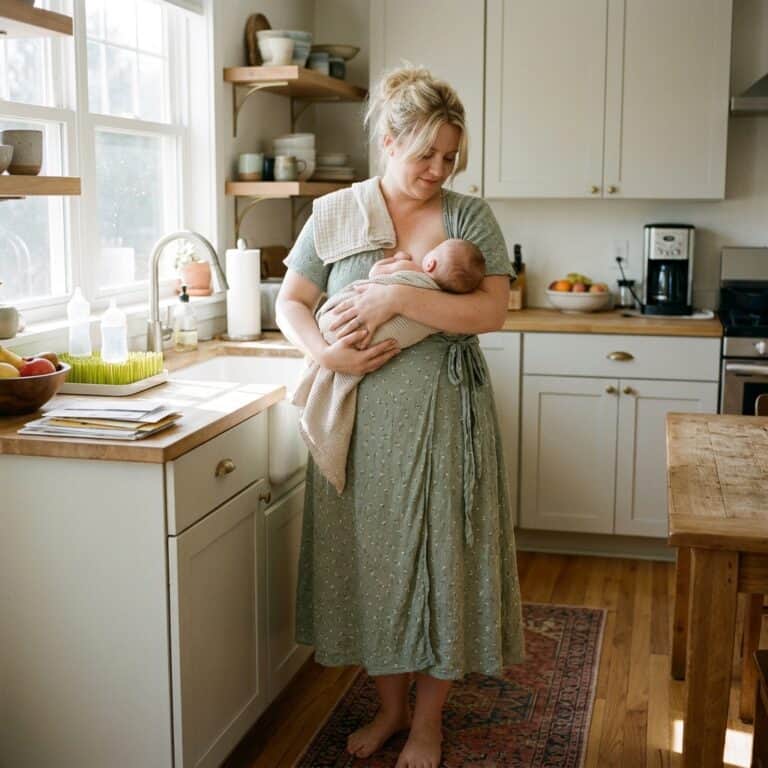
Sometimes the outfit looks fine and still feels impossible to wear. The label scratches. The waistband keeps announcing itself. Two layers twist against each other. By the time you have fed your baby and found your shoes, you want to take the whole thing off.
Clothing comfort is personal. One person likes a close, steady fit; another prefers fabric that barely touches the body. You do not need to justify either preference or keep a garment because someone else calls it soft.
A useful postpartum wardrobe can begin with a simple question: “Which parts of this outfit am I continually noticing?” That answer helps you make a specific change instead of replacing everything at once.
Separate sensory preferences from skin symptoms
This guide is about the feel and practicality of clothes. Disliking a seam or heavy layer is not, by itself, a diagnosis. Equally, an itchy rash, persistent soreness, or recurring irritation should not automatically be treated as a styling problem.
The NHS describes skin symptoms such as itching, dryness, burning, and blistering in contact dermatitis. Seek medical advice for persistent or concerning symptoms, and urgent advice for a severe reaction or possible infection. A fabric preference checklist cannot identify an allergy or replace individual care.
You can make comfortable clothing choices while seeking help. Avoid turning the search for a soft outfit into a promise that a particular fibre, detergent, or label will treat a medical condition.
Notice one source of discomfort at a time
Choose a familiar outfit and identify the first thing you want to adjust. Is it pressure, roughness, heat, movement, sound, or the work of arranging it? “I dislike this top” becomes easier to act on when you can say, “The seam under the arm rubs whenever I reach.”
Then change one element. Try the same trousers with a different top, or the same top without the optional cardigan. If you replace the bra, top, trousers, and layer at once, it can be harder to understand which change helped.
Keep the experiment small. You are gathering useful wardrobe information, not building another daily tracking obligation. A few words in your phone, like “smooth neckline, loose sleeves, no waist tie,” may be enough.
Check the inside as carefully as the outside
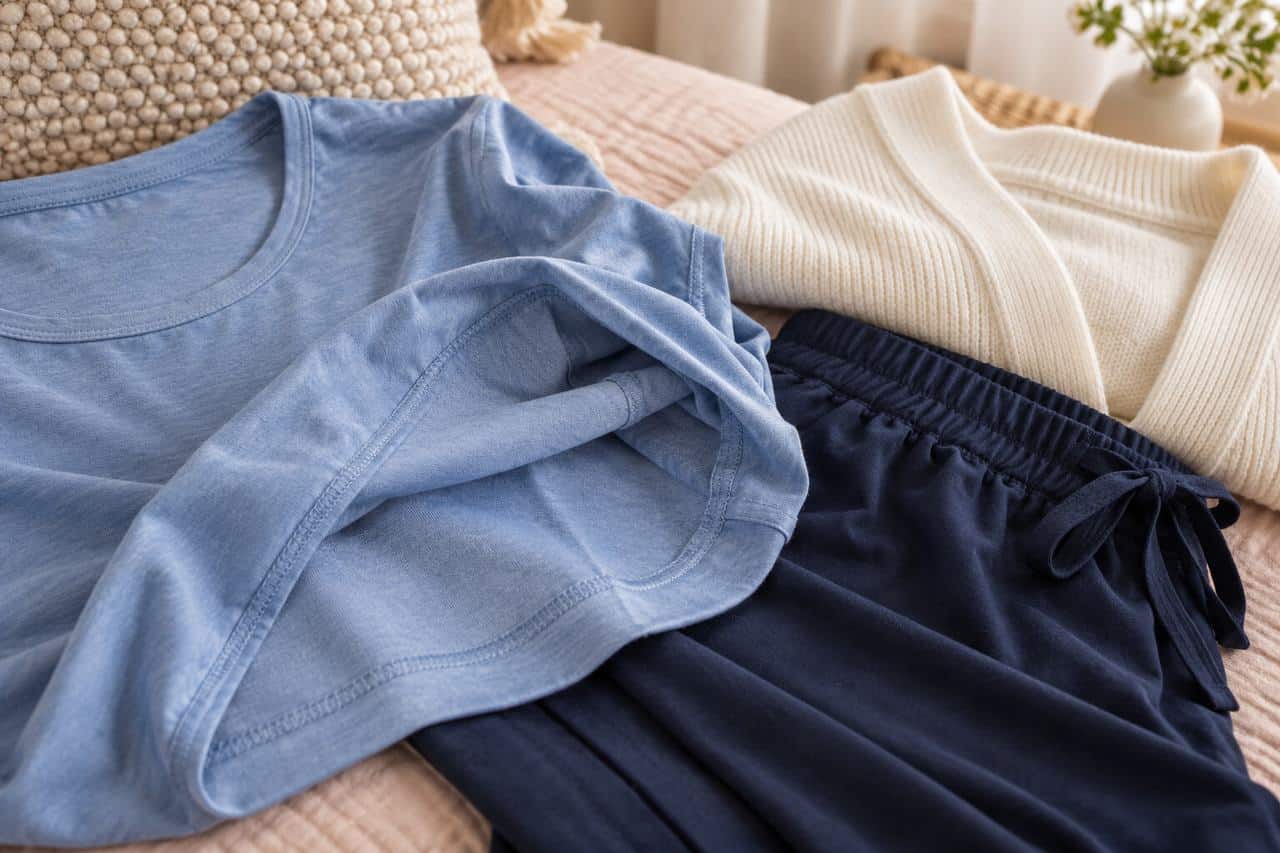
Turn a garment partly inside out before committing to it. Run your fingers along seams, labels, elastic casings, and the back of closures. Notice where those features will meet your body when you sit or move.
- Neckline: Is the edge smooth, heavy, stiff, or close to the throat?
- Underarms and shoulders: Are seams positioned where they bother you during reaching?
- Waist: Is the elastic covered, and does it fold or twist when seated?
- Feeding opening: Does extra fabric gather, rub, or need repeated rearranging?
- Labels and hardware: Is anything scratchy or pressed directly against a sensitive area?
Do not assume that “seamless” means there is nothing to feel. Edges, bands, joins, and hardware may still matter. Likewise, a garment with visible seams may feel perfectly comfortable if they sit in places you do not mind.
Use fibre names as clues, not guarantees
You may already know that you enjoy certain cotton tees or a particular modal top. That is valuable personal evidence. It does not mean every garment with the same fibre content will feel identical.
Weight, weave or knit, stretch, lining, finishing, and cut all influence the experience of wearing an item. A ribbed fabric can feel gentle to one person and too textured to another. A loose woven shirt may feel easier than a clingy knit, even when both are described as breathable.
When shopping online, ask about the details you notice most: inner seams, lining, fabric weight, neckline finish, or elastic construction. If texture is decisive and the seller cannot describe it clearly, a manageable return option may matter more than a persuasive product description.
Choose the pressure and waistband position you prefer
High-waisted is not automatically comfortable. Neither is low-waisted, oversized, or stretchy. A waistband’s width, firmness, position, and behaviour while seated all affect how it feels.
Try sitting for a little while in the actual outfit. Notice whether you keep pulling the waistband away, rolling it down, or lifting the top to adjust it. Compare a different rise or construction rather than assuming you need to tolerate the first option.

If you have an incision, healing area, or a clinician’s clothing instructions, let those individual needs guide the decision. Do not use a fashion rule to override discomfort or medical advice. A garment that works later may not be the useful choice today.
Make feeding access part of the comfort check
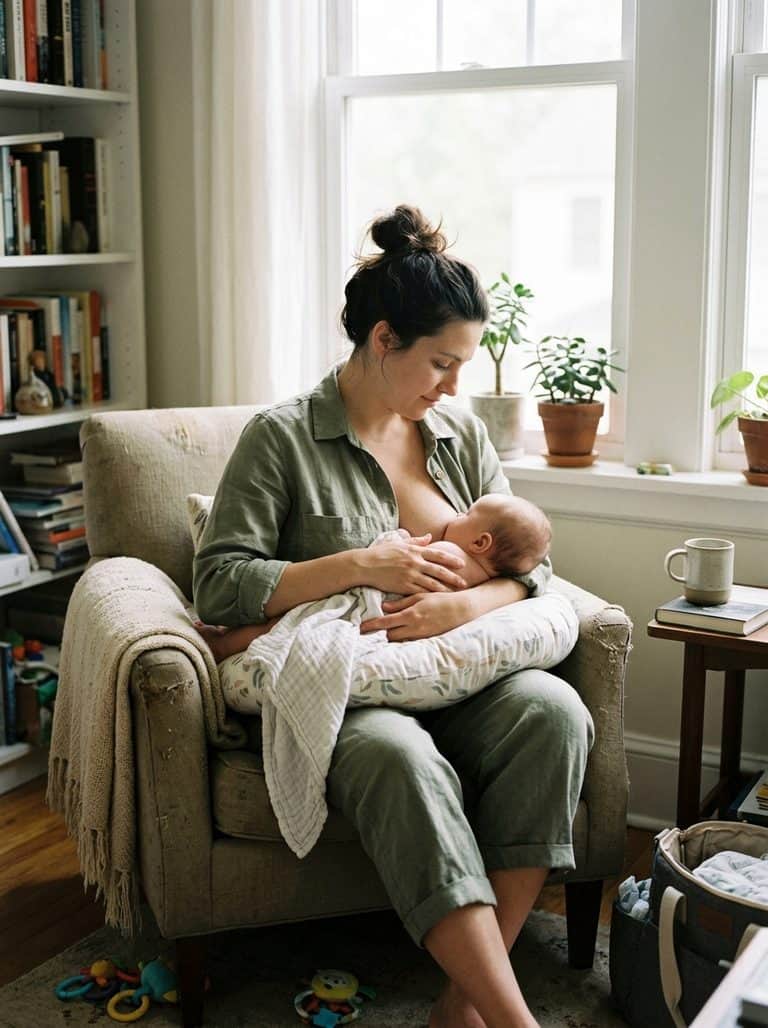
A pleasant fabric can still become frustrating if you must wrestle with it at every feed. Try the complete access sequence while seated: open or move the outer garment, arrange the underlayer, and restore both.
Watch for fabric bunching under the chin, a stiff opening edge, a tie that presses when seated, or several layers sliding in different directions. You may prefer one designed opening, a simple shirt, or a separate tee that lifts easily. The right answer comes from the actual garment on your body.
For pumping, follow your exact equipment and support-garment instructions. Do not choose a tighter layer simply to force a setup to stay in place. Comfort and compatibility need their own checks.
Create three outfits around your comfort priorities
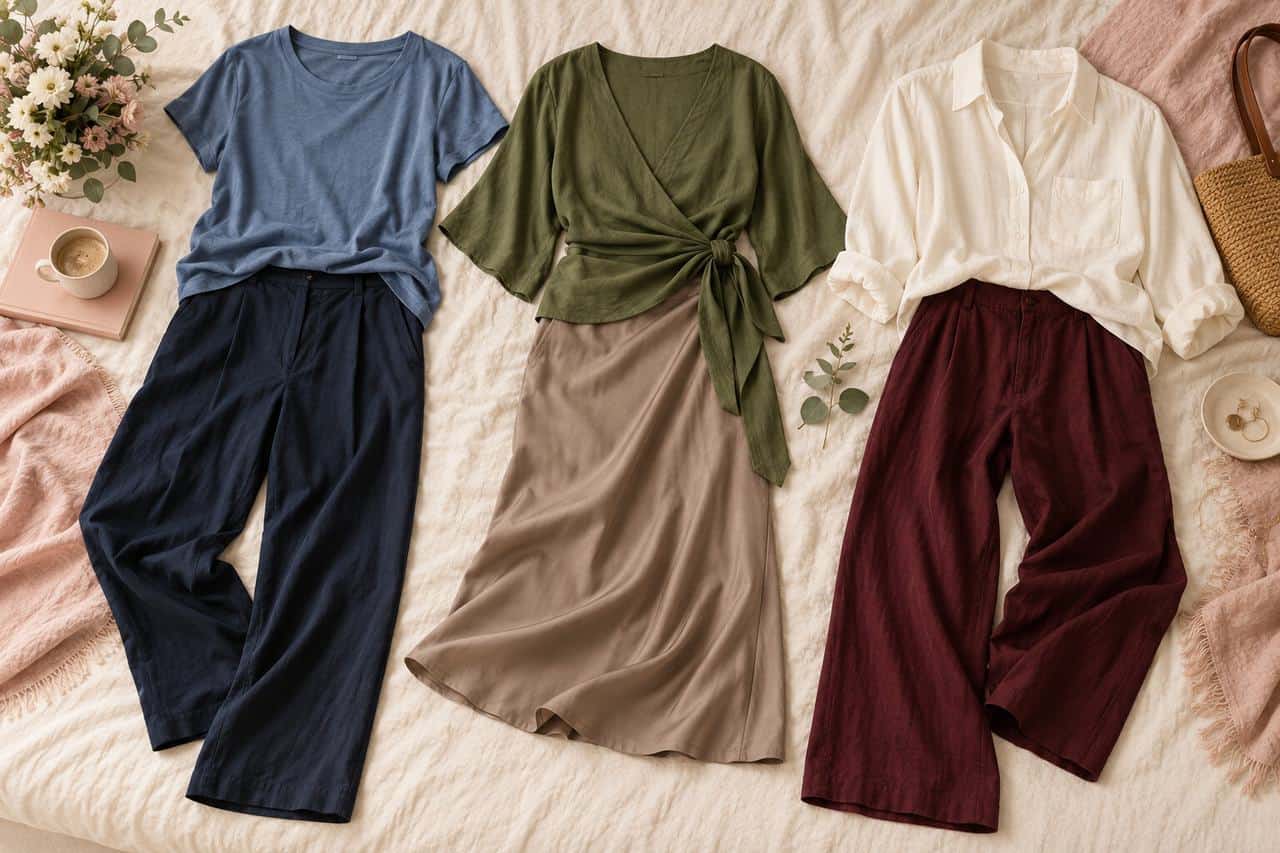
For fewer fastenings
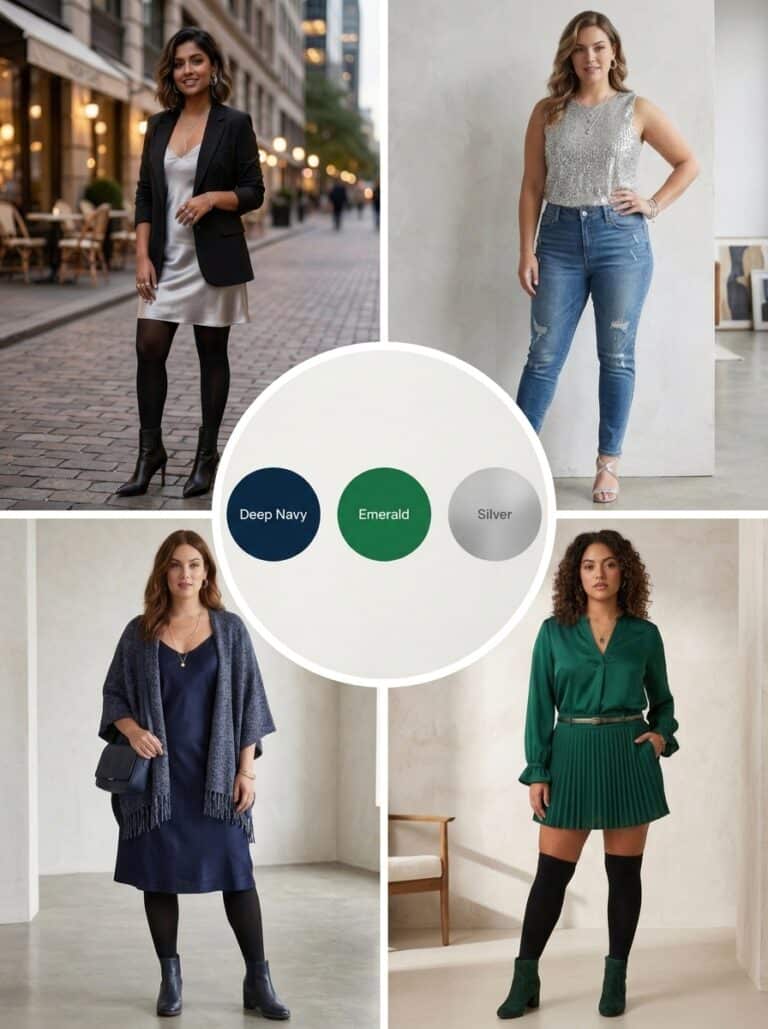
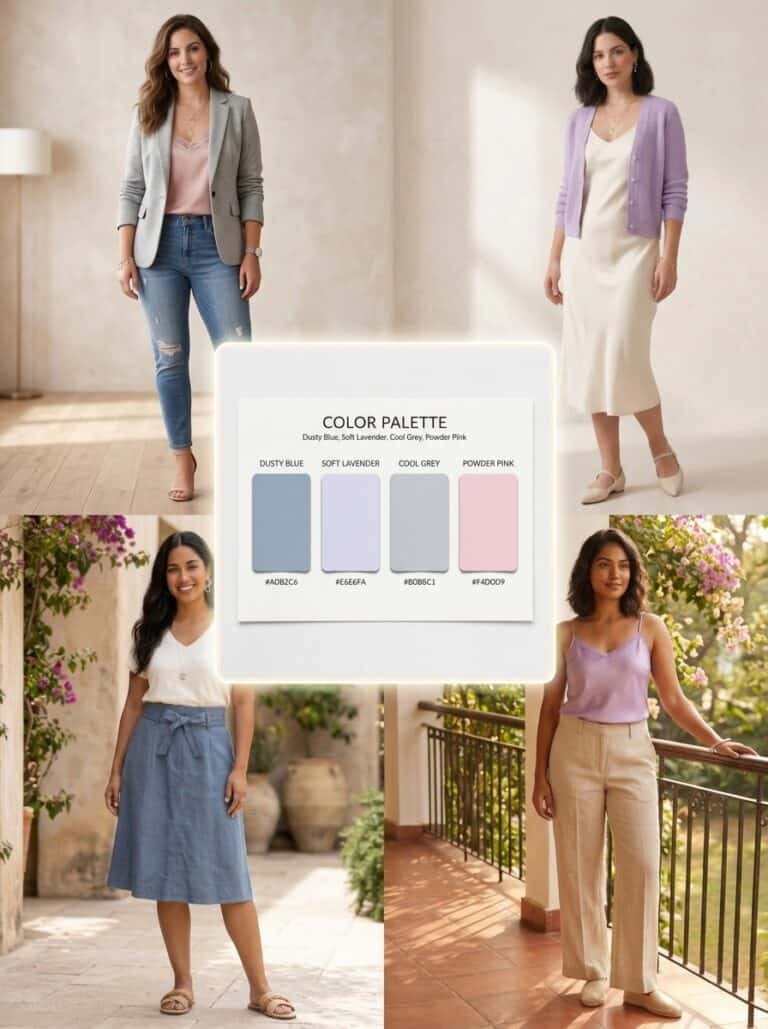
Try a loose blue tee with navy pull-on trousers and familiar shoes. Check the lift movement and your preferred coverage before relying on it for feeding. If the trouser elastic is the irritating part, choose a different waistband rather than discarding the whole outfit idea.
For less fabric around the waist
Try a soft opening top worn untucked with a comfortable skirt. An olive wrap top and taupe skirt may be a candidate if you enjoy the wrap’s feel; if the tie presses or bothers you, choose a different opening.
For a little structure without extra layers
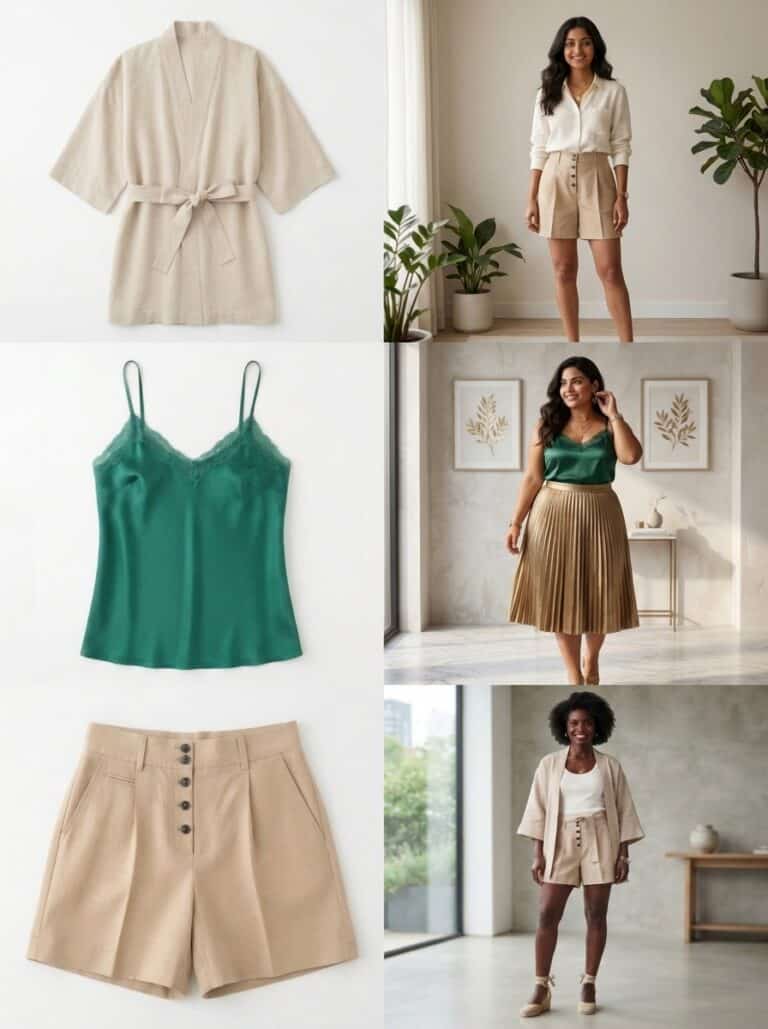
Try an ivory button-front shirt with soft burgundy trousers. The shirt supplies a finished shape on its own. Check the collar, sleeve seams, and buttons instead of assuming that “structured” must mean uncomfortable.
From the capsules
The Year Round Capsule
Two hundred nursing-friendly outfits from fifty-six pieces, fifty for every season, laid out and then worn. $29 once, yours to keep.
Accessories are optional. If earrings, a necklace, or a belt add irritation or another task, use colour and shape to create an outfit you enjoy. Looking put together does not require wearing every finishing touch.
Keep a short clothing comfort profile
A useful profile describes what you have observed, rather than assigning you a fixed category. Include three things that usually work, three things to check, and one reference garment.
“Usually works: smooth neckline, sleeves with room, waistband that stays flat when seated. Check carefully: scratchy labels, stiff plackets, multiple inner layers. Reference: my blue tee after washing according to its label.”
Add a note if your preferences change. A top you enjoyed during one stage may feel different with another bra, a warmer room, or a different daily routine. Updating your preferences is useful information, not inconsistency.
Keep care simple and garment-specific
Follow the actual care label and any advice you have received for your skin. If you remove a scratchy label after deciding to keep an item, first photograph its care and fibre information. Take care not to damage the seam, and seek help if the label is sewn into the construction.
Do not buy a garment on the assumption that repeated washing will definitely soften an uncomfortable edge. Choose something you can reasonably use, then learn how it feels after appropriate care.
Questions moms often ask
Do I need to buy specialist sensory clothing?
Not necessarily. A familiar everyday garment may meet your needs. Specialist features are worth considering when they solve a specific problem you have identified.
Is a natural fibre always the best choice?
No single fibre guarantees comfort or rules out a reaction. Consider the whole garment and your own experience. Ask a clinician about suspected skin problems.
Can I still wear fitted clothes?
Yes, if you enjoy how they feel and they allow the movement and access you need. Comfort is not limited to one silhouette.
The Nursing Mama Fashion Commandments
Twelve rules I wish someone had told me postpartum. Print them. Screenshot them. Live by them.
- Nursing bra always. Regular bras become instruments of pain the day letdown surprises you.
- Nursing pads on your body + a spare pair in your bag. Every single time you leave the house. No exceptions.
- Extra top in your bag — for YOU, not the baby. Because leaks, spit-up, and coffee-spills don’t care about your outfit plan.
- If it takes more than 5 minutes to figure out how to nurse or pump in it, it’s not the right outfit today. Feeding access is comfort. Comfort is not optional.
- Belt under the bust (empire) or below the belly with drape — never at the belly button. Your postpartum body deserves flattery, not compression.
- Comfortable waistband is non-negotiable. Elastic, wrap, or pull-on. Zippers are a Sunday-only luxury for now.
- Dark tones, prints, or textures — not thin light solids. Because letdown marks are real and you deserve clothes that don’t advertise them.
- Machine-washable everything. Dry-clean is not real-mama fashion. If it can’t survive a spit-up rinse, it’s not in rotation.
- Cross-body bag only. Hands stay free for the carrier, the toddler, the coffee, the door, the meltdown.
- Comfortable shoes always. You’re carrying a car seat and a diaper bag. This is not the season for a heel you can’t run in.
- Get dressed BEFORE the kids see you if you can. It changes the whole day — for them and for you.
- One accessory — earrings, a lip color, a scarf — counts as “put together.” That’s the whole game. You get to feel like yourself again.
Let comfort be useful information
You are allowed to care about how clothes feel for the whole day, not only how they look in a photograph. Start with one reliable outfit and use what it teaches you.
Explore NennVersa and The NennVersa Atelier for practical ways to combine comfort, feeding access, and personal style. We focus on you, Mom.