You may breastfeed before leaving home, pump during a workday, and feed your baby again after you return. Your clothes need to support more than one task, often in different settings, without turning each transition into a complete outfit change.
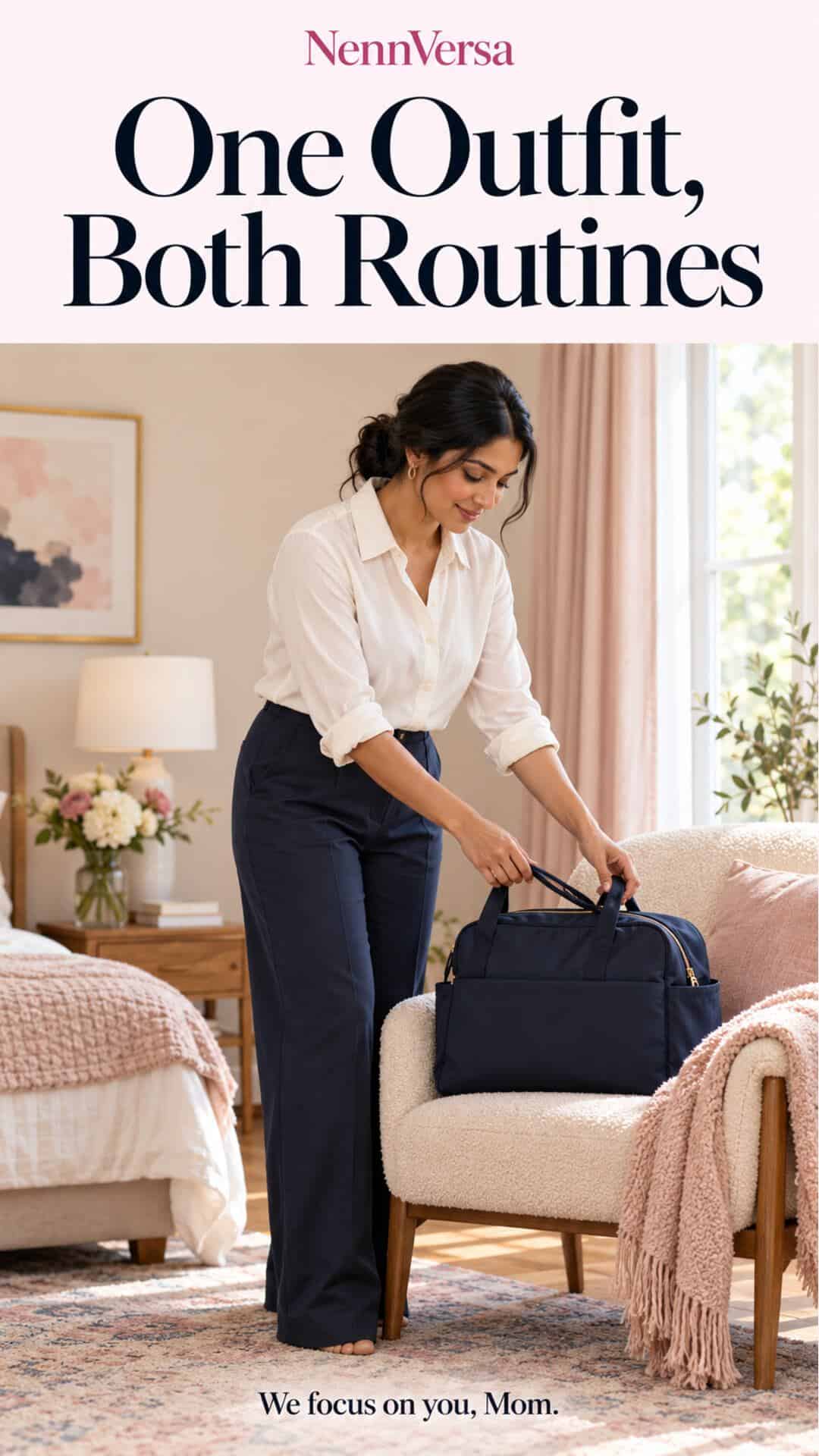
One outfit can sometimes do that work, but “nursing friendly” and “pumping friendly” are not interchangeable promises. A top that moves aside for a feed may not give you enough room to position your equipment. A bra that supports a pump may not offer the direct-feeding access you prefer.
The useful approach is to check both routines separately, then see how they fit into the same combination. This guide plans clothing; it does not prescribe feeding frequency, pumping schedules, milk storage, or a particular equipment setup.
Begin with your real day
Write down the settings you expect to move through, rather than inventing a detailed schedule. For example: home, commute, workplace, and home again. Or home, a family visit, and an afternoon outing.
Next to each setting, note the clothing task: direct feeding, setting up a pump, changing an underlayer, or simply wearing the outfit comfortably. Include any uniform, dress-code, temperature, or coverage preference that changes what you need.
This can reveal the actual problem. You may already have a top that works for both routines but need a better place to keep a spare. Or the outfit may work at home while a fixed lining makes it awkward in a different setting.
Check the two access tasks separately
For direct breastfeeding, rehearse the clothing movement while seated. Can you reach each side, arrange the underlayer, and restore the outfit without a struggle? Does the fabric remain where you want it, or do you keep gathering and adjusting it?
For pumping, use your exact equipment and the appropriate support arrangement. Check the space needed to position and remove the components, the clothing around them, and any tubing route specified for your setup.
The FDA recommends reading the complete pump instruction manual before first use. Manufacturer instructions take priority over outfit shortcuts. If clothing presses, pulls, or makes the setup difficult to use, change the clothing arrangement rather than forcing the equipment to fit.
| Clothing check | Direct feeding | Pumping |
|---|---|---|
| Outer garment | Access to each side and a comfortable reset | Room to position, use, and remove the exact setup |
| Underlayer | A release or movement you can manage | Support and compatibility specified for your equipment |
| Seated fit | Fabric, waistband, and coverage preferences | Fabric clearance and comfort with the full setup |
| Afterwards | Close and restore the outfit | Remove equipment and restore all layers |
A “yes” in one column is not an automatic “yes” in the other. Treat an untried check as untried, rather than assuming it will be fine because a garment looks roomy.
Choose the underlayer arrangement deliberately
You might use a garment intended for both nursing and pumping, or use a separate pumping support garment when needed. The right arrangement depends on your exact products, fit, and preferences.
If you are considering a combination bra, check what the manufacturer says it supports and how each opening works. If you use a separate pumping garment, rehearse putting it on and taking it off with the clothes you will actually wear.
Do not assume that a clip, slit, stretchy cup, or “hands-free” description establishes compatibility with every pump. Avoid cutting or improvising support based on an outfit photograph. When instructions are unclear, ask the manufacturer or a qualified professional for individual guidance.
There is no requirement to make one bra perform every task if a simple planned change works better for you. The goal is a manageable routine, not the fewest possible items at any cost.
Look for outer garments that leave room to work
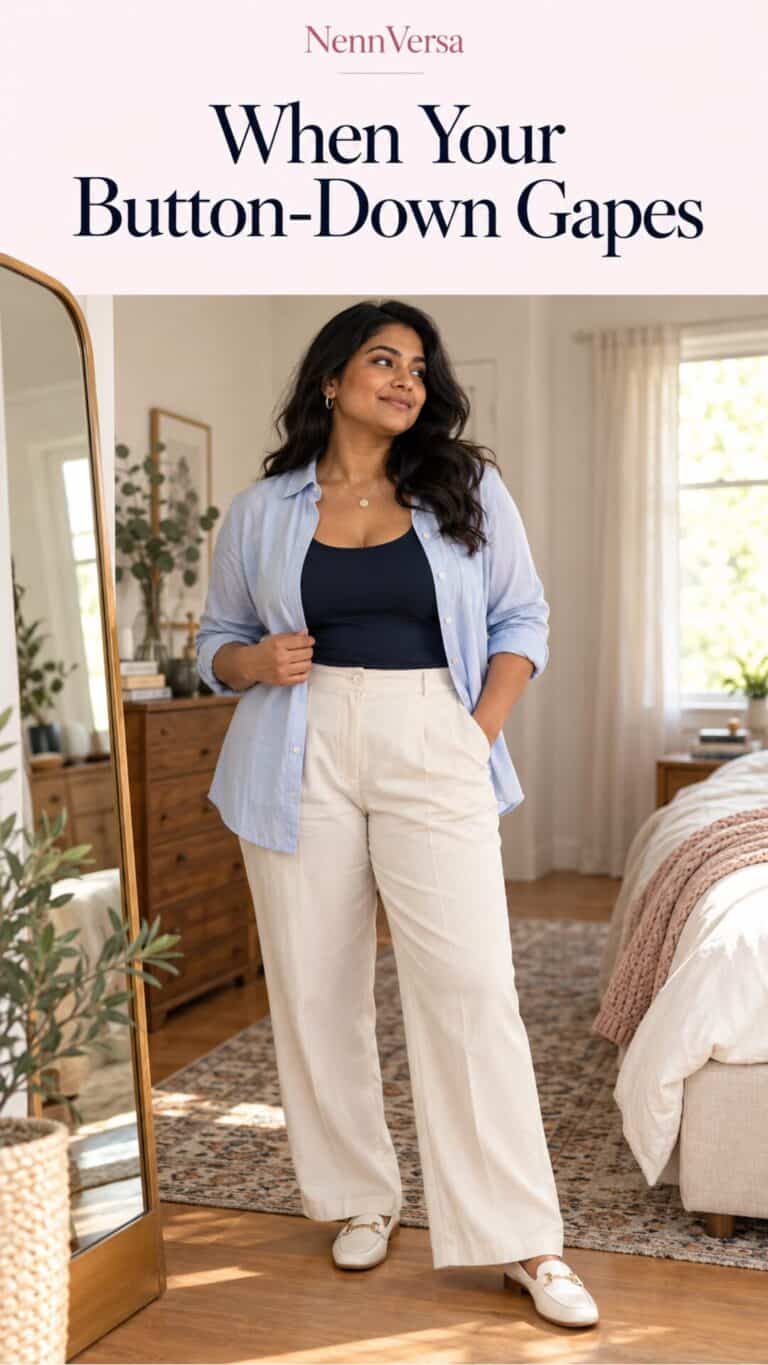
A real button-front shirt is a useful candidate because you can inspect how far it opens. A true wrap may work if its panels move sufficiently and its tie does not interfere. A designed nursing opening may work for one setup but be too restricted for another.
A separate liftable top can also be a candidate, provided gathering the fabric does not create pressure or make the setup awkward. Check where the fabric goes while you are seated; do not judge only from a standing mirror view.

One-piece garments deserve particular attention. A dress with an accessible outer layer may still have a fixed lining. A jumpsuit may require more undressing than you want. If the whole outfit has to come off for one routine, separates may make that day easier.
Build a day plan without rebuilding your outfit
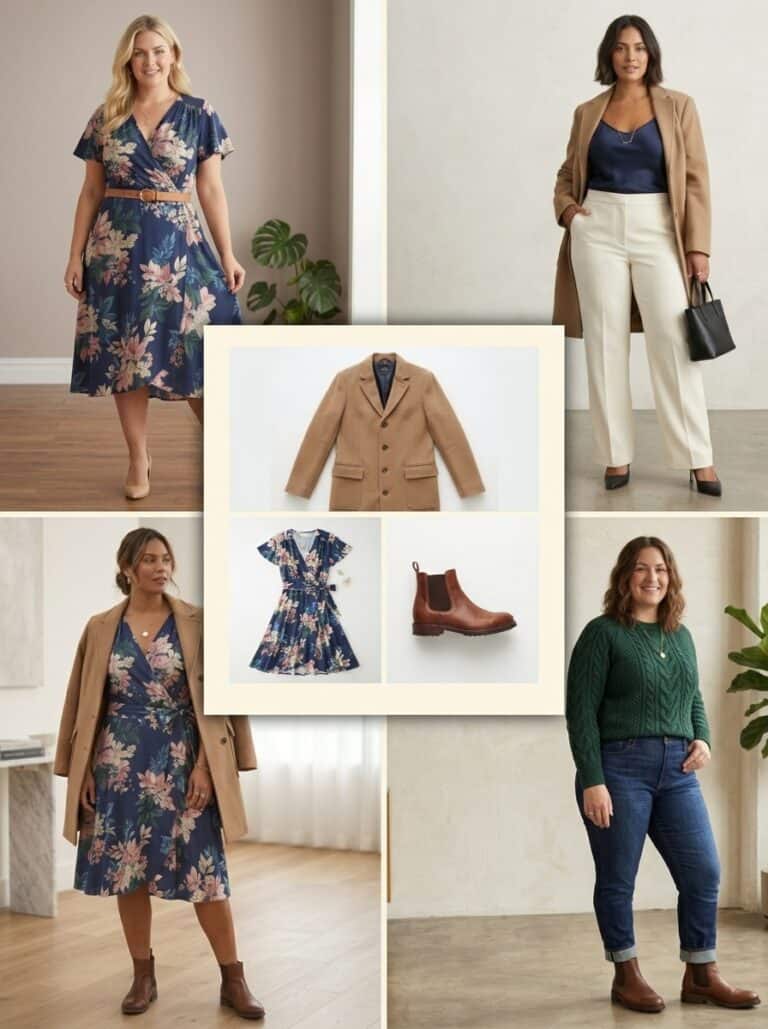
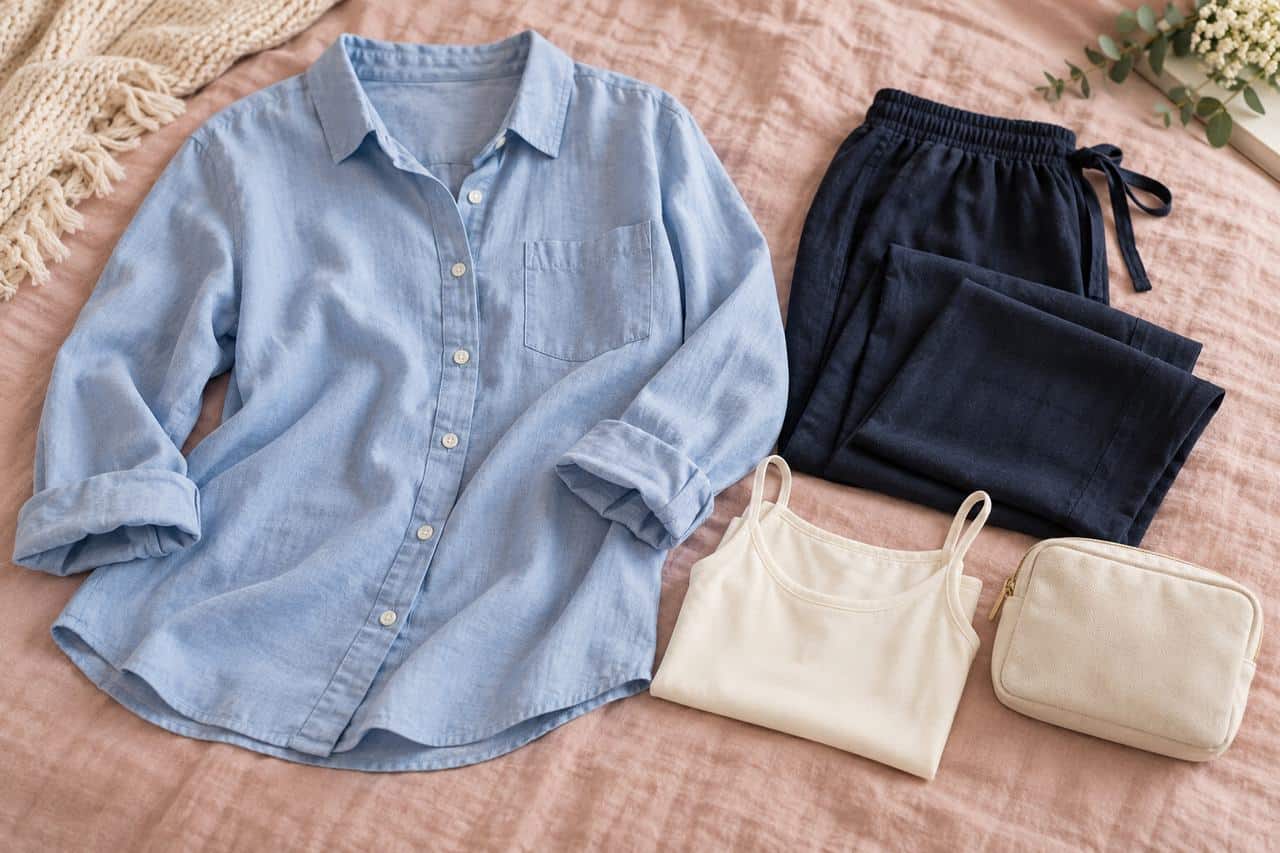
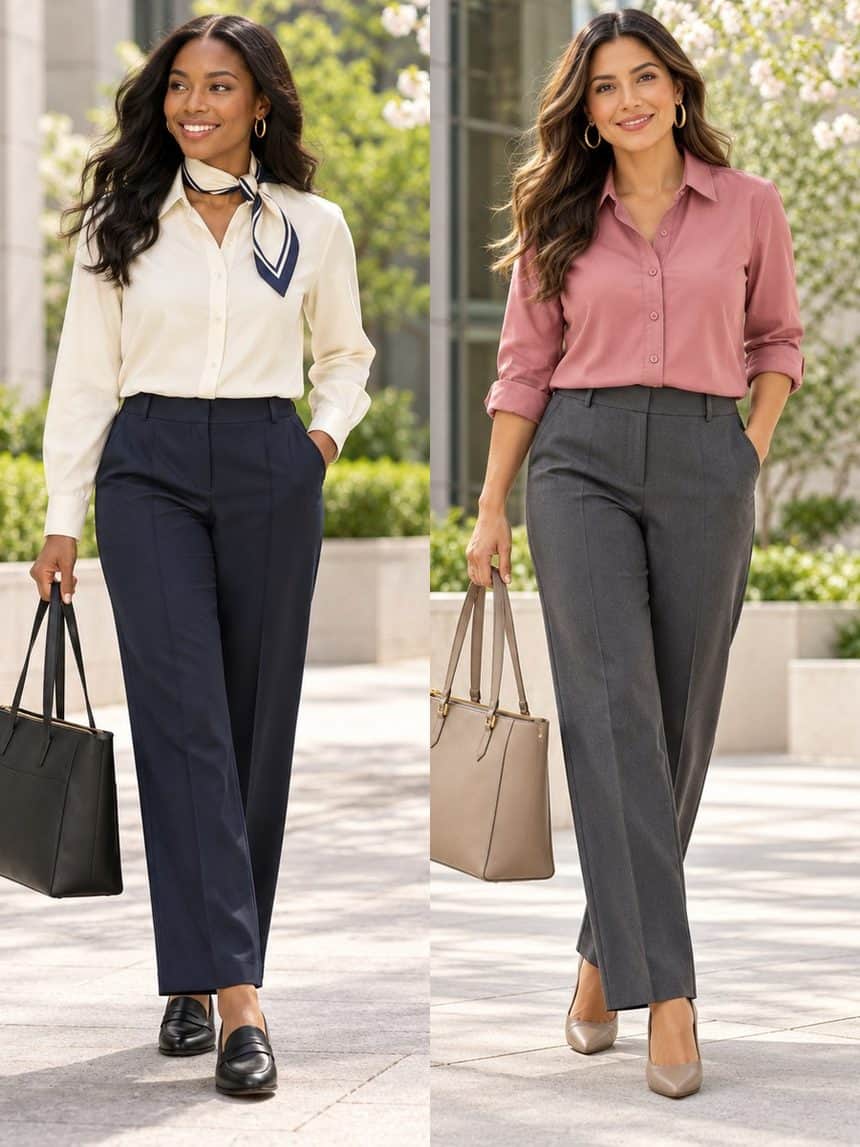
Consider an illustrative workday outfit: an ivory opening shirt, navy trousers, suitable underlayer arrangement, and an optional open cardigan. The shirt and trousers can remain the same while you use the access method appropriate to each routine.
Before leaving, check that the cardigan can stay out of the way and that the shirt does not become restrictive when seated. If a support-garment change is part of your plan, give it a clean place in your bag and a practical place to happen.
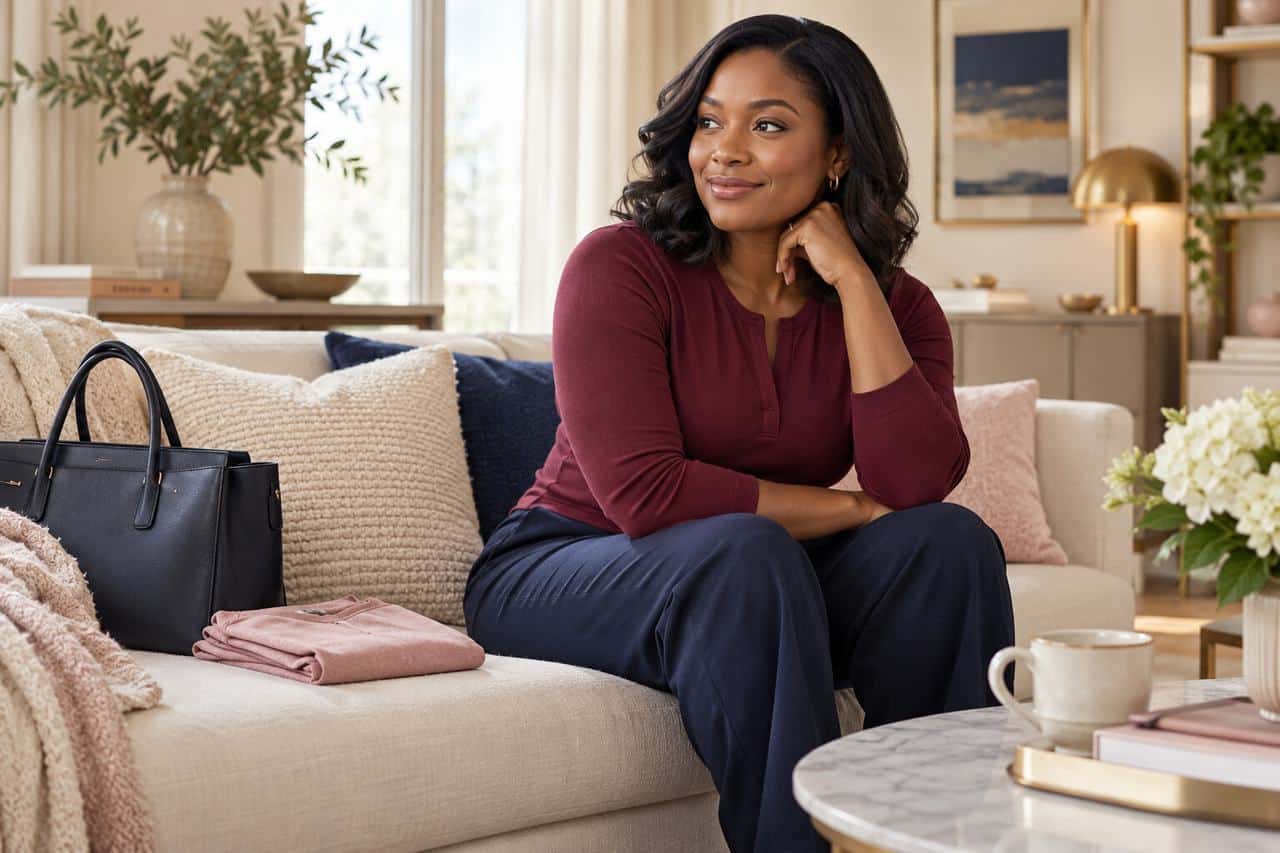
For a home-and-outing day, a burgundy Henley with comfortable trousers might be another candidate. Its placket must be deep enough for the actual tasks; some Henleys will not be. Try it rather than deciding from the garment name.
For a family gathering, separates can offer a dressier look without the access constraints of a one-piece outfit. A blouse and midi skirt may allow an easier underlayer change than a fitted lined dress, depending on their construction.
Give the spare outfit a specific job
A spare top is useful when it works with the bottom and underlayer already in your plan. Pack a familiar piece whose opening you have checked. A random tee may replace a stained shirt but leave you with a new access problem.
If your own routine calls for a spare underlayer, choose it with the same care. Keep clean spare clothing separate from used garments and from equipment-care supplies. A clothing pouch is an organising choice, not a substitute for following equipment hygiene instructions.
Plan what happens to the used piece when you get home. A small reset (remove the used clothing, deal with it according to its care needs, and replenish the spare) can keep tomorrow’s bag from inheriting today’s problem.
From the capsules
The Back to Work Capsule
Two hundred workday outfits, every top opening for the eleven o'clock pump. $27 once, yours to keep.
Rehearse the transition, not only the opening
Set aside a calm moment to try the sequence. Sit in the outfit, move the layers, make any planned support-garment change, and restore the clothing. Note the one step that feels awkward.
For an actual pump trial, follow your equipment instructions and usual care guidance. Stop if use is painful or the setup is not working properly, and seek appropriate help rather than treating discomfort as an outfit challenge to push through.
The useful notes are practical: “Untuck the shirt first,” “Choose the shorter cardigan,” or “This top works for direct feeding but not my pump.” They help you make one targeted change.
Use a three-part fallback
If the planned combination does not work, simplify in this order: change the optional outer layer, try a different top, or use a planned clothing change. There is no prize for forcing one outfit to handle every situation.
Keep a known workable combination available while experimenting with something new. On a demanding day, choosing familiar clothes can be an act of care for yourself rather than a failure of creativity.
If the difficulty is equipment fit, pain, or feeding concerns, get qualified support. A different neckline cannot resolve every problem, and the clothing plan should never obscure the need for individual help.
Questions moms often ask
Do I need a combination nursing-and-pumping bra?
Not necessarily. Assess your existing products and exact equipment instructions. A combination garment is one option; a planned change may suit you better.
Does a wearable pump mean any loose top will work?
No. Check the complete setup, support requirements, access for positioning and removal, and clothing pressure. A loose appearance alone does not establish compatibility.
Can I use the same spare for both routines?
Yes, if you have checked it with both. Choose a spare as part of the complete outfit rather than as an isolated extra.
The Nursing Mama Fashion Commandments
Twelve rules I wish someone had told me postpartum. Print them. Screenshot them. Live by them.
- Nursing bra always. Regular bras become instruments of pain the day letdown surprises you.
- Nursing pads on your body + a spare pair in your bag. Every single time you leave the house. No exceptions.
- Extra top in your bag — for YOU, not the baby. Because leaks, spit-up, and coffee-spills don’t care about your outfit plan.
- If it takes more than 5 minutes to figure out how to nurse or pump in it, it’s not the right outfit today. Feeding access is comfort. Comfort is not optional.
- Belt under the bust (empire) or below the belly with drape — never at the belly button. Your postpartum body deserves flattery, not compression.
- Comfortable waistband is non-negotiable. Elastic, wrap, or pull-on. Zippers are a Sunday-only luxury for now.
- Dark tones, prints, or textures — not thin light solids. Because letdown marks are real and you deserve clothes that don’t advertise them.
- Machine-washable everything. Dry-clean is not real-mama fashion. If it can’t survive a spit-up rinse, it’s not in rotation.
- Cross-body bag only. Hands stay free for the carrier, the toddler, the coffee, the door, the meltdown.
- Comfortable shoes always. You’re carrying a car seat and a diaper bag. This is not the season for a heel you can’t run in.
- Get dressed BEFORE the kids see you if you can. It changes the whole day — for them and for you.
- One accessory — earrings, a lip color, a scarf — counts as “put together.” That’s the whole game. You get to feel like yourself again.
Make your clothes one less thing to solve
A workable outfit gives you a clear route through the day and room to adjust when plans change. Check both tasks, keep the useful pieces, and let your own experience guide the next choice.
Explore NennVersa and The NennVersa Atelier for more practical ways to get dressed around feeding and everyday life. We focus on you, Mom.