You still love the dress. You like its colour, you recognise yourself in it, and you would happily wear it again, if you could feed in it without taking half of it off.
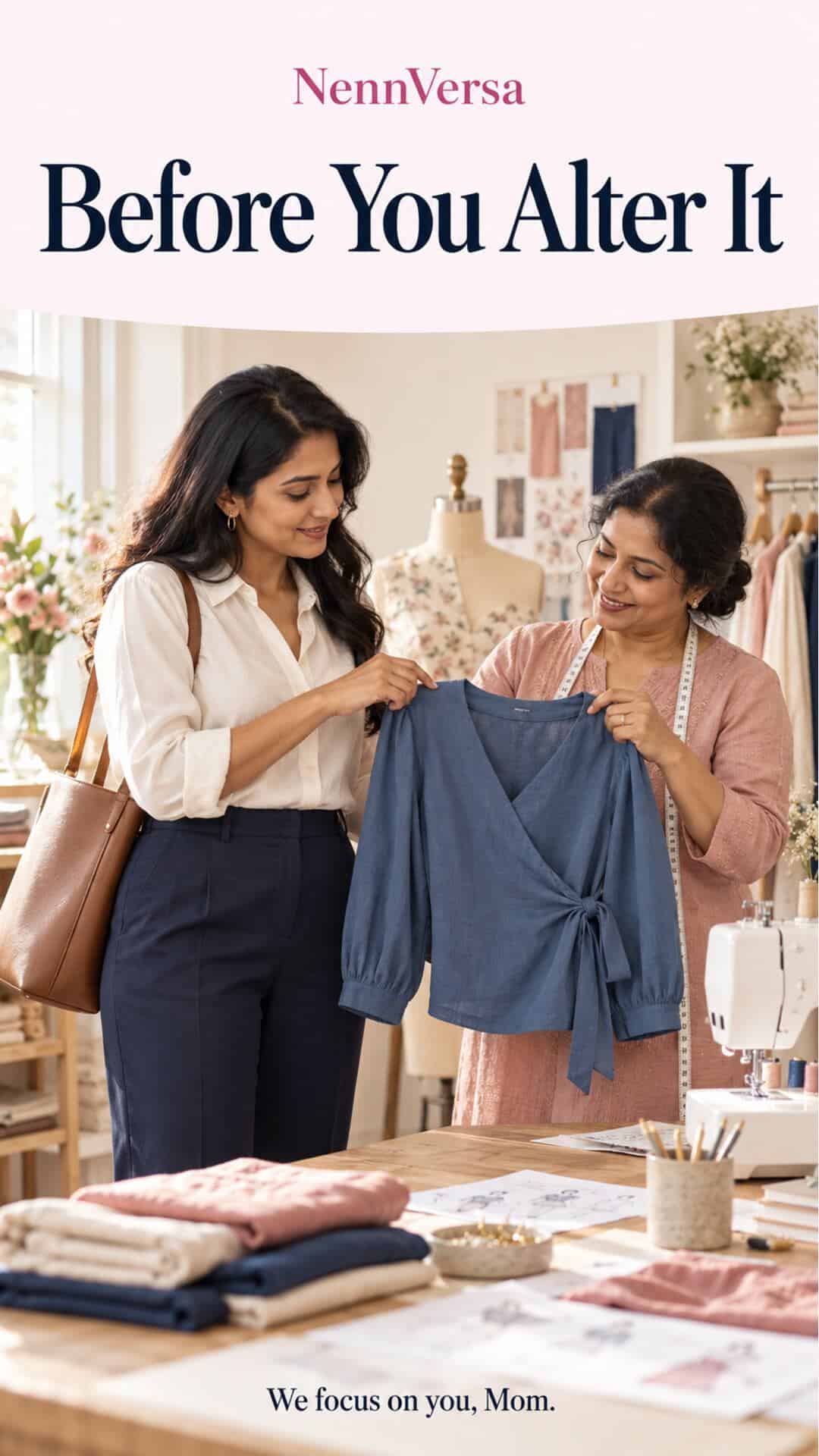
It is reasonable to wonder whether an alteration could make it work. Sometimes a professional can help. Sometimes the change would be expensive, uncomfortable, visually disruptive, or simply unsuitable for that garment. The useful first step is a consultation, not a pair of scissors.
Think of this guide as a way to prepare a clear brief. It will help you describe what you need, compare the cost with other options, and check the finished result. It is not a sewing tutorial or a promise that every dress can be converted.
Name the problem before suggesting the solution
“Make it nursing friendly” leaves several questions unanswered. Do you need to reach one side at a time? Clear both sides for pumping? Avoid lifting a whole dress? Keep your abdomen covered? Replace a closure that is difficult for your hands?
Write the task in ordinary language. For example: “I want to open this shirt while seated without removing it,” or “I need the opening to work through both the outer fabric and lining.” Explain what you want the garment to look like once everything is closed again.
Also name what you do not want changed: the neckline, sleeve shape, waist position, or overall fit. This gives the tailor a real problem to assess instead of a vague request to add a zip somewhere.
Separate a fit fix from an access redesign
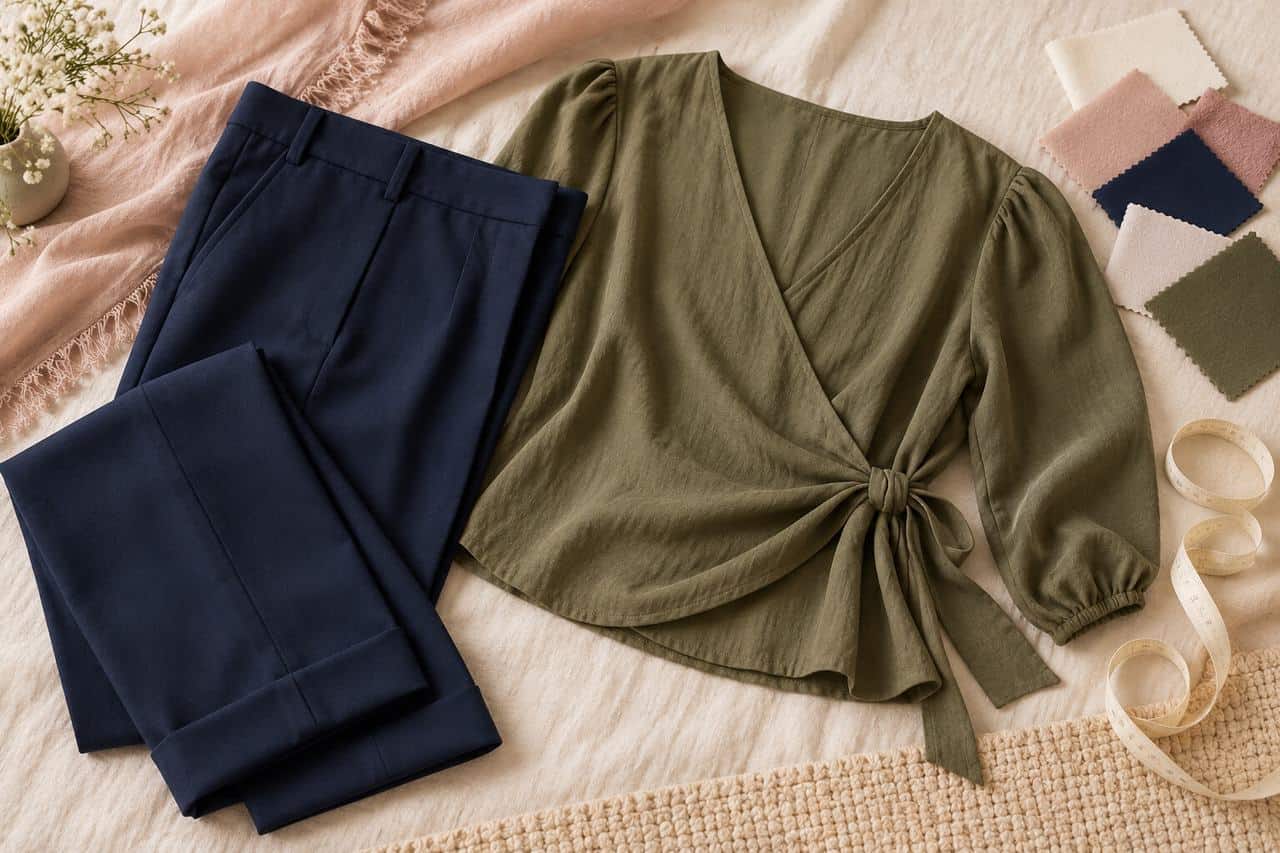
A fit alteration changes how a garment sits on you. An access redesign changes how you get through it. They can interact, but solving one does not automatically solve the other.
| What is bothering you? | What to ask about | What still needs checking |
|---|---|---|
| Trousers drag on the floor | Hem adjustment with your intended shoes | Rise and seated waistband comfort |
| Sleeves get in the way | Whether length or cuff adjustment is suitable | Reach, arm room, and the original sleeve shape |
| A shirt gaps at the bust | Whether its cut and available fabric permit a useful fit change | Whether the garment is fundamentally too narrow |
| A dress has no usable feeding opening | Whether an access redesign is feasible in this construction | Lining, closure position, comfort, appearance, and cost |
Adding a fastening to hold a gaping shirt closed does not necessarily add the room it needs. Likewise, making a dress larger does not create a usable access route. Ask the professional to assess the cause rather than agreeing to the first visible fix.
Let the garment’s construction set the possibilities
Bring the actual item to the consultation. Photographs can start a conversation, but they cannot reveal every seam allowance, lining attachment, reinforcement, fabric weakness, or hidden fastening.
Ask the tailor to explain where a proposed opening would sit and how it would be finished inside. A closure that looks discreet from the outside may still feel bulky against the body. An opening may also change the way a print aligns or a garment hangs.
Useful questions include: Will both layers open? Can the fabric support the proposed closure? Will the closed garment lie smoothly? Is the alteration reversible? Could it affect the original care instructions? The answer may be “not reliably,” and that is helpful information before money and fabric are committed.
Bring the layers that matter
Wear or bring the bra or underlayer you expect to use, along with any bottom that affects a top’s position. If a dress hem is being assessed, bring the intended shoes. You are checking an outfit in use, not an isolated garment on a hanger.
For pumping access, explain your clothing requirements and consult your exact equipment instructions. A tailor can assess a garment’s construction, but cannot certify that a modified opening will safely support a pump. The FDA advises reading the pump’s instruction manual; those instructions remain the starting point for using your equipment.
Do not cut holes in a support garment and assume that an improvised arrangement is equivalent to a compatible pumping bra. Ask the relevant manufacturer or a qualified professional when support or equipment use is uncertain.
Take a clear brief to the fitting

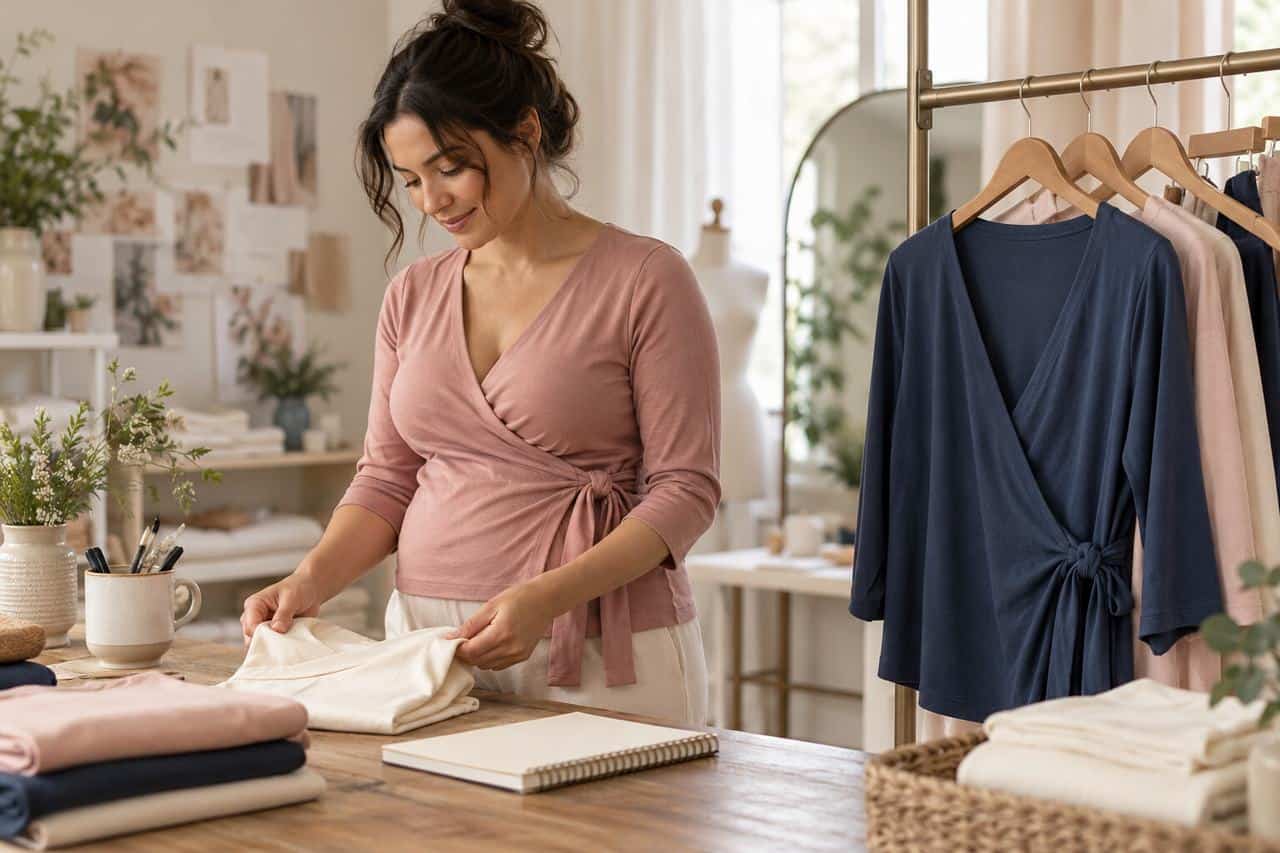
A short written brief can keep the appointment focused:
“This is my blue work shirt. I like the neckline and sleeve shape. I need easier access while seated, with the ivory underlayer I have brought. Please explain the possible change, how it will feel inside, whether the lining also needs work, and the total price before any cutting. I would like to check the opening and closed fit at the final fitting.”
Add a spending limit and a realistic date by which you need the garment. If the work requires several appointments, include that time in the decision. Ask whether the quote includes hardware, fittings, and any agreed finishing work.
During a fitting, follow the tailor’s directions around pins and tools. Do not test a feeding routine with a baby against an unfinished or pinned garment. The practical access rehearsal belongs after the garment is safely finished.
Decide whether the alteration earns its place
Compare the confirmed alteration cost with the cost of a suitable alternative, but also consider why you value this piece. A favourite garment with sentimental meaning may justify more investment than an unfamiliar sale purchase.
Ask yourself three questions. Would I enjoy wearing it if the change works? Does it solve a current need? Can I manage the cost and appointments without creating another unfinished project?
For example, shortening trousers you already love may complete several outfits. Redesigning a lined dress for one afternoon may be less useful if you can borrow an accessible dress that fits. Neither answer is a universal rule. The point is to judge the actual garment and occasion.
Do not authorise a major change simply because you have already paid for the clothing. Money already spent does not make every additional expense worthwhile.
Check the finished garment in the positions you use
At collection, inspect the agreed work and try the garment on with the relevant layers. Open and close it several times gently. Sit, reach forward, and check whether the closure presses, pulls, or catches.
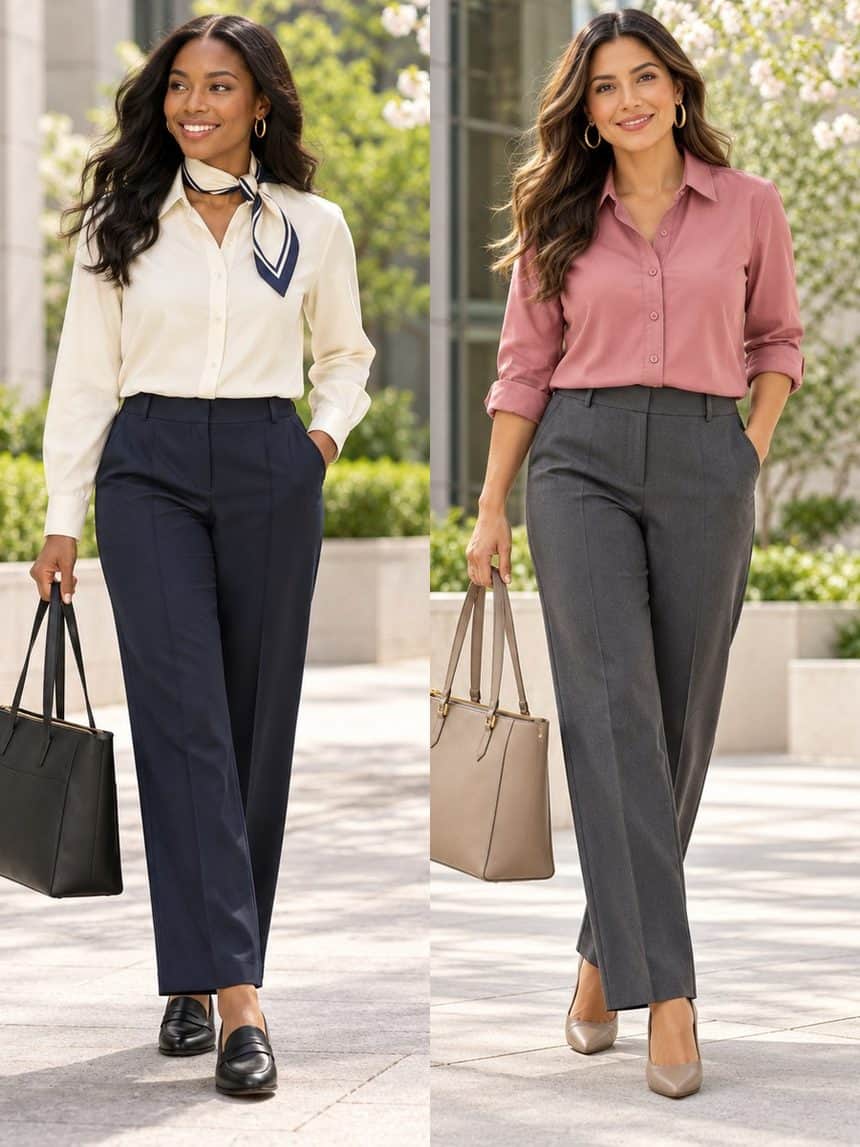
From the capsules
The Back to Work Capsule
Two hundred workday outfits, every top opening for the eleven o'clock pump. $27 once, yours to keep.
Confirm that you can reach the intended access area and restore the whole outfit. Look at the closed garment in ordinary light. Check the inside finish with your hands and ask about anything that feels rough or looks unfinished.
If you pump, do your equipment-specific check separately in an appropriate setting, following manufacturer instructions. An opening that looks large enough is not proof that a complete setup will fit comfortably.
Ask how to care for the altered garment and whether the added materials change the original guidance. Keep the agreed brief and receipt so you can explain any mismatch clearly.
Know when to keep the original garment unchanged
Some pieces can remain part of your wardrobe without becoming feeding clothes. You might wear a favourite dress during a short occasion when your own feeding plan makes it practical, save it for a later season, or simply keep it because you enjoy it.
There is also value in choosing a separate top and skirt that create the feeling you wanted from a dress. You may be able to reproduce the colour, shape, or level of formality without redesigning the original piece.
Clothes do not need to perform every job to deserve a place in your wardrobe. The goal is to make enough of your everyday clothing useful, rather than converting everything you own.
Questions moms often ask
Can any dress have a nursing zip added?
No general promise is reliable. Fabric, lining, seams, fit, and opening position all matter. Ask an experienced tailor to assess the specific dress before approving work.
Would a hidden snap solve a gaping shirt?
It may change how the front closes, but it does not necessarily solve inadequate room. Ask whether the garment needs a fit change or a different cut.
Should I wait until my body stops changing?
You can seek comfortable clothing now. For expensive or difficult-to-reverse work, discuss the possibility of future adjustment and decide how much uncertainty you are comfortable with.
The Nursing Mama Fashion Commandments
Twelve rules I wish someone had told me postpartum. Print them. Screenshot them. Live by them.
- Nursing bra always. Regular bras become instruments of pain the day letdown surprises you.
- Nursing pads on your body + a spare pair in your bag. Every single time you leave the house. No exceptions.
- Extra top in your bag — for YOU, not the baby. Because leaks, spit-up, and coffee-spills don’t care about your outfit plan.
- If it takes more than 5 minutes to figure out how to nurse or pump in it, it’s not the right outfit today. Feeding access is comfort. Comfort is not optional.
- Belt under the bust (empire) or below the belly with drape — never at the belly button. Your postpartum body deserves flattery, not compression.
- Comfortable waistband is non-negotiable. Elastic, wrap, or pull-on. Zippers are a Sunday-only luxury for now.
- Dark tones, prints, or textures — not thin light solids. Because letdown marks are real and you deserve clothes that don’t advertise them.
- Machine-washable everything. Dry-clean is not real-mama fashion. If it can’t survive a spit-up rinse, it’s not in rotation.
- Cross-body bag only. Hands stay free for the carrier, the toddler, the coffee, the door, the meltdown.
- Comfortable shoes always. You’re carrying a car seat and a diaper bag. This is not the season for a heel you can’t run in.
- Get dressed BEFORE the kids see you if you can. It changes the whole day — for them and for you.
- One accessory — earrings, a lip color, a scarf — counts as “put together.” That’s the whole game. You get to feel like yourself again.
Make the appointment about your real needs
A useful alteration begins with a clear task and ends with a garment you can actually wear. You are allowed to ask questions, request a quote, or decide that the proposed change is not worth it.
For more ways to make your existing clothes work through this season, explore NennVersa and The NennVersa Atelier. We focus on you, Mom.