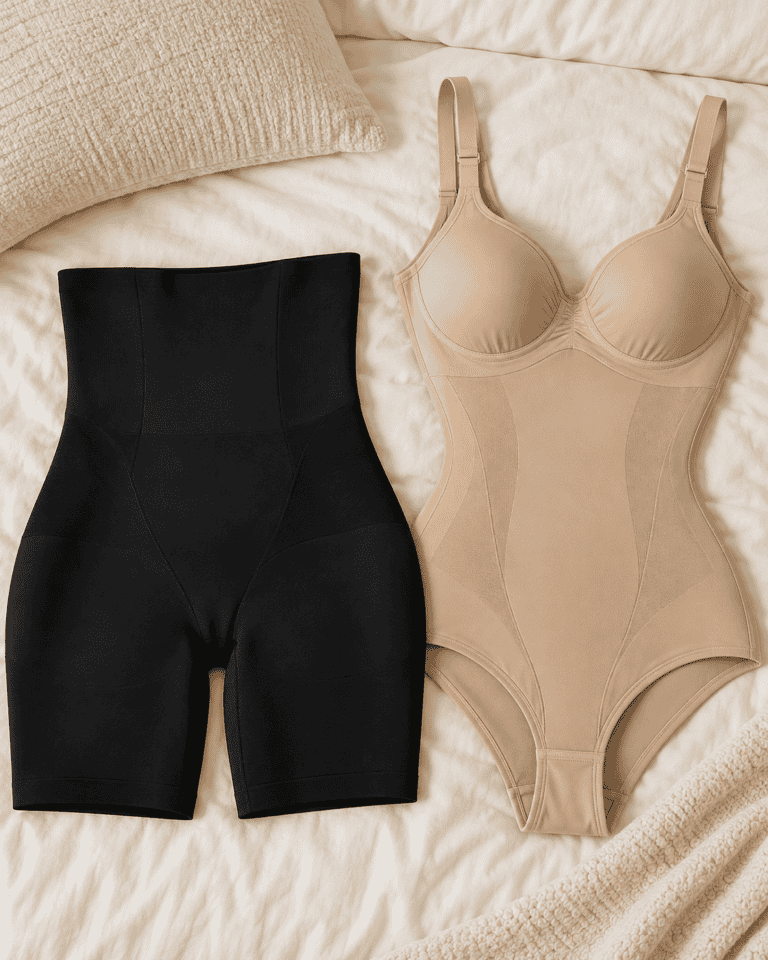
Much return-to-work clothing advice assumes you can choose a roomy blouse, an open cardigan, and whichever trousers feel best. That is not your situation if your workplace requires scrubs, a branded polo, a tunic, a protective layer, or a specific uniform.
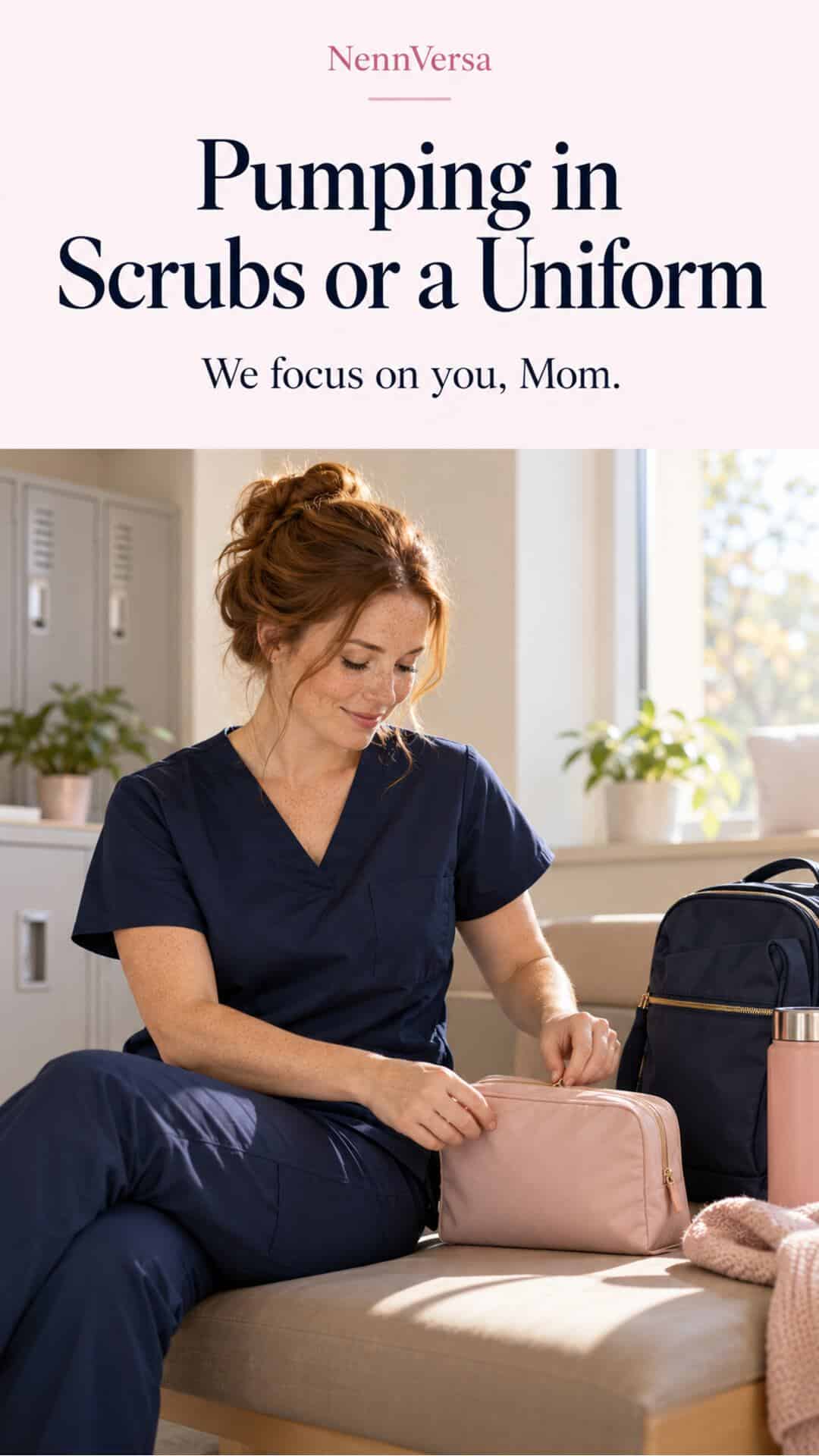
You may have limited control over the outer garment, but you can still investigate access, underlayers, fit, and the steps around a pumping break. Preparing those details before your first shift can reveal a problem while there is time to discuss an approved solution.
This is a clothing and preparation guide. Your workplace’s safety and infection-control requirements, your pump’s instructions, and your individual feeding plan determine the arrangements you need.
Identify what is fixed and what can change
Start with the actual policy rather than a general description such as “navy scrubs.” There may be requirements for a particular cut, sleeve length, logo placement, fabric, laundering process, or protective equipment.
Ask which choices are available within the policy. Can you select a different approved top? Is a front-opening version available? Can you wear an underlayer, and are there restrictions on its neckline or sleeves? If an alteration is being considered, who must approve it?
Do not modify protective equipment or required uniform features on your own. An ordinary clothing shortcut may be unsuitable for a clinical, industrial, food-service, or other controlled work setting.
Map the actual access route
Put on the complete uniform with the bra and underlayer you intend to use. Identify how you will reach your breasts and position the pump in the appropriate pumping space.
A scrub top may need to lift from the hem. A tunic may have a zip or buttons, but the opening may not extend far enough. A polo’s placket may look useful while being too shallow for your setup. A uniform dress can require a different solution because lifting it affects the entire outfit.
Include every layer in the trial. A top that lifts easily over a fixed undershirt does not provide complete access. A tucked layer may be manageable, but check the time and space needed to restore it.
Compare common uniform situations
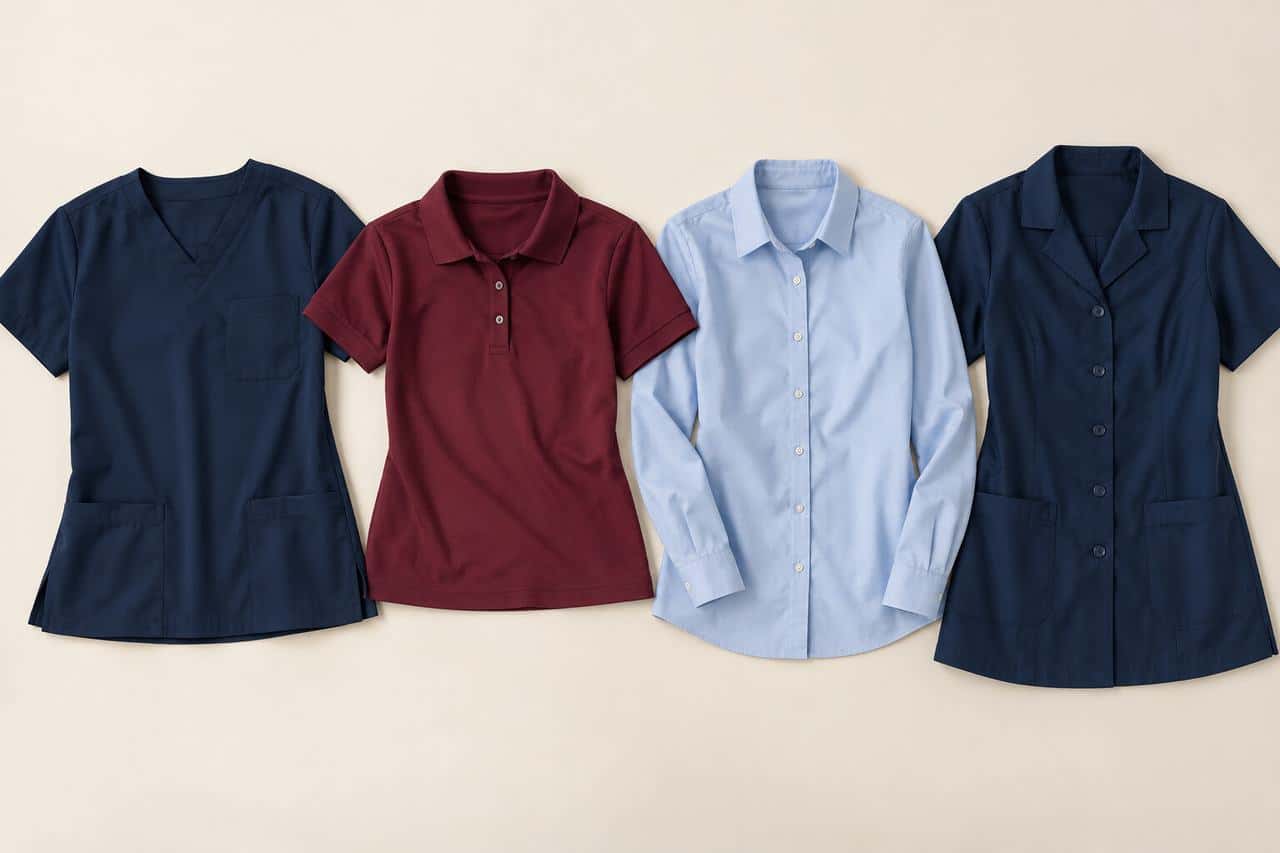
| Uniform | Clothing question | Possible option to discuss or test |
|---|---|---|
| Pullover scrub top | Can it lift comfortably without restricting the opening? | An approved fit with usable hem access and a compatible underlayer |
| Polo shirt | Is the real placket sufficient? | Hem access or a different approved opening style |
| Button-front shirt | Do the opening and bra work together? | A comfortable approved size or cut with functioning front access |
| Tunic or uniform dress | Does access require more undressing than you can manage? | An approved alternative garment or a practical change arrangement |
| Protective outer layer | What removal and replacement process is required? | Follow workplace procedures and discuss the full break sequence |
These are questions to investigate, not promises that your employer permits the options. Getting the policy clear first can prevent buying a garment you cannot use.
Match the bra to the actual pump
If you use conventional pumping components, check whether the bra supports the exact setup and lets you assemble it as instructed. If you use in-bra cups, check the manufacturer’s guidance about bra support and available space.
A wearable device is not automatically compatible with a close-fitting uniform. Even if it fits beneath the top, you still need a practical route for checking placement and removing it. The FDA advises following the pump’s instruction manual; uniform convenience should not override that setup.
Do not assume that wearing a pump means you can perform every work task with it in place. Whether a particular activity is appropriate depends on the equipment, your job, and the setting. Plan the break you actually need rather than expecting the device to remove the need for one.
Rehearse the whole break sequence
Your clothing trial should include entering the space, managing required outer layers, accessing the bra, positioning the equipment, removing it, and restoring the uniform. You can rehearse the clothing steps without trying to create a perfect timed performance.
Notice practical obstacles. Is there somewhere appropriate to put a removed layer? Does a badge or lanyard get in the way? Can you reach the opening while seated? Does the bra need adjusting after the equipment comes out?
Consider what happens afterward too. You may need time and facilities for pump care, milk storage, and hand hygiene. A break estimate based only on the device running leaves out the surrounding work.
Use a specific workplace conversation
A clear request gives the person helping you something concrete to address. You might say:

“I’m preparing for pumping during my shifts. My current uniform top needs to lift from the hem, and the underlayer affects access. Could we review the approved clothing options and the practical arrangements for changing, pumping, and returning to work?”
Ask who can answer questions about the space, scheduling, storage, and uniform requirements. Depending on your workplace, that may involve a manager, occupational health team, human resources, or another designated contact.
Keep a written note of the agreed arrangements and where to raise a problem. Employment protections and workplace rules differ by location; use current official information for your jurisdiction rather than assuming a rule from another country applies.
Prepare for the room you will use
Find out what is actually available: a suitable chair and surface, power if needed, access arrangements, and the facilities relevant to your plan. Ask about a fallback if the usual room is unavailable.
Think about the uniform in that space. A top that must come off entirely requires a different level of privacy and handling from one with accessible front buttons. If the room is cool, an approved removable layer may be useful before or after the session.
If your shift moves between locations, review the plan for each place. One well-arranged room does not solve access at a different site where you also spend part of the day.
Keep clean clothing and equipment care distinct
A spare uniform top can be useful, but its pouch should not become the default home for used pump parts. Decide which items are clean, which need washing, and where each belongs after the session.
The CDC’s pump-hygiene guidance recommends cleaning milk-contact parts after use and provides instructions for cleaning, drying, and storage. Make a plan that follows current guidance and the device instructions, including any additional recommendations from your baby’s care team.
The clothing system should support that plan: keep a usable spare accessible, follow uniform laundering rules, and identify where used clothing goes. An organization hack should not replace the care procedure it is supposed to make easier.

From the capsules
The Back to Work Capsule
Two hundred workday outfits, every top opening for the eleven o'clock pump. $27 once, yours to keep.
Choose a backup that meets the same requirements
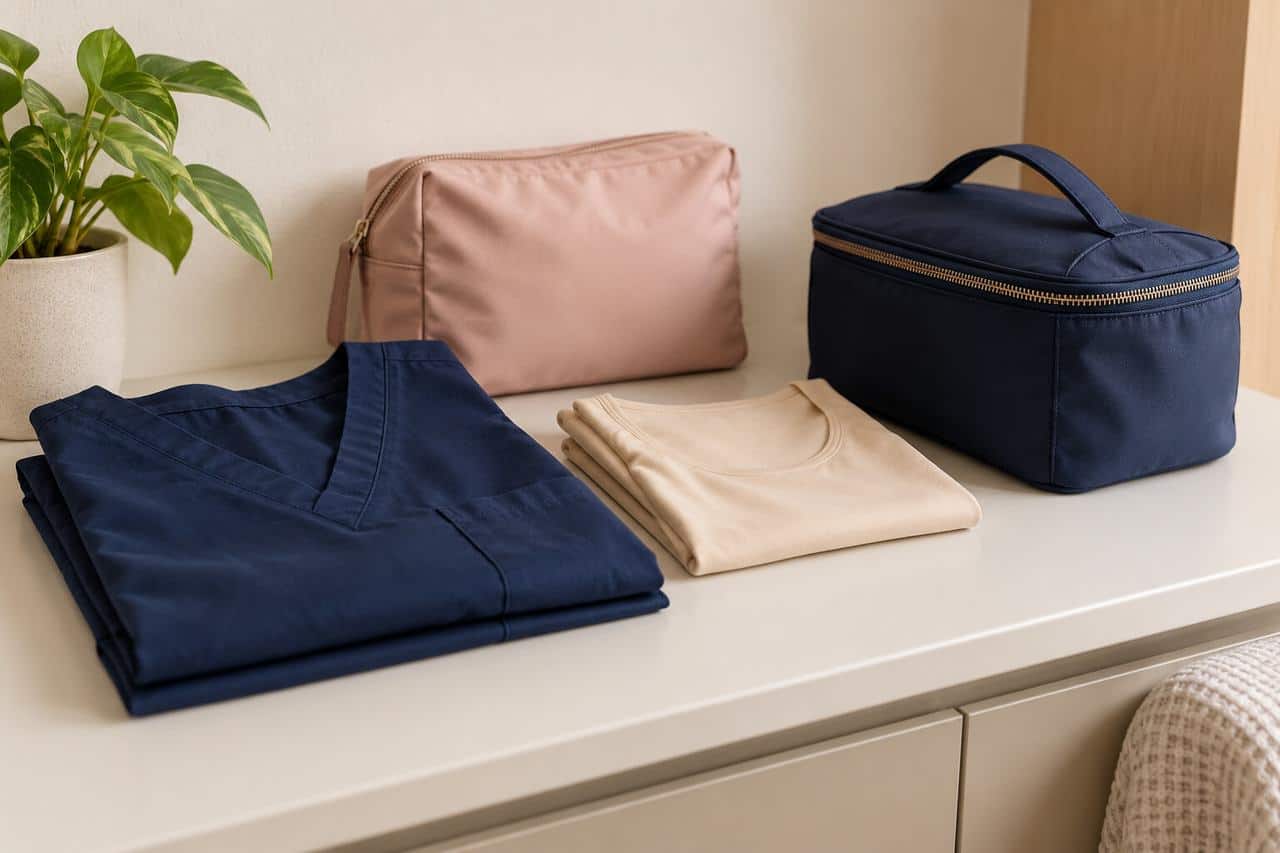
Pack an approved spare if your situation calls for one. Check its size and access before the shift rather than assuming another top in the same color will work.
Include the underlayer if the spare depends on it, and consider whether the spare needs the same identification or uniform features. Agree where it can be stored. A change left in a distant locker may be less useful than you expected during a busy day.
When the spare is used, make replacing it part of the homecoming reset. A pouch containing yesterday’s used top is not a ready backup.
Review after the first real shift
Write down one thing that worked and one thing that needs changing. Perhaps the top was comfortable but an inner layer complicated access. Perhaps the uniform was fine, while reaching the room took longer than expected.
Keep clothing problems separate from workplace-arrangement problems so the right person can help. Buying a different top will not fix an unavailable room, and a better room will not make an unsuitable opening wider.
Make the smallest useful change and reassess. You do not need to solve every possible future shift on the first day.
Common questions
Can I pump under my scrub top while working?
Do not assume this is appropriate because the pump is wearable. Check the device instructions, task demands, and workplace requirements. You may need dedicated time and space regardless of whether the equipment fits under the top.
Should I add a zip to my uniform?
First obtain the relevant workplace approval and professional alterations advice. Check safety, laundering, durability, and the actual access route. A modification is not automatically permitted or practical.
What if no approved uniform gives easy access?
Discuss the specific problem and a workable alternative with the appropriate workplace contact. That might involve an approved garment or a practical changing arrangement; do not assume you must manage an unusable outfit silently.
The Nursing Mama Fashion Commandments
Twelve rules I wish someone had told me postpartum. Print them. Screenshot them. Live by them.
- Nursing bra always. Regular bras become instruments of pain the day letdown surprises you.
- Nursing pads on your body + a spare pair in your bag. Every single time you leave the house. No exceptions.
- Extra top in your bag — for YOU, not the baby. Because leaks, spit-up, and coffee-spills don’t care about your outfit plan.
- If it takes more than 5 minutes to figure out how to nurse or pump in it, it’s not the right outfit today. Feeding access is comfort. Comfort is not optional.
- Belt under the bust (empire) or below the belly with drape — never at the belly button. Your postpartum body deserves flattery, not compression.
- Comfortable waistband is non-negotiable. Elastic, wrap, or pull-on. Zippers are a Sunday-only luxury for now.
- Dark tones, prints, or textures — not thin light solids. Because letdown marks are real and you deserve clothes that don’t advertise them.
- Machine-washable everything. Dry-clean is not real-mama fashion. If it can’t survive a spit-up rinse, it’s not in rotation.
- Cross-body bag only. Hands stay free for the carrier, the toddler, the coffee, the door, the meltdown.
- Comfortable shoes always. You’re carrying a car seat and a diaper bag. This is not the season for a heel you can’t run in.
- Get dressed BEFORE the kids see you if you can. It changes the whole day — for them and for you.
- One accessory — earrings, a lip color, a scarf — counts as “put together.” That’s the whole game. You get to feel like yourself again.
Prepare the next departure
Try your uniform, bra, and pump setup before the first shift, then write down any unresolved clothing or workplace questions.
Use NennVersa’s My Workday Launch Plan to organize prepared items, last-minute additions, and the return-home reset. For everyday wardrobe planning around your work and home routines, explore The NennVersa Atelier.
Your uniform can be a fixed requirement without making your comfort and practical needs invisible.