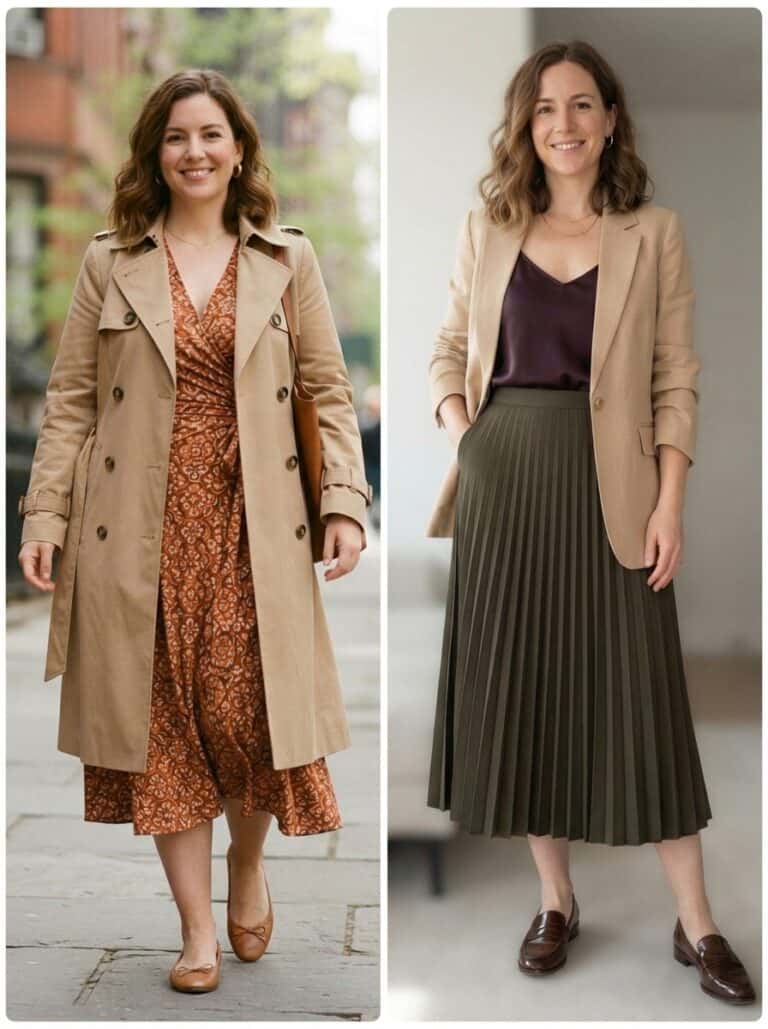
A dress can make room for a growing bump and still be impossible to breastfeed in comfortably. A nursing top can have excellent feeding access and feel too short during pregnancy. The two labels describe different jobs, even when shops place them in the same section.
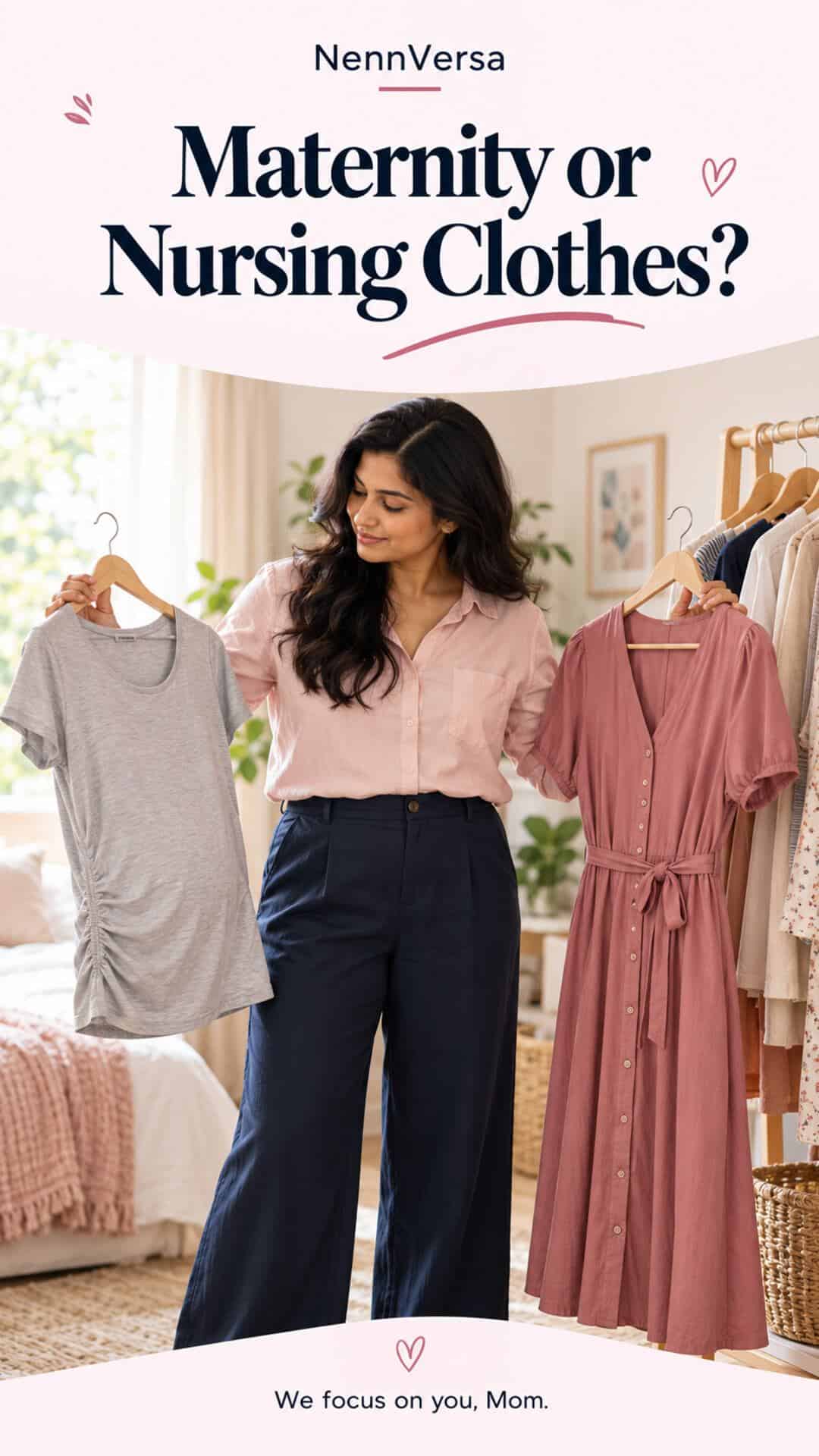
Maternity clothes are generally designed around pregnancy fit. Nursing clothes include an intended route to reach the breast. Some garments combine both features. Ordinary clothes can also work beautifully, depending on their shape, openings and the underlayers you wear.
You do not need to replace a whole wardrobe at the point when pregnancy becomes postpartum. Begin by checking what each piece can actually do for you.
Separate room, access and comfort
These are three different questions. Room asks whether the garment accommodates your body. Access asks whether you can nurse or position and remove your pump. Comfort asks how the outfit feels through the day.
A stretchy neckline may provide room without being designed for repeated pulling. A generous dress may fit comfortably but have a closed lining beneath its buttons. A clever feeding panel may work well while the armholes or waistband feel wrong.
Check all three instead of letting one reassuring word on a product page answer for the whole garment.
| Garment | What it may offer | What still needs checking |
|---|---|---|
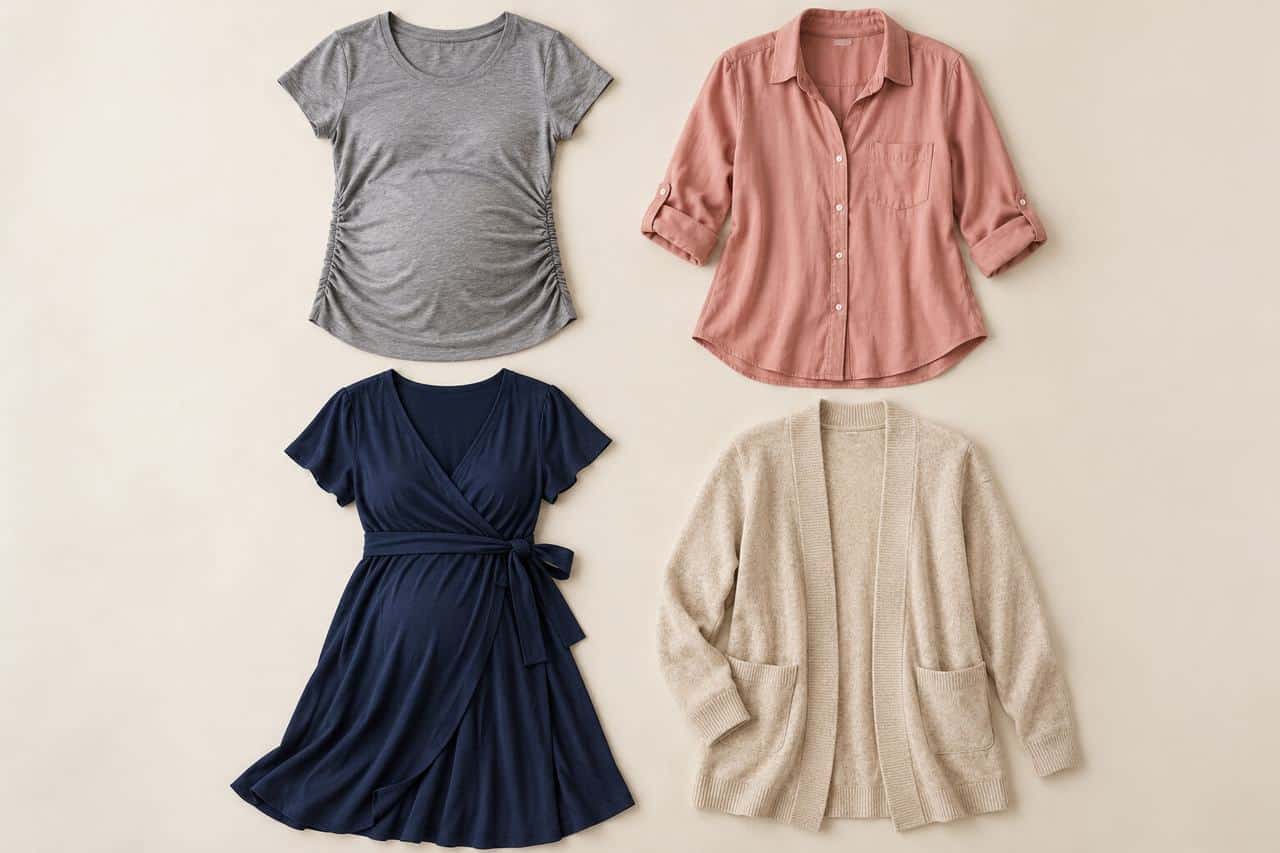
| Maternity T-shirt | Extra front length or room. | Whether lifting from the hem works with your underlayer and coverage preference. |
| Nursing top | A panel, clip, zip or opening intended for feeding. | Fit, ease of opening and compatibility with your bra or pump. |
| Maternity-and-nursing dress | Pregnancy room and feeding access. | The full opening through any lining; comfort before and after birth. |
| Ordinary button-front shirt | Adjustable front access and everyday styling. | Working buttons, sufficient opening and comfortable bust room. |
| Open cardigan | A reusable outer layer. | The top and bra beneath it still need to work. |
Find the pieces most likely to stay useful
Open cardigans, button-front shirts, accessible shirt dresses and soft bottoms may continue working across several stages. A maternity trouser does not expire on the day you give birth. Keep wearing it while its waistband and overall fit feel comfortable.
Some adjustable garments offer useful flexibility, but a tie or elastic panel is not a guarantee of fit. Consider where it sits, how it feels when seated and whether it interferes with a sensitive area.
Look at the clothes you already reach for. If you like dresses, test your dresses first. If you prefer separates, start with those. Building around your habits is more useful than forcing yourself into someone else’s essential-items list.
Check the complete feeding route
Try the outfit with its intended bra and underlayer. Open the garment, move the lining if there is one, reach the bra, and check how you would restore everything afterward. Practise while seated as well as standing if that is comfortable for you.
For a wrap dress, find out whether the front actually opens or is stitched in place. For a Henley, check how far the placket extends. For a lift panel, check that the inner opening is usable. A photograph can show a neckline without showing the construction beneath it.
A high neckline is not automatically unsuitable. A dedicated nursing garment may have side zips or another opening. Equally, a low neckline is not automatically accessible if the fabric and construction do not allow it to move as needed.
Give pumping its own check
Access that works for nursing may not allow you to position two pumping components at once or remove cups without difficulty. Test the clothing steps with the exact equipment and bra you use, following the manufacturer’s instructions.
You do not need to run the pump to discover that a blouse will not open sufficiently. First check access, space, support and the route for removing the equipment. Then get qualified help if the actual setup is uncomfortable or you are unsure about fit.
A wearable pump still requires appropriate setup and checking. Do not buy a close-fitting top on the assumption that hiding the device is the only requirement.
Keep what works without keeping everything visible
Sort your existing pieces into useful now, worth testing, and put aside. This can be a small exercise involving five garments, not a full wardrobe clear-out.
“Useful now” means comfortable and suited to a real task. “Worth testing” might mean a shirt that needs its underlayer checked or a dress whose opening you have not examined. “Put aside” does not mean your body has failed it; the piece may simply be wrong for this season.
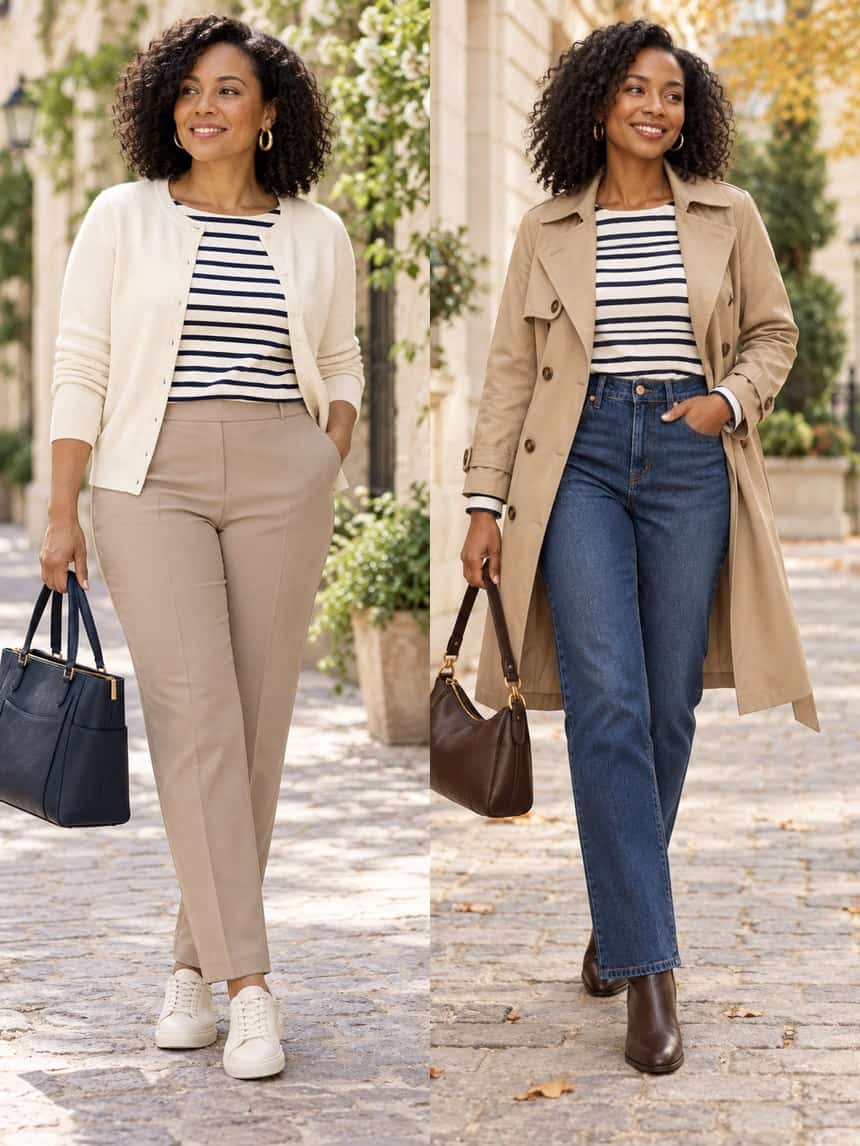
From the capsules
The Year Round Capsule
Two hundred nursing-friendly outfits from fifty-six pieces, fifty for every season, laid out and then worn. $29 once, yours to keep.
Do not discard all maternity clothes because you want the label out of your life. You can keep a comfortable piece and still choose how you describe your style.
Buy for the missing function
After trying existing clothes, describe the gap in plain language: “I need a lightweight dress with access I can manage,” or “I need a top that works with my pumping bra at work.” That is a better shopping brief than “I need nursing clothes.”
Buy one unfamiliar style before committing to several when you can. Read the actual measurements, fabric care and return conditions. If access is unclear, ask the seller for a photograph or explanation of the opening rather than hoping the label means what you need.
Consider the whole cost: a bargain top may require a new bra or special laundry care. A familiar shirt already in your wardrobe may solve the same problem without a purchase.
Common questions
Can I wear maternity clothes while breastfeeding?
Yes, if they remain comfortable and provide usable access with your other layers. The maternity label alone does not answer the access question.
Do nursing clothes need to be loose?
No single silhouette works for everyone. You need comfortable fit and enough room for the intended opening and equipment, if used. A fitted garment with well-designed access may be useful; a loose garment with a fixed lining may not be.
Can I keep wearing nursing clothes after feeding ends?
Yes. Functional buttons, wrap fronts and discreet openings can remain part of ordinary outfits. You can decide based on comfort and taste rather than the category.
The Nursing Mama Fashion Commandments
Twelve rules I wish someone had told me postpartum. Print them. Screenshot them. Live by them.
- Nursing bra always. Regular bras become instruments of pain the day letdown surprises you.
- Nursing pads on your body + a spare pair in your bag. Every single time you leave the house. No exceptions.
- Extra top in your bag — for YOU, not the baby. Because leaks, spit-up, and coffee-spills don’t care about your outfit plan.
- If it takes more than 5 minutes to figure out how to nurse or pump in it, it’s not the right outfit today. Feeding access is comfort. Comfort is not optional.
- Belt under the bust (empire) or below the belly with drape — never at the belly button. Your postpartum body deserves flattery, not compression.
- Comfortable waistband is non-negotiable. Elastic, wrap, or pull-on. Zippers are a Sunday-only luxury for now.
- Dark tones, prints, or textures — not thin light solids. Because letdown marks are real and you deserve clothes that don’t advertise them.
- Machine-washable everything. Dry-clean is not real-mama fashion. If it can’t survive a spit-up rinse, it’s not in rotation.
- Cross-body bag only. Hands stay free for the carrier, the toddler, the coffee, the door, the meltdown.
- Comfortable shoes always. You’re carrying a car seat and a diaper bag. This is not the season for a heel you can’t run in.
- Get dressed BEFORE the kids see you if you can. It changes the whole day — for them and for you.
- One accessory — earrings, a lip color, a scarf — counts as “put together.” That’s the whole game. You get to feel like yourself again.
Let the garment earn its place
Use My Wardrobe Decision Notebook to record what each piece does, what you need to check and whether you want to keep, borrow, buy or wait. For help combining the pieces that pass your own checks, explore The NennVersa Atelier. The most useful wardrobe is the one that works for the person wearing it now.