The first workday back can involve enough logistics without discovering that your dress only opens at the back. Clothes may be the smaller part of your pumping plan, but they are the part you wear through every meeting, commute, and pumping session.
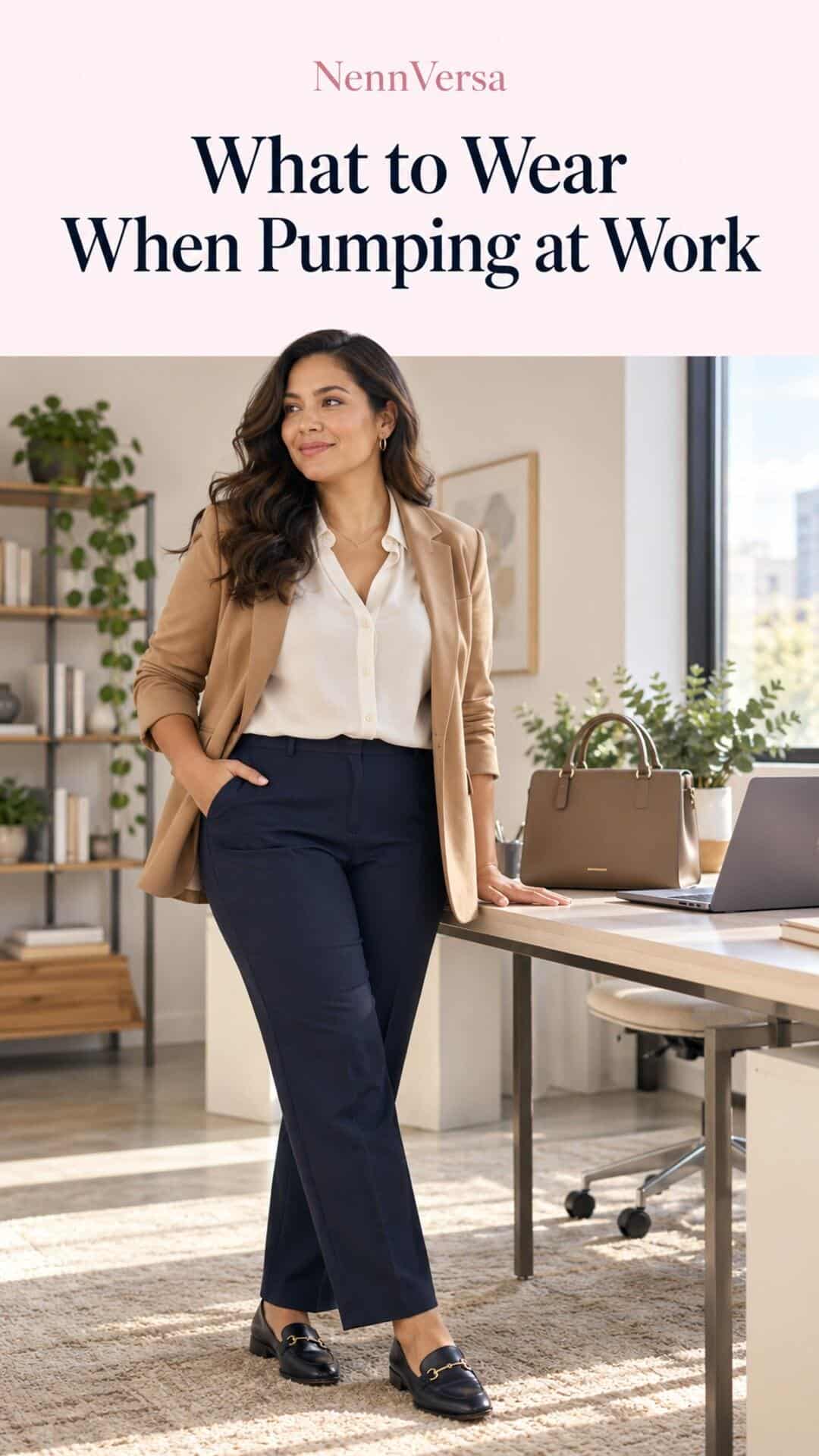
The most useful pumping-at-work outfit has comfortable access, room for your actual setup, and an easy way to get dressed again. It should also suit your workplace and feel like something you would choose for yourself.
You do not necessarily need a separate pumping wardrobe. Start by testing the clothes you own with the bra and pump you intend to use, then fill the specific gaps.
Plan the pumping space before the outfit
Before returning, discuss a private place to pump, time in your workday, milk storage, and where you can clean pump parts. These are practical needs that clothing cannot replace. The CDC recommends arranging these details with your employer before your return and practicing with your pump beforehand. CDC guidance on returning to your workplace.
Workplace protections vary by location and circumstances. Use the relevant employment authority for your country rather than assuming advice written for another country applies to you.
When you know the space, picture the whole process: arriving with your bag, setting up, adjusting clothes, pumping, putting everything away, and returning to work. That sequence helps you notice clothing issues before a busy day.
Choose the access route that suits your setup
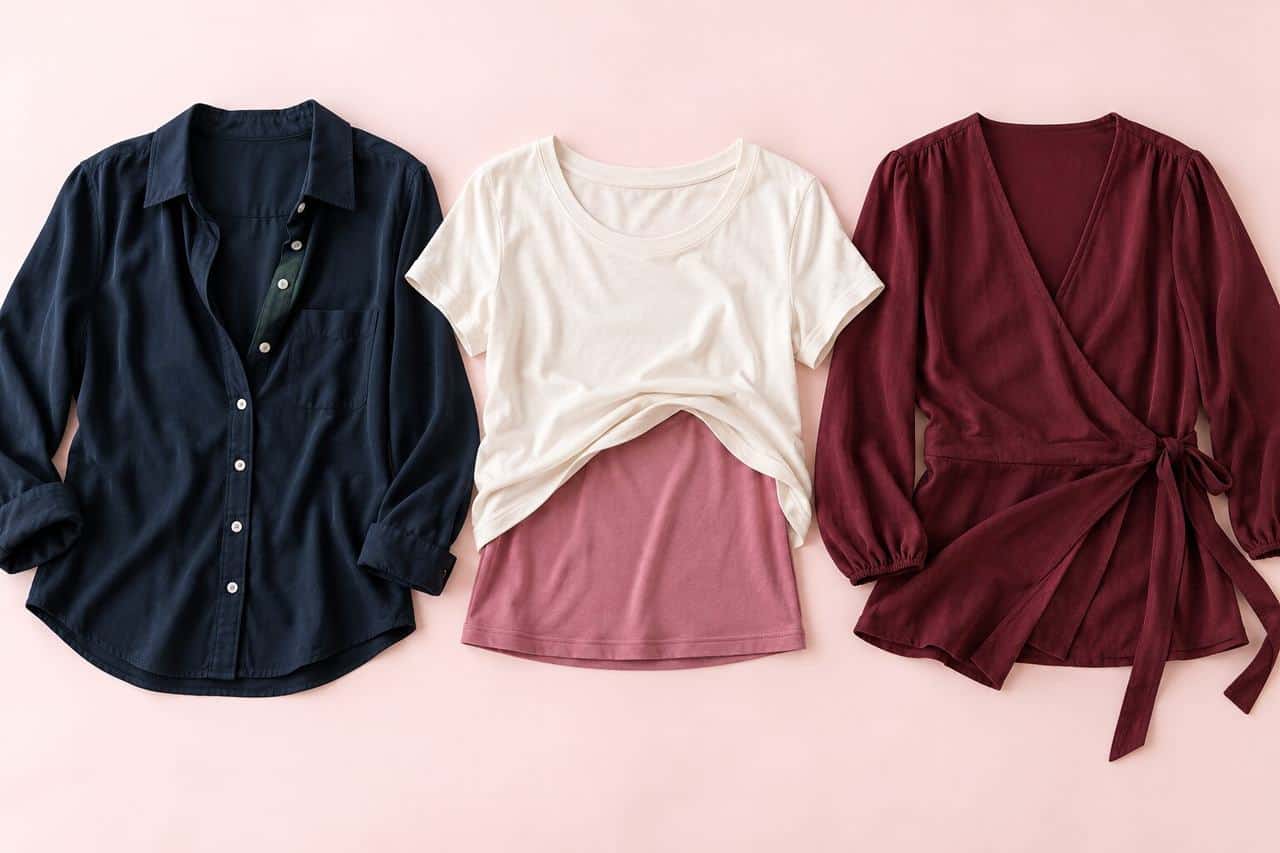
Open from the front
A real button-front blouse, shirt dress, or sufficiently deep Henley can let you open the chest area while leaving the rest of the garment in place. Check the lowest point you need to open and how the fabric sits afterward.
Look for buttons you can operate comfortably. Decorative buttons and a short neckline placket may not provide useful access. A fitted shirt can also pull once your bra or collection cups are in place.
Lift the outer layer
A liftable blouse or tee can work over a compatible bra or tank. Make sure the fabric stays clear of your setup without needing to be held continuously. A tucked-in top may need to be untucked and rearranged each time.
Try this seated, with the underlayer you will actually wear. A tank that provides coverage may still obstruct the opening you need. More layers can mean more warmth and more adjustment, so keep only the layers that help.
Use a genuine nursing or pumping opening
Some garments use lift panels, side openings, or concealed zips. These can be useful when you prefer a higher neckline, but the opening must be in the right place and large enough for your setup.
A nursing opening designed for one side at a time may be awkward for simultaneous double pumping. Inspect the construction and test it. The marketing label cannot make that decision for you.
Wearables still need a clothing check
A wearable pump changes the shape and space inside your clothing. Check the pump manufacturer’s bra and positioning instructions, then see whether your top allows that setup without compressing or displacing it.
Do not tighten clothing to force a wearable into place. If it hurts or does not fit securely, reassess the setup and seek appropriate help. This outfit check does not determine flange fit or whether a pump is suitable for you.
Five work outfits to try
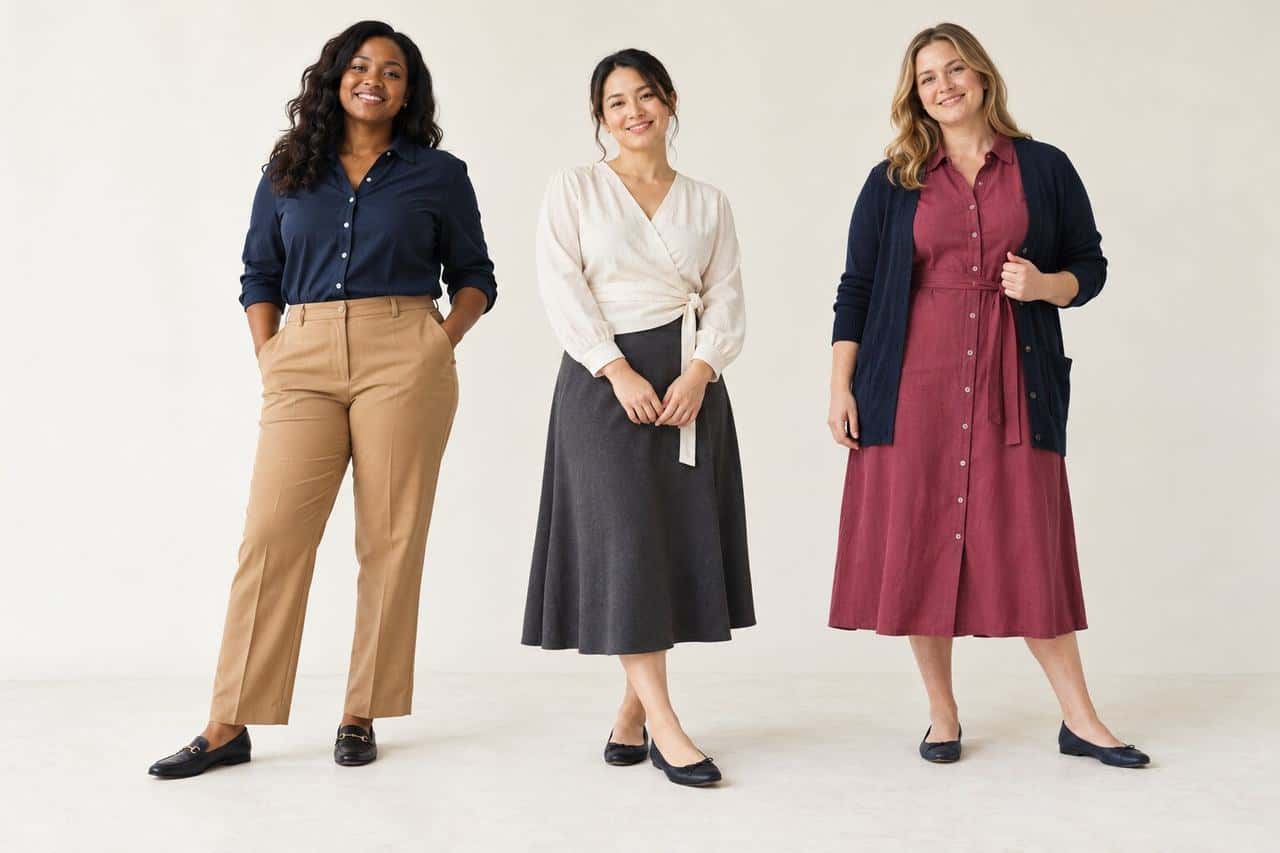
1. Button-front shirt, straight trousers, loafers
Try a navy shirt with camel trousers and loafers. The front opening is easy to inspect, and separate tops and bottoms let you replace one item if needed. Choose trousers that stay comfortable during a seated session.
If you like a tucked shirt, practice untucking and retucking it before wearing it to work. An untucked shirt with an intentional hem can remove that extra step.
2. Wrap blouse, midi skirt, flats
An ivory true-wrap blouse and charcoal midi skirt offer a different silhouette without requiring a one-piece outfit. Check whether the wrap opens far enough and whether an internal fastener adds an awkward step.

Before leaving home, lean forward and sit down. If the neckline needs constant pinning or repositioning, choose another top. You want comfortable access during pumping and secure coverage afterward.
3. Shirt dress and an open cardigan
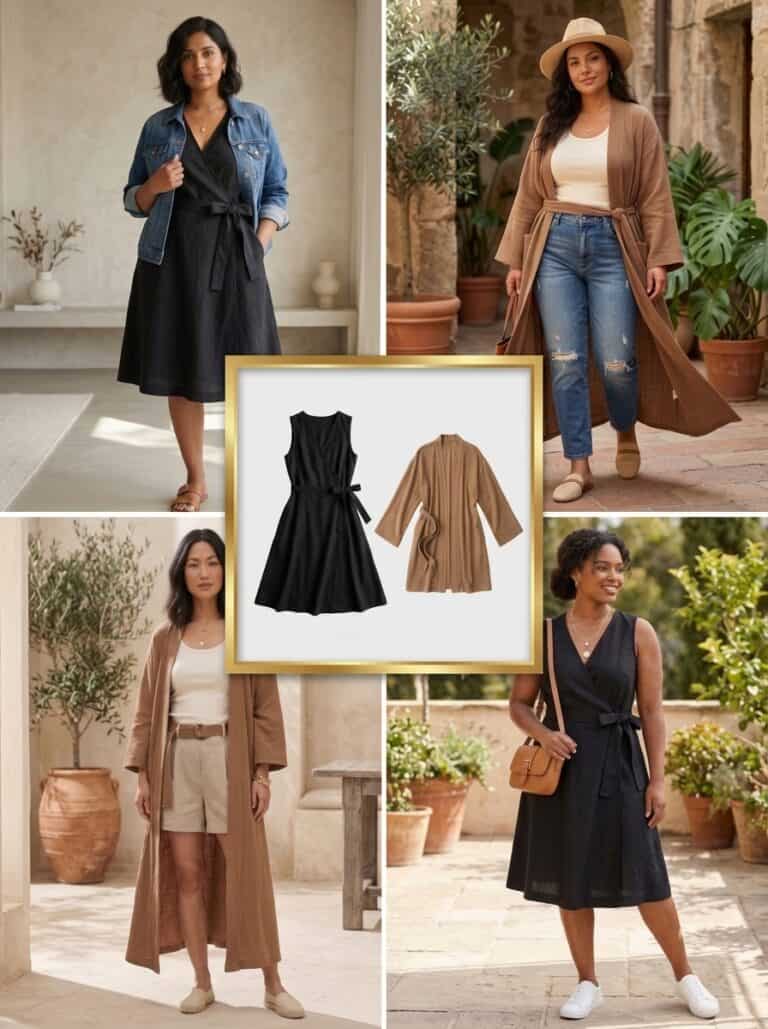
A burgundy dress with a functioning front placket can simplify the morning. Confirm that the placket opens sufficiently; a dress may have buttons only at the neckline, or a lining that changes how it opens.
Keep the cardigan easy to remove. If a waist tie or belt complicates access, leave it off when the dress allows, or choose a different cut. You do not have to make every layer work through every session.
4. Lift-access top, pull-on work trousers, blazer
A purpose-made accessible top can sit beneath an open blazer for a more formal workplace. Test the top without the blazer first, then check that the full outfit feels comfortable when you sit and move.
Choose a washable base if that suits your routine. A blazer can be the occasional outer layer rather than a garment you need to clean after every minor spill.
5. Simple knit top, cardigan, and your approved work bottoms
For a casual office, an accessible knit top and cardigan may be enough. For a uniformed role, begin with the actual uniform and relevant dress requirements. Ask about an approved alternative top if your current one is difficult to use.
Healthcare, food preparation, laboratory, and other specialist settings have their own clothing and hygiene requirements. Build within those requirements instead of adding loose accessories or layers that interfere with the work.
Do a complete practice run
Try the whole outfit, including your bra, base layer, and shoes. Practice setting up in a private space with your clean equipment, following its instructions. Notice which clothing steps are awkward and whether the top stays clear of the equipment.
Then practice getting dressed again. Can you close the buttons, adjust the neckline, and return to a comfortable fit? Does the outfit need a mirror, a full-length zip, or a second person?
Write down one change rather than rejecting everything: a different tank, a looser shirt, or a separate pumping bra if that is part of your chosen setup. Clothing trials are most useful when they lead to a specific adjustment.
From the capsules
The Back to Work Capsule
Two hundred workday outfits, every top opening for the eleven o'clock pump. $27 once, yours to keep.
Build a small spare-clothing kit
Pack a spare top that works with the bottoms and bra you are wearing. Add replacement breast pads if you use them, and a separate washable pouch for damp clothing. If your routine calls for a spare bra, choose one compatible with your setup.
A neutral spare does not have to match every outfit you own. It needs to work with the outfits you actually repeat. Test it before leaving it in a desk drawer.
Keep clothing separate from clean pump equipment. Your clothing pouch is not a cleaning or milk-storage solution. Use the pump manufacturer’s instructions and current CDC guidance for those tasks.
Plan a workweek without buying five new outfits
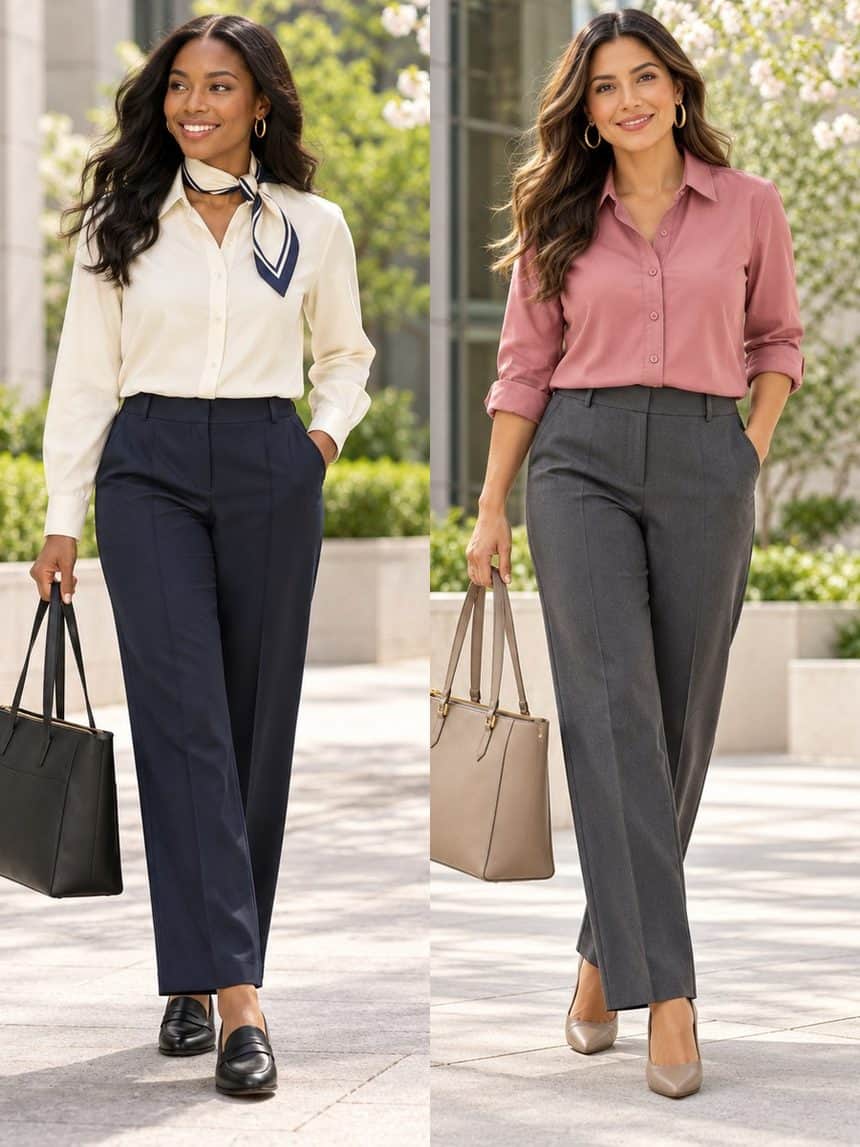
Choose two or three tested bottoms and rotate accessible tops according to your laundry needs. Repeating a comfortable pair of trousers is often simpler than finding five entirely different silhouettes.
For example, navy trousers can work with an ivory blouse on one day and a burgundy accessible knit on another. Add the same blazer if you want it. A shirt dress can cover another day without needing another trouser purchase.
Keep a short outfit list beside your work bag. Include the bra or tank each combination needs. If you record only the visible clothes, the access problem may reappear when the essential underlayer is still drying.
If you need to buy something
Look for a proven access opening, enough room through the bust and shoulders, manageable sleeves, and a care routine you can maintain. Review size charts and returns before ordering. A product called “nursing-friendly” may still be unsuitable for your pump arrangement.
Useful shopping categories include washable button-front blouses, comfortable work trousers, a manufacturer-compatible pumping bra, and a washable clothing pouch. Buy the item that solves your observed problem rather than treating the whole list as essential.
Your questions, answered
Can I wear an ordinary bra for pumping?
It depends on your pump and how you use it. Some setups use a separate pumping bra; others use a compatible bra with collection cups. Follow your equipment’s instructions and test your chosen arrangement before the workday.
Can I wear a dress?
Yes, if its opening gives you the access you need. A back-zip dress or a sewn-shut faux wrap may involve more undressing than you prefer. Test the specific dress rather than ruling out the whole category.
Do I need to hide every sign that I pump?
No. Choose the coverage and privacy that feel comfortable to you. Your outfit should support your needs, and you deserve a workable space and time for pumping regardless of how discreet your clothing is.
The Nursing Mama Fashion Commandments
Twelve rules I wish someone had told me postpartum. Print them. Screenshot them. Live by them.
- Nursing bra always. Regular bras become instruments of pain the day letdown surprises you.
- Nursing pads on your body + a spare pair in your bag. Every single time you leave the house. No exceptions.
- Extra top in your bag — for YOU, not the baby. Because leaks, spit-up, and coffee-spills don’t care about your outfit plan.
- If it takes more than 5 minutes to figure out how to nurse or pump in it, it’s not the right outfit today. Feeding access is comfort. Comfort is not optional.
- Belt under the bust (empire) or below the belly with drape — never at the belly button. Your postpartum body deserves flattery, not compression.
- Comfortable waistband is non-negotiable. Elastic, wrap, or pull-on. Zippers are a Sunday-only luxury for now.
- Dark tones, prints, or textures — not thin light solids. Because letdown marks are real and you deserve clothes that don’t advertise them.
- Machine-washable everything. Dry-clean is not real-mama fashion. If it can’t survive a spit-up rinse, it’s not in rotation.
- Cross-body bag only. Hands stay free for the carrier, the toddler, the coffee, the door, the meltdown.
- Comfortable shoes always. You’re carrying a car seat and a diaper bag. This is not the season for a heel you can’t run in.
- Get dressed BEFORE the kids see you if you can. It changes the whole day — for them and for you.
- One accessory — earrings, a lip color, a scarf — counts as “put together.” That’s the whole game. You get to feel like yourself again.
Make the first day easier on yourself
Choose one tested outfit, put its underlayers together, and check your spare top. A reliable combination is more helpful than a new outfit you have not tried.
If you want support building more work combinations around your body, feeding needs, and personal style, explore The NennVersa Atelier. Your work wardrobe can make room for this part of your life.